How to Clean and Maintain Delicate Floral Drop Earrings
Learn expert techniques to clean, store, and maintain delicate floral drop earrings. Protect gemstones, enamel, and metals with our detailed care guide.

The Unique Vulnerability of Floral Drop Earrings
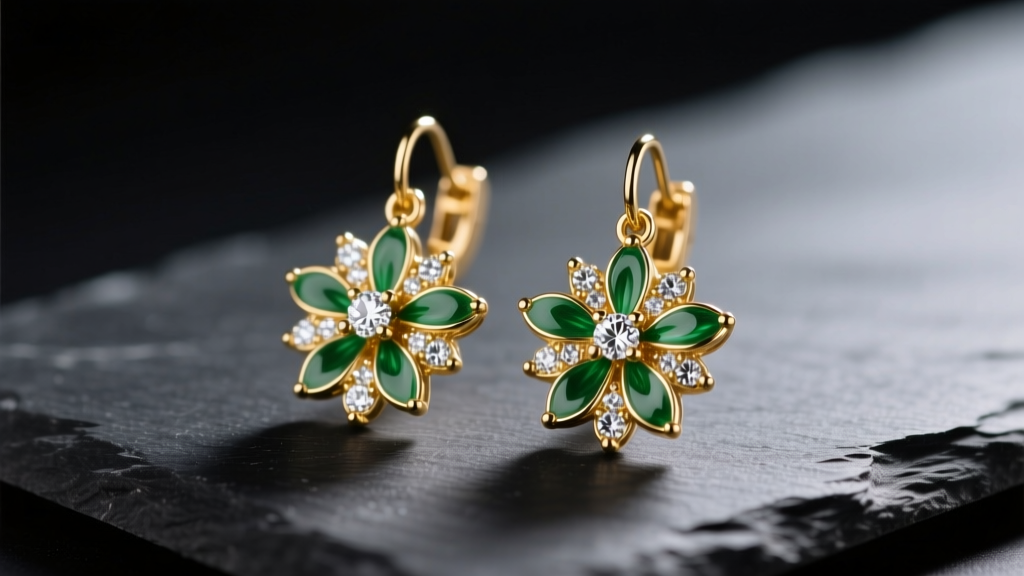
Floral drop earrings represent a unique intersection of intricate artistry and structural vulnerability. Unlike simple studs or smooth hoops, botanical and floral designs feature deep crevices, overlapping metal petals, and mixed-media elements like cold enamel, pavé gemstones, and resin. These intricate details trap dead skin cells, cosmetic residue, and environmental pollutants, leading to rapid tarnishing and a dull appearance. Furthermore, the elongated nature of drop earrings subjects the posts and jump rings to continuous kinetic stress, increasing the risk of bending or stone loss. Proper maintenance requires a departure from generic jewelry cleaning methods. In this comprehensive guide, we break down the exact protocols, material-specific chemistry, and structural maintenance required to preserve the brilliance and integrity of your floral drop earrings.
Material-Specific Cleaning Protocols
Floral earrings frequently combine multiple materials in a single piece. A single harsh chemical can dissolve the adhesive holding a pavé diamond or cloud a vibrant resin petal. Understanding the Mohs hardness scale and chemical reactivity of your specific earrings is the first step in safe maintenance. Below is a decision matrix for the most common materials found in botanical drop designs.
| Material Component | Hardness / Durability | Recommended Cleaning Agent | Strictly Avoid |
|---|---|---|---|
| Vitreous Enamel (Glass) | 6.0 - 7.0 Mohs | Mild dish soap, distilled water, microfiber | Ultrasonic cleaners, abrasive pastes |
| Cold Enamel / Epoxy Resin | 2.0 - 3.0 Mohs | Dry microfiber cloth only | Water immersion, alcohol, acetone |
| Pavé Diamonds / Cubic Zirconia | 8.0 - 10.0 Mohs | Ammonia-free degreaser, soft brush | Chlorine bleach, hard-bristled brushes |
| Oxidized Sterling Silver | 2.5 - 3.0 Mohs | Dry polishing cloth (non-treated) | Silver dip solutions, baking soda paste |
When dealing with oxidized sterling silver floral designs, the darkened crevices are intentional, providing contrast that makes the metallic petals pop. Using standard silver dips or abrasive baking soda pastes will strip this intentional patina, leaving the earring looking flat and overly bright. Always use a soft, untreated cloth to gently buff only the raised surfaces.
Step-by-Step Deep Cleaning Guide for Metal and Gemstone Florals
For standard precious metal floral drops (solid gold, platinum, or standard sterling silver without delicate resins), a systematic deep cleaning every 4 to 6 weeks will restore their original luster. This method focuses on dislodging debris from the tight angles of petal overlaps without scratching the metal.
The Soak and Agitate Method
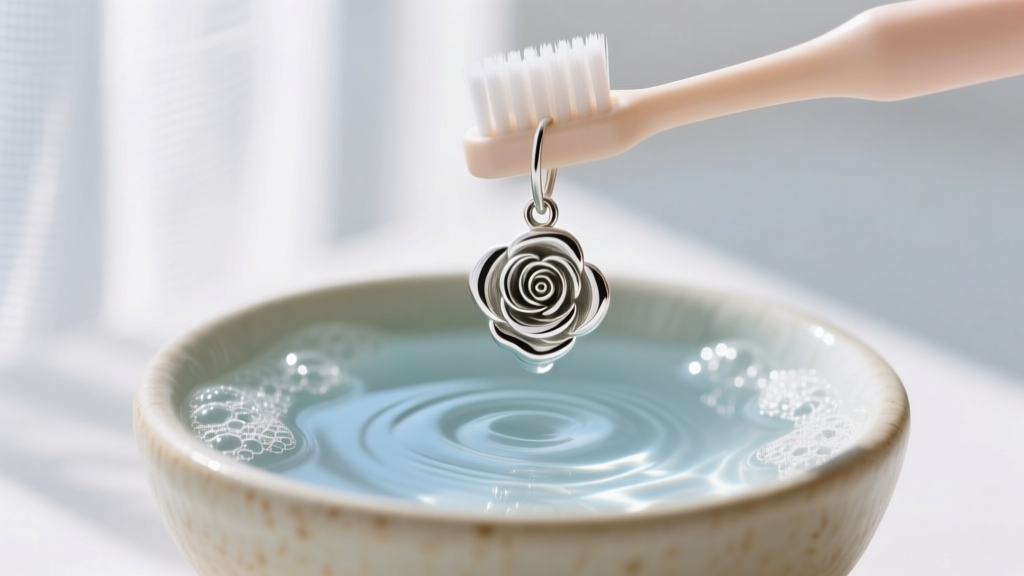
- Prepare the Solution: Mix three drops of phosphate-free, mild dish detergent (such as Dawn) into a small ceramic bowl of lukewarm distilled water. Tap water contains chlorine and heavy minerals that can leave microscopic water spots on high-polish metals.
- The Soak: Submerge the earrings for exactly 5 to 7 minutes. This softens hardened sebum and cosmetic buildup lodged between the floral elements. Do not exceed 10 minutes, especially if the earrings feature any glued components, as prolonged water exposure can weaken jewelry adhesives.
- Targeted Agitation: Using an extra-soft baby toothbrush (bristle diameter under 0.05mm), gently sweep the bristles along the grain of the metal. Focus on the jump rings connecting the drop to the post, and the underside of the floral basket where skin contact is highest.
- The Rinse: Rinse under a gentle stream of lukewarm distilled water. Ensure the drain is securely plugged or use a small mesh strainer to prevent catastrophic loss.
Drying and Polishing Crevices
Air drying is not recommended for intricate floral drops, as water tension can trap moisture in deep crevices, leading to localized tarnishing or rust on internal steel tension springs (if present in the clasp). Instead, use a can of compressed air to blast moisture out of the pavé settings and petal overlaps. Follow up by gently buffing the accessible high points with a clean, lint-free jeweler's microfiber cloth.
Maintaining Earring Posts, Gauges, and Clasps
The structural integrity of floral drop earrings relies heavily on the post and clasp mechanism. Because floral drops carry more weight than standard studs, they exert continuous downward leverage on the earlobe. To minimize this, jewelers typically use 20-gauge (0.81mm) or 22-gauge (0.64mm) posts. While this reduces weight, thinner gauges are highly susceptible to bending when inserted into the ear or when snagged on clothing.
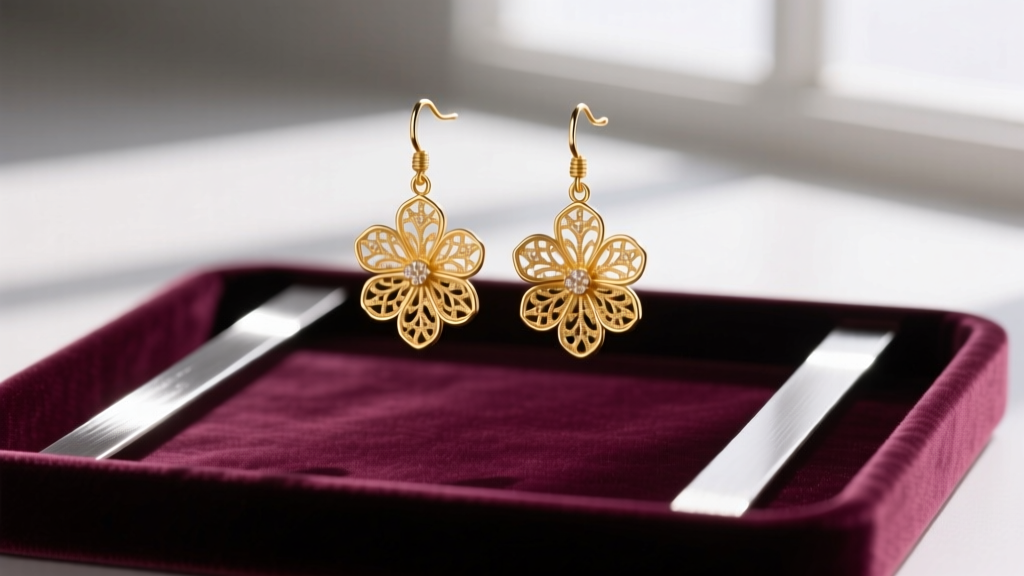
If your earring post bends, never attempt to bend it back with bare fingers or standard metal pliers, as this will work-harden the metal and cause it to snap, or leave deep gouges in the gold or silver. Instead, use nylon-jaw jewelry pliers to gently apply even pressure and straighten the post.
Friction backs (butterfly clasps) on drop earrings frequently loosen due to the pendulum motion of the floral element. To secure your earrings, upgrade to silicone friction backs or La Pousette locking backs. Silicone backs provide superior grip and cushion the earlobe against the heavier drop weight, preventing the earring from drooping forward and stretching the piercing hole over time.
Proper Storage to Prevent Petal Warping and Tarnish
How you store your floral drop earrings is just as critical as how you clean them. The protruding nature of floral petals makes them prone to crushing and warping when tossed into a communal jewelry box. Furthermore, sterling silver reacts with hydrogen sulfide in the air to form silver sulfide (tarnish).
- Individual Compartments: Store each pair in its own soft flannel pouch or a dedicated compartment in a lined jewelry box to prevent the metal petals from scratching adjacent gemstones.
- Anti-Tarnish Strips: Place 3M anti-tarnish strips inside your storage containers. These strips absorb airborne sulfur compounds and can prevent silver floral earrings from tarnishing for up to 6 months.
- Humidity Control: Never store jewelry in the bathroom. The high humidity and aerosolized chemicals from hairsprays and perfumes will rapidly degrade both metal finishes and porous gemstones like pearls or opals often used in floral centers.
- Hanging Storage: For elongated floral drops with chain elements, hang them on a multi-tier jewelry stand to prevent the chains from knotting, which is a common issue with articulated botanical designs.
What to Avoid: Common Mistakes That Ruin Floral Designs
Many well-intentioned jewelry owners inadvertently destroy their pieces by using outdated or overly aggressive cleaning methods. According to the Gemological Institute of America (GIA), one of the most common causes of damage to intricate jewelry is the misuse of ultrasonic cleaners. While ultrasonic machines are excellent for plain diamond solitaires, they operate using high-frequency sound waves (typically 20 to 40 kHz) that create microscopic cavitation bubbles in the cleaning solution.
In floral drop earrings, these violent vibrations can easily shake loose the tiny pavé stones held in delicate micro-prongs. Furthermore, if your floral earrings feature cold enamel or resin petals, the ultrasonic waves can cause micro-fractures, leading to cloudy, cracked, or completely shattered enamel work. Similarly, the Assay Office London warns against the use of harsh household chemicals like bleach or ammonia, which can permanently pit the surface of karat gold alloys and cause irreversible stress-corrosion cracking in the metal prongs holding your floral design together.
Conclusion
Caring for floral drop earrings requires a mindful, material-specific approach that prioritizes gentleness over aggressive polishing. By understanding the vulnerabilities of mixed media, utilizing the correct micro-cleaning tools, and upgrading your storage and clasp hardware, you can ensure your botanical statement pieces remain as vibrant and structurally sound as the day they were crafted. Regular, gentle maintenance will always outperform harsh, infrequent deep cleans, keeping your floral silhouettes blooming brilliantly year after year.


