How to Identify, Authenticate, and Clean IBB CN Earrings
Learn how to identify, authenticate, and safely clean IBB CN earrings. Step-by-step guide for testing 925 silver and plated jewelry marks.

Decoding the Mark: What Does IBB CN Actually Mean?
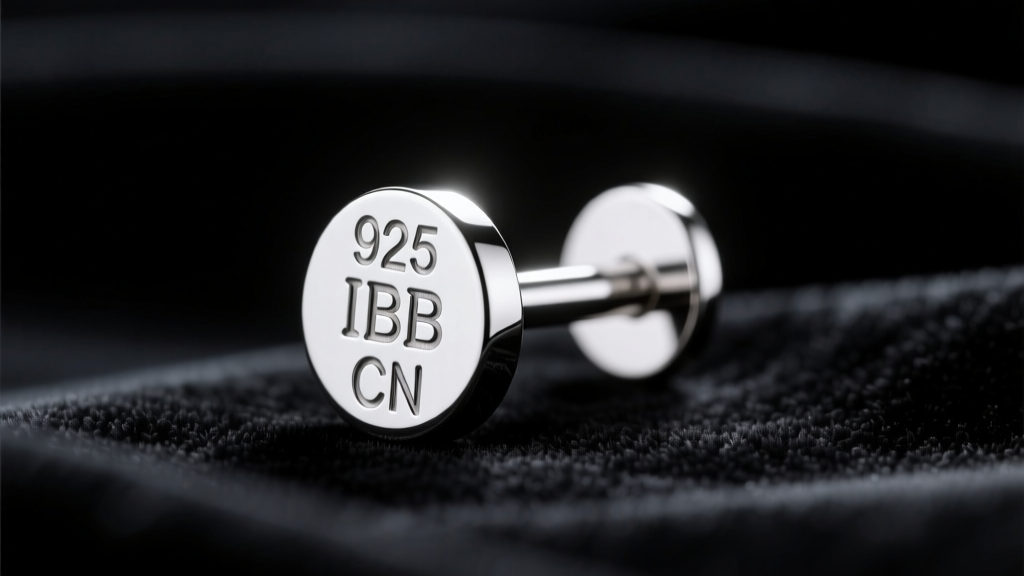
Finding a tiny, cryptic stamp on the post or clasp of your favorite earrings can feel like discovering a secret code. If you have flipped over a pair of studs or inspected the hinge of a hoop and spotted the markings "IBB CN" alongside a metal purity stamp like 925, you are looking at a specific intersection of global jewelry manufacturing. To properly care for these pieces in 2026, you first need to understand their origin.
The "CN" portion is straightforward: it is the internationally recognized country of origin mark for China, mandated by customs and trade regulations. The "IBB" stamp is a maker's mark or sponsor's mark. Historically, IBB has been associated with the International Bullion Broker or specific large-scale precious metal distributors and manufacturing houses that supply global jewelry brands. According to the Federal Trade Commission Jewelry Guides, any piece of jewelry stamped with a metal purity mark (like 925 for sterling silver) must also bear a registered maker's mark to ensure accountability and traceability.
However, because IBB CN earrings are mass-produced and widely distributed, the market is flooded with both genuine 925 sterling silver pieces and base-metal counterfeits bearing laser-etched fake stamps. This guide will walk you through the exact, step-by-step process of authenticating, testing, and restoring your IBB CN earrings to their original luster.
Step 1: Authenticating Your IBB CN Earrings
Before you apply any cleaning solutions or polishing cloths, you must verify the base metal. Treating a gold-plated brass earring like solid sterling silver will strip the plating and ruin the piece. Start with non-destructive testing methods.
The Visual and Magnetic Baseline Tests
First, examine the earring post. Genuine sterling silver IBB CN stud earrings typically feature a 20-gauge (0.8mm) or 18-gauge (1.0mm) post. If the post is unusually thick, overly rigid, or attracts a rare-earth neodymium magnet, you are likely dealing with a stainless steel or nickel-silver base metal. Pure silver and gold are diamagnetic, meaning they will not stick to a magnet. If your hoop earrings or drop earrings contain a steel spring inside the clasp mechanism, a slight magnetic pull at the hinge is normal, but the main body of the earring should remain completely non-magnetic.
Acid Testing for Silver Purity
If the magnet test is inconclusive, proceed to an acid test. You can purchase a standard precious metal testing kit online for under $15.
- Find a discreet area on the earring, such as the back of the butterfly clutch or the inside of the hoop.
- Use the provided testing stone to rub the metal, leaving a small, visible streak.
- Apply a single drop of 925 silver testing acid (usually a dark red or brown solution) to the streak.
- Observe the color change. A dark, blood-red color confirms 925 sterling silver. A brown or green color indicates a lower purity silver or a silver-plated base metal. A clear or blue tint means it is a non-silver base metal.
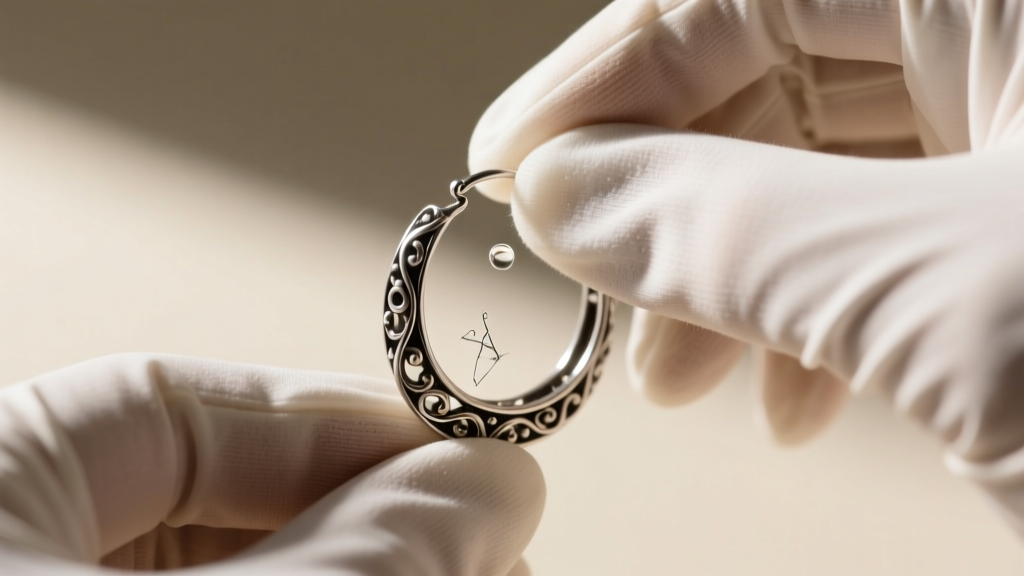
For a deeper understanding of how assay offices and laboratories verify these exact stamps, the Gemological Institute of America (GIA) provides extensive resources on metal identification and hallmarking standards that apply to global imports.
Step 2: Identifying the Metal Composition Matrix
Not all IBB CN earrings are created equal. The accompanying stamps dictate your exact cleaning protocol. Use the table below to identify your specific variant and its corresponding material makeup.
| Stamp Variation | Material Composition | Durability & Tarnish Profile | Recommended Cleaning Protocol |
|---|---|---|---|
| 925 IBB CN | Solid 92.5% Sterling Silver | High durability; prone to silver sulfide tarnish | Ion-Exchange Bath or Silver Polish |
| 14K GP IBB CN | 14K Gold Plated over Brass/Copper | Low durability; plating will wear over time | Mild Soap & Microfiber Only |
| 925 14K GC IBB CN | 14K Gold Vermeil over 925 Silver | Medium durability; thick gold layer over silver | Mild Soap; Avoid Abrasives |
| Rhodium IBB CN | 925 Silver with Rhodium Flash | Highly tarnish-resistant; scratches easily | Warm Water & Dish Soap |
Step 3: Step-by-Step Cleaning Protocols
Once you have confirmed your earrings are solid 925 sterling silver (and do not feature glued-in gemstones like turquoise, opal, or cubic zirconia), you can utilize the most effective, non-abrasive cleaning method known to jewelers: the ion-exchange aluminum foil bath.
Protocol A: The Ion-Exchange Bath (Solid Silver Only)
Tarnish on silver is primarily silver sulfide, a chemical reaction caused by sulfur in the air. This method reverses the chemical reaction without removing any of the underlying silver.
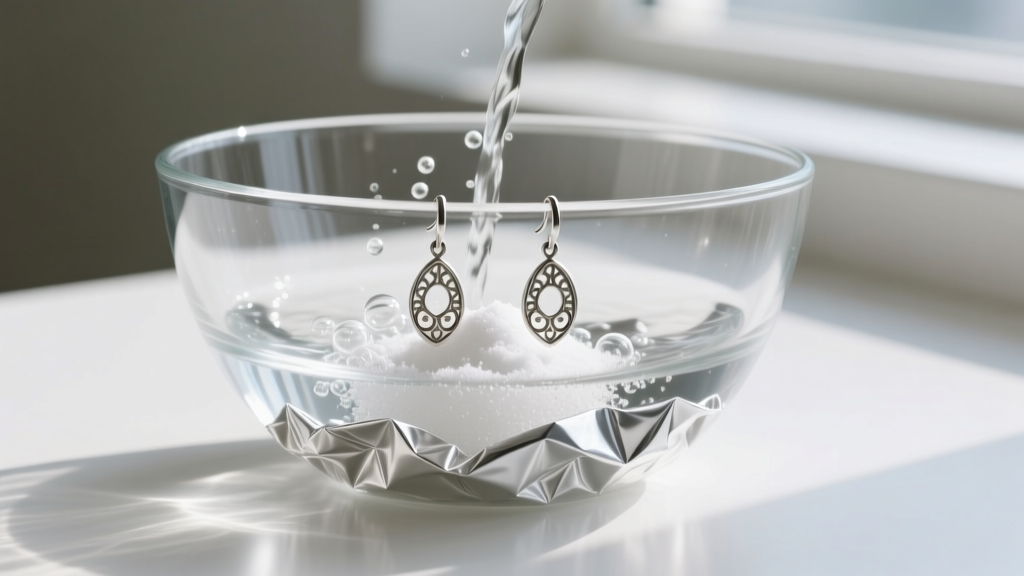
- Line a glass or ceramic bowl with aluminum foil, shiny side facing up.
- Place your tarnished 925 IBB CN earrings directly onto the foil. The silver must physically touch the aluminum.
- Boil a cup of distilled water and pour it into the bowl, ensuring the earrings are fully submerged.
- Add two tablespoons of sodium bicarbonate (baking soda). The water will bubble and release a slight sulfur (rotten egg) odor.
- Let the earrings sit for 3 to 5 minutes. You will watch the yellow and black tarnish literally transfer from the silver to the aluminum foil.
- Remove the earrings with plastic or wooden tongs (never metal, which can scratch), rinse under cool distilled water, and pat dry with a lint-free microfiber cloth.
Protocol B: Caring for Plated and Vermeil IBB CN Earrings
If your earrings are stamped 14K GP or feature a rhodium flash, the ion-exchange bath will destroy the plating. Instead, use a gentle surfactant method.
- Mix three drops of phosphate-free, mild dish soap into a bowl of lukewarm (not hot) water.
- Submerge the earrings for exactly 60 seconds to loosen sebum and cosmetic buildup.
- Use an ultra-soft, baby-hair toothbrush to gently sweep the crevices around the earring post and clutch.
- Rinse with cool water and immediately dry. Allowing plated jewelry to air-dry causes hard water spots that etch into the gold or rhodium layer.
Troubleshooting Common IBB CN Earring Issues
Even with meticulous care, mass-produced earrings encounter structural issues. Here is how to handle the most common problems specific to IBB CN imports.
Bent 20-Gauge Posts
Sterling silver is a relatively soft metal. If you sleep in your IBB CN studs, the 20-gauge posts will inevitably bend. Do not attempt to bend them back with your fingers, as this introduces micro-fractures that will eventually snap the post. Instead, use a pair of nylon-jaw jewelry pliers to gently apply even pressure and straighten the post. If the post snaps, a local jeweler can laser-weld a new sterling silver post for approximately $25 to $40.
Worn Rhodium Plating
Many 925 IBB CN earrings are coated in a microscopic layer of rhodium to prevent tarnish and provide a bright, white-gold-like finish. Over time, friction from the earlobe wears this away, revealing the slightly yellowish hue of raw sterling silver beneath. If your earrings look patchy, you can have them professionally re-rhodium plated. As of 2026, due to precious metal market fluctuations, expect to pay between $45 and $90 per pair for a high-quality, thick rhodium dip.
Expert Storage Tip: Never store your IBB CN silver earrings in the original cardboard or velvet-lined retail boxes. The adhesives used in commercial jewelry boxes often contain sulfur compounds that accelerate tarnishing. Instead, store them in individual, anti-tarnish ziplock bags with a piece of 3M anti-tarnish paper or a silica gel packet to control ambient humidity.
Final Thoughts on Maintaining Your Collection
The IBB CN stamp is a hallmark of globalized jewelry manufacturing, representing pieces that range from high-quality solid sterling silver to affordable fashion plate. By taking the time to properly authenticate your earrings with an acid test and matching your cleaning protocol to the exact metal composition, you can extend the lifespan of your jewelry by decades. Whether you are utilizing the ion-exchange method for heavy tarnish or gently washing gold vermeil, treating your earrings with technical precision ensures they remain a staple in your rotation for years to come.


