Material Guide: Choosing the Best Metals for Worm Earrings
Discover the best materials for worm earrings. We compare titanium, gold, and silver properties for segmented crawlers and articulated drops.

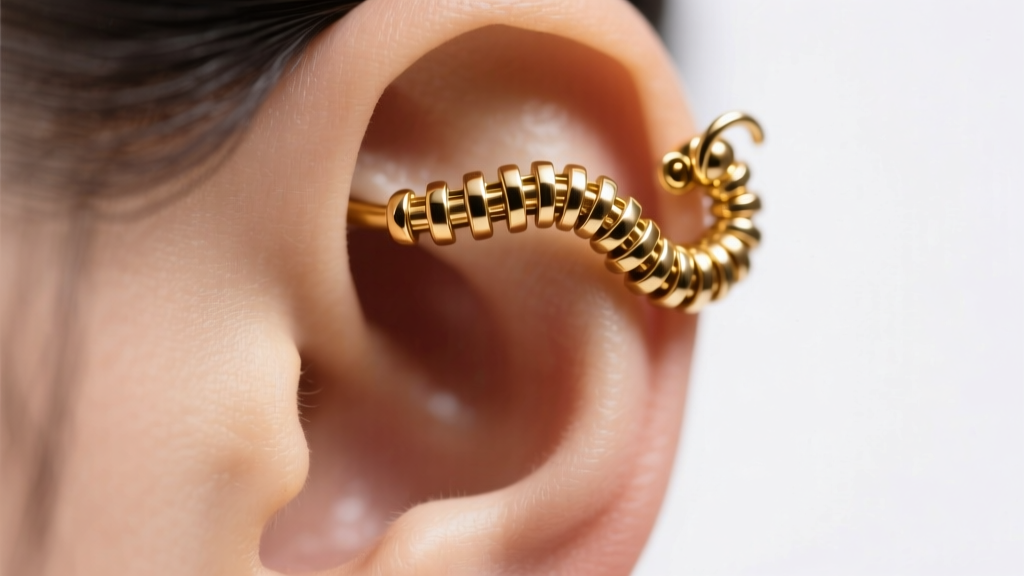
The Anatomy of Worm Earrings: Why Material Dictates Longevity
Worm earrings—characterized by their undulating, multi-segmented designs that mimic the fluid, crawling movement of a worm or caterpillar—have become a staple in both avant-garde and fine jewelry collections. Whether styled as an articulated drop earring that dangles from the lobe or a tension-fit cartilage crawler that wraps around the helix, these pieces present unique metallurgical challenges. Unlike a solid cast hoop or a simple stud, the defining feature of worm earrings is articulation. A rigid piece cannot achieve the illusion of movement. Therefore, designers must rely on micro-hinges, tension wires, or interlocking jump rings to create the segmented body.
Because of these mechanical stress points, the material properties of the metal used are not just a matter of aesthetics or skin sensitivity; they are a matter of structural survival. In 2026, advancements in micro-CNC machining have allowed for incredibly precise hinge mechanisms in fine jewelry, but the fundamental laws of metallurgy still apply. Choosing the wrong alloy for a segmented crawler will inevitably lead to work hardening, hinge shearing, or crevice corrosion. This guide breaks down the exact material properties required for high-quality worm earrings, helping you make an informed investment.
Metallurgical Breakdown: Top Alloys for Articulated Jewelry
When evaluating metals for multi-jointed jewelry, we must look beyond basic hypoallergenic claims and examine yield strength, fatigue resistance, and Vickers hardness (HV). Here is how the top three jewelry metals perform under the specific mechanical demands of worm earrings.
Implant-Grade Titanium (ASTM F136)
For cartilage crawlers and tension-fit worm cuffs, implant-grade titanium (specifically ASTM F136 Ti-6Al-4V) is the undisputed champion. Titanium possesses a high strength-to-weight ratio and exceptional fatigue resistance, meaning it can endure the repeated micro-flexing of a tension-fit ear cuff without snapping. With a Vickers hardness of approximately 350 HV, it holds hinge pins securely in place. Furthermore, titanium is completely inert, bypassing any risk of contact dermatitis on the highly sensitive helix or conch cartilage. The primary drawback is its high melting point, which makes traditional soldering of micro-hinges difficult, often requiring laser welding or cold-assembly techniques that drive up the manufacturing cost.
14k and 18k Solid Gold
Gold remains the premier choice for luxury articulated drop earrings, but the karat weight drastically alters its mechanical viability. Pure 24k gold is far too soft for any jointed jewelry. Even 18k gold (75% pure gold), with a Vickers hardness of roughly 130-150 HV, is often too malleable for the microscopic hinge pins required in worm earrings; the pins can bend or shear under the weight of the articulated segments. Therefore, 14k gold (58.5% pure gold, alloyed with copper, silver, or zinc) is the superior structural choice. Boasting a hardness of 180-220 HV, 14k gold provides the necessary rigidity to maintain hinge integrity while retaining the rich color and biocompatibility expected of fine jewelry. According to the Gemological Institute of America (GIA), the specific alloy mix in 14k gold also dictates its color and tarnish resistance, making it highly versatile for intricate segment detailing.
Sterling Silver (925) & Rhodium Plating
Sterling silver is highly accessible and easily cast into complex worm segments, but it is the most problematic metal for articulated designs. Silver has a low fatigue limit. When the micro-hinges of a silver worm earring are repeatedly opened, closed, or flexed, the metal undergoes work hardening and eventually develops microscopic stress fractures at the joints. To combat tarnish, many manufacturers apply rhodium plating. However, rhodium is extremely hard and brittle; at the friction points of a hinge, the plating will quickly wear away, exposing the raw silver to sweat and oxygen, leading to localized blackening that is nearly impossible to polish out of a micro-crevice.
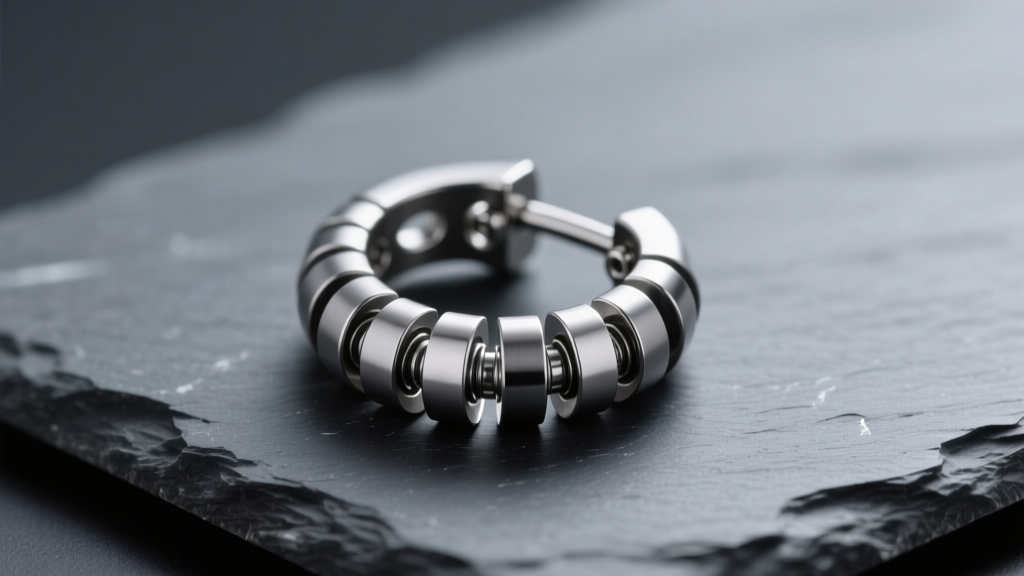
Comparative Data: Tensile Strength & Biocompatibility Matrix
The following table synthesizes the critical material data points relevant to the structural and biological demands of segmented ear jewelry. This framework should guide your purchasing decisions based on your specific piercing placement and lifestyle.
| Material | Yield Strength (MPa) | Vickers Hardness (HV) | Hinge Durability | Biocompatibility | Avg. Price Range (USD) |
|---|---|---|---|---|---|
| ASTM F136 Titanium | 830 - 900 | ~350 | Exceptional | Superior (Inert) | $85 - $250 |
| 14k Solid Gold | 350 - 450 | ~190 | Very Good | High (Nickel-free alloys) | $250 - $800+ |
| 18k Solid Gold | 250 - 300 | ~140 | Fair (Pins may bend) | High | $400 - $1,200+ |
| 925 Sterling Silver | 200 - 250 | ~65 | Poor (Fatigue cracking) | Moderate (Copper allergy risk) | $40 - $120 |
Critical Failure Modes in Segmented Earrings
Understanding how worm earrings fail is just as important as knowing which metals to buy. The complex geometry of these pieces introduces specific vulnerabilities that do not exist in standard stud or hoop earrings.
- Crevice Corrosion: The tiny gaps between the "segments" of a worm earring trap dead skin cells, sebum, and moisture. In lower-grade alloys or silver, this stagnant micro-environment causes rapid, localized corrosion that weakens the structural links.
- Galvanic Corrosion: To save costs, some manufacturers use stainless steel or brass for the internal hinge pins while casting the outer segments in gold or silver. When exposed to sweat (an electrolyte), these dissimilar metals create a galvanic cell, rapidly corroding the less noble metal and causing the hinge to seize or snap.
- Hinge Pin Shearing: If a drop-style worm earring is too heavy and the hinge pin is machined below 0.8mm in diameter, the sheer force of gravity combined with the kinetic movement of walking will eventually shear the pin, dropping the lower segments.
- Nickel Leaching at Joints: Even if the main body of the earring is nickel-free, the internal spring mechanisms or friction pins in the hinges are frequently made of nickel-bearing steel. The Association of Professional Piercers (APP) strictly advises against wearing mixed-metal assemblies in fresh or sensitive cartilage piercings due to the high risk of nickel sensitization.
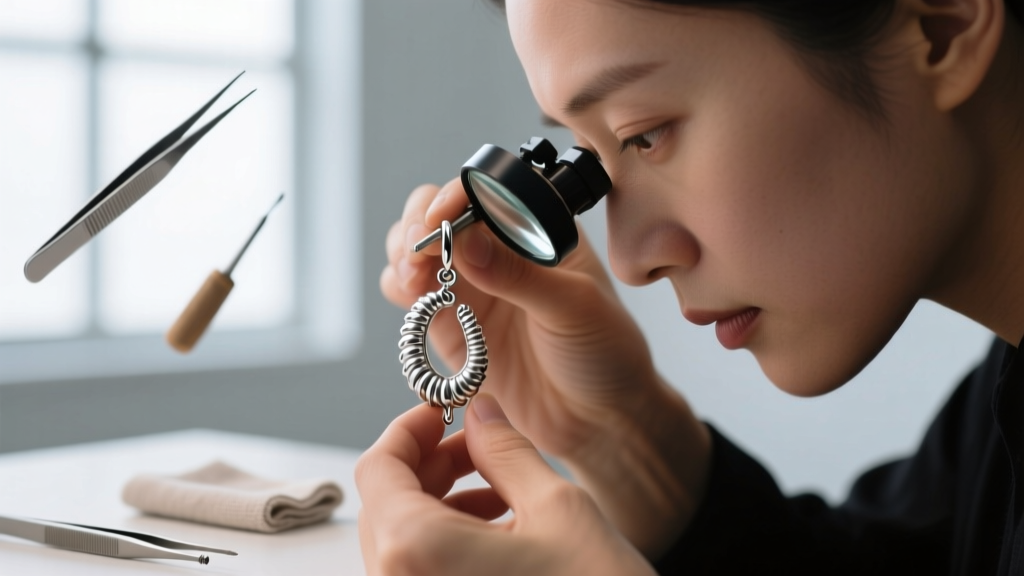
Sizing, Gauge, and Maintenance Protocols
For tension-fit cartilage worms, the gauge of the main wire is critical. A 16-gauge (1.2mm) wire provides the necessary structural memory to grip the ear without bending out of shape over time. Thinner 18-gauge (1.0mm) or 20-gauge (0.8mm) wires will warp within weeks of daily wear. For articulated drops, ensure the jump rings connecting the segments are soldered closed rather than simply butted together, preventing the segments from unlinking when caught on hair or clothing.
Maintenance requires a departure from standard jewelry care. Ultrasonic cleaners are highly effective for removing sebum from the crevices of worm earrings, but they can loosen the friction pins in poorly constructed hinges. For high-end gold or titanium worm earrings, a soak in warm distilled water with a few drops of mild, phosphate-free dish soap, followed by agitation with an extra-soft baby toothbrush, is the safest method to clear the segment gaps without compromising the micro-hinges. Never use steam cleaners on rhodium-plated silver worm cuffs, as the thermal shock can cause the plating to flake at the joints.
Expert Verdict: Which Material Should You Choose?
The ideal material for your worm earrings depends entirely on the earring's function and placement. If you are purchasing a tension-fit cartilage crawler that must grip the ear and endure micro-flexing, ASTM F136 Titanium is the only logical choice for long-term structural integrity and skin safety. If you are investing in a luxury articulated drop earring for the lobe, 14k Solid Gold offers the perfect balance of heirloom value, aesthetic warmth, and the mechanical hardness required to keep micro-hinges secure. Avoid sterling silver for any worm earring featuring moving parts; reserve silver only for solid-cast, rigid worm motifs where fatigue cracking is not a factor.
"In articulated jewelry, the metal is not just a canvas; it is a machine. Compromising on the alloy's yield strength to save on material costs guarantees a mechanical failure at the exact point where the piece is most vulnerable."


