Ruby and Pearl Earrings: A Gemologist's Material & Care Guide
Discover the gemological properties of ruby and pearl earrings. Compare Mohs hardness, grading systems, and expert care tips for mixed-material studs.

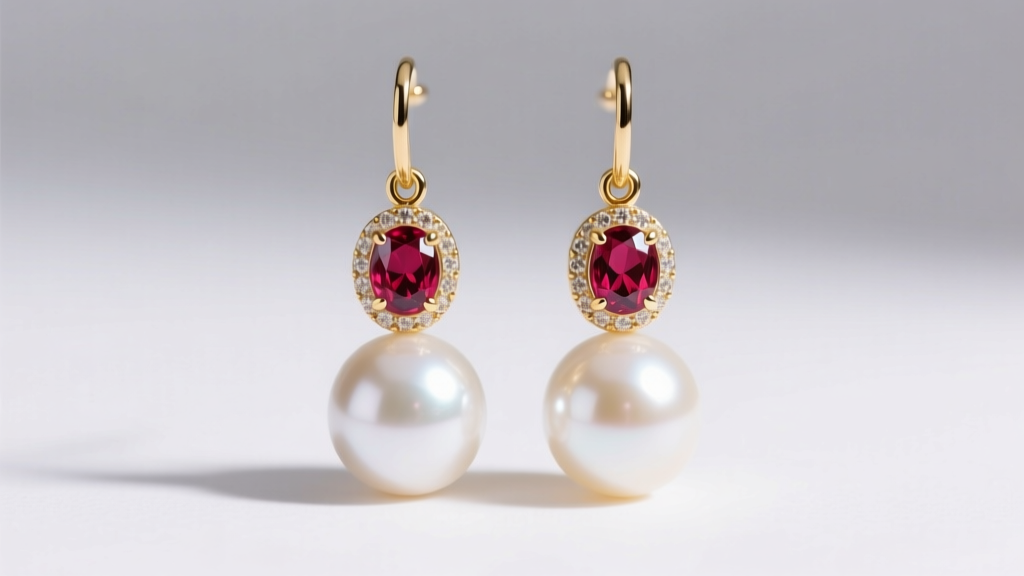
The Gemological Paradox: Corundum Meets Nacre
When you invest in ruby and pearl earrings, you are not just purchasing a beautiful piece of jewelry; you are uniting two of the most fundamentally different materials in the gemological world. On one hand, you have the ruby—a fiery, inorganic crystal composed of aluminum oxide (corundum) forged under extreme metamorphic heat and pressure. On the other, you have the pearl—an organic, biogenic gem created by living mollusks layering microscopic aragonite platelets and conchiolin protein over time.
This striking contrast creates a breathtaking aesthetic, but it also presents unique challenges in jewelry design, structural integrity, and daily wear. Understanding the distinct material properties of these two gems is essential for anyone looking to buy, wear, or maintain mixed-material fine jewelry. According to the Gemological Institute of America (GIA), corundum is one of the most durable gemstones on earth, while the GIA's pearl guide notes that organic gems require highly specific environmental conditions to prevent degradation.
Mohs Hardness & Durability: A Comparative Breakdown
The most critical factor when pairing a ruby and a pearl in a single earring design is their vast disparity in hardness. The Mohs scale is logarithmic, meaning a ruby at 9.0 is not just slightly harder than a pearl at 2.5; it is exponentially more resistant to scratching and abrasion. If these two materials are stored loosely together in a jewelry box, the ruby will effortlessly carve deep, permanent scratches into the pearl's delicate nacre.
| Material Component | Mohs Hardness | Structural Traits | Primary Vulnerabilities |
|---|---|---|---|
| Ruby (Corundum) | 9.0 | Excellent toughness, no true cleavage | Extreme thermal shock (if fracture-filled) |
| Pearl (Nacre) | 2.5 - 4.5 | Flexible organic matrix, prone to abrasion | Acids, cosmetics, ultrasonic cavitation |
| 18k Gold Setting | 2.5 - 3.0 | Malleable, secures the gems | Chlorine, mercury, physical bending |
| Jeweler's Epoxy | N/A | Bonds half-drilled pearls to metal posts | Heat, acetone, prolonged water exposure |
Because of this hardness gap, jewelers must meticulously engineer ruby and pearl earrings to ensure the gems never physically rub against one another during wear. Drop earrings and dangles are the most common silhouettes for this pairing, as they allow the ruby to act as the primary stud or top motif, while the pearl dangles safely below on a separate axis.
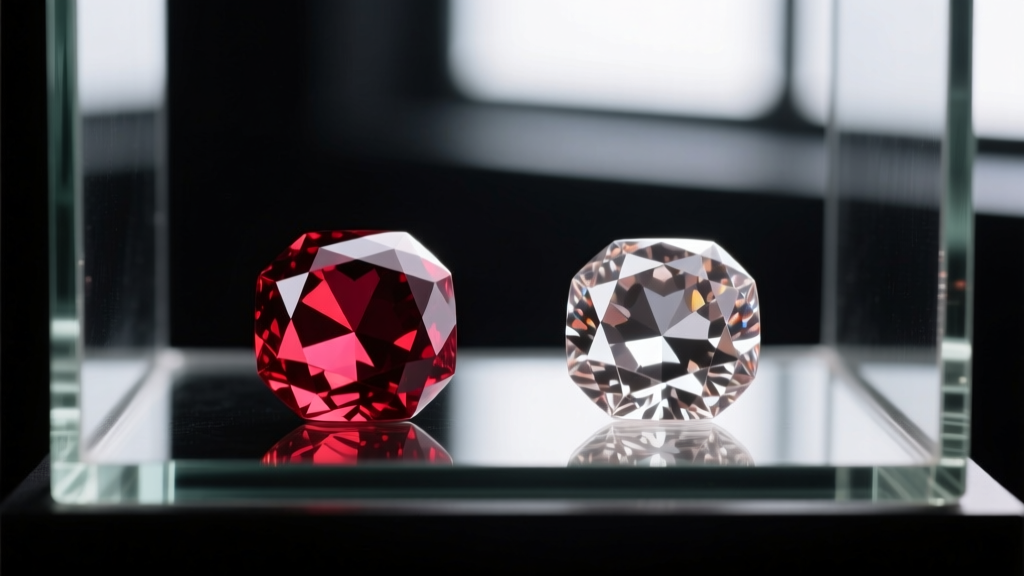
Grading Systems: Evaluating Your Ruby and Pearl Earrings
Appraising a piece of jewelry that features both a precious gemstone and an organic gem requires fluency in two entirely different grading vocabularies. Here is what you need to look for when evaluating the quality of the materials.
Ruby Grading: Color, Clarity, and Treatment
Rubies are evaluated primarily on color saturation. The most coveted designation is "Pigeon's Blood" (a vivid, highly saturated red with a slight purplish secondary hue and strong UV fluorescence). Clarity is secondary; rubies are Type II gemstones, meaning natural inclusions (like rutile silk) are expected and actually serve as proof of natural, earth-mined origin. However, you must verify the treatment status. An unheated ruby commands a massive premium (often 50% to 150% more than a heated equivalent). Conversely, "fracture-filled" or "lead-glass filled" rubies are heavily treated, low-value stones that are extremely fragile and should never be paired with high-quality pearls.
Pearl Grading: Luster, Nacre, and Surface
Unlike rubies, pearls are not graded by a universal laboratory standard, but top-tier jewelers rely on the AAA-A system or specific trade designations like "Hanadama" (the highest grade of Japanese Akoya pearls). When examining the pearls in your earrings, prioritize luster (the sharpness of light reflection on the surface) and nacre thickness. A high-quality Akoya pearl should have a nacre thickness of at least 0.4mm, while a White South Sea pearl should boast 2.0mm to 4.0mm of nacre. Thin-nacre pearls will eventually peel or crack, especially when subjected to the tension of earring posts.
Setting Styles & The Epoxy Problem
The structural engineering of ruby and pearl earrings reveals a fascinating secret of the jewelry trade: the two gems are almost never set the same way. While the ruby is typically secured using traditional metal prongs or a bezel setting, the pearl is usually half-drilled and mounted onto a metal peg using a two-part jeweler's epoxy resin.
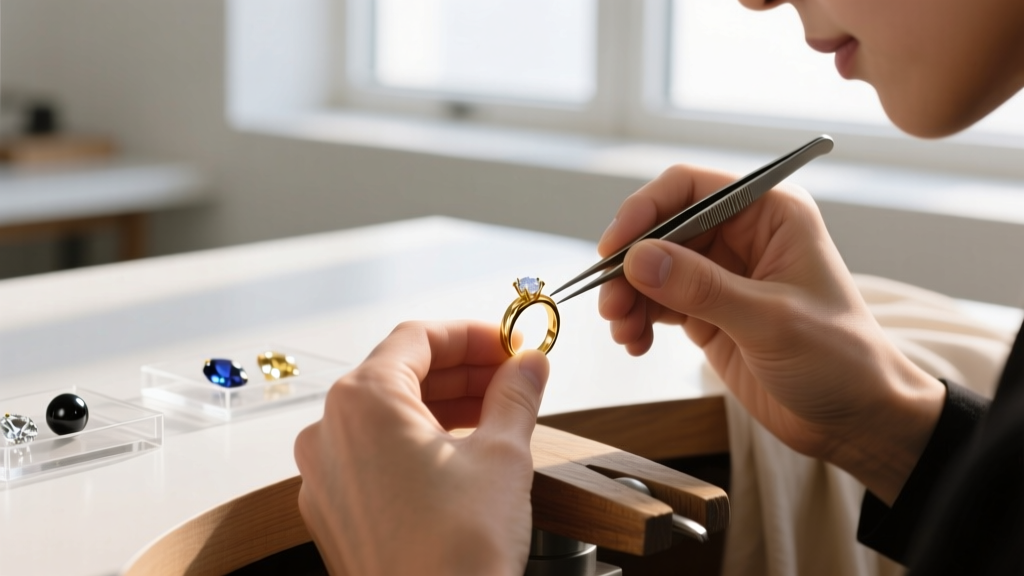
This creates a significant maintenance hazard. If a ruby prong becomes loose and requires tightening with jewelry pliers, or if the earring post needs to be laser-welded, the ambient heat transferred through the gold can melt or degrade the epoxy holding the pearl. Furthermore, applying too much lateral pressure to the pearl while tightening the ruby's setting can snap the pearl's drill hole. Always take ruby and pearl earrings to a master jeweler who understands the thermal and physical limits of organic gem adhesives, rather than a standard mall kiosk repair shop.
Expert Care & Cleaning Protocols
Cleaning mixed-material earrings requires a cautious, conservative approach. The golden rule for ruby and pearl earrings is to completely avoid ultrasonic and steam cleaners. While an untreated ruby can easily survive an ultrasonic bath, the high-frequency cavitation will strip the pearl's luster, and the heat will instantly dissolve the epoxy bond, causing the pearl to fall off and potentially shatter on the sink floor.
- The Wipe-Down Method: After every wear, gently wipe the pearls with a clean, slightly damp microfiber cloth to remove skin oils and acidic perspiration that can etch the nacre over time.
- Mild Soap Wash: Once a month, use a drop of pH-neutral baby shampoo in lukewarm water. Dip a soft baby toothbrush into the solution and gently brush the ruby and the gold setting. Avoid scrubbing the pearl directly; simply let the soapy water run over it.
- The 'Last On, First Off' Rule: Always put your earrings on after applying hairspray, perfume, and cosmetics. The alcohol and volatile organic compounds in beauty products can dehydrate the pearl's conchiolin matrix, leading to microscopic cracking.
- Isolated Storage: Store the earrings in a dedicated, soft-lined pouch. Never drop them loose into a communal jewelry box where diamond or ruby accents from other pieces can scratch the pearl.
Gemologist's Note: If you live in a highly arid climate or frequently travel in airplane cabins, the lack of humidity can dehydrate organic gems. Occasionally wiping your pearls with a minuscule drop of pure, unscented mineral oil on a soft cloth can help maintain their moisture balance and prevent the nacre from crazing.
Pricing Tiers & Investment Value
The market for ruby and pearl earrings spans a wide spectrum, heavily dictated by the origin of the ruby and the cultivation method of the pearl. Here is a realistic breakdown of what to expect in the current fine jewelry market:
- Commercial Grade ($150 - $600): Features heavily heat-treated or fracture-filled rubies paired with commercial-grade freshwater or thin-nacre Akoya pearls. Settings are typically 10k gold, sterling silver, or gold vermeil. These are fashionable but hold no intrinsic investment value.
- Fine Jewelry Grade ($1,200 - $4,500): Features eye-clean, lightly heated (or unheated) rubies of good saturation paired with Hanadama-certified Akoya or mid-tier White South Sea pearls. Settings are solid 14k or 18k gold with secure, well-engineered epoxy pegs and sturdy ruby prongs.
- High Jewelry / Investment Grade ($8,000 - $50,000+): Features GRS or Gübelin-certified unheated Burmese or Mozambican "Pigeon's Blood" rubies paired with perfectly matched, thick-nacre South Sea pearls exhibiting exceptional orient and overtone. Settings are often platinum or 18k gold, sometimes accented with D-F color diamond halos to bridge the two primary gems.
By understanding the profound material differences between corundum and nacre, you can confidently select, wear, and preserve ruby and pearl earrings that will remain structurally sound and visually stunning for generations.


