Mens Earrings Black Finish Care: PVD, Enamel & Onyx Guide
Learn how to clean and maintain black men's earrings. Expert care tips for PVD coatings, black enamel, and onyx inlays to prevent fading and damage.

The Anatomy of Black Finishes in Men's Jewelry
When shopping for mens earrings black finishes and dark gemstones remain a dominant aesthetic choice, offering a sleek, masculine edge that traditional metals sometimes lack. However, maintaining these dark tones requires a nuanced understanding of jewelry metallurgy and gemology. Unlike raw silver or gold, black earrings are rarely solid black metal. They are typically achieved through surface treatments like Physical Vapor Deposition (PVD), electroplated black rhodium, vitreous enamel, or the use of dark gemstones like black onyx and obsidian. Each of these materials reacts differently to environmental stressors, skin pH, and cleaning chemicals.
Understanding the exact composition of your jewelry is the first step in preventing premature fading, chipping, or cloudiness. A 2026 industry report on men's jewelry trends highlights that while dark finishes are more popular than ever, consumer complaints regarding coating degradation have risen proportionally. This is largely due to the misuse of ultrasonic cleaners and harsh chemical dips that strip delicate dark coatings. To preserve the integrity of your jewelry, you must abandon one-size-fits-all cleaning routines and adopt material-specific protocols.
Daily Maintenance for Black PVD and Titanium
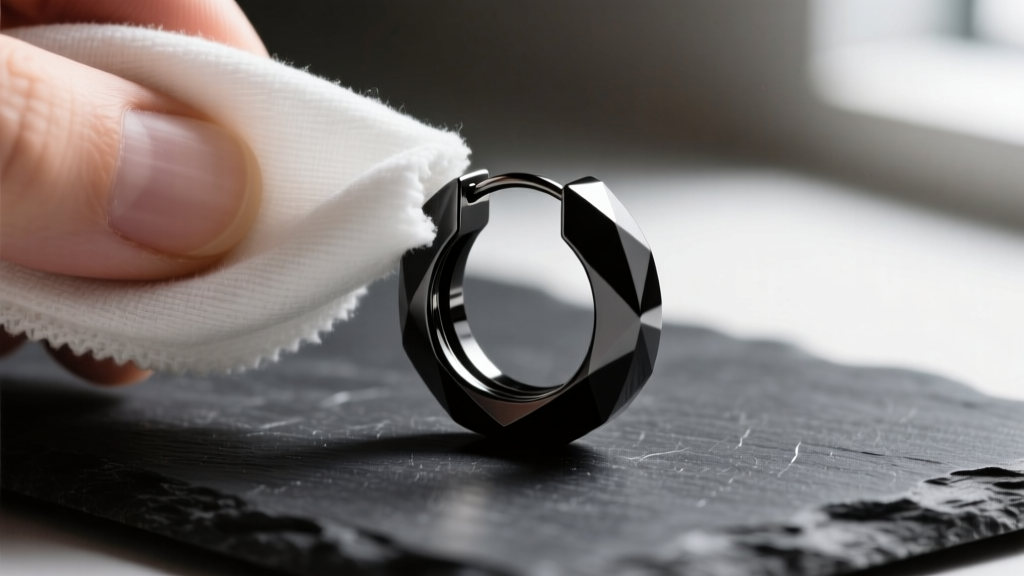
Physical Vapor Deposition (PVD) is the gold standard for black metal jewelry. In this process, materials like titanium or zirconium are vaporized in a vacuum chamber and bonded to a stainless steel or titanium base at the molecular level. A high-quality black PVD coating is typically between 0.5 and 1.5 microns thick and boasts a Mohs hardness that resists everyday scratching far better than traditional electroplating. However, PVD is not invincible. The accumulation of sebum, dead skin cells, and environmental pollutants can create a cloudy film that dulls the deep black luster.
For daily maintenance, avoid commercial jewelry dips, ammonia-based cleaners, and chlorine. Instead, create a mild cleaning solution using one part gentle dish soap (like Dawn) to ten parts distilled water. Tap water contains chlorine and hard minerals that can leave microscopic calcium deposits on black surfaces, causing them to look perpetually smudged. Submerge your PVD earrings for three to five minutes, then gently agitate the water. Use a soft-bristled baby toothbrush to lightly sweep away debris, rinse thoroughly in distilled water, and pat dry with a lint-free microfiber cloth. Never use paper towels, as the wood pulp fibers will inflict micro-scratches on the PVD surface over time.
The Hinge and Threading Challenge in 14G and 16G Hoops
For men wearing black PVD clicker hoops or segment rings in standard 14-gauge (1.6mm) or 16-gauge (1.2mm) sizes, the hinge mechanism and threading are the primary failure points for hygiene. The barrel of a clicker hinge easily traps sebum and soap scum, which can eventually cause the mechanism to stiffen or fail. To clean these tight tolerances without scratching the black coating, use a soft, 0.4mm interdental brush. Gently pass the brush through the hinge gap while the earring is submerged in your soapy distilled water solution. Avoid using metal sewing needles or hard toothpicks, which can scrape the PVD coating off the internal moving parts, leading to rust and friction.
Caring for Black Onyx and Dyed Agate Inlays
Black onyx is a staple in men's signet rings and stud earrings, prized for its deep, opaque, glassy luster. However, gemological reality dictates that almost all commercial black onyx is actually gray chalcedony or agate that has been treated using a centuries-old sugar-acid process. According to the Gemological Institute of America (GIA), this dye treatment is generally stable, but the stone itself requires careful handling. Onyx sits at a 6.5 to 7 on the Mohs hardness scale, meaning it can be easily scratched by quartz dust (which is present in everyday household dust and dirt).
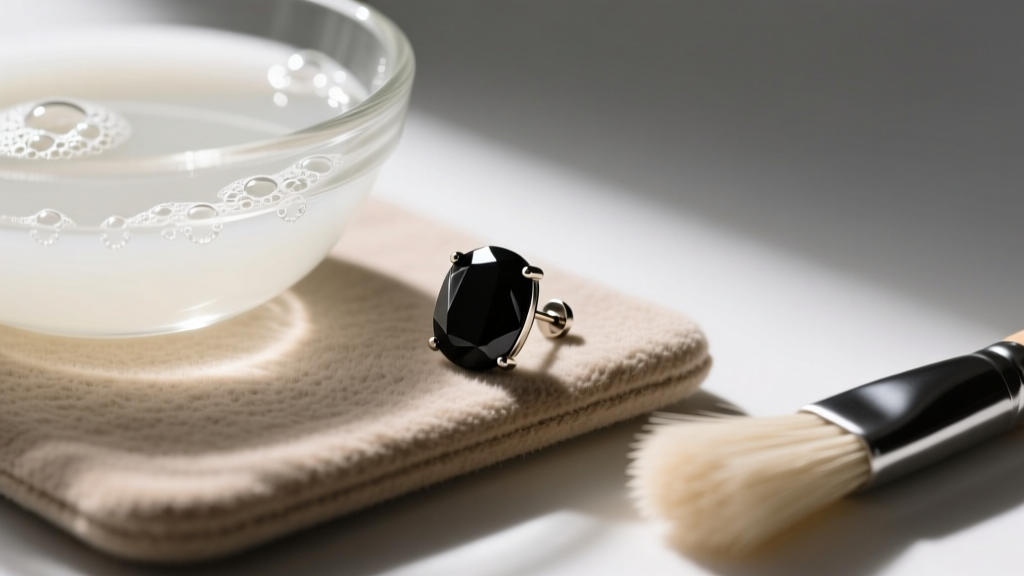
Crucially, you must never place black onyx earrings in an ultrasonic cleaner. The high-frequency vibrations can cause internal fractures, especially in stones that have pre-existing microscopic stress lines from the cutting process. Furthermore, exposure to extreme heat or prolonged soaking in harsh chemical solvents can potentially leach the dye, causing the stone to revert to its natural, splotchy gray appearance. Clean onyx inlays using only a damp microfiber cloth. If the stone is set in a black PVD or black rhodium bezel, use a cotton swab dipped in distilled water to carefully trace the bezel edge, lifting away dirt without dragging it across the gemstone's highly polished surface.
The Enamel Dilemma: Vitreous vs. Cold Enamel
Black enamel earrings offer a glossy, ink-like finish that is highly sought after in minimalist menswear. The care protocol depends entirely on the type of enamel used. Vitreous enamel is essentially glass powder fused to metal at temperatures exceeding 1,400°F. It is highly durable, scratch-resistant, and impervious to most chemicals. You can clean vitreous enamel with standard soapy water and a soft brush without fear of damaging the finish.
Cold enamel, on the other hand, is a modern epoxy or resin-based alternative. While it mimics the look of vitreous enamel, it is significantly softer and highly susceptible to chemical degradation. Alcohol-based products, hand sanitizers, and colognes will break down the molecular bonds of cold enamel, causing it to yellow, crack, or peel away from the metal base. If your black enamel earrings feel slightly warm to the touch or have a subtle plastic-like resonance when tapped, they are likely cold enamel. Clean these strictly with a dry, soft cloth and keep them far away from any aerosolized grooming products.
Material Compatibility Matrix
Using the wrong cleaning method is the fastest way to ruin dark jewelry. Refer to the table below to ensure your maintenance routine aligns with your earring's specific material composition.
| Material / Finish | Ultrasonic Cleaner | Steam Cleaning | Chemical Dips | Recommended Method |
|---|---|---|---|---|
| Black PVD (Titanium/Steel) | Safe (with caution) | No | No | Mild soap, distilled water, microfiber |
| Black Rhodium Plating | No | No | No | Damp cloth only; avoid all friction |
| Black Onyx / Dyed Agate | No | No | No | Damp cloth; avoid heat and solvents |
| Vitreous Enamel | Safe | Safe | No | Soapy water, soft brush |
| Cold Enamel (Resin) | No | No | No | Dry microfiber cloth only |
Long-Term Storage and Wear Prevention
Proper storage is just as critical as active cleaning. Black rhodium, which is an electroplated finish often used over sterling silver or white gold, is notoriously thin and soft. Unlike PVD, black rhodium will naturally wear away over time due to friction, revealing the lighter metal beneath. To extend the life of black rhodium earrings, they must be stored individually in soft flannel pouches to prevent contact with other jewelry. Never toss multiple pairs of earrings into a shared valet tray or drawer; the friction from daily movement will act like sandpaper against delicate dark platings.

For long-term storage, consider the environment. While PVD and onyx are relatively stable, the base metals or silver backings of your earrings can still oxidize if exposed to high humidity and sulfur in the air. Utilizing anti-tarnish silica gel packets inside your jewelry box or storage pouches will absorb excess moisture and airborne sulfur compounds. According to metallurgical guidelines from Rio Grande Jewelry Supply, controlling the micro-climate of your jewelry storage can extend the lifespan of delicate platings and prevent the base metal from compromising the structural integrity of the dark finish above it. By combining precise cleaning techniques with disciplined storage habits, your black earrings will maintain their dark, sophisticated aesthetic for years to come.


