Golden Earring Band Members Style: Gold Hoop Buying Guide
Channel 70s rock legends with our buying guide to golden earring band members style. Discover gauge sizes, gold grades, and vintage hoop closures.

The Legacy of 70s Rocker Jewelry
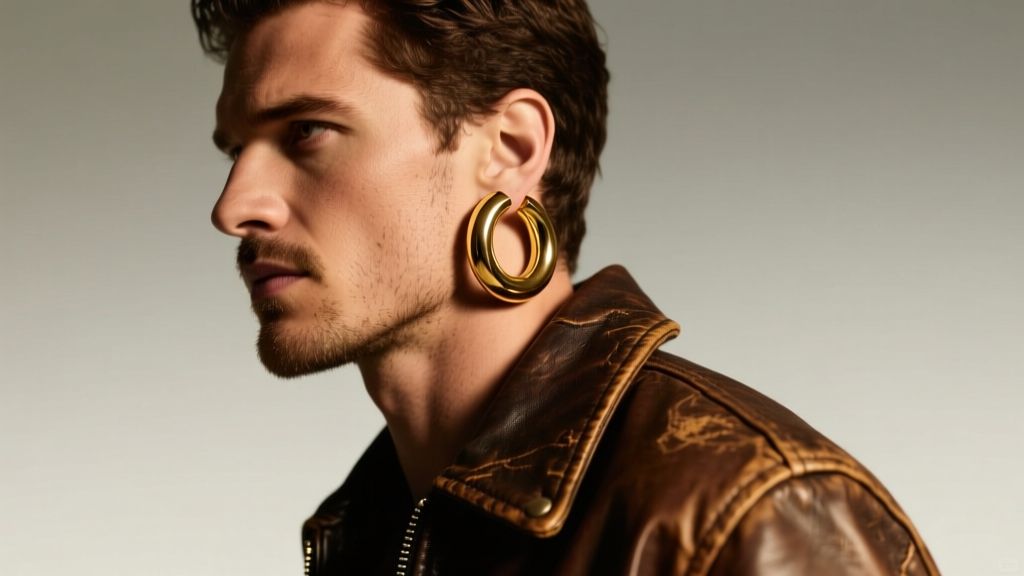
When analyzing the iconic style of golden earring band members from the 1970s and 80s Dutch rock scene, one cannot overlook the profound impact of their jewelry choices. Legends like George Kooymans and Barry Hay didn't just write anthems like 'Radar Love'; they defined a rugged, bohemian aesthetic that blended heavy metal with earthy, tribal motifs. Today, replicating the aesthetic popularized by golden earring band members requires more than just buying any gold hoop. It demands an understanding of metallurgical grades, structural weight, and the specific hardware that allows a statement piece to survive a rock tour—or a modern daily commute.
In this 2026 buying guide, we deconstruct the exact specifications you need to look for when shopping for classic rock-inspired gold earrings. Whether you are targeting the medium-sized tubular hoops of the mid-70s or the eclectic, etched dangles of the early 80s, understanding the anatomy of these pieces is critical for comfort, longevity, and authentic style.
Sizing, Gauge, and Weight Dynamics
The quintessential rocker hoop sits right on the jawline, typically ranging from 35mm to 50mm in diameter. However, the most common mistake buyers make is ignoring the wire gauge and the resulting weight. Standard ear piercings are usually done at 18-gauge (1.0mm) or 16-gauge (1.2mm). The heavy, masculine hoops worn by rock icons were historically crafted in much thicker wire—often 12-gauge (2.0mm) or 10-gauge (2.5mm).
Tubular vs. Solid Wire Construction
If you opt for a 45mm hoop in solid 14k gold wire, the earring can easily exceed 9 grams per piece. This weight will cause severe lobe fatigue and eventually stretch the piercing downward. To achieve the bold, thick profile of a 10-gauge earring without the punishing weight, you must look for tubular gold construction. A 40mm tubular hoop crafted from hollow 14k gold typically weighs between 3.5 and 5 grams, offering the exact visual heft of the 1970s era while remaining comfortable for all-day wear.
Material Grades: Solid Gold vs. Vermeil
The warm, rich glow of vintage rock jewelry comes from high-karat gold alloys. According to the Gemological Institute of America (GIA), 14k gold (58.5% pure gold) offers the ideal balance of durability and color for everyday hoop earrings. The copper and silver alloys mixed into 14k gold provide the structural integrity needed to prevent the hoop from bending out of shape when removed.
However, 18k gold (75% pure gold) provides a deeper, more buttery yellow hue that closely mimics vintage 70s pieces. Because 18k is softer, it is highly recommended to only purchase 18k hoops if they feature a reinforced closure or a thicker structural profile.
The FTC Standard for Vermeil
If solid gold is outside your budget, gold vermeil is the only acceptable alternative for this aesthetic. Do not settle for standard gold plating, which will wear off within months. The Federal Trade Commission (FTC) strictly defines vermeil as a sterling silver base coated with a minimum of 2.5 microns of 10k, 14k, or 18k gold. When shopping, always verify the micron thickness; anything less will quickly expose the silver underneath, ruining the vintage illusion.
| Material Type | Gold Purity | Base Metal | Expected Lifespan | Price Range (40mm Hoops) |
|---|---|---|---|---|
| 14k Solid Gold | 58.5% | N/A (Alloyed) | Lifetime | $450 - $800 |
| 18k Solid Gold | 75.0% | N/A (Alloyed) | Lifetime | $650 - $1,200 |
| Gold Vermeil | 10k - 18k | 925 Sterling Silver | 2 - 5 Years | $80 - $150 |
| Gold Plated | Varies | Brass / Steel | 6 - 12 Months | $20 - $50 |
Hardware That Survives the Tour
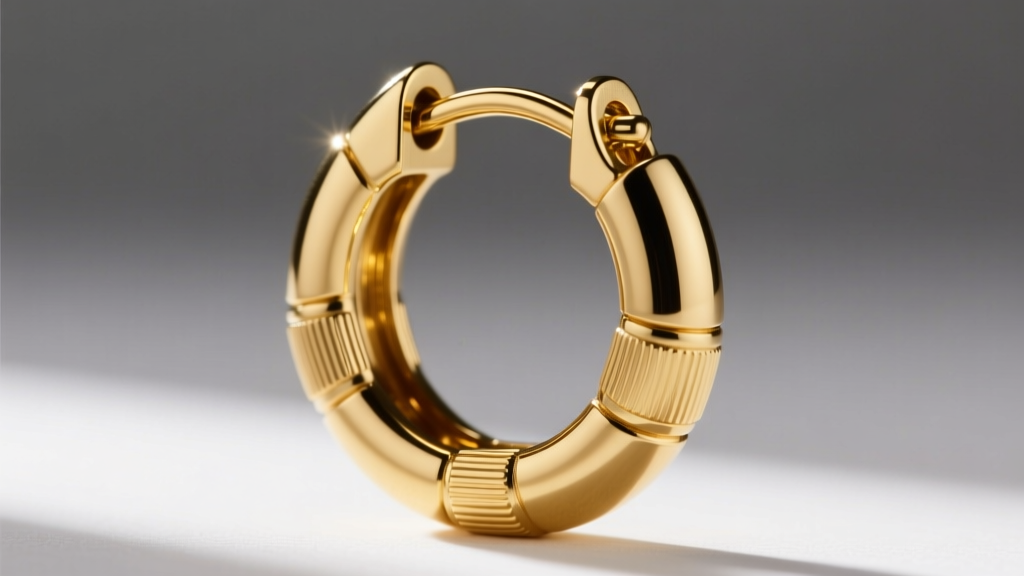
The closure mechanism is the most critical point of failure on any hoop earring. The classic rock aesthetic demands a seamless look, but vintage pieces often suffered from lost earrings due to weak wires. When buying modern replicas or vintage-inspired pieces, prioritize these three closure types:
- Saddleback Hinge: This features a hinged post that snaps securely into a grooved latch on the opposite side of the hoop. It provides a seamless, continuous circle appearance and is highly secure against accidental snags on clothing or guitar straps.
- Clicker Ring: Originally designed for cartilage and septum piercings, the hinged clicker is now widely used in 12-gauge lobe hoops. It produces an audible 'click' when closed, ensuring the segment is perfectly flush and locked.
- French Wire (for Dangles): If you are leaning into the bohemian dangle style, ensure the French wire has a slightly thicker gauge and consider purchasing clear silicone earring backs to prevent loss during active movement.
Bohemian Dangles and Tribal Motifs
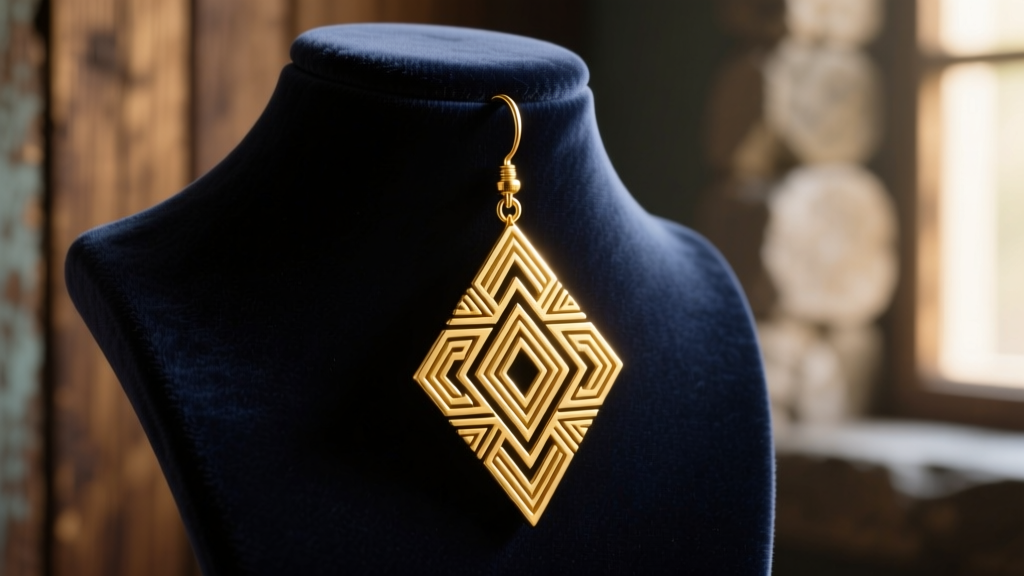
Beyond the standard hoop, the eclectic style of the era heavily featured dangle earrings with geometric, tribal, or sunburst etchings. These pieces were often inspired by global travels and the bohemian counterculture movement. When buying etched dangles, look for deep relief engraving rather than superficial laser etching. Deep relief catches the light dynamically and retains the dark patina (oxidation) in the grooves, which highlights the intricate patterns and gives the earring an authentic, aged vintage feel.
Weight distribution is paramount for dangles. A top-heavy dangle will pull the piercing forward and cause discomfort. Look for designs where the center of gravity sits just below the earlobe, utilizing a wide, flat French wire hook to distribute the pressure across a larger surface area of the piercing channel.
Face Shape and Proportion Pairing
While the rock-and-roll attitude is universal, the physical proportions of your earrings should complement your facial structure to achieve the most flattering look:
- Square Jawlines: Opt for rounded, tubular hoops between 40mm and 50mm. The continuous curve softens angular features and draws the eye downward, mimicking the effortless cool of 70s frontmen.
- Round Faces: Choose slightly elongated oval hoops or dangles with vertical geometric motifs. This adds necessary verticality and structure, preventing the face from looking overly wide.
- Heart-Shaped Faces: Medium-sized hoops (30mm to 35mm) that end just at the jawline work best, adding subtle width to the lower half of the face without overwhelming the forehead.
Care and Patina Maintenance
Authentic vintage-style gold jewelry shouldn't look like it was manufactured yesterday. A slight patina adds character and depth, especially on tribal-etched pieces. To maintain this look, avoid ultrasonic cleaners and harsh chemical dips, which will strip the oxidation from the crevices and leave the piece looking flat and overly polished.
Instead, clean your solid gold or vermeil earrings using a mild, phosphate-free dish soap and a soft-bristled baby toothbrush. Gently brush the surface to remove skin oils and environmental dust, but leave the recessed areas untouched. Dry immediately with a microfiber cloth to prevent water spots. For solid 14k or 18k gold, you can occasionally use a dedicated jewelry polishing cloth on the high-relief areas to maintain a brilliant shine that contrasts beautifully with the darker, textured grooves.


