Budget Earrings and Headphones: A Comfort & Value Guide
Discover the best budget earrings and headphones combinations for all-day comfort. Compare flat-backs, huggies, and materials to maximize value.

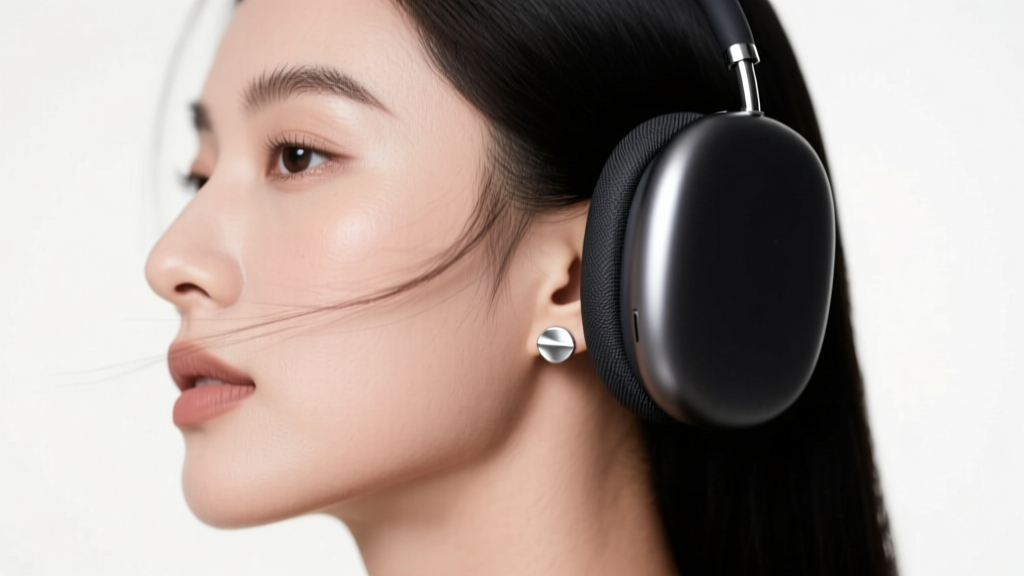
As we navigate the audio landscape of 2026, the latest generation of spatial audio earbuds and adaptive ANC over-ear headphones have become permanent fixtures on our heads. But for jewelry lovers, this daily tech integration presents a unique biomechanical challenge. The clash between earrings and headphones is a frequent source of ear fatigue, contact dermatitis, and damaged jewelry. When assessing budget versus value, the cheapest option on the jewelry counter often becomes the most expensive when it ruins your listening experience or causes an earlobe infection.
This guide cuts through the fluff to evaluate the true cost, material science, and ergonomic clearance required to comfortably wear earrings alongside modern audio gear. We will explore exact gauge sizes, material grades, and structural designs that offer the highest return on investment for heavy headphone users.
The Hidden Cost of Cheap Earrings and Headphones
Most budget-friendly stud earrings under $15 utilize the traditional "butterfly" or "friction" back. While fine for occasional wear, this design is a catastrophic failure point when paired with over-ear headphones like the Sony WH-1000XM series or Apple AirPods Max.
Over-ear headphones exert a clamping force typically ranging from 3 to 5 Newtons to maintain a seal for active noise cancellation. When the memory foam ear pads compress against your ear, a standard 10mm butterfly back acts as a rigid fulcrum. The sharp post is driven directly into the mastoid bone or the back of the earlobe, leading to pressure necrosis, localized swelling, and micro-tears in the fistula (the piercing hole).
The Value Assessment: A $10 pair of butterfly-back studs might seem like a bargain, but the resulting earlobe tenderness will force you to remove your headphones every 45 minutes. Upgrading to a $25 flat-back labret eliminates this pressure point entirely, offering exponential value in daily comfort and wear-time.
Material Value: Why Implant-Grade Titanium Wins
When evaluating budget jewelry, material composition is where consumers are most frequently misled. The term "surgical steel" is unregulated and usually refers to 316L stainless steel, which contains 8% to 10.5% nickel.
The environment inside an over-ear headphone cup is a microclimate of elevated heat and trapped humidity. According to the Association of Professional Piercers (APP), this damp, warm environment accelerates the leaching of nickel salts from 316L steel. When combined with the friction of taking headphones on and off, this creates a high risk for allergic contact dermatitis.
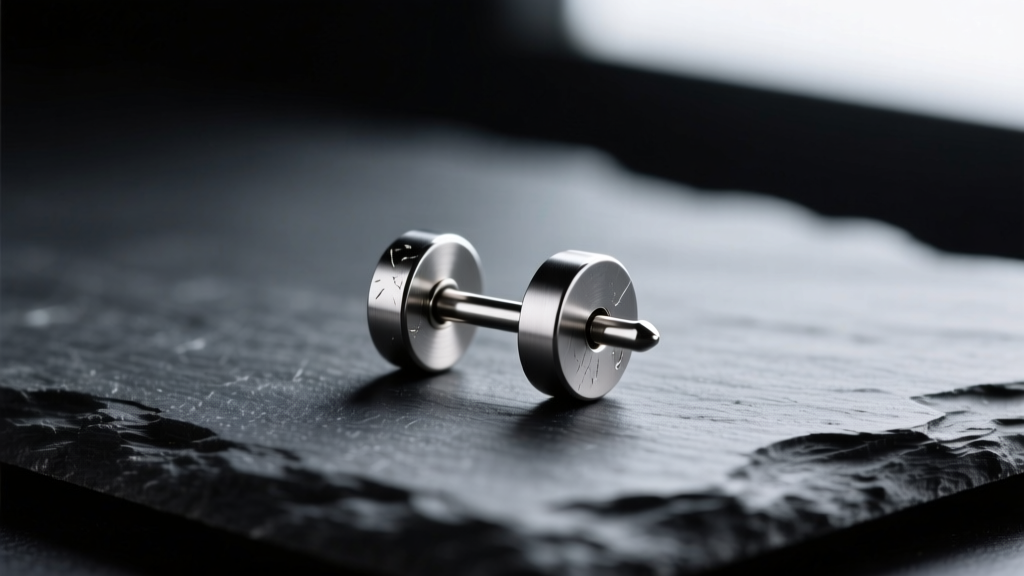
The ASTM F-136 Standard
For the best value, bypass "hypoallergenic" marketing buzzwords and look specifically for ASTM F-136 implant-grade titanium. This alloy contains zero nickel and boasts a highly polished mirror finish that resists bacterial adhesion. Brands like NeoMetal and BodyArt4U offer threadless titanium flat-backs in the $20 to $35 range. While the initial outlay is double that of mall-kiosk steel, the longevity and biocompatibility make the cost-per-wear infinitesimally small.
Clearance and Gauge: The Physics of Ear Fatigue
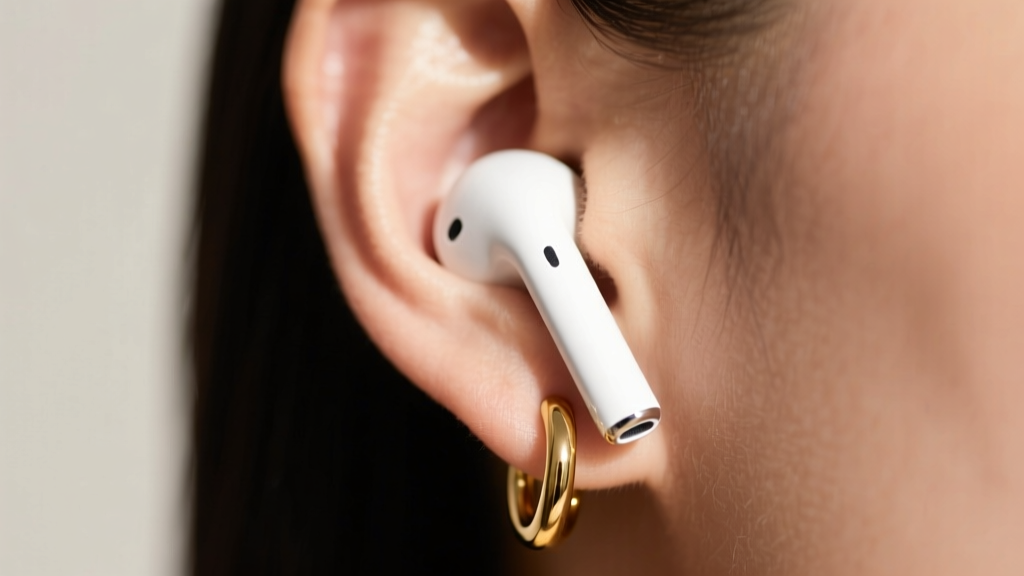
If you prefer in-ear monitors (IEMs) or true wireless stereo (TWS) earbuds with protruding stems, your primary concern shifts from clamping pressure to physical clearance. Dangle earrings and large hoops will constantly clack against plastic earbud stems, creating annoying acoustic feedback and physically dragging on your piercing.
Optimal Gauge and Post Lengths
- Standard Lobe Piercings: Usually pierced at 18G (1.0mm) or 20G (0.8mm). For headphone wearers, an 18G post offers slightly more structural rigidity against the lateral pressure of headphone bands.
- Cartilage / Helix Piercings: Standardized at 16G (1.2mm). Never downsize to 18G or 20G for cartilage, as the thinner metal acts like a cheese wire under the weight of over-ear pads.
- Post Length: For healed lobes, a 6mm or 8mm flat-back post is ideal. Anything longer (10mm+) will leave a gap that catches on the headphone's inner fabric mesh.
Budget Breakdown: Studs, Huggies, and Threadless Ends
To help you allocate your jewelry budget effectively, we have categorized the most common earring types by their compatibility with modern audio gear. This matrix highlights where your money is best spent.
| Earring Type | Budget Range | Headphone Compatibility | Value Score |
|---|---|---|---|
| Flat-Back Labret (Threadless) | $25 - $45 | Excellent (Over-Ear & IEM) | Very High |
| Seamless Huggie (9-11mm ID) | $20 - $40 | Excellent (Over-Ear), Good (IEM) | High |
| Butterfly Friction Stud | $5 - $15 | Poor (Causes Pressure Necrosis) | Low |
| Standard Dangle / Drop | $15 - $50 | Terrible (Snags on Stems & Pads) | Very Low |
| Internally Threaded Hoop | $30 - $60 | Fair (Can snag on memory foam) | Medium |
Note: ID stands for Inner Diameter. For huggies, an ID of 9mm to 11mm ensures the jewelry hugs the earlobe tightly without leaving a gap for earbud stems to catch on.
Real-World Troubleshooting: Snags and Pressure Points
Even with the correct style, budget manufacturing can introduce microscopic flaws that become major irritants when combined with the friction of headphones. Here is how to troubleshoot and maintain your jewelry for seamless tech integration.
The Cotton Swab Burr Test
Cheaply machined budget jewelry often has micro-burrs near the hinge of a huggie or the setting of a gemstone. When an over-ear headphone pad presses against the earring, these invisible burrs scrape the skin. The Fix: Run a standard cotton swab over every surface and hinge of your budget earrings. If the cotton snags or pulls, the jewelry has a burr that will damage your skin under headphone pressure. Use a fine-grit jeweler's file or return the piece.
PVD Coating vs. Solid Gold
Many budget brands offer "gold" huggies for under $20. These are typically brass or steel plated with PVD (Physical Vapor Deposition) gold. While PVD is durable, the constant friction of sliding over-ear headphones on and off will eventually wear the coating down to the base metal over 12 to 18 months. If you wear headphones for more than 4 hours a day, investing in solid 14k gold or high-quality gold-vermeil over sterling silver offers vastly superior long-term value, preventing the green skin oxidation associated with exposed brass.
Final Verdict on Value
The intersection of earrings and headphones requires a shift in how we define jewelry value. A cheap price tag is irrelevant if the earring's geometry causes pain or its metallurgy triggers an allergic reaction under the heat of an ANC earcup. By investing in ASTM F-136 titanium flat-backs, utilizing threadless push-pin technology, and respecting the physical clearance limits of your specific audio gear, you can achieve an all-day, zero-fatigue setup that protects both your piercings and your listening experience.


