What to Clean Earrings With: Safe Solutions by Material
Discover exactly what to clean earrings with based on your jewelry's material. Expert guides for gold, silver, titanium, and delicate gemstones.

The Golden Rule: Match the Cleaner to the Metal
Knowing exactly what to clean earrings with is the difference between preserving a family heirloom and permanently ruining a delicate gemstone. Every day, your earrings accumulate sebum, dead skin cells, cosmetic residues, and environmental pollutants. For standard 20-gauge or 18-gauge earring posts, this microscopic debris traps bacteria against the skin, which the American Academy of Dermatology notes can trigger localized contact dermatitis or piercing irritation.
However, the biggest mistake beginners make is treating all jewelry the same. A cleaning solution that makes a diamond sparkle can instantly dissolve the nacre on a pearl or strip the rhodium plating off white gold. To maintain the structural integrity and luster of your collection, you must tailor your cleaning agents to the specific metallurgical and gemological properties of your earrings.
What to Clean Earrings With: Material-by-Material Breakdown
Solid Gold (14k/18k), Platinum, and Lab-Grown Diamonds
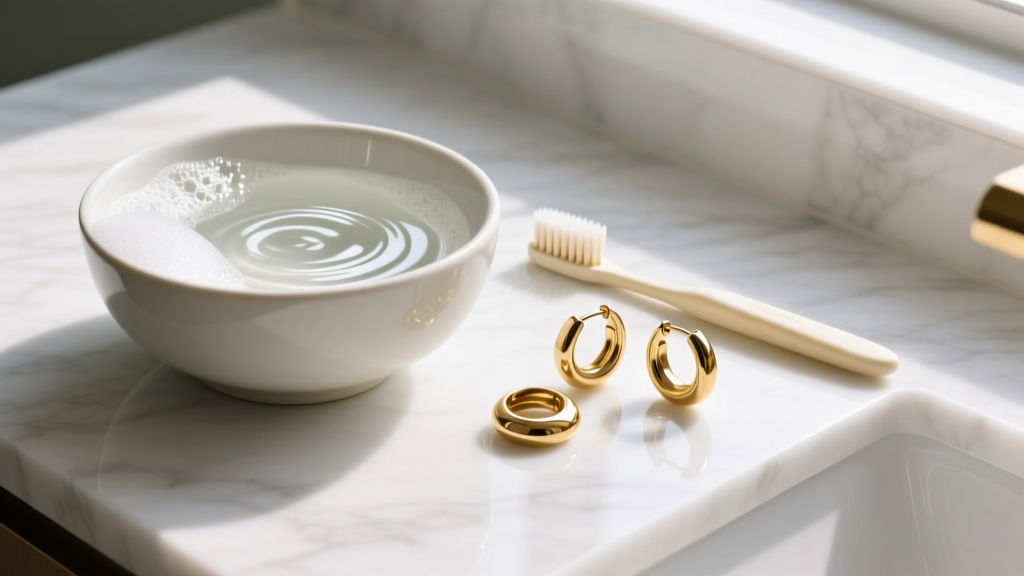
Solid gold and platinum are highly stable, non-reactive metals. The safest and most effective cleaner for these pieces is a pH-neutral liquid dish soap (like original blue Dawn) mixed with warm distilled water. The surfactants in the soap break down the lipid bonds of skin oils without attacking the metal alloys. Use a soft-bristled baby toothbrush to gently agitate the area where the earring post meets the backing or clutch, as this is where the most debris accumulates. For lab-grown and natural diamonds, this method safely removes the grease film that dulls their refractive index.
Sterling Silver (925) and Oxidization
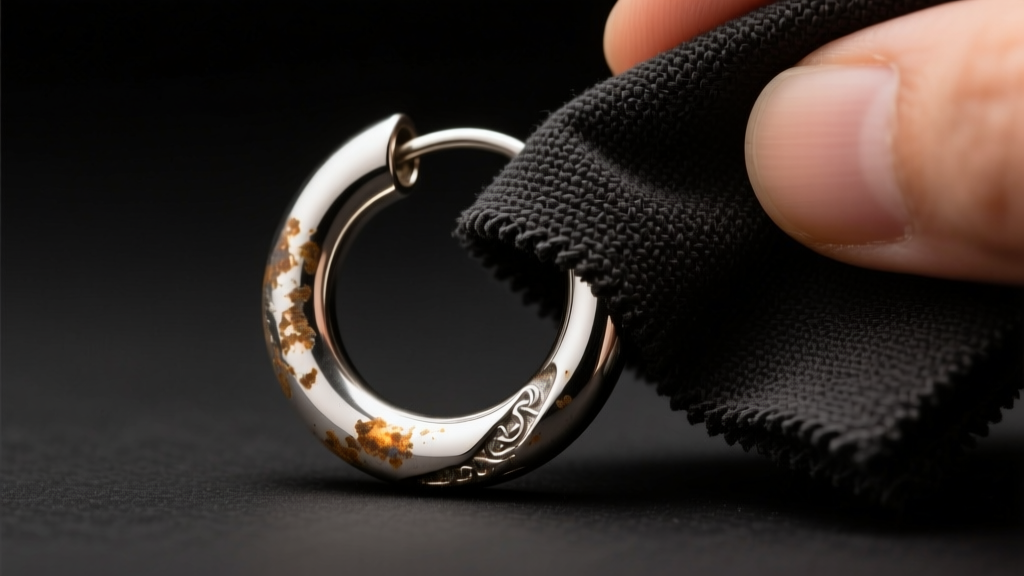
Sterling silver is an alloy containing 92.5% pure silver and 7.5% copper. It is the copper that reacts with sulfur in the air to create silver sulfide, commonly known as tarnish. For light tarnish, use a specialized jeweler's polishing cloth impregnated with micro-abrasives and anti-tarnish agents. For heavy, blackened tarnish on solid silver pieces without gemstones, you can use an electrochemical bath: line a glass bowl with aluminum foil, add boiling water, a tablespoon of baking soda, and a pinch of salt. The sulfur transfers from the silver to the aluminum. Note: Never use liquid silver dips on oxidized (blackened) silver designs, as they will strip the intentional dark patina.
Implant-Grade Titanium and Surgical Steel
Titanium (specifically ASTM F136 implant-grade) and 316L surgical steel are the gold standards for fresh piercings and sensitive ears due to their biocompatibility and lack of nickel. To clean these, avoid harsh chemicals, alcohols, and hydrogen peroxide, which can dry out the surrounding tissue and degrade the metal's passive oxide layer. Instead, use a sterile 0.9% sodium chloride saline wound wash. Spray it directly onto the earring and wipe away softened crusties with a non-woven gauze pad.
Porous Organics: Pearls, Opals, and Coral
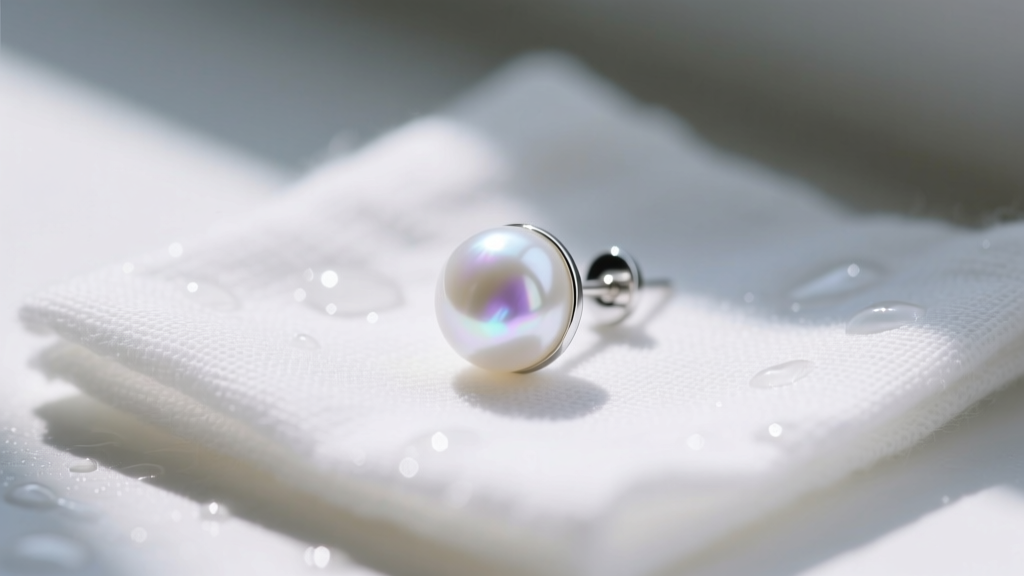
Organic gemstones are incredibly delicate. According to the GIA Gem Encyclopedia, pearls rank a mere 2.5 on the Mohs hardness scale, making them highly susceptible to scratching and chemical erosion. Never soak pearls or opals in water, and never expose them to ultrasonic cleaners. The vibrations can shatter opals, and water can dissolve the silk thread or epoxy used in pearl settings. Simply wipe them down after every wear with a slightly damp, lint-free microfiber cloth to remove acidic skin oils.
The Compatibility Matrix: What to Use and What to Avoid
Use this quick-reference table to ensure you are using the correct chemical agents for your specific earring materials.
| Material | Safe Cleaners | Unsafe Cleaners | Recommended Frequency |
|---|---|---|---|
| 14k/18k Solid Gold | pH-neutral dish soap, warm water | Bleach, chlorine, toothpaste | Bi-weekly |
| Sterling Silver (925) | Jeweler's rouge cloth, aluminum foil bath | Liquid dips (on stones), rubber bands | Monthly or as needed |
| Titanium / Steel | 0.9% Sterile saline, mild antibacterial soap | Rubbing alcohol, hydrogen peroxide | Daily (for healing), Weekly (healed) |
| Pearls & Opals | Damp microfiber cloth only | Ultrasonics, steam, ammonia, vinegar | After every wear |
| Gold Vermeil / Plated | Warm water, gentle wipe | Polishing cloths, toothbrushes, dips | Monthly (gentle wipe only) |
Step-by-Step: The 10-Minute Deep Clean Routine
For standard metal and hard-gemstone earrings (gold, platinum, diamonds, sapphires), follow this professional-grade cleaning protocol:
- Prepare the Bath: Fill a small ceramic bowl with warm (not hot) distilled water. Add three drops of pH-neutral dish soap. Avoid tap water, as hard water minerals can leave microscopic calcium deposits on your gems.
- Soak: Submerge the earrings for 3 to 5 minutes. This softens hardened sebum and cosmetic buildup around the prongs and earring clutches.
- Agitate: Using a brand-new, ultra-soft baby toothbrush, gently brush the earring. Pay special attention to the back of the gemstone setting, where lotion and dead skin trap light-blocking grease.
- Rinse: Rinse the earrings under a gentle stream of lukewarm distilled water. Ensure the drain is plugged or use a mesh strainer to prevent losing small stud earrings.
- Dry: Pat dry with a clean, lint-free microfiber cloth. Avoid paper towels or tissue paper, as their wood-pulp fibers can cause micro-scratches on highly polished metal surfaces.
Common Beginner Mistakes That Ruin Jewelry
When searching for what to clean earrings with, the internet is full of dangerous DIY hacks. Avoid these common pitfalls:
- Using Toothpaste: Toothpaste contains hydrated silica and other abrasives designed to strip plaque from enamel. On jewelry, these abrasives will leave a matte, scratched finish on high-polish gold and silver.
- Boiling Water for Gemstones: While boiling water might sanitize solid metal, it causes thermal shock in gemstones. Emeralds are often fracture-filled with oils that will melt and leak out in boiling water, turning the stone cloudy. Opals contain up to 20% water; boiling them will cause rapid dehydration and catastrophic cracking (crazing).
- Ultrasonic Cleaners for Fractured Stones: Ultrasonic cleaners use high-frequency sound waves to create microscopic cavitation bubbles. If a diamond or sapphire has a feather inclusion or surface-reaching fracture, these vibrations can literally shatter the stone from the inside out.
Pro-Tip for Earring Backs: Don't forget to clean the earring backs (clutches, omega clips, or screw-backs). These components harbor more bacteria and dead skin than the front of the earring. Soak them in the same soapy solution, but use a wooden toothpick to carefully dig out compacted debris from the internal threading or grooves.
When to See a Professional Jeweler
While home maintenance is excellent for daily hygiene, certain situations require professional intervention. If your diamond or sapphire stud feels loose when you gently tap it with a wooden toothpick, the prongs have likely worn down. Do not attempt to clean it in an ultrasonic machine, as the vibrations will dislodge the stone entirely. Take it to a certified bench jeweler who can use a microscope to check the prong tension, tighten the settings, and give it a professional steam clean. Furthermore, if your white gold earrings are looking distinctly yellow, no amount of cleaning will fix it; the rhodium plating has worn off and requires professional re-plating.


