Girl With a Pearl Earring Description of the Painting: A Buyer's Guide
Explore the girl with a pearl earring description of the painting to master buying large, high-luster pearl studs. Your ultimate Vermeer jewelry guide.


Johannes Vermeer’s 1665 masterpiece has captivated art lovers and jewelry enthusiasts for centuries. When analyzing the girl with a pearl earring description of the painting, art historians and gemologists alike are drawn to the singular, luminous piece of jewelry that gives the work its name. The painting is not just a cultural touchstone; it is a masterclass in light, reflection, and the visual weight of fine jewelry. For modern buyers seeking to capture this exact magic, Vermeer’s work serves as the ultimate technical spec sheet.
In this 2026 buying guide, we will decode the anatomy of Vermeer’s iconic pearl, translating 17th-century artistic techniques into actionable, modern jewelry-buying metrics. From millimeter sizing and luster grades to the structural engineering required to support heavy pearl studs, here is everything you need to know to purchase your own masterpiece.
Decoding the Masterpiece: The Art History and Optical Illusions
To buy a pearl that mimics the painting, we must first understand what Vermeer actually painted. According to the Mauritshuis museum, the official home of the artwork in The Hague, the earring is defined by its striking specular highlights. Vermeer used just a few deliberate brushstrokes of pure white lead paint to create the illusion of a highly reflective, spherical surface catching the light from an unseen window.
Interestingly, the girl with a pearl earring description of the painting often sparks debate regarding the pearl's shape. While it appears round at first glance, the elongated reflection and the way it hangs suggest it may actually be a teardrop or a slightly baroque (irregular) pearl, which were highly prized in the 17th century. However, to achieve the iconic "Vermeer look" in modern jewelry, buyers typically seek perfectly round or near-round pearls with exceptional mirror-like luster.
Sizing the "Vermeer" Pearl: Millimeters Matter
The most striking aspect of the painting is the sheer scale of the earring. If we map the proportions of the pearl against the subject's facial features, the earring would measure roughly 14mm to 18mm in diameter in real life. This is a massive pearl by modern standards.
When shopping, you must understand pearl sizing metrics:
- 6mm - 8mm: Standard, delicate stud earrings. Far too small to achieve the Vermeer aesthetic.
- 9mm - 11mm: The upper limit for high-quality Akoya pearls. Prominent, but still lacks the dramatic, heavy droop seen in the painting.
- 12mm - 15mm: The sweet spot for replicating the painting. This size provides the necessary visual weight and begins to pull slightly on the earlobe, mimicking the tension Vermeer painted.
- 16mm - 18mm+: Statement sizes. Extremely rare in saltwater varieties and commands luxury pricing.
Chasing the Specular Highlight: Luster and Nacre Thickness
Vermeer’s bright white highlight indicates a pearl with "Excellent" luster. The Gemological Institute of America (GIA) defines excellent luster as reflections that are bright, sharp, and distinct. A pearl with poor or chalky luster will scatter light, completely ruining the moody, high-contrast aesthetic of the painting.

To ensure you are buying a pearl with the correct optical properties, you must look at the nacre thickness and the luster grade. In 2026, the market has seen a surge in high-grade Edison freshwater pearls that offer thick nacre and sharp luster at a fraction of the cost of saltwater alternatives. However, for the absolute sharpest reflections, White South Sea pearls remain the gold standard.
Pearl Type Comparison Chart for the Vermeer Look
| Pearl Type | Typical Size Range | Luster Profile | Estimated Price (14mm Pair) | Best For |
|---|---|---|---|---|
| White South Sea | 10mm - 20mm | Satin to Mirror (Excellent) | $3,500 - $12,000+ | Purists seeking authentic luxury and perfect spheres. |
| Edison Freshwater | 11mm - 16mm | Sharp, High-Gloss | $300 - $900 | Value buyers wanting massive size and bright luster. |
| Tahitian (White/Silver) | 10mm - 16mm | Mirror-like with dark overtones | $2,000 - $6,000 | Those wanting a moody, modern twist on the classic. |
| Majorica (Imitation) | 12mm - 16mm | Artificial, Uniform Glass | $150 - $300 | Theatrical props or strict budget constraints. |
The Hardware: Engineering Support for Heavy Carat Weights
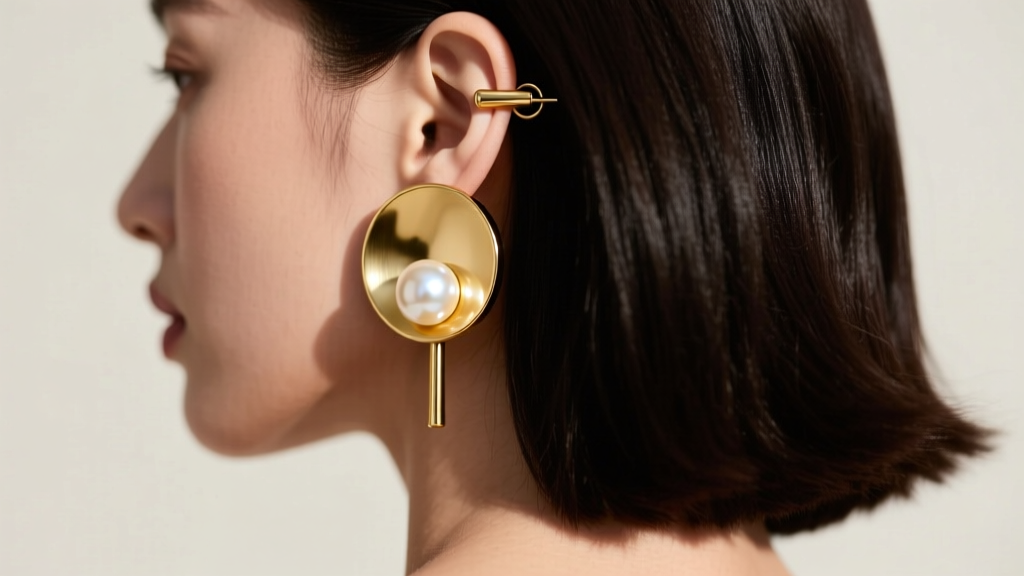
A critical, often overlooked detail in the girl with a pearl earring description of the painting is the physical interaction between the jewelry and the anatomy. A 15mm solid nacre pearl weighs roughly 4 to 6 grams. Standard earring hardware will fail under this weight, resulting in the dreaded "sad earring" droop, where the pearl points toward the floor rather than sitting flush against the lobe.
To ensure your pearl hangs with the elegant, slight tension depicted by Vermeer, you must demand specific hardware specifications from your jeweler:
- Post Gauge: Reject standard 0.8mm posts. You need a heavy-duty 1.0mm or 1.2mm post (typically 16-gauge or 14-gauge) to prevent the metal from bending under the pearl's weight.
- Clutch/Backing Diameter: Standard butterfly backs (approx. 4mm wide) will dig into the neck and fail to distribute the weight. Require a 10mm to 12mm flat disc clutch or a specialized silicone-cushioned screw-back. This wide surface area acts as a counterweight, keeping the pearl perfectly angled.
- Cup Setting: The pearl should be set in a straight-cup or slightly flared peg setting with a 3mm to 4mm base to ensure the drill hole does not expand and crack the nacre over time.
Face Shapes and Proportional Styling
While Vermeer’s subject pulls off the massive pearl effortlessly, modern wearers must consider facial proportions when buying 14mm+ studs.
Round and Heart Face Shapes
Large, perfectly round pearls can emphasize the circularity of a round face. If you have a round or heart-shaped face, look for a pearl with a very slight drop or oval shape (14x15mm) to create an elongating illusion, or pair the studs with a deep V-neckline to draw the eye vertically.
Oval and Square Face Shapes
These face shapes provide the ideal structural canvas for massive round pearls. The strong jawline or balanced proportions of an oval face can anchor the visual weight of a 16mm South Sea pearl without the wearer looking overwhelmed by the jewelry.
Final Buying Advice for 2026
Replicating the magic of Vermeer's masterpiece requires looking past basic jewelry descriptions and focusing on the physics of light and weight. When you review a girl with a pearl earring description of the painting, you are looking at a study in contrast: the dark, shadowed background against the blindingly sharp specular highlight of the pearl.
When making your purchase, prioritize luster over perfect surface cleanliness. A 14mm pearl with a minor blemish but a razor-sharp, mirror-like reflection will capture the Vermeer aesthetic far better than a flawless but chalky bead. Insist on heavy-gauge posts, wide disc backings, and always view the pearl in natural, directional window light before finalizing your investment.


