Men's Diamond Earrings 2 Carat: 2026 Metal & Stone Guide
Explore material properties, metal grades, and diamond origins for men's diamond earrings 2 carat. Expert 2026 guide on settings, gauges, and pricing.

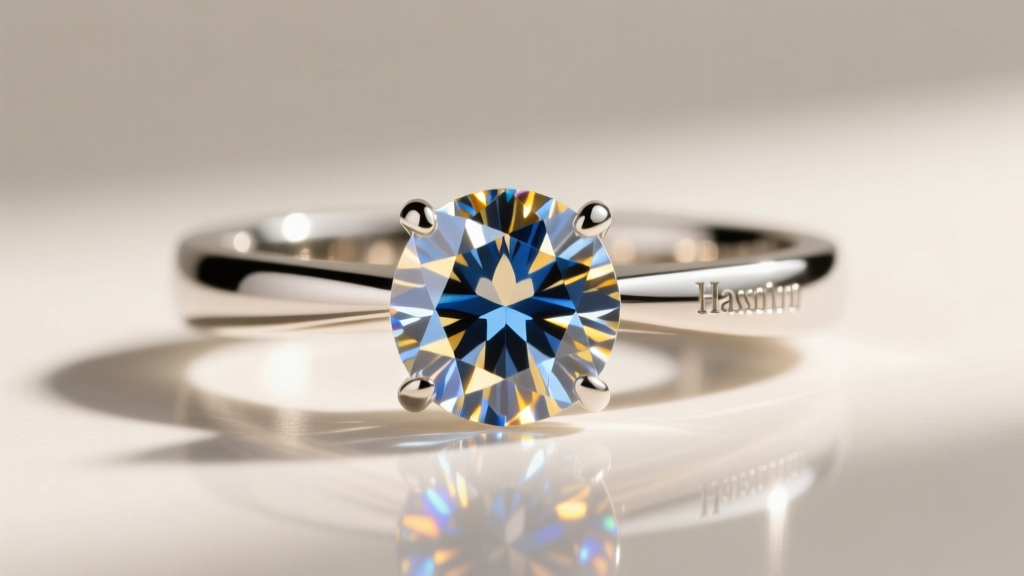
When investing in high-carat fine jewelry, the structural and material realities of the piece matter just as much as its visual impact. For men's diamond earrings 2 carat, the intersection of metallurgy, gemology, and structural engineering dictates both the longevity and the aesthetic of the jewelry. In 2026, the market has shifted dramatically with the maturation of lab-grown diamond technologies and advanced alloy formulations, giving buyers more precise control over weight, durability, and price.
This guide bypasses generic style advice to focus strictly on the material properties, gauge specifications, and structural mechanics required to properly mount and wear 2-carat diamond earrings for men.
Decoding '2 Carat': Total Weight vs. Individual Stone Weight
Before analyzing metals and settings, we must clarify the nomenclature. In the jewelry industry, '2 carat' can refer to two vastly different configurations, each with unique material stress profiles:
- 2 Carat Total Weight (CTW): This means each earring features a 1.00-carat diamond (approx. 6.5mm in diameter). This is the most common interpretation for men's studs, offering a bold but proportionate look.
- 2 Carat Each (4 Carat TW): Each earring features a massive 2.00-carat stone (approx. 8.1mm). This configuration requires heavy-duty structural support due to the sheer weight and leverage exerted on the earlobe.
Understanding this distinction is critical because the metal volume and post gauge required to safely secure an 8.1mm stone are substantially higher than those needed for a 6.5mm stone.
The Metal Matrix: Platinum vs. White Gold vs. Black Rhodium
The choice of metal dictates the earring's tensile strength, weight, and long-term maintenance. For men's jewelry, durability against accidental impacts and snags is paramount.
950 Platinum: The Heavyweight Champion
Platinum (95% pure, 5% ruthenium or iridium) is the ultimate choice for high-carat men's earrings. Unlike gold alloys, platinum is malleable rather than brittle. If a platinum prong is struck, it bends rather than snaps, keeping the diamond secure. Furthermore, platinum's natural white color does not require rhodium plating, meaning it will never 'yellow' over time. However, its density means a platinum basket setting will be noticeably heavier on the earlobe, which can cause drooping if the post gauge is insufficient.
14k and 18k White Gold: The Stiff Alternative
White gold (alloyed with nickel, palladium, or silver) offers higher rigidity than platinum. An 18k white gold setting will resist bending better than platinum, but if subjected to severe trauma, the prongs can fracture. Additionally, white gold requires periodic rhodium plating to maintain its bright white finish. For men who work with their hands or frequently wear headphones, 14k white gold offers a highly durable, lower-maintenance alternative, provided the rhodium upkeep is accepted.
Black Rhodium & Oxidized Alloys
A major trend in 2026 men's jewelry is the use of black rhodium plating over white gold or platinum. This creates a dark, gunmetal aesthetic that dramatically increases the perceived contrast and brilliance of the diamond. The material caveat here is that black rhodium wears faster than standard white rhodium, requiring re-plating every 12 to 18 months depending on skin chemistry and friction.
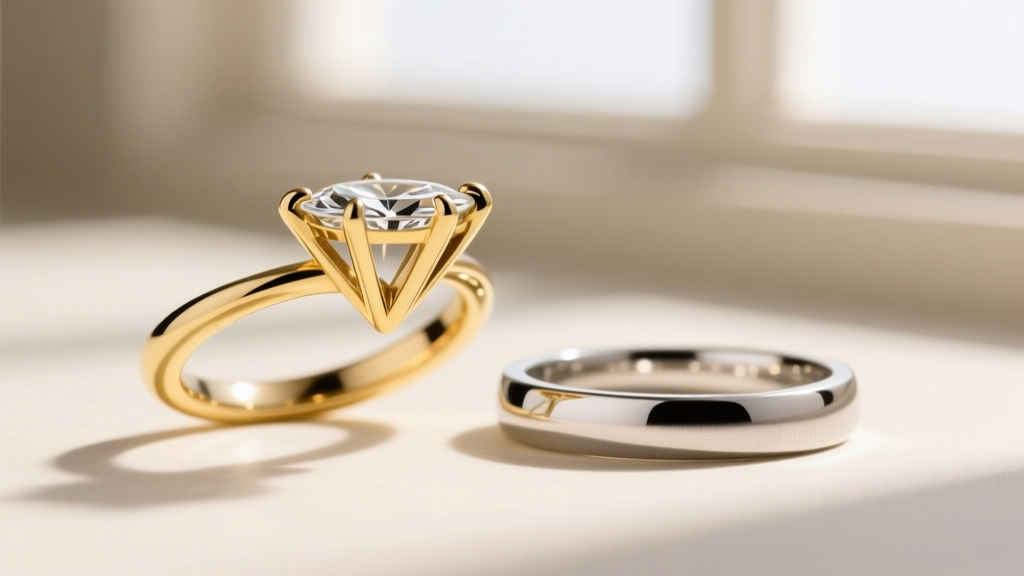
Post Gauge & Structural Integrity: The Hidden Failure Point
The most common failure mode in men's diamond earrings 2 carat is not the prongs breaking, but the post bending or snapping at the solder joint. Standard women's earring posts are typically 20-gauge (0.81mm) or 18-gauge (1.02mm). These gauges are structurally inadequate for 1-carat or 2-carat individual stones.
Expert Rule of Thumb: For any diamond stud exceeding 1.00 carat per ear, the post must be upgraded to a minimum of 16-gauge (1.29mm) or ideally 14-gauge (1.63mm). The thicker post prevents the 'droop' effect and resists bending when snagged on clothing or towels.
When ordering custom or high-end pieces, explicitly verify the post thickness. A heavy 2-carat stone on a thin 18k gold 18-gauge post will eventually fatigue the metal at the base of the basket, leading to catastrophic loss of the stone.
Diamond Material Properties: Lab-Grown vs. Natural in 2026
The physical, chemical, and optical properties of lab-grown diamonds are identical to natural diamonds. However, the growth methods dictate specific material characteristics that buyers should understand when selecting 2-carat stones.
CVD vs. HPHT Growth Methods
According to the Gemological Institute of America (GIA), lab-grown diamonds are primarily created via Chemical Vapor Deposition (CVD) or High Pressure High Temperature (HPHT) methods.
- CVD Diamonds: Grown in a vacuum chamber. They often exhibit brown or gray undertones straight out of the reactor and require post-growth HPHT annealing to achieve high color grades (D-F). CVD stones sometimes feature internal strain patterns visible under specialized polarized light.
- HPHT Diamonds: Grown using a metal flux catalyst. These stones can occasionally retain microscopic metallic inclusions that are magnetic. However, HPHT generally produces stones with superior inherent color without the need for post-growth treatment.
The Clarity & Color Sweet Spot for Men
Because earrings are viewed from a distance and in constant motion, you do not need to pay the premium for flawless (FL) or internally flawless (IF) material. Based on the GIA Diamond Clarity Scale, the optimal material sweet spot for men's 2-carat CTW earrings is VS2 to SI1. At this grade, inclusions are invisible to the naked eye, especially when set in a multi-prong basket.
For color, the G to H range (Near Colorless) provides the best value. When set in white gold or platinum, G-H stones face up brilliantly white, saving thousands of dollars compared to D-F colorless grades without any visible compromise in material beauty.
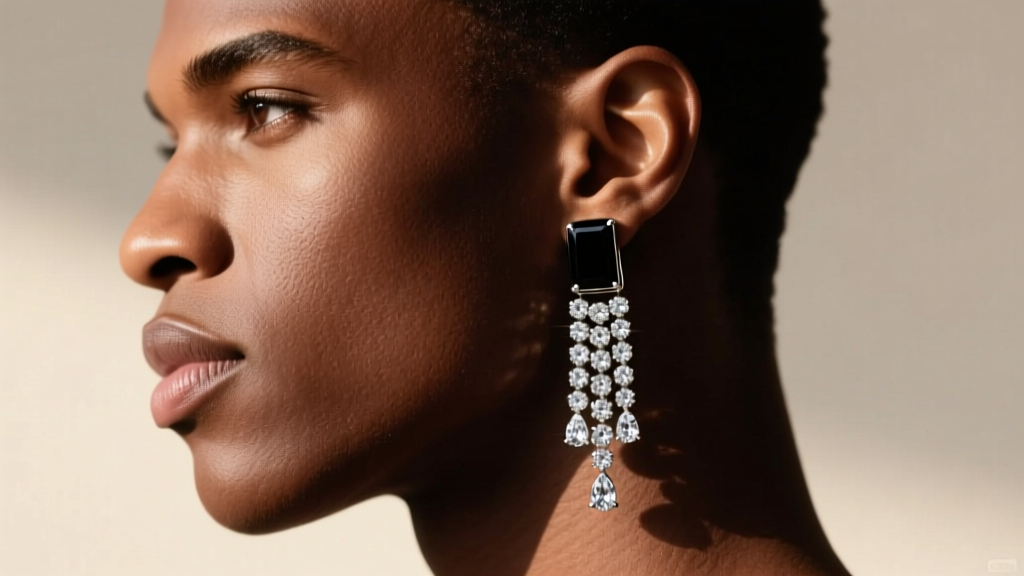
Setting Mechanics: Securing Heavy Stones
The geometry of the setting determines how the metal interacts with the diamond's girdle and pavilion. For men's 2-carat earrings, three primary setting architectures dominate:
- The Martini Setting: Features three prongs and a narrow base, allowing maximum light to enter the pavilion. While visually lightweight, the narrow base concentrates the stone's weight on a smaller point of the post, increasing the risk of drooping on heavier 2-carat-each stones.
- The Basket Setting: Utilizes four or six prongs with a horizontal metal band (the 'basket') connecting them near the base. This distributes the structural load more evenly across the post and provides superior lateral protection against impacts. This is the recommended setting for active men.
- The Bezel Setting: A solid metal rim encircles the girdle. While it sacrifices about 5-10% of the diamond's visible light return, it offers the ultimate material protection. The metal rim absorbs all lateral shocks, making it impossible for the diamond's girdle to chip if struck against a hard surface.
Backing Mechanisms: Screw-backs vs. La Pousette
Standard friction push-backs are a liability for 2-carat earrings. The weight of the stone can cause the earring to slowly slide out of the earlobe over the course of a day. You must upgrade to either screw-backs (which thread onto a grooved post) or La Pousette backs (a mechanical locking mechanism featuring a spring-loaded clutch that clicks securely into a groove on the post). La Pousette backs are vastly superior for material longevity, as screw-backs can easily cross-thread and strip the delicate gold or platinum grooves over time.
2026 Pricing & Material Value Matrix
The table below outlines the expected market pricing for men's diamond earrings 2 carat (configured as 1.00ct each, 2.00 CTW) based on material combinations in the current 2026 market. Prices assume G-H color and VS2-SI1 clarity.
| Metal Material | Diamond Origin | Setting Style | Approx. Price Range (USD) |
|---|---|---|---|
| 14k White Gold | Lab-Grown (CVD/HPHT) | 4-Prong Basket | $1,200 - $2,500 |
| 18k White Gold | Lab-Grown (CVD/HPHT) | 4-Prong Basket | $1,600 - $3,200 |
| 950 Platinum | Lab-Grown (CVD/HPHT) | 4-Prong Basket | $2,200 - $4,500 |
| 14k White Gold | Natural (Mined) | 4-Prong Basket | $6,500 - $11,000 |
| 950 Platinum | Natural (Mined) | 4-Prong Basket | $8,500 - $15,000+ |
Final Verdict on Material Selection
When purchasing men's diamond earrings 2 carat, prioritize structural material integrity over marginal gains in diamond color or clarity. A 1.00-carat G-color SI1 lab-grown diamond set in a 14-gauge 950 platinum basket with La Pousette locking backs represents the pinnacle of modern jewelry engineering. It provides immense visual impact, lifelong metallurgical durability, and the mechanical security required to protect a significant financial investment. Always demand a GIA or IGI grading report to verify the diamond's material properties, and never compromise on the post gauge thickness.


