Beginner Guide to Choosing Women's Earrings Dangle Styles
Discover how to choose the perfect women's earrings dangle styles for your face shape, weight tolerance, and metal sensitivities.


The Anatomy of Movement: Drop vs. Dangle
When building a versatile and expressive jewelry collection, understanding how to select and style women's earrings dangle designs is an essential skill for any beginner. While the terms "drop" and "dangle" are frequently used interchangeably in fast-fashion retail, they represent two entirely distinct structural categories in fine jewelry. A drop earring hangs just below the earlobe and remains largely stationary, connected by a rigid or semi-rigid link. A true dangle earring, however, features one or more articulation points—such as jump rings or flexible chain links—that allow the ornament to swing, sway, and move independently of the ear wire.
This kinetic movement is what gives dangles their signature elegance, but it also introduces unique structural challenges regarding weight distribution, lobe health, and facial framing. This comprehensive guide will walk you through the exact specifications, material grades, and styling frameworks you need to confidently choose dangle earrings that are both beautiful and comfortable for long-term wear.
The Physics of Dangles: Weight, Gauge, and Lobe Health
The most common mistake beginners make when purchasing women's earrings dangle styles is ignoring the relationship between the earring's total weight and the gauge (thickness) of the ear wire. The standard piercing for a healed earlobe is 20-gauge (0.81mm). While a 20-gauge wire is perfectly suitable for lightweight studs, it can cause a phenomenon known in the body modification community as the "cheese cutter effect" when subjected to the swinging momentum of a heavy dangle.
If a dangle earring exceeds 8 grams, the downward force and kinetic swinging can slowly stretch the piercing hole, leading to discomfort, micro-tears, and permanent lobe sagging over time. To mitigate this, always look for dangles crafted with an 18-gauge (1.02mm) or even 16-gauge (1.29mm) ear wire for heavier statement pieces. According to the Association of Professional Piercers (APP), matching the jewelry gauge to the structural demands of the design is critical for maintaining tissue health.
| Weight Class | Mass (Grams) | Recommended Wire Gauge | Max Continuous Wear | Best Closure Type |
|---|---|---|---|---|
| Featherweight | 1g - 4g | 20g (0.81mm) | 12+ Hours | French Wire / Fishhook |
| Medium | 5g - 10g | 18g (1.02mm) | 8 Hours | Leverback / Latch |
| Statement | 11g - 20g+ | 16g (1.29mm) | 4 Hours (Events) | Thick Leverback / Omega |
Face Shape Framework for Dangle Earrings
Because dangles draw the eye vertically and create movement, they are powerful tools for balancing facial proportions. Here is a precise framework for matching women's earrings dangle silhouettes to your specific bone structure.
Round Faces
The goal for round face shapes is to create the illusion of length and sharpen soft features. Opt for long, narrow, and linear dangle designs. Geometric bar dangles, slender chain drops, and elongated rectangular shapes are ideal. Avoid wide chandeliers, large hoops, or circular clustered dangles, as these will echo and exaggerate the roundness of your jawline and cheeks.
Square Faces
Square faces are characterized by a strong, angular jawline and a broad forehead. To soften these striking angles, choose dangles with curved lines, rounded edges, and organic shapes. Teardrop dangles, oval cabochon swings, and hoop-based dangles introduce a necessary softness. Steer clear of sharp, boxy, or rigid geometric dangles that mirror the sharpness of the jaw.
Heart-Shaped Faces
A heart-shaped face features a broader forehead that tapers down to a narrow, pointed chin. The objective is to add visual weight to the lower half of the face to create balance. Chandelier earrings, pear-shaped dangles, and bottom-heavy triangular designs are perfect. Avoid inverted triangles or top-heavy dangles that will make the chin appear even narrower.
Oval Faces
Oval faces are naturally balanced, meaning almost any dangle style will work. However, to add a modern edge, experiment with bold, asymmetrical dangles or oversized geometric shapes. The only style to potentially avoid is excessively long, narrow dangles that might over-elongate an already proportionate face.
"A well-chosen dangle earring doesn't just accessorize an outfit; it frames the face and dictates the kinetic energy of your personal style."
Material Grades and Pricing Tiers
The material of your dangle earrings dictates not only their price but also their weight and hypoallergenic properties. The Gemological Institute of America (GIA) outlines strict standards for precious metal alloys, which is vital knowledge when investing in fine jewelry.
- Implant-Grade Titanium (ASTM F136): The ultimate choice for sensitive ears. Titanium is incredibly lightweight, meaning designers can create massive, dramatic dangle silhouettes that remain in the "Featherweight" or "Medium" categories, sparing your earlobes from stress. Expect to pay $40 to $120 for high-quality titanium dangles.
- 14k and 18k Solid Gold: Gold is dense and heavy. A solid 14k gold dangle will weigh significantly more than the exact same design in titanium. Ensure the gold is alloyed with silver or copper, not nickel, to prevent contact dermatitis. Pricing ranges from $250 to over $1,500 depending on gemstone inclusions.
- Sterling Silver (925): A classic, affordable option ($30 to $90). However, pure silver is too soft for ear wires, so it is alloyed with copper. This makes it prone to oxidation. Always look for 925 silver that has been rhodium-plated to provide a tarnish-resistant barrier and a brighter, whiter finish.
- Brass and Base Alloys: Frequently found in fast-fashion dangles ($10 to $25). These are heavy, highly reactive with skin acidity, and often contain hidden nickel. Avoid these if you plan to wear your dangles for more than a few hours.
Closure Mechanisms: Security vs. Ease of Use
The way a dangle attaches to your ear is just as important as the ornament itself. The swinging motion of dangles makes them prone to slipping out if the wrong closure is used.
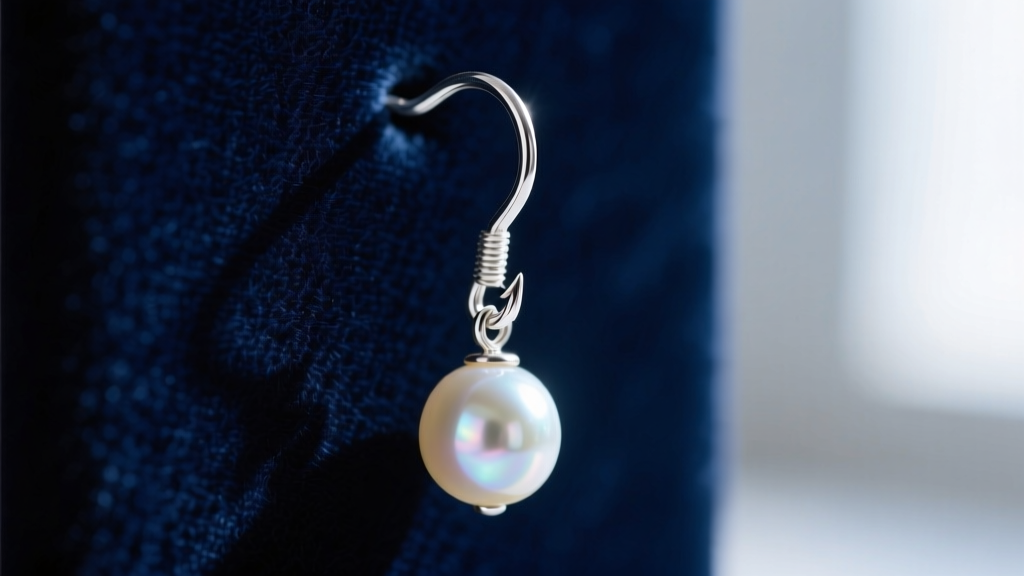
French Wire (Fishhook): The most common and elegant closure. It slides easily through the piercing but lacks a mechanical lock. For dangles, you must use silicone or metal ear nuts (scrolls) to secure them, otherwise, the momentum of the swing will eventually pull the earring out of the lobe.
Leverback: Features a hinged wire that snaps securely into a catch at the back of the earring. This is the gold standard for medium-to-heavy dangles, as the mechanical lock prevents loss during active movement, dancing, or taking off sweaters.
Latch Back / Hinged Hoop: Often used for huggie-style dangles, the wire hinges open and clicks securely into a hidden groove. It provides excellent security and a seamless, clean look from the side profile.
Maintenance, Storage, and Troubleshooting
Dangle earrings require specific care routines to maintain their structural integrity and visual appeal. Because of their articulation points, dangles are highly susceptible to tangling in hair, catching on knitwear, and knotting together in jewelry boxes.
The Anti-Tangle Storage Protocol
Never toss dangle earrings loosely into a drawer or a shared compartment. The chains and jump rings will inevitably intertwine, and attempting to pull them apart can bend the delicate ear wires or snap the solder rings. Store dangles in compartmentalized boxes with individual velvet slots, or better yet, hang them on a dedicated jewelry tree or wall-mounted rack. Hanging them utilizes gravity to keep the chains straight and the articulation points stress-free.
Cleaning Articulation Points
Over time, body oils, hairspray, and environmental dust accumulate in the tiny jump rings and hinges of dangle earrings, causing them to stiffen and lose their swing. Once a month, soak your metal dangles (avoiding porous gems like pearls or opals) in a warm bath of distilled water and a few drops of mild, phosphate-free dish soap. Use an extra-soft baby toothbrush to gently agitate the joints, rinse thoroughly, and dry completely with a microfiber cloth before storing. This simple maintenance step ensures your women's earrings dangle designs remain fluid, hygienic, and visually striking for years to come.


