Disc Drop Earrings Buying Guide: What You Must Know
Discover what to look for when buying disc drop earrings. Our expert guide covers metal grades, weight limits, clasp types, and face-shape styling tips.

The Anatomy of Disc Drop Earrings
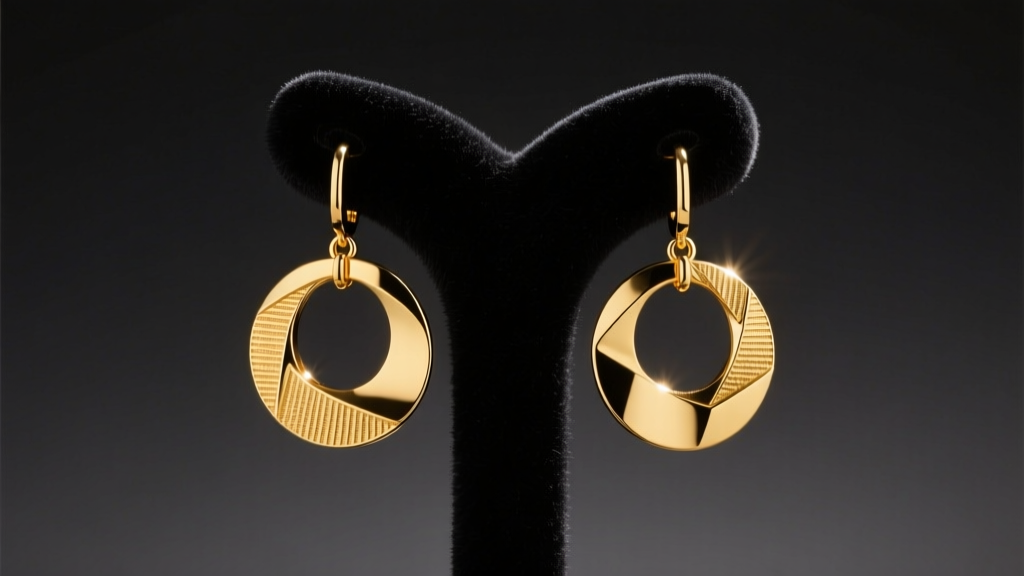
Disc drop earrings occupy a highly specific and elegant niche in jewelry design. Unlike dangle earrings, which feature multiple articulated joints that move independently, drop earrings consist of a single element suspended from the earlobe. When that element is a geometric, flat, or slightly domed circle, we classify it as a disc drop. In 2026, the market has seen a massive resurgence in minimalist, architectural jewelry, making disc drops a staple for both professional environments and evening wear. However, buying the right pair requires looking past the aesthetic and understanding the biomechanics of how these pieces interact with your earlobes over time.
Material Grades and Metal Selection
The metal used in disc drop earrings dictates not only the visual warmth of the piece but also its structural integrity. Because drops act as a pendulum, the wire and the disc must withstand constant kinetic stress. According to the Gemological Institute of America (GIA), understanding karatage is vital for gold jewelry. While 18k gold offers a richer, deeper yellow hue, it is inherently softer. For a heavy disc drop, an 18k gold wire might slowly bend or warp under the weight of the disc. Therefore, 14k gold is often the superior choice for the structural components of drop earrings, as the higher alloy content provides necessary tensile strength.
| Metal Type | Durability | Hypoallergenic | Best For | Price Range |
|---|---|---|---|---|
| 14k Yellow Gold | High | Yes (if nickel-free) | Everyday heavy drops | $150 - $600 |
| 18k Yellow Gold | Medium | Yes | Lightweight, small discs | $300 - $1,200 |
| ASTM F136 Titanium | Very High | Yes (Biocompatible) | Sensitive ears, heavy discs | $40 - $120 |
| Gold Vermeil | Low-Medium | Usually (Sterling base) | Trend-driven, occasional wear | $60 - $180 |
Hypoallergenic Imperatives
For those with contact dermatitis or nickel allergies, material transparency is non-negotiable. The Association of Professional Piercers (APP) strongly recommends implant-grade ASTM F136 titanium for any jewelry worn in the body. If you are buying disc drops for newly stretched lobes or sensitive piercings, titanium is the gold standard. If you prefer the look of silver, ensure it is stamped .925 sterling silver, but be aware that some sterling alloys contain trace copper or nickel that can cause oxidation and irritation over prolonged wear.
Weight, Gauge, and Lobe Biomechanics
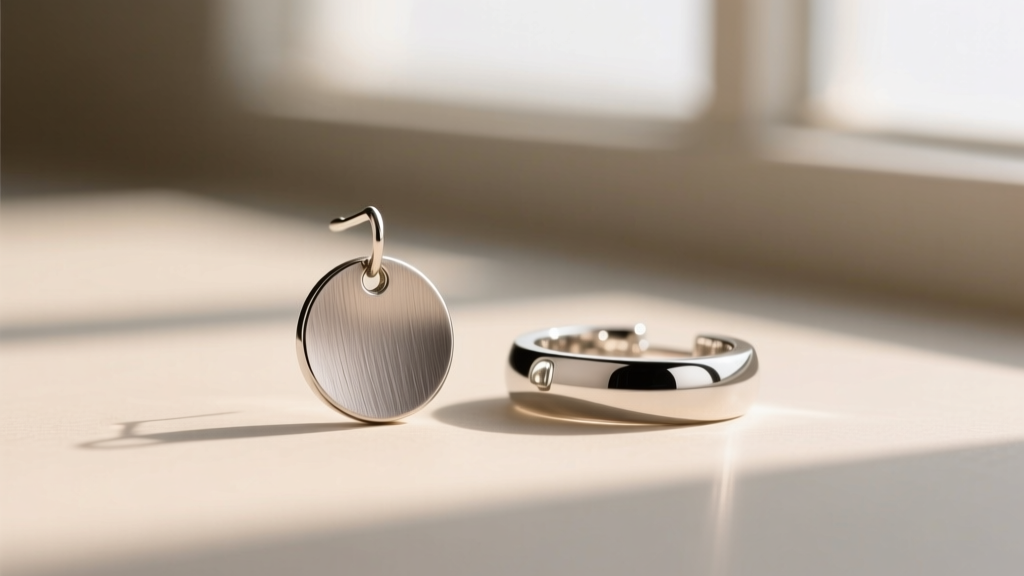
The most overlooked factor when buying disc drop earrings is the weight-to-gauge ratio. A drop earring functions as a lever. The earlobe piercing (the fistula) acts as the fulcrum. If a disc is too heavy and the wire is too thin, the downward force will cause micro-tears in the tissue, leading to gradual lobe stretching or a condition known as earlobe ptosis (sagging).
The 18-Gauge vs. 20-Gauge Debate
Standard female earlobe piercings are typically done at 20-gauge (0.81mm) or 18-gauge (1.02mm). When shopping for disc drops, always check the wire thickness. If the disc weighs more than 4 grams, you should strictly avoid 20-gauge or 22-gauge wires. The surface area of an 18-gauge wire distributes the pendulum weight much more evenly across the fistula. For oversized, statement disc drops weighing upwards of 8 to 10 grams, look for designs that incorporate a supportive cuff or a thicker 16-gauge (1.29mm) post to prevent long-term tissue damage.
- Under 3 grams: Safe for 20g or 22g delicate wires.
- 3 to 7 grams: Requires an 18g wire for daily wear safety.
- Over 7 grams: Demands a 16g wire or an ear cuff support system.
Clasp Mechanics for Drop Styles
Because disc drops swing with your movement, the clasp mechanism is a critical point of failure. A standard friction push-back (butterfly clutch) is entirely unsuitable for drop earrings, as the kinetic swinging will slowly work the backing loose, resulting in a lost earring. Instead, look for the following secure closures:
Leverback Closures: The absolute best choice for disc drops. A hinged wire snaps securely into a locked position behind the ear, completely preventing accidental loss. This is highly recommended for solid gold or precious stone-inlaid discs.
French Wire (Shepherd Hook): Elegant and classic, but inherently insecure. If you buy French wire disc drops, you must use silicone ear backs or friction clutches to secure them, especially if you plan to wear them while commuting or walking outdoors.
Proportion and Face Shape Pairing
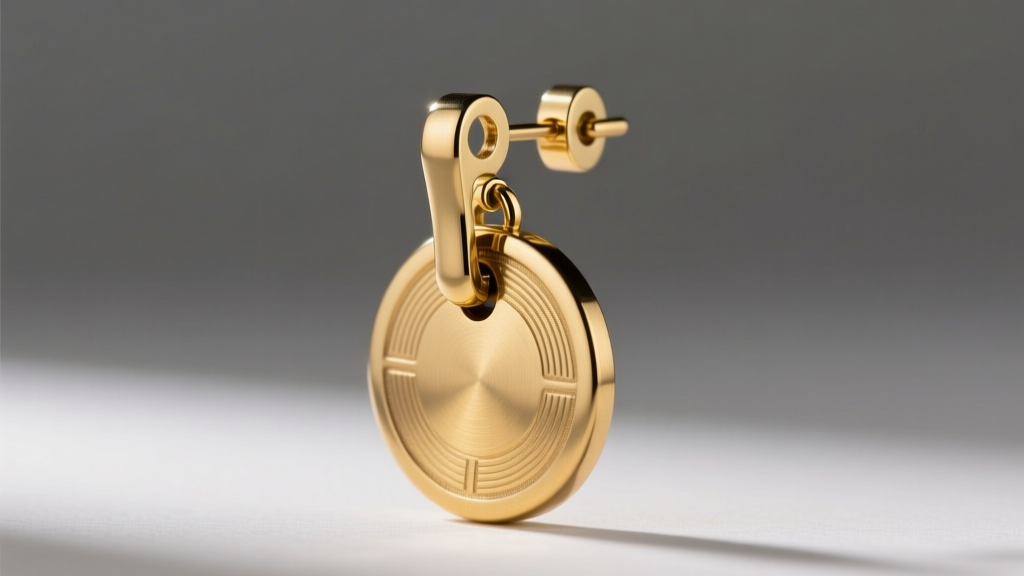
Disc drops are incredibly versatile, but the diameter and finish of the disc should be chosen to complement your facial structure. The flat, reflective surface of a disc draws the eye horizontally and vertically, depending on the drop length.
- Round Faces: Opt for elongated, oval-shaped disc drops or narrow, vertically suspended rectangles. Avoid perfectly round, wide discs, as they will emphasize the roundness of your jawline.
- Square Faces: Choose slightly domed or hammered-finish discs. The textured, softer edges will balance a strong, angular jawline. A medium drop length (1.5 to 2 inches) is ideal.
- Heart-Shaped Faces: Teardrop-shaped discs or circular discs with a wider base will add visual weight to the lower half of your face, balancing a narrower chin.
- Oval Faces: You have the most freedom. Bold, oversized geometric discs or hammered brass drops will beautifully frame your naturally balanced proportions.
Care and Maintenance Framework
Disc drop earrings, particularly those with high-polish or mirror finishes, are prone to micro-scratches and fingerprint smudges. To maintain their optical clarity, store them flat in a velvet-lined box. Hanging them on standard jewelry trees can cause the wire to bend under the disc's weight over time. For cleaning, avoid ultrasonic cleaners if the disc features any enamel work or glued gemstone accents. Instead, use a mild, phosphate-free dish soap and a microfiber cloth to gently buff the metal surface.
Expert Tip: If your gold or silver disc drops develop a slight bend in the wire from daily wear, do not attempt to bend them back into shape with your fingers. The repeated stress will cause metal fatigue and eventually snap the wire. Take them to a jeweler for a quick, professional reshaping with nylon-jaw pliers.


