Mercedes Benz Earrings: A Beginner's Collector Guide
Discover the world of Mercedes Benz earrings. Learn about materials, gauge sizes, vintage authentication, and styling for automotive jewelry lovers.

When luxury automotive heritage intersects with personal style, the result is a niche but fiercely dedicated jewelry market. For car enthusiasts, collectors, and fashion-forward individuals alike, Mercedes Benz earrings offer a unique way to wear a piece of engineering history. However, navigating this market as a beginner can be surprisingly complex. Are you looking at official dealership merchandise, mid-century vintage estate jewelry, or custom upcycled automotive parts? Each category comes with distinct material profiles, weight considerations, and care requirements.
This comprehensive beginner-friendly explainer will break down everything you need to know about collecting, wearing, and maintaining Mercedes Benz themed earrings, ensuring your earlobes look as premium as a Stuttgart-engineered chassis.
The Three Tiers of Mercedes Benz Earrings
Before making a purchase, it is crucial to understand which tier of automotive jewelry you are exploring. The market is broadly divided into three distinct categories:
1. Official Licensed Merchandise
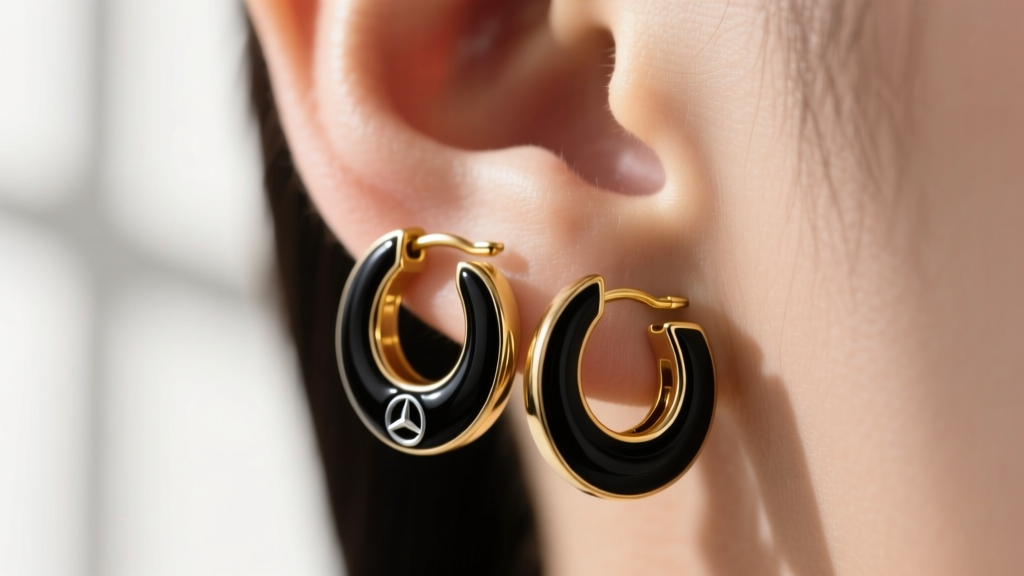
Sold through official Mercedes-Benz boutiques and authorized dealerships, these pieces are modern, mass-produced, and heavily branded. They typically feature the iconic three-pointed star logo rendered in brass or stainless steel, often accented with black or silver cold enamel. While they are excellent for casual, everyday brand loyalty, they rarely hold secondary collector value.
2. Vintage and Estate Automotive Jewelry
Peaking in popularity between the 1950s and 1980s, vintage Mercedes Benz earrings were often produced by high-end European jewelers as premium dealership gifts or boutique accessories. These pieces frequently utilize solid sterling silver, 14k gold vermeil, and traditional guilloché enamel. According to automotive memorabilia valuation experts at Hagerty, pristine vintage automotive jewelry from this era is becoming increasingly scarce and highly sought after by niche collectors.
3. Custom Upcycled Automotive Parts
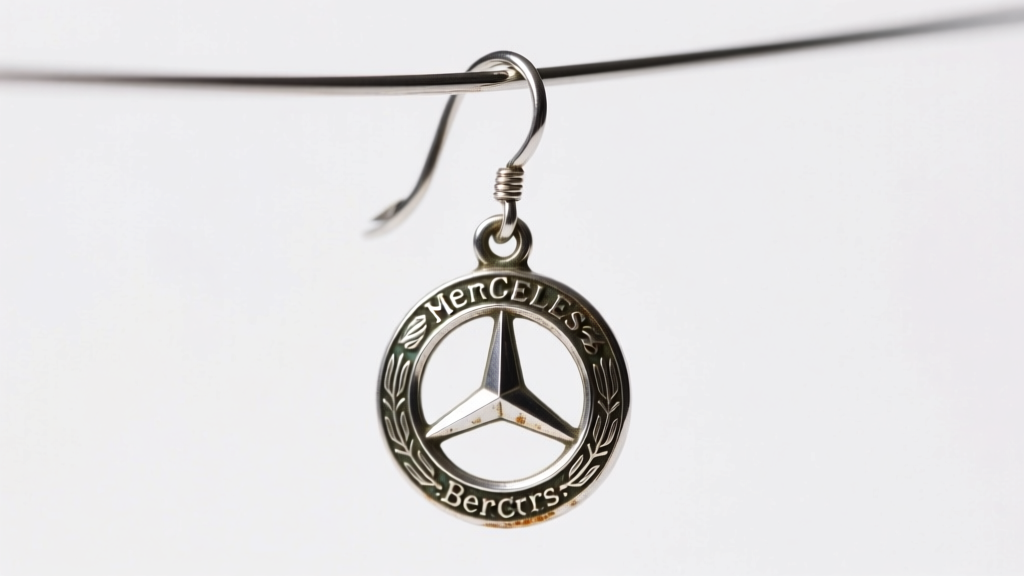
A modern trend in sustainable fashion involves taking actual retired car parts—such as vintage hood ornaments, emblem badges, or even ignition keys—and converting them into statement dangle earrings. These are highly unique, heavy, and require specialized piercing knowledge to wear safely.
Material Metallurgy and the 'Cheese Cutter' Effect
The most common mistake beginners make when buying automotive-themed jewelry is ignoring the relationship between the earring's weight and the gauge (thickness) of the post or wire. Standard ear piercings are typically done at 20-gauge (0.81mm) or 18-gauge (1.02mm).
While a lightweight enamel logo stud is perfectly fine on a 20G post, upcycled Mercedes badges or solid metal vintage dangles can easily weigh between 8 and 15 grams per earring. Hanging a heavy piece of zinc alloy or solid brass on a thin 20G wire will trigger what piercers call the 'cheese cutter effect'. Gravity and the kinetic movement of your head will cause the thin wire to slowly migrate through your earlobe tissue, leading to pain, tearing, and permanent stretching.
To avoid this, always check the wire gauge on heavier pieces. Any Mercedes Benz earring exceeding 5 grams should feature a 16-gauge (1.29mm) or 14-gauge (1.63mm) hook or post to safely distribute the weight across a wider surface area of the piercing channel.
Sizing, Weight, and Piercing Compatibility
Use the table below as a quick-reference framework to match the style of Mercedes Benz earring you are considering with the appropriate piercing placement and hardware thickness.
| Earring Style | Average Weight | Minimum Safe Gauge | Best Piercing Placement |
|---|---|---|---|
| Modern Enamel Logo Studs | 1.5 - 3g | 20G (0.8mm) | Standard Lobe |
| Sterling Star Huggies | 3 - 5g | 18G (1.0mm) | Lobe or Helix |
| Upcycled Badge Dangles | 8 - 15g | 16G (1.2mm) | Stretched Lobe / Heavy Lobe |
| Vintage Hood Ornament Drops | 12 - 20g | 14G (1.6mm) | Ear Scaffolding / Harness |
Authentication: Spotting Real Vintage vs. Reproductions
If you are hunting for vintage Mercedes Benz earrings on estate sites or auction houses, authentication is key. The secondary market is flooded with 1990s reproductions and modern fast-fashion knockoffs masquerading as mid-century originals. Here is how to tell the difference:
- Hallmarks and Stamps: Authentic vintage pieces from the 1950s to 1970s will often bear a 'Sterling', '925', 'Germany', or 'W. Germany' stamp on the post base or clutch. Many were crafted by specific European jewelers and will feature a tiny maker's mark (such as a crescent moon or specific geometric stamp).
- Enamel Quality: Genuine vintage pieces often feature champlevé or guilloché enamel, where the colored glass is fired into engraved metal grooves, creating a deep, luminous, multi-dimensional effect. Modern reproductions use 'cold enamel' (an epoxy resin) which sits flat on the surface, lacks depth, and may show microscopic bubbling under a jeweler's loupe.
- The 'Pot Metal' Test: Cheap reproductions are often cast from 'pot metal' (a low-grade zinc/copper alloy). If the earring feels suspiciously light for its size, or if the unpolished back leaves a green oxidized residue on your skin when exposed to sweat, it is likely a modern, low-quality reproduction.
Care and Maintenance for Enamel and Plated Metals
Automotive jewelry requires specific maintenance routines, particularly when enamel is involved. The Gemological Institute of America (GIA) notes that different enamel types react drastically to standard jewelry cleaning methods.
Expert Tip: Never use a standard ultrasonic jewelry cleaner on vintage Mercedes Benz earrings featuring guilloché or cold enamel. The high-frequency vibrations can cause microscopic fractures in the glass or resin, leading to permanent clouding, cracking, or chipping.
For Modern Cold Enamel (Official Merch): Clean only with a damp microfiber cloth and mild dish soap. Avoid alcohol-based cleaners, perfumes, and hairsprays, as these chemicals will degrade the epoxy resin over time, causing it to yellow or peel away from the metal backing.
For Vintage Fired Enamel and Sterling Silver: Use a dedicated silver polishing cloth on the metal parts, carefully avoiding the enamel insets. If the enamel is dirty, use a soft-bristled baby toothbrush with lukewarm water and a drop of gentle soap, drying immediately to prevent water spots.
Styling Your Automotive Jewelry
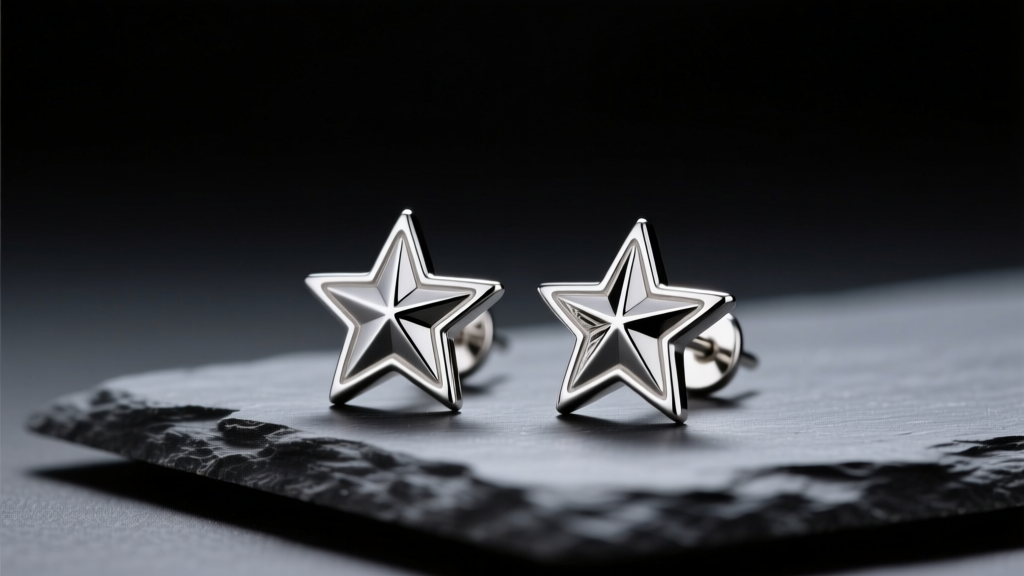
Because the Mercedes Benz three-pointed star is a bold, geometric symbol, it pairs best with minimalist styling. If you are wearing heavy, upcycled badge dangles, keep your neck and wrists bare to let the earrings serve as the focal point of your outfit. For a more subtle, professional environment, opt for 8mm to 10mm sterling silver star studs or black enamel huggies, which provide a sophisticated nod to automotive heritage without overwhelming your facial features. Whether you are a lifelong collector or a new enthusiast, understanding the metallurgy, weight dynamics, and history behind these pieces ensures your collection will remain both stylish and structurally sound for years to come.


