Fulani Earrings: Technical Anatomy, Weight & Piercing Guide
Master the technical anatomy of Fulani earrings. Explore gold grades, lobe weight limits, gauge requirements, and structural adaptations for safe wear.

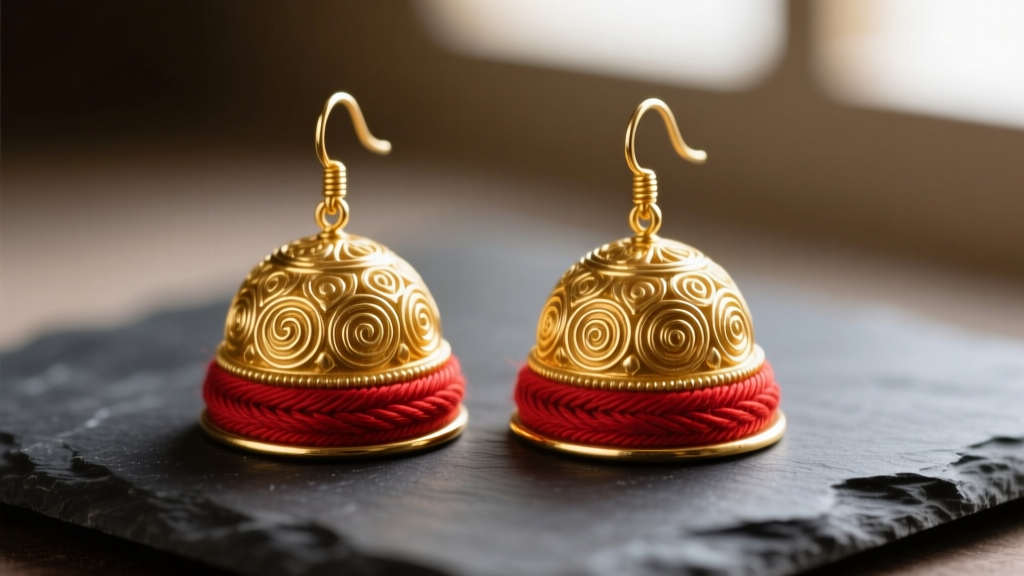
The Structural Anatomy of Traditional Fulani Earrings
Fulani earrings, historically crafted and worn by the Fula (or Peul) people of West Africa, represent a masterclass in portable wealth and advanced metallurgical artistry. Often referred to as Kwottone or Dungi, these iconic pieces are characterized by their massive, boat-like or twisted hoop silhouettes. To understand how to wear, adapt, and care for them in a modern context, we must first deconstruct their anatomy.
A traditional Fulani earring consists of three primary structural components:
- The Central Dome (Repoussé Plate): The focal point of the earring is a convex, shield-like dome. Master goldsmiths create this using the repoussé technique, hammering the metal from the reverse side to create intricate, low-relief geometric or floral patterns. This technique work-hardens the metal, adding structural rigidity to an otherwise soft high-karat gold sheet.
- The Twisted Wire Border: The perimeter of the earring is framed by thick, twisted wire. Historically, artisans used square or rectangular wire stock, twisting it tightly to create a spiral ridge. This not only provides an iconic visual texture but acts as a structural exoskeleton, preventing the thin central plate from buckling under its own weight.
- The Red Thread Wrapping: The suspension loop and parts of the wire frame are tightly bound in red silk or cotton thread. While culturally significant—often denoting marital status or wealth tiers within the Wodaabe sub-group—this wrapping serves a vital mechanical purpose. It acts as a friction buffer, protecting the soft gold from skin oils and preventing the twisted wires from catching on textiles.
Metallurgy and Material Grades: 24k vs. 18k vs. Brass
The material composition of Fulani earrings dictates their weight, durability, and price point. According to the Metropolitan Museum of Art, traditional West African goldsmithing heavily favored high-karat gold due to its malleability and cultural association with pure, untarnished wealth. However, for daily wear in 2026, material selection requires a compromise between authenticity and biomechanical safety.
Table: Material Comparison & Weight Metrics
| Material Grade | Density (g/cm³) | Typical Weight (Solid Pair) | Pros | Cons |
|---|---|---|---|---|
| 24k Gold (Pure) | 19.32 | 90g - 150g | Hypoallergenic, traditional, no tarnish | Extremely heavy, soft, prone to bending |
| 18k Gold (75%) | 15.60 | 70g - 110g | Excellent balance of color and durability | Still heavy for standard piercings, expensive |
| 14k Gold (58%) | 13.50 | 55g - 85g | Highly durable, lower cost | Lighter color, less traditional resonance |
| Hollow Brass (Electroformed) | ~2.5 (Effective) | 12g - 20g | Ultra-lightweight, affordable, high volume | Can cause contact dermatitis if plating wears |
Modern jewelers frequently utilize electroforming over 3D-printed resin molds to create hollow brass or copper cores, which are then heavily plated in 18k gold. This reduces the weight by up to 85% while maintaining the exact volumetric dimensions of traditional solid gold pieces.
Biomechanics of the Earlobe: Managing Heavy Gauge Trauma
The most critical technical challenge of wearing traditional solid Fulani earrings is managing shear force on the earlobe. A standard earlobe piercing (typically 20g to 18g, or 0.8mm to 1.0mm) creates a narrow fistula. According to guidelines from the Association of Professional Piercers, a standard fistula can safely support approximately 7 to 10 grams of sustained dynamic load before the risk of tissue migration, elongation, or acute tearing increases exponentially.
When a solid 24k gold Fulani earring weighing 60 grams is suspended from an 18g fistula, the downward vector creates severe localized pressure. The tissue responds by migrating downward, eventually resulting in a 'cheese-cutter effect' where the wire slices through the lobule.
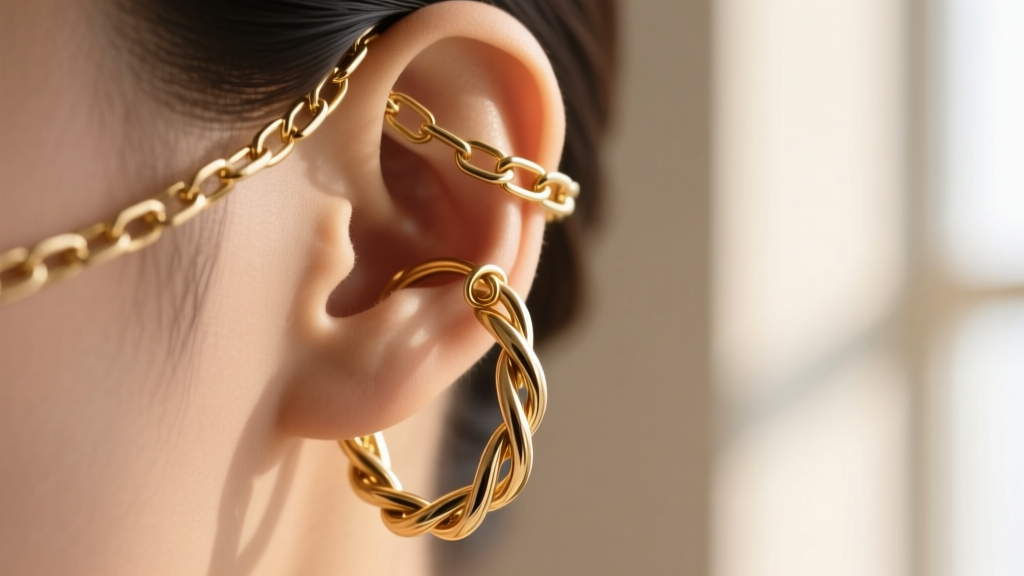
Support Mechanisms and Modern Adaptations
To safely wear heavy, authentic Fulani earrings without surgical intervention, structural load distribution is mandatory. Expert jewelers and piercers recommend the following adaptations:
- Over-Ear Support Chains (Ear Chains): A delicate chain connects the top of the earring's suspension loop to a secondary hook that rests over the helix or conch of the upper ear. This transfers up to 70% of the earring's dead weight from the soft tissue of the lobule to the rigid cartilage of the upper ear.
- Clear Silicone O-Rings / Pads: Placing a medical-grade silicone pad between the earring wire and the earlobe increases the surface area of the load-bearing zone, reducing localized PSI (pounds per square inch) and preventing acute cutting.
- Tension Ear Cuffs: For those without pierced lobes, modern CAD-designed tension cuffs clamp onto the lower cartilage ridge, mimicking the drape of a Fulani earring without requiring a fistula.
Sizing, Gauge, and Piercing Prerequisites
If you intend to wear solid gold or heavy brass Fulani earrings without external support chains, your piercing must be intentionally stretched to distribute the weight. The Smithsonian National Museum of African Art notes that historically, many Fula women naturally stretched their lobes to accommodate the immense wealth they wore.
For modern wearers, transitioning to a stretched lobe is a slow, technical process:
- 2g to 0g (6mm to 8mm): This is the minimum recommended threshold for wearing solid Fulani earrings (40g+) without support chains. At this diameter, the fistula is wide enough that the downward force is distributed across a broader band of tissue.
- 00g (10mm): Ideal for vintage, heavy 22k-24k pieces. The thick wire of traditional Fulani earrings (often 3mm to 5mm thick at the hook) requires a larger gauge anyway to prevent the wire from acting as a blade inside a tight fistula.
- Wire Gauge Matching: Always measure the exact thickness of the earring's suspension hook. Never force a 4mm hook through a 2mm fistula; the resulting friction will cause micro-tears and hypertrophic scarring.
Care, Maintenance, and Oxidation Prevention
Maintaining Fulani earrings requires specific protocols based on their material and construction. The intricate twisted wire and repoussé crevices are notorious traps for sebum, dead skin cells, and environmental particulates.
For Solid High-Karat Gold (18k - 24k):
High-karat gold does not oxidize, but it is soft. Avoid ultrasonic cleaners, as the high-frequency vibrations can loosen the traditional red thread wrapping and potentially warp thin repoussé domes. Instead, use a soft-bristled baby toothbrush with a mild, phosphate-free dish soap and warm water. Gently agitate the crevices of the twisted wire, rinse, and pat dry with a microfiber cloth.
For Hollow Electroformed Brass/Copper:
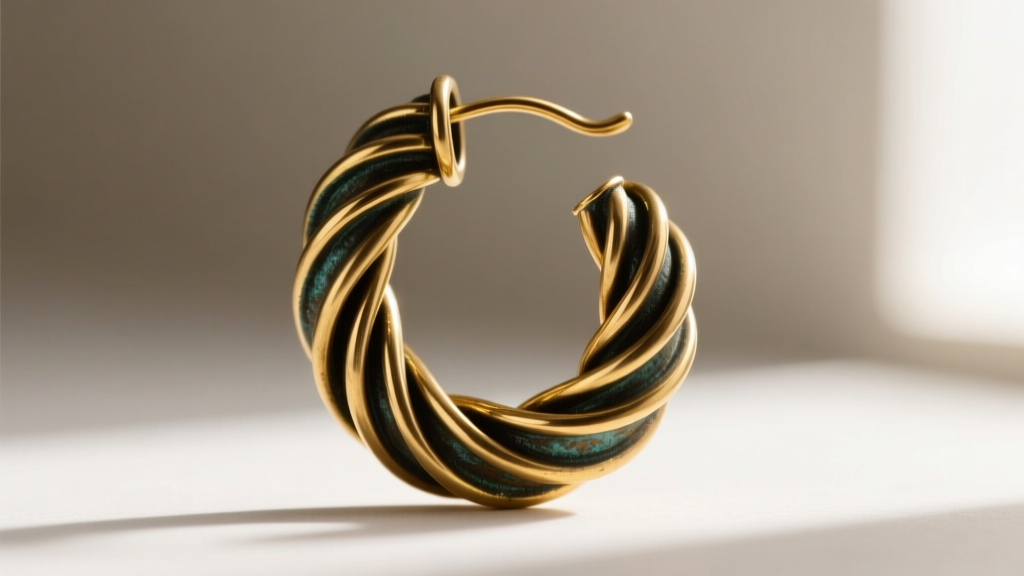
These pieces are highly susceptible to galvanic corrosion if the gold plating is compromised. Sweat and skin oils (which are slightly acidic) will rapidly oxidize the underlying copper, creating a green patina that stains the skin. To prevent this:
- Apply a micro-thin layer of jewelry-safe Renaissance Wax to the hook and inner wire borders to create a moisture barrier.
- Never submerge hollow electroformed pieces in liquid cleaners; if liquid enters the microscopic pinholes of the plating, it will become trapped and cause internal blistering.
- Store them in anti-tarnish cloth pouches with silica gel packets to control ambient humidity.
Expert Insight: If the red silk thread on a vintage or artisan Fulani earring begins to fray, do not attempt to replace it with synthetic nylon thread. Nylon lacks the microscopic grip of natural fibers and will slide along the twisted gold wire, failing to provide the necessary structural friction and potentially scratching the soft metal during adjustment.


