Earring Swollen Ear: Causes, Quick Fixes & Prevention
Got an earring swollen ear? Discover exact causes, from nickel allergies to gauge friction, and learn step-by-step troubleshooting for fast, safe relief.

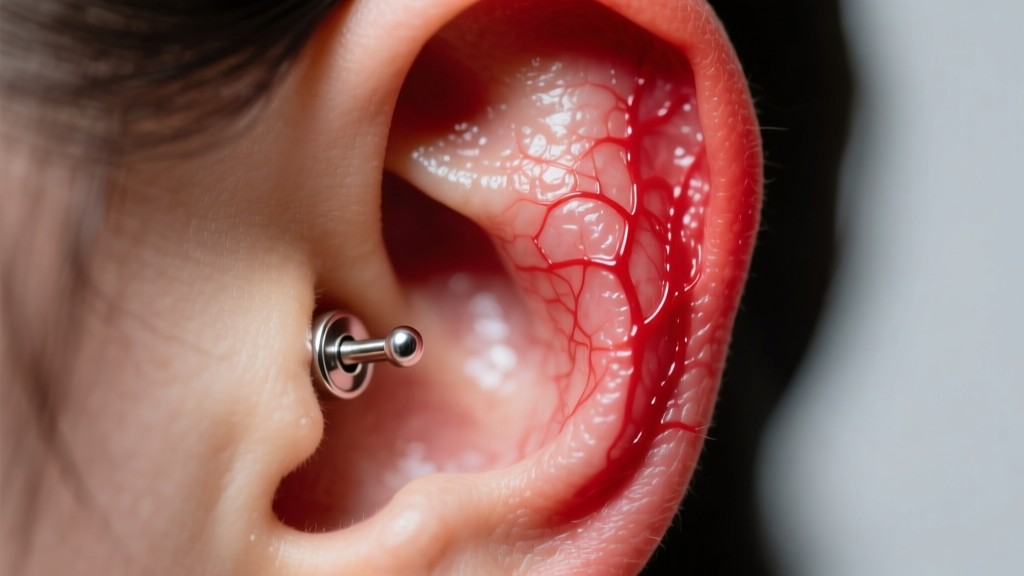
Waking up with an earring swollen ear is a frustrating and painful experience that can quickly derail your day. Whether you are dealing with a fresh piercing that has suddenly flared up or a healed lobe that became irritated overnight, localized edema (swelling) is your body’s inflammatory response to a specific trigger. As jewelry professionals, we see countless cases where the wrong material, improper gauge sizing, or trapped bacteria turns a beautiful accessory into a medical nuisance.
This comprehensive troubleshooting guide cuts through the guesswork. We will diagnose the exact root cause of your earring swollen ear, provide an immediate step-by-step action plan for relief, and outline the specific material grades and gauge sizes you need to prevent future flare-ups.
The 4 Root Causes of an Earring Swollen Ear
To effectively treat the swelling, you must first identify the catalyst. An earring swollen ear typically stems from one of four distinct issues:
1. Allergic Contact Dermatitis (The Nickel Culprit)
The most common cause of sudden earlobe swelling is a nickel allergy. According to the American Academy of Dermatology, nickel allergy affects up to 36% of women. Many commercial earrings are made from 'surgical steel' (316L stainless steel), which contains 8-12% nickel. When sweat and skin oils interact with the metal, nickel ions leach into the epidermis, triggering an immune response characterized by intense itching, redness, and localized swelling.
2. Bacterial Infection
If the swelling is accompanied by throbbing pain, heat radiating from the tissue, and yellow or green discharge, you are likely dealing with a bacterial infection. Staphylococcus aureus and Pseudomonas aeruginosa are the primary offenders. This often occurs when 'butterfly' friction backs trap moisture, sebum, and dead skin cells against the posterior earlobe, creating a breeding ground for bacteria.
3. Mechanical Trauma & Micro-Tears
Sleeping in hoop earrings, wearing heavy dangle earrings for extended periods, or snagging your jewelry on clothing causes blunt force trauma to the fistula (the piercing hole). This mechanical stress causes micro-tears in the epithelial lining, leading to immediate inflammatory swelling as the body rushes blood to the site to repair the tissue.
4. Gauge Mismatch Friction
Ear piercings are not one-size-fits-all. Standard earlobe piercings are typically 20G (0.81mm) or 18G (1.02mm), while cartilage piercings are usually 16G (1.29mm) or 14G (1.63mm). Forcing a thicker 16G earring post into a delicate 18G lobe hole causes blunt force dilation, resulting in severe swelling and potential scarring.
Diagnostic Triage: Allergy vs. Infection vs. Trauma
Use this diagnostic table to identify your specific type of earring swollen ear before attempting treatment. Misdiagnosing an infection as an allergy can lead to severe complications.
| Symptom | Allergic Dermatitis | Bacterial Infection | Mechanical Trauma |
|---|---|---|---|
| Primary Sensation | Intense itching, burning | Throbbing pain, tender to touch | Soreness, stinging |
| Visual Signs | Red, flaky, or crusty skin | Deep red/purple, pus, extreme heat | Swollen, bruised, or torn tissue |
| Discharge | Clear, watery weeping | Thick yellow, green, or foul-smelling | Minor spotting of blood |
| Onset Speed | 12 to 48 hours after wearing | 2 to 5 days post-trauma/piercing | Immediate (within hours) |
Immediate Action Plan: How to Reduce Swelling Fast
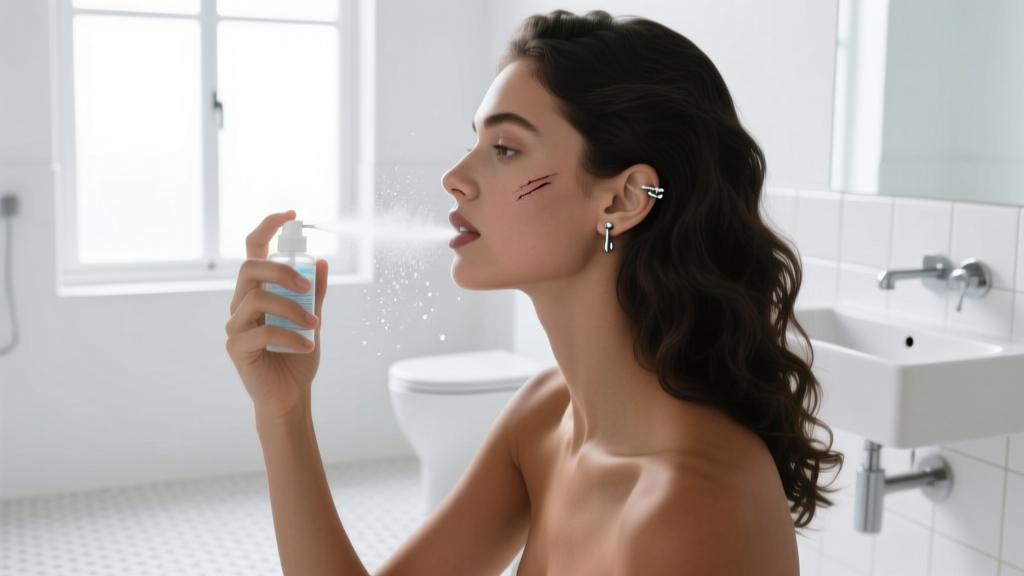
Once you have identified the likely cause, follow this clinical troubleshooting protocol to reduce the earring swollen ear rapidly.
Step 1: The Jewelry Swap (or Removal)
If it is an allergy or trauma: Remove the offending jewelry immediately. Leaving nickel in the ear will only compound the immune response. If the hole is fully healed, leave it empty to let the tissue breathe. If it is a fresh piercing (under 6 months old), do not remove the jewelry, as the fistula will swell shut and trap the infection inside. Instead, swap it for an implant-grade titanium flat-back labret.
If it is an infection: Never remove the jewelry from an infected, unhealed piercing. Removing the post allows the surface holes to close, forming an abscess. Keep a sterile titanium post in place to allow for drainage.
Step 2: The 0.9% Sterile Saline Protocol
Discard all rubbing alcohol, hydrogen peroxide, and tea tree oil. These harsh astringents destroy healthy fibroblast cells and delay healing. Instead, use a sterile 0.9% sodium chloride (NaCl) wound wash with no additives. Spray the front and back of the earlobe twice daily. The isotonic solution gently flushes away crusties, bacteria, and allergen residues without disrupting the skin's acid mantle.
Step 3: Targeted Cryotherapy
To constrict the blood vessels and reduce localized edema, apply a cold compress. Wrap a clean ice pack or a bag of crushed ice in a sterile paper towel. Apply to the swollen earlobe for exactly 10 minutes, followed by a 20-minute break. Never apply ice directly to the skin, as this can cause ice burns and further tissue damage.
Material Grades: What to Wear When Healing
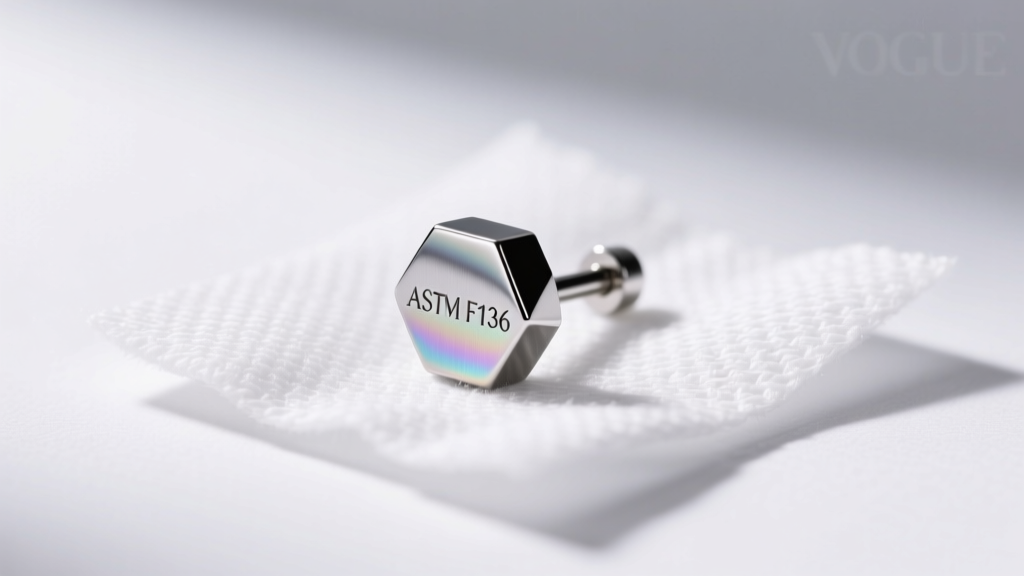
When dealing with an earring swollen ear, the metallurgical composition of your jewelry is non-negotiable. The Mayo Clinic strongly recommends avoiding cheap alloys when skin barriers are compromised.
The 'Surgical Steel' Myth: The term 'surgical steel' is largely a marketing buzzword in the jewelry industry. 316L stainless steel contains nickel and is highly porous at a microscopic level, making it entirely unsuitable for swollen, irritated, or healing ears.
Safe Materials for Swollen Ears:
- ASTM F136 Implant-Grade Titanium: The gold standard for irritated ears. It contains 0% nickel, is highly biocompatible, and has a mirror-smooth surface finish that prevents bacterial adhesion.
- Niobium: A hypoallergenic, highly reactive metal that is completely nickel-free and safe for severe contact dermatitis.
- Solid 14k or 18k Gold: Must be alloyed for body jewelry (avoid 24k as it is too soft and easily scratched, harboring bacteria). Ensure it is nickel-free and cadmium-free.
Long-Term Prevention: Gauge Sizing & Earring Backings
To ensure you never have to search for an earring swollen ear remedy again, you must optimize your jewelry mechanics.
Verify Your Gauge Size
Visit a professional piercer to have your fistula measured with a taper. Wearing the correct gauge prevents the 'cheese-cutter effect,' where a wire that is too thin (like a 22G) slices through the tissue under the weight of an earring, causing chronic swelling and migration.
Ditch the Butterfly Backs
Standard friction backs (butterfly clasps) are the enemy of ear health. They pinch the earlobe, restrict blood flow, and trap moisture. Switch to flat-back labrets with internally threaded or threadless (push-pin) closures. Flat backs distribute pressure evenly across the posterior earlobe and eliminate the dark, moist gap where bacteria thrive.
Weight Limits for Dangles
If you love statement dangle earrings, limit wear to 4-6 hours. Heavy brass or steel dangles exert continuous downward traction on the fistula. For heavy pieces, consider using earlobe support patches (like invisible silicone stabilizers) to distribute the weight across a wider surface area of the ear.
Red Flags: When to See a Medical Professional
While most cases of an earring swollen ear can be managed at home with saline and titanium swaps, certain symptoms require immediate medical intervention. Seek professional medical care if you experience:
- Embedded Jewelry: If the swelling has completely engulfed the earring backing or the front of the stud, do not attempt to dig it out yourself. A doctor or professional piercer must use a sterile scalpel to release the tissue.
- Spreading Redness: If red streaks begin radiating from the earlobe down your neck or jawline, this indicates lymphangitis, a serious spreading infection.
- Systemic Symptoms: A fever, chills, or swollen lymph nodes behind the ear and neck mean the localized infection has entered your systemic circulation.
By understanding the precise mechanics of your jewelry and respecting the biology of your ear tissue, you can permanently eliminate the earring swollen ear cycle and enjoy your collection comfortably.


