Best Metals for Teardrop Drop Earrings: A Material Guide
Discover the best metals for teardrop drop earrings. Compare weight, durability, and hypoallergenic properties of gold, titanium, and silver.

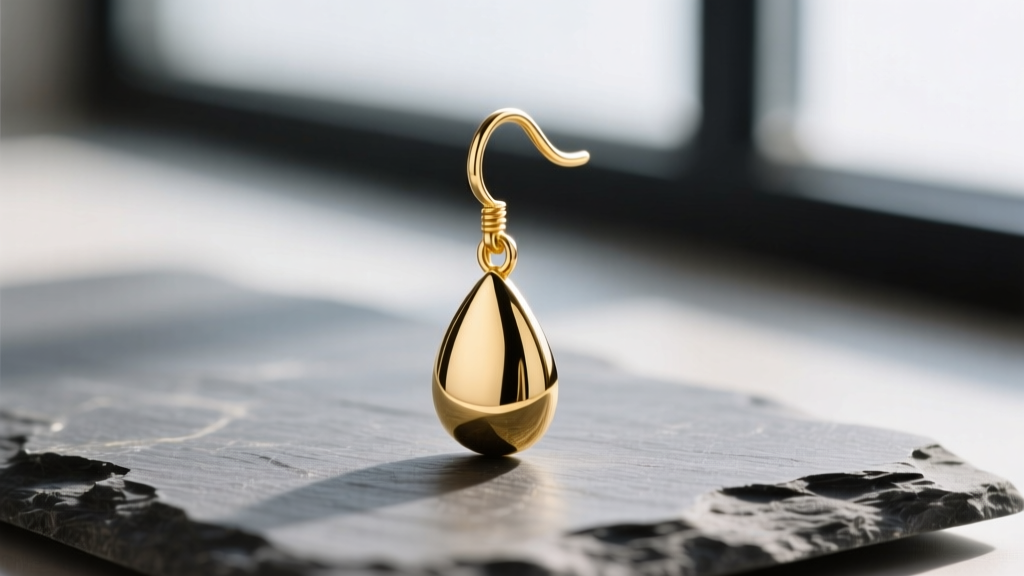
The Physics of the Teardrop: Why Material Weight Matters
When selecting teardrop drop earrings, the silhouette is only half the equation. The teardrop shape—a rounded bottom tapering to a narrow top—creates a unique center of gravity that sits significantly lower than the piercing hole. This bottom-heavy geometry exerts continuous downward and forward leverage on the earlobe. If the material is too dense, prolonged wear will cause lobe fatigue, stretching, and eventual migration of the piercing.
To understand how different metals perform, we must look at specific gravity (density). For context, a solid 30mm teardrop cast in 18k gold will weigh approximately 40% more than the exact same dimensional design cast in sterling silver, and nearly 300% more than one machined from titanium. Therefore, the ideal material for teardrop drop earrings depends entirely on the physical scale of the design and the wearer's lobe tensile strength.
Comprehensive Metal Comparison for Teardrop Drops
Below is a metallurgical breakdown of the most common materials used in teardrop drop earrings, analyzing their structural integrity, weight profiles, and biological compatibility.
| Material | Specific Gravity | Standard Grade/Alloy | Avg. Price Range (Pair) | Lobe Stretch Risk |
|---|---|---|---|---|
| Implant-Grade Titanium | 4.5 g/cm³ | ASTM F136 (Ti-6Al-4V) | $45 - $120 | Very Low |
| Sterling Silver | 10.4 g/cm³ | 925 (92.5% Ag, 7.5% Cu) | $60 - $180 | Moderate |
| 14k Solid Gold | 13.2 g/cm³ | 58.5% Au alloy | $250 - $600 | Moderate/High |
| 18k Solid Gold | 15.6 g/cm³ | 75% Au alloy | $400 - $1,200+ | High (for large drops) |
| Niobium | 8.5 g/cm³ | Reactor-grade pure | $50 - $150 | Low/Moderate |
1. Implant-Grade Titanium (ASTM F136)
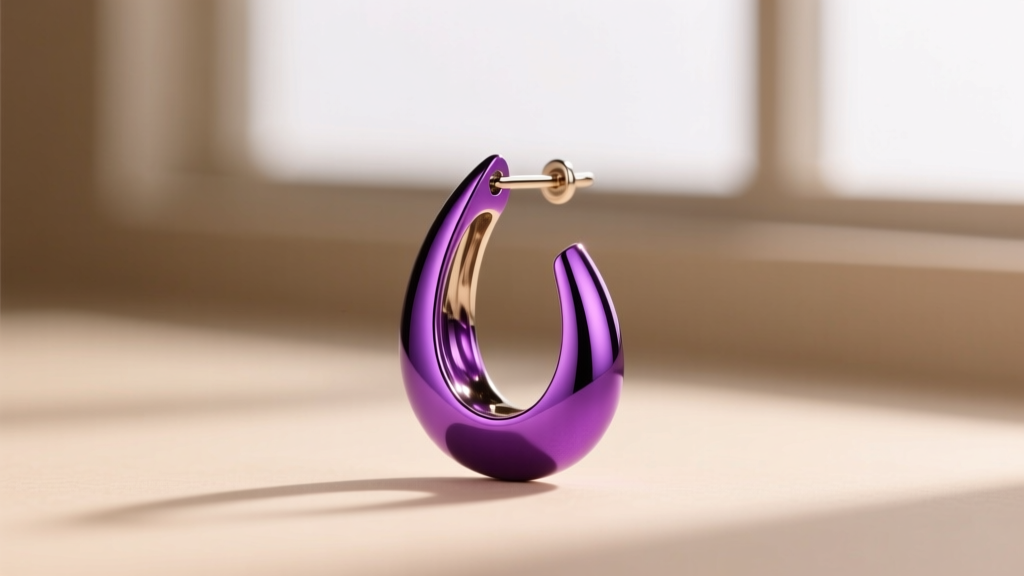
For oversized or statement teardrop drop earrings, titanium is the undisputed champion of comfort. Governed by the Association of Professional Piercers (APP) standards, ASTM F136 titanium is entirely nickel-free and biocompatible. Because its specific gravity is roughly 4.5 g/cm³, jewelers can create massive, shoulder-dusting teardrop designs that weigh less than a standard 14k gold stud. Furthermore, titanium can be anodized via voltage manipulation to produce vibrant, permanent colors like deep purples and teals without the use of surface plating that can chip or flake over time.
2. Solid 14k and 18k Gold
Gold offers unmatched prestige and a warm luster that complements the sweeping curves of a teardrop silhouette. However, gold is heavy. A solid 18k gold teardrop carries a high risk of stretching the earlobe if the drop exceeds 25mm in length. To mitigate this, high-end jewelers often utilize electroforming or hollow-casting techniques for gold teardrops, creating a voluminous exterior with a microscopic wall thickness (often 0.2mm to 0.4mm). While this solves the weight issue, hollow gold teardrops are highly susceptible to denting if dropped on a hard surface, making 14k solid cast teardrops a more durable, albeit heavier, choice for daily wear.
3. Sterling Silver (925) vs. Argentium
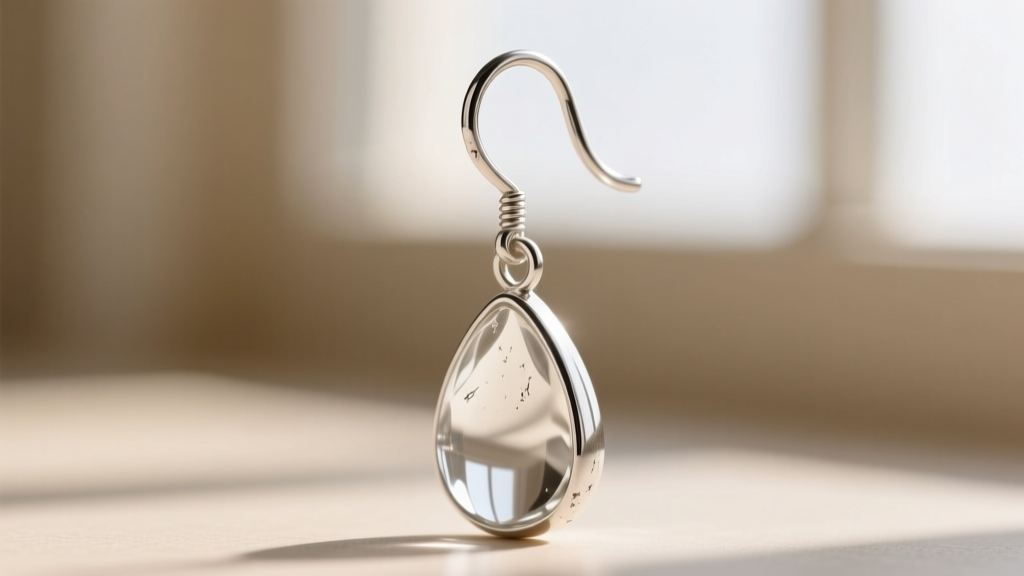
Standard 925 sterling silver is a staple for mid-range teardrop drop earrings. The 7.5% copper content provides the necessary tensile strength to support the wire-wrapping often used to attach gemstone teardrops. However, copper oxidizes. In the humid microclimate behind the earlobe, standard sterling silver will develop a dark patina, particularly in the crevices where the teardrop loop meets the ear wire. For a superior alternative, seek out Argentium Silver (935 or 960 grade). Argentium replaces some of the copper with germanium, creating a highly tarnish-resistant alloy that maintains its bright white shine with minimal maintenance, making it ideal for intricate, textured teardrop designs.
Manufacturing Methods: Cast vs. Stamped Teardrops
The way the metal is formed drastically alters the structural integrity of the earring.
- Die-Struck / Stamped: Flat sheet metal is stamped into a teardrop shape. This compresses the metal grains, increasing tensile strength and making the earring highly resistant to bending. These are usually lightweight but limited to 2D profiles.
- Investment Cast: Molten metal is poured into a plaster mold created from a wax original. This allows for complex, 3D sculptural teardrops with granulation or filigree. Cast metal is more porous and slightly softer than die-struck metal, meaning a heavy cast teardrop is more likely to warp if snagged on clothing.
- Seamless Tubing: Often used for hollow hoop-teardrop hybrids, metal tubing is bent and polished. The seam is the weakest point; always inspect the top loop of a tubular teardrop to ensure it has been laser-welded seamlessly.
Ear Wire Gauge and Tensile Strength
The most common failure point in teardrop drop earrings is not the drop itself, but the ear wire. The wire must support the pendulum-like swing of the teardrop without permanently deforming.
- 22-Gauge (0.64mm): Too thin for any teardrop exceeding 15mm in length or 3 grams in weight. The wire will easily bend out of its hook shape, leading to lost earrings.
- 20-Gauge (0.81mm): The industry standard for most drop earrings. It provides an excellent balance between lobe comfort (fitting easily through standard 18g or 16g piercings) and the structural rigidity needed to hold a medium-weight metal teardrop.
- 18-Gauge (1.02mm): Required for heavy, solid gemstone or thick-cast metal teardrops. Note that 18g wire may cause discomfort in older, un-stretched piercings that have tightened over time.
For secure wear, look for teardrop drops that utilize a French wire with a silicone O-ring stopper or a leverback closure. Leverbacks are particularly recommended for heavy gold teardrops, as the hinged mechanism completely encloses the ear wire, preventing the heavy drop from pulling the earring out during sleep or physical activity.
Tarnish, Patina, and Long-Term Wear
According to gemological and metallurgical guidelines outlined by institutions like the Gemological Institute of America (GIA), the environment your jewelry lives in dictates its lifespan. Teardrop earrings rest against the neck and jawline, areas prone to perfume sprays, lotions, and natural skin oils. Brass and copper-based alloys (often found in cheap, gold-plated teardrops) will rapidly oxidize and cause green skin discoloration when exposed to the acidic pH of human sweat. Always verify that the base metal of a plated teardrop is either sterling silver or stainless steel, and avoid brass entirely for body-adjacent jewelry.
Expert Verdict: Matching Material to Your Lifestyle
There is no single "best" metal; there is only the right metal for your specific teardrop design and lifestyle.
The Golden Rule of Teardrops: As the volume of the drop increases, the density of the metal must decrease. If you desire a massive, 50mm sculptural teardrop for daily wear, titanium or hollow-formed 14k gold are your only ergonomic options. If you prefer a delicate, 10mm solid teardrop, 18k gold or Argentium silver will provide the heirloom-quality weight and drape you desire without overwhelming the earlobe.
By understanding the specific gravity, manufacturing technique, and wire gauge of your teardrop drop earrings, you can invest in pieces that not only frame the face beautifully but remain physically comfortable and structurally sound for decades.


