Tribal Earrings 2026: The Neo-Primitive Style Revival
Discover the 2026 tribal earrings trend. Explore neo-primitive designs, implant-grade titanium options, and styling tips for modern ear curation.


The Evolution: From 90s Mall Kiosks to 2026 High Jewelry
If the phrase 'tribal earrings' immediately conjures memories of stamped, blackened pot-metal dangles from late-90s mall kiosks, it is time to recalibrate your style radar. In 2026, the tribal aesthetic has undergone a radical, high-end metamorphosis. The modern 'neo-primitive' movement in body jewelry strips away the cheap, mass-produced Aztec and Celtic knockoffs of the past, replacing them with anatomically precise, 3D-printed, and hand-carved pieces that draw from organic, skeletal, and cyber-tribal influences.
This revival is not merely a nostalgic loop; it is a direct response to the 'curated ear' movement. Today's collectors demand pieces that respect both the artistry of ancient body modification and the strict biocompatibility standards of modern piercing. We are seeing a surge in structural ear shields, interlocking cartilage cuffs, and heavy-gauge huggies that mimic bone, wood grain, and scarification patterns. The result is a style that feels simultaneously ancient and fiercely futuristic.
Material Upgrades: Ditching the Pot Metal
The most critical flaw of vintage tribal jewelry was its metallurgy. Cheap zinc alloys and nickel-heavy base metals caused widespread contact dermatitis and piercing rejection. The 2026 neo-tribal trend is anchored in medical-grade safety and sustainable sourcing. According to the Association of Professional Piercers (APP), only specific grades of metals should be worn in healed or healing piercings, a rule that high-end tribal designers now strictly follow.
| Material | Grade / Standard | Aesthetic Profile | Biocompatibility | 2026 Price Range |
|---|---|---|---|---|
| Titanium | ASTM F136 Implant-Grade | Matte, dark anodized, or raw grey | Exceptional (Nickel-free) | $65 - $180 |
| Gold | 14k / 18k Solid (Nickel-free) | High polish, hammered, or satin | Excellent (if alloyed correctly) | $250 - $850 |
| Brass | Recycled / Architectural | Develops a natural, earthy patina | Moderate (Sealed for sensitive skin) | $45 - $110 |
| Bone / Horn | Ethically Sourced Water Buffalo | Authentic primitive texture | Poor for fresh piercings (porous) | $30 - $75 |
Designers are increasingly utilizing CAD (Computer-Aided Design) to cast intricate tribal motifs in ASTM F136 titanium, a material previously reserved for surgical implants. This allows for the heavy, imposing look of traditional tribal wood or bone plugs, but at a fraction of the weight and with zero risk of allergic reaction. For those seeking a warmer tone, the Gemological Institute of America (GIA) notes that modern 14k gold alloys are now formulated without nickel, making solid gold tribal shields a safe, heirloom-quality investment.
Anatomical Curation: Where to Place Neo-Tribal Pieces
The neo-tribal trend is heavily dependent on placement. Unlike the standard lobe dangles of the past, modern tribal pieces are engineered to wrap around the complex topography of the outer ear. Here is the structural breakdown of the top placements for 2026:
1. The Conch Shield
Conch shields are the crown jewels of the neo-tribal look. These large, contoured plates sit flush against the inner cup of the ear (the conch). They typically require a 14-gauge or 12-gauge labret post for stability, as the weight of a solid metal shield will cause a standard 18-gauge wire to migrate or tear. Look for shields with negative space cutouts resembling mandibles or geometric webbing.
2. The Daith Clicker
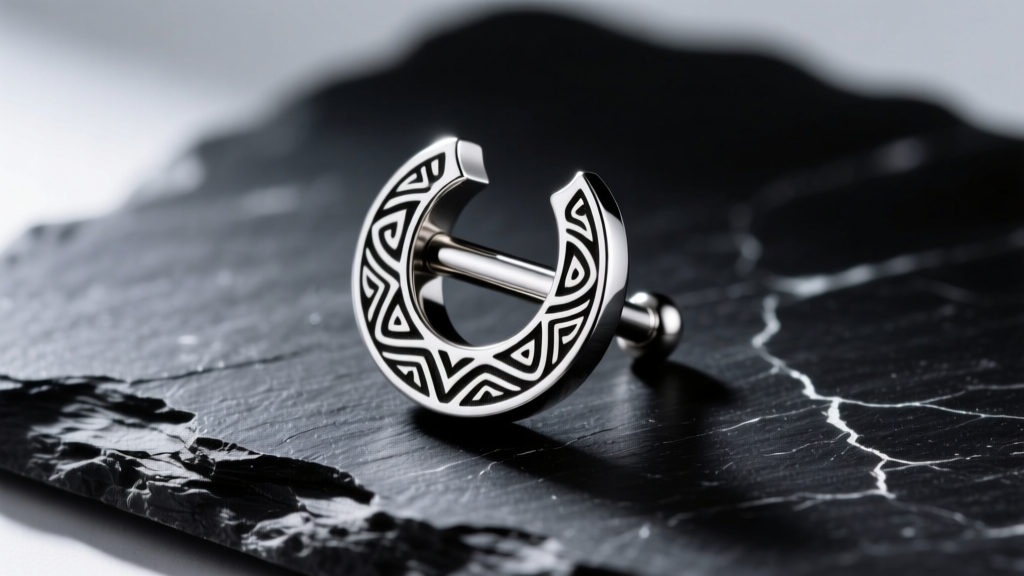
The daith piercing, located in the innermost cartilage fold, is the perfect anchor for tribal clicker rings. In 2026, the trend leans toward 'segmented' clickers—rings that feature a thick, textured tribal motif on the bottom half, tapering to a smooth, polished wire on the top half to reduce friction against the helix. Standard sizing is 16-gauge with a 3/8' (10mm) inner diameter.
3. Stacked Lobe Huggies
For those without cartilage piercings, the tribal aesthetic is achieved through stacking. Thick, 12-gauge or 10-gauge huggie hoops with bone-carved textures are worn in pairs or triples up a stretched or standard lobe. The key is the hinge mechanism; high-end tribal huggies now use stealth hinges that are completely invisible when closed, maintaining the illusion of a continuous, carved bone ring.
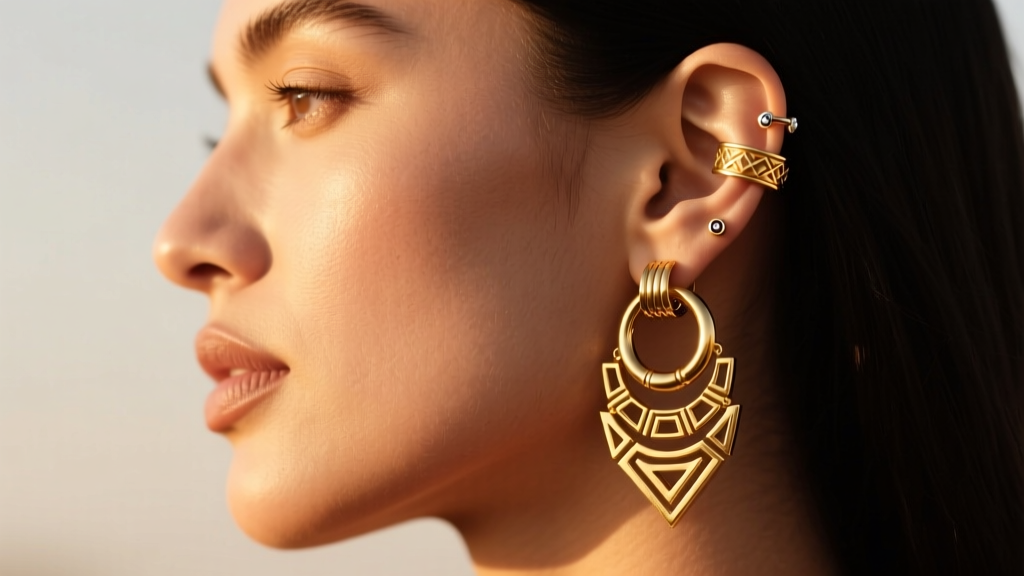
'The modern tribal ear is not about symmetry; it is about architectural balance. A heavy, textured conch shield on the left ear should be counterweighted by a series of sleek, minimalist titanium studs on the right.' — Lead Curator, Jewel Style Radar
Face Shape & Styling Framework
Tribal earrings are inherently bold and carry significant visual weight. Styling them requires an understanding of facial geometry to ensure the jewelry enhances rather than overwhelms your features.
- Round Faces: Avoid wide, circular tribal hoops or large conch shields that add horizontal volume. Instead, opt for elongated, vertical tribal drops or elongated ear cuffs that draw the eye downward, creating an illusion of length.
- Square / Angular Jawlines: Soften strong jawlines with organic, flowing tribal designs. Look for pieces with curved, wave-like engravings or asymmetrical bone-mimicking huggies. Avoid harsh, geometric Aztec patterns that mirror the angles of the jaw.
- Oval Faces: The universal canvas. Oval faces can carry the heaviest, most complex neo-tribal setups, including full ear shields and stacked heavy-gauge cartilage pieces without losing facial balance.
- Heart-Shaped Faces: Balance a narrower chin with volume at the top of the ear. Helix cuffs and upper-cartilage tribal clusters draw attention upward, harmonizing the facial proportions.
Sourcing & Price Guide for Authentic Neo-Tribal
The market is currently flooded with fast-fashion 'tribal' pieces made from painted acrylic and mystery metals. To invest in the genuine 2026 neo-primitive trend, you must look to specialized body jewelry artisans and high-end piercing studios. Brands like Industrial Strength, Neometal, and independent CAD-jewelers on platforms like Etsy are leading the charge in ASTM F136 titanium tribal designs.
Expect to pay between $80 and $150 for a single, high-quality titanium conch shield or custom daith clicker. Solid 14k gold tribal pieces, particularly those featuring hand-engraved scarification patterns or inlaid ethically sourced turquoise and obsidian, will command prices ranging from $300 to over $900. While the initial investment is steep, the biocompatibility, structural integrity, and timeless artistry of these pieces make them permanent fixtures in any serious jewelry collection. The era of disposable tribal jewelry is over; the era of neo-primitive heirlooms has arrived.


