Troubleshooting Spiral Gold Earrings: Snags, Fit & Care
Learn how to troubleshoot spiral gold earrings. Fix tension issues, prevent cartilage snags, and safely clean tight coils without damage.

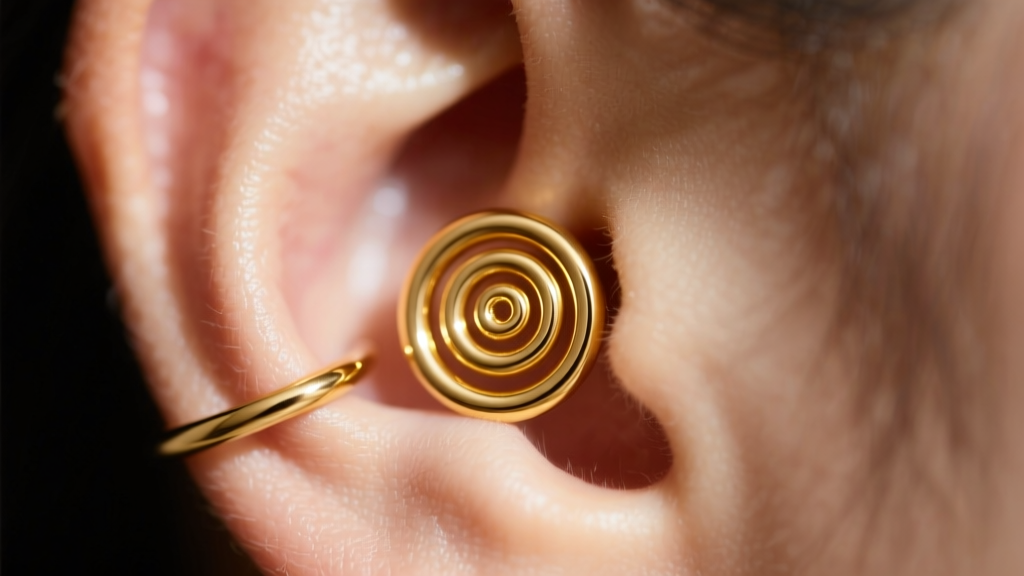
Spiral gold earrings—often designed as continuous wire hoops, ear cuffs, or helix wraps—are celebrated for their seamless, clasp-free aesthetic. However, their reliance on metal tension and continuous wire geometry creates a unique set of mechanical and hygienic challenges. Unlike standard stud or hinged hoop earrings, spirals lack a secure locking mechanism, making them prone to tension loss, hair snagging, and sebum buildup within the tight coils.
Whether you are dealing with a loose 14k gold lobe spiral or an 18k cartilage cuff that keeps pinching, this comprehensive troubleshooting guide provides actionable, metallurgically sound solutions to restore your jewelry's fit, function, and brilliance.
The Mechanics of Tension: Why Spirals Lose Their Grip
The primary failure point of any spiral earring is tension loss. Because these pieces rely on the spring-like memory of the gold alloy to grip the earlobe or cartilage, repeated insertion and removal gradually stretches the wire. When the gap between the two ends of the spiral widens beyond the thickness of your ear tissue, the earring becomes prone to slipping out during sleep or physical activity.
How to Safely Adjust Wire Tension
Many wearers attempt to squeeze the ends of a loose spiral back together using their fingers or standard metal jewelry pliers. This is a critical error. Metal-on-metal contact will mar the polished surface of the gold, and uneven pressure can warp the circular geometry into an oval shape, causing the earring to sit crookedly.
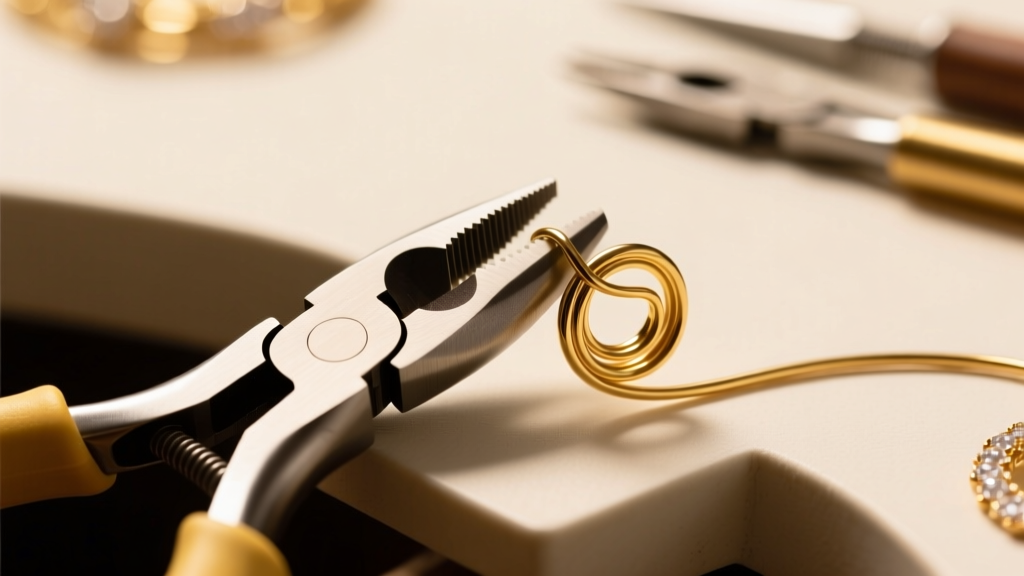
- Use Nylon-Jaw Pliers: Invest in a pair of nylon-jaw or plastic-tipped jewelry pliers. These grip the metal firmly without scratching the gold finish.
- Bend from the Center: Never squeeze the ends inward. Instead, place the pliers at the exact apex (the center back) of the spiral curve and apply gentle, incremental pressure to close the overall diameter.
- Check the Gap: The ideal gap between the two ends of the wire should be roughly 1mm to 1.5mm smaller than the thickness of your earlobe or cartilage to ensure a snug, secure fit without cutting off circulation.
Troubleshooting the 'Cheese Cutter' Effect in Cartilage
When spiral gold earrings are worn in upper ear piercings (such as the helix or forward helix), improper wire gauge can lead to a painful phenomenon known in the professional piercing community as the 'cheese cutter effect.' This occurs when a wire is too thin, causing it to slowly migrate through the tissue under the weight of the jewelry or the tension of the spiral.
According to the Association of Professional Piercers (APP), jewelry worn in cartilage piercings should ideally be 16-gauge (1.29mm) or 14-gauge (1.63mm) to distribute pressure evenly. Many fashion-grade spiral cuffs are manufactured at 18-gauge (1.02mm) or even 20-gauge (0.81mm) to save on precious metal costs and make the wire easier to bend by hand.
Expert Warning: If your 18-gauge or 20-gauge spiral earring is causing persistent tenderness, redness, or visible thinning of the cartilage ridge, remove it immediately. The tissue is migrating, and continued wear will result in a permanent tear.
The Fix: If you have a custom or high-end spiral that is too thin, take it to a professional bench jeweler. They can carefully solder a thicker, compatible gold wire to the existing spiral structure, or you can commission a replacement using the original design but cast in a 16-gauge or 14-gauge wire profile.
Solving the Snagging Epidemic
The open gap required to insert a spiral earring acts as a natural hook for hair strands, sweater threads, and towel loops. This snagging not only damages your clothing but can violently rip the earring from your ear, potentially tearing the piercing channel.
Strategic Placement and Modification
- Gap Orientation: Always insert the spiral so the opening faces downward or inward toward your neck, rather than upward or outward. Gravity and the natural motion of brushing your hair will push strands over the smooth curve of the wire rather than catching the open gap.
- Silicone O-Ring Stoppers: For wearers who sleep in their spirals, sliding a tiny, 1mm clear silicone o-ring over the trailing end of the wire can bridge the gap and prevent hair from catching. While slightly visible, this is the most effective zero-damage solution for nighttime wear.
- Threadless Conversion: Advanced jewelry modifiers can solder a threadless (push-pin) end to one side of the spiral and a receiving tube to the other, effectively converting a continuous tension wire into a secure, clasp-like mechanism that eliminates the snag gap entirely.
Deep Cleaning Tight Coils: Removing Trapped Debris
The tight 2mm to 3mm gaps between the coils of a spiral earring are notorious traps for sebum, dead skin cells, shampoo residue, and environmental dust. Over time, this buildup forms a hardened, grayish paste that can cause contact dermatitis and foul odors, often mistaken for a metal allergy.
While the Gemological Institute of America (GIA) notes that pure gold and high-karat alloys are highly resistant to tarnish, the alloys mixed into 14k gold (like copper and zinc) can react with trapped acidic skin oils, leading to localized surface discoloration.
Safe Cleaning Protocols by Material
| Cleaning Method | Best For | Risk to 14k/18k Gold | Risk to Gemstone Settings |
|---|---|---|---|
| Warm Water & Dawn Dish Soap | Plain gold spirals, heavy sebum buildup | None (Safe) | None (Safe) |
| Ultrasonic Jewelry Cleaner | Stubborn dirt in tight, plain-wire coils | None (Safe) | HIGH (Can loosen pave or tension settings) |
| Ammonia-Based Dip Cleaners | Restoring extreme shine to 14k gold | MODERATE (Can strip rhodium plating on white gold) | HIGH (Can fracture emeralds or opals) |
| Isopropyl Alcohol (70%+) | Quick sanitization before insertion | None (Safe) | MODERATE (Can dry out porous stones like turquoise) |
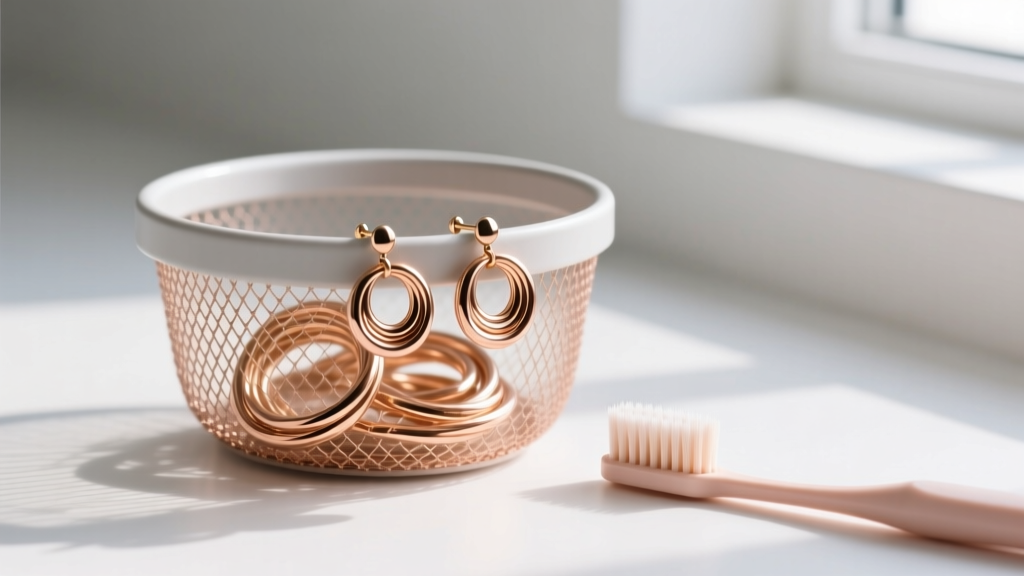
The Ultimate Manual Cleaning Routine: Mix one part clear, ammonia-free dish soap with ten parts warm distilled water. Let the spirals soak for 15 minutes to soften the keratin and sebum. Use an extra-soft baby toothbrush to gently sweep parallel to the wire coils. Brushing perpendicular to the coils can bend thin-gauge wire. Rinse thoroughly with distilled water and dry with a lint-free microfiber cloth.
Metallurgical Realities: 14k vs. 18k Gold in Spiral Designs
When troubleshooting the longevity of a spiral earring, you must consider the metallurgy of the gold alloy. The karat weight dictates not just the color and value, but the mechanical memory and work-hardening properties of the wire.
- 18k Gold (75% Pure Gold): Softer and more malleable. While it offers a richer yellow hue and higher hypoallergenic properties, 18k gold loses its tension memory much faster than lower karats. An 18k spiral will require more frequent adjustments and is highly susceptible to permanent deformation if bent too aggressively.
- 14k Gold (58.5% Pure Gold): The superior choice for tension-based jewelry. The higher percentage of alloy metals (copper, silver, nickel, or zinc) gives 14k gold a higher yield strength. It acts like a superior spring, retaining its circular shape and gripping tension far longer than 18k, making it the industry standard for continuous wire hoops and spiral cuffs.
When to Retire a Spiral Earring
Gold is a durable metal, but continuous wire jewelry has a finite mechanical lifespan. Every time you open and close a spiral to insert it, you are subjecting the metal to stress. Over time, this causes work hardening—a process where the metal becomes brittle at the molecular level.
If you notice micro-cracks along the curve of the wire, or if the spiral suddenly snaps while you are adjusting the tension, the metal has reached its fatigue limit. At this stage, the earring cannot be safely repaired by simply soldering the break; the surrounding metal is too brittle and will simply break again. Consult a master jeweler to see if the wire can be entirely re-cast or replaced, or responsibly recycle the gold melt value toward a new, structurally sound piece.