Safety Earring Backs: A Complete Budget and Value Guide
Discover the true value of safety earring backs. We compare silicone, friction, screw, and locking clutches to protect your fine jewelry investments.

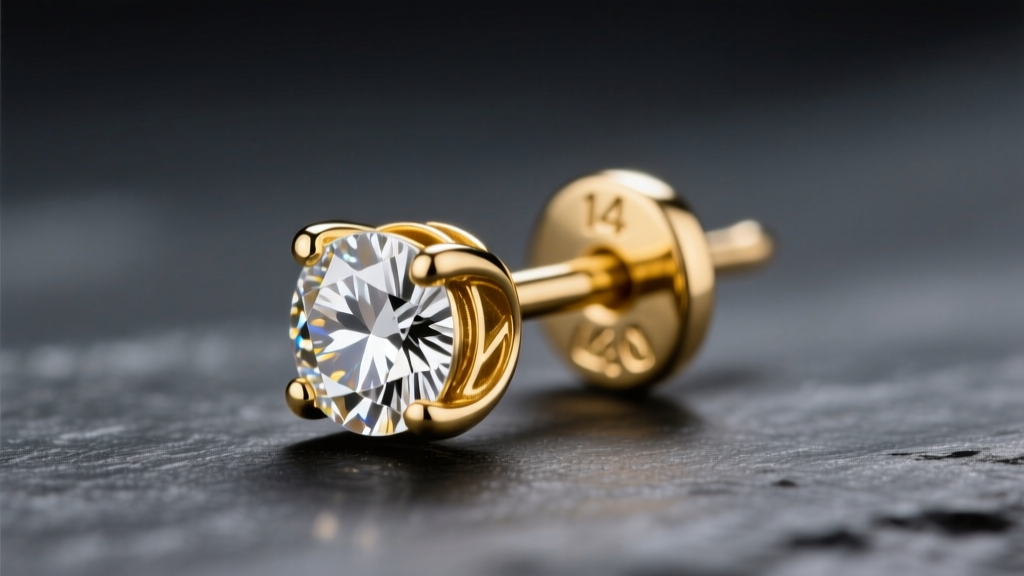
When investing in fine jewelry, the focus is almost entirely on the carat weight, cut quality, and precious metal purity of the piece itself. Yet, the single point of failure for any stud earring is the clutch mechanism securing it to your earlobe. Losing a $3,000 diamond solitaire because of a failing $2 piece of metal is a devastating and surprisingly common financial loss. This is where high-quality safety earring backs transition from a mere accessory to a critical insurance policy for your valuables.
In this comprehensive budget and value assessment, we break down the exact metallurgy, mechanical longevity, and cost-to-benefit ratio of the four primary earring back types. Whether you are securing everyday 20-gauge gold hoops or heirloom 18-gauge diamond studs, understanding the true value of your earring backs will save you money and heartbreak in the long run.
The True Cost of Losing a Stud: Why Backs Matter
According to industry data from Jewelers Mutual, 'mysterious disappearance'—where a piece of jewelry is lost without a clear cause like a theft or snag—is one of the most common insurance claims for fine jewelry. Standard friction backs rely on metal tension that degrades over time, leading to silent failures. When you factor in standard jewelry insurance deductibles, which typically range from $100 to $500, replacing a lost earring out-of-pocket can cost thousands. Evaluating safety earring backs through a value-driven lens means comparing the upfront cost of a premium clutch against the potential replacement cost and insurance premium hikes associated with losing the earring.
Material & Mechanism Breakdown: What Are You Paying For?
The market is flooded with options, but they are not created equal. Let us assess the actual value proposition of each tier.
Silicone & Plastic O-Rings (The Budget Tier)
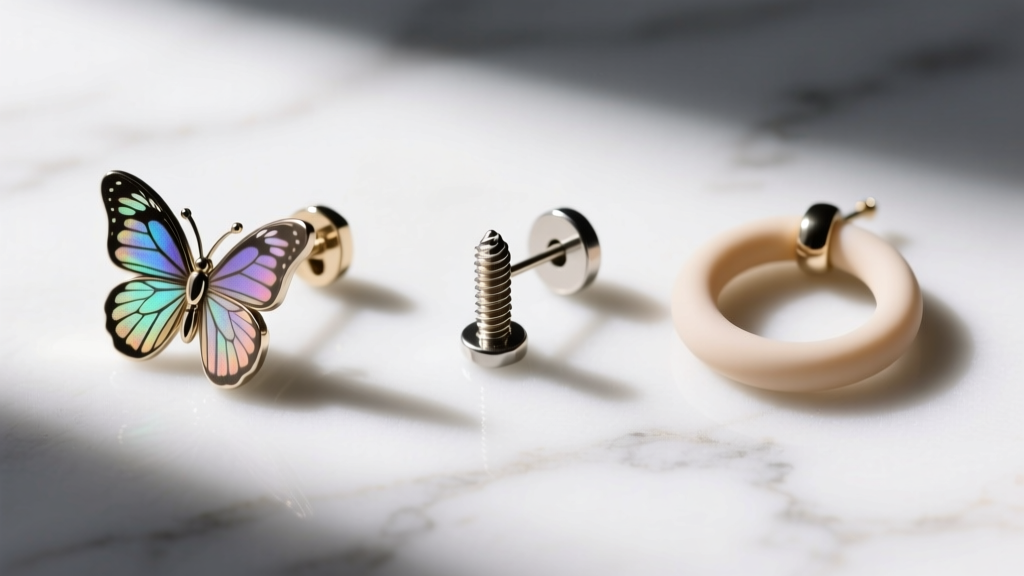
Silicone backs are the undisputed champions of short-term, low-cost security. Priced at roughly $3 to $8 for a pack of 10 pairs, they provide immense initial friction against the earring post. However, from a long-term value perspective, they are a depreciating asset. Silicone is highly porous and degrades rapidly when exposed to isopropyl alcohol, hand sanitizers, and natural sebum. A silicone back will typically stretch, tear, or become a hygiene hazard within 3 to 6 months of daily wear. They are excellent for temporary security during travel or athletic activities, but they offer zero long-term value for fine jewelry.
Standard Friction 'Butterfly' Backs (The Baseline)
The traditional butterfly clutch is the industry standard, usually included with the purchase of the earrings. Crafted from 14k gold, platinum, or surgical steel, they cost between $15 and $40 per pair. Their mechanism relies on two rolled metal tabs that grip the grooved earring post. While adequate for fashion jewelry or pieces valued under $500, the metal tabs lose their tension over time. Furthermore, the open-back design traps dead skin and hair products, requiring frequent ultrasonic cleaning to maintain a secure grip.
Screw Backs (The Mid-Range Security)
Screw backs introduce a threaded mechanical advantage, requiring the user to twist the backing onto a correspondingly threaded post. Priced between $40 and $80, they offer a massive upgrade in security for active individuals. The primary drawback affecting their long-term value is the risk of cross-threading. If forced at an improper angle, the delicate threads (often M0.8 for 20-gauge posts) will strip, rendering both the back and the earring post useless. Repairing a stripped thread requires a bench jeweler to solder on a new post, costing an additional $50 to $90.
Locking Mechanisms like La Pousette (The Premium Tier)
Locking safety earring backs, most notably the patented La Pousette clutch, represent the pinnacle of jewelry security. Priced between $120 and $250 per pair, they utilize a spring-loaded internal mechanism that snaps securely into a notched earring post. To remove them, the user must pinch two tiny side tabs to retract the internal lock. While the initial capital expenditure is high, the mechanical lifespan of a solid 18k gold or platinum locking clutch exceeds 15 years with basic maintenance. For any single earring valued over $1,500, this premium tier offers an unbeatable return on investment.
Value Matrix: Matching the Back to the Earring's Worth
To make an informed purchasing decision, use the following framework to align your earring back budget with the replacement value of your jewelry.
| Back Type | Avg. Cost (Pair) | Security Level | Post Requirement | Best Value Use Case |
|---|---|---|---|---|
| Silicone O-Ring | $3 - $8 | Low (Temporary) | Any smooth 20G/18G | Athletics, travel, costume jewelry |
| Friction (Butterfly) | $15 - $40 | Medium | Grooved 20G/18G | Everyday wear, pieces under $500 |
| Screw Back | $40 - $80 | High | Threaded 20G/18G | Active lifestyles, children's fine jewelry |
| Locking (La Pousette) | $120 - $250 | Maximum | Notched 18G/16G | Heirlooms, diamond solitaires over $1,500 |
Hidden Costs: Post Compatibility and Gauge Sizing
A critical mistake many consumers make when upgrading their safety earring backs is ignoring post compatibility. You cannot simply slide a premium locking clutch onto a standard friction post. The internal spring mechanism requires a deep, precisely machined notch to engage properly.
Furthermore, gauge sizing plays a massive role in structural integrity. Standard fashion studs are typically 20-gauge (0.81mm thick). However, the internal mechanics of a high-quality locking back require more physical space. Therefore, most premium locking backs are engineered for 18-gauge (1.02mm) or 16-gauge (1.29mm) posts. If your current diamond studs feature 20-gauge posts, upgrading to locking backs will require a bench jeweler to laser-weld new 18-gauge notched posts onto your earrings. This service typically costs $45 to $85 per earring. When budgeting for premium safety earring backs, you must factor in this one-time bench fee to ensure the mechanical integrity of the locking system.
Maintenance and Wear-and-Tear Costs
Value is not just about the purchase price; it is about the total cost of ownership over time. The Gemological Institute of America (GIA) emphasizes that regular maintenance is key to preventing jewelry loss. Different backs require different maintenance schedules, which impacts their long-term value.
- Silicone: Requires zero maintenance but demands total replacement every 3 to 6 months. Annual cost: ~$12.
- Friction: Requires weekly soaking in warm soapy water to remove sebum buildup that compromises tension. The metal tabs must be gently squeezed with pliers every 12 months to restore grip. Lifespan: 2 to 4 years.
- Screw: Requires careful cleaning of the threads using a soft toothbrush. Cross-threading is a constant risk during reattachment. Lifespan: 5+ years if handled meticulously.
- Locking: The internal spring can become jammed if lotions or hair products solidify inside the clutch. Requires monthly flushing with an ultrasonic cleaner or a specialized jewelry cleaning pen. Lifespan: 10 to 20+ years.
Expert Verdict: Where to Save and Where to Splurge
When conducting a budget and value assessment of safety earring backs, the golden rule of thumb is to allocate 5% to 10% of the earring's total appraised value toward its security mechanism.
If you are wearing $50 gold ball studs, a $3 pack of silicone backs or the included friction clutches provide perfectly adequate value. However, if you are wearing a $4,000 pair of diamond solitaires, relying on a standard butterfly back is a mathematical gamble with poor odds. Spending $180 on a pair of 18k gold locking safety earring backs, plus $90 for a post upgrade, represents a fractional premium that guarantees your investment stays exactly where it belongs.
Ultimately, true value in jewelry is found in peace of mind. By matching the mechanical security of your earring backs to the financial and sentimental value of your studs, you ensure that your fine jewelry remains a lasting asset rather than a cautionary tale.


