How to Style Autumn Earrings: Step-by-Step 2026 Guide
Master the art of styling autumn earrings with our step-by-step 2026 guide. Learn material pairings, gauge tips, and face-shape matching for fall.


Introduction to Autumn Ear Styling in 2026
As the air turns crisp and wardrobes transition toward heavier fabrics, the jewelry industry shifts its focus to richer textures, warmer metals, and deeper gemstone palettes. Styling autumn earrings in 2026 is no longer just about matching colors; it is an intricate balance of metallurgy, weight distribution, and practical wearability against cold-weather garments. The modern jewelry enthusiast understands that a beautifully curated fall ear stack must withstand the friction of wool scarves, the weight of oversized knitwear, and the environmental humidity of the changing seasons.
Whether you are curating a curated lobe stack or managing a delicate helix piercing, transitioning your ear jewelry for the fall requires a strategic approach. This comprehensive, step-by-step guide will walk you through the exact material grades, gauge sizes, and silhouette pairings needed to elevate your autumn earrings while maintaining the health and comfort of your piercings.
Step 1: Selecting the Right Autumn Metals and Gemstones
The foundation of any successful fall jewelry rotation lies in the alloy composition and gemological properties of your pieces. For autumn earrings, 14k yellow gold remains the undisputed champion. Unlike 18k gold, which has a softer, more buttery hue, 14k gold contains a higher percentage of copper alloy (typically around 12-15%). This copper content imparts a warmer, slightly rosier undertone that perfectly mirrors the amber and rust tones of autumn foliage.
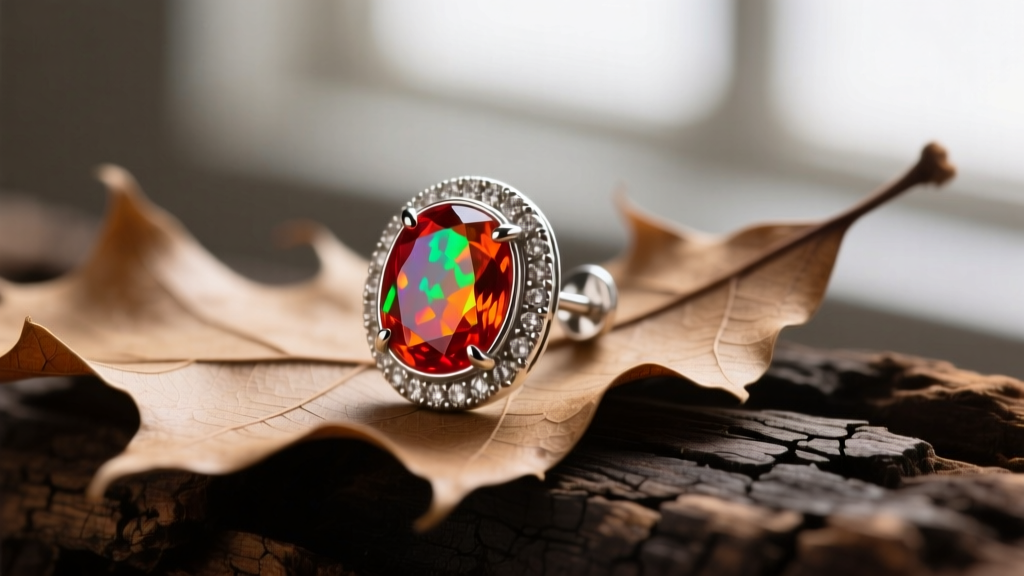
When it comes to gemstones, durability is just as critical as color. While opals and pearls offer a moody, seasonal aesthetic, their lower Mohs hardness scores make them susceptible to scratching when pulled against heavy winter coats. Instead, opt for stones that offer both autumnal depth and structural integrity. According to the Gemological Institute of America (GIA), smoky quartz achieves its rich brown and gray hues through natural irradiation of trace aluminum within the crystal lattice. Ranking at a 7 on the Mohs scale, smoky quartz is exceptionally durable for daily autumn wear. Similarly, deep red garnets provide a luxurious pop of color against dark outerwear without the fragility of fire opal.
| Material / Gemstone | Grade / Specification | Mohs Hardness | Estimated Price Range | Best Autumn Application |
|---|---|---|---|---|
| 14k Yellow Gold | 58.5% Gold, Copper/Silver Alloy | N/A (Metal) | $80 - $350 | Everyday hoops and huggies |
| Oxidized Sterling Silver | 92.5% Silver, Intentional Patina | N/A (Metal) | $40 - $150 | Edgy, textured lobe stacks |
| Smoky Quartz | Natural Brown/Gray Macrocrystalline | 7 | $30 - $120 | Statement drop earrings |
| Mozambique Garnet | Pure Red to Red-Brown Silicate | 7 to 7.5 | $60 - $250 | Bezel-set studs and dangles |
Step 2: Matching Earring Silhouettes to Fall Wardrobes
Autumn fashion is defined by volume and layering. Turtlenecks, chunky cardigans, and wide-brimmed hats fundamentally alter the visual real estate around your face and neck. Choosing the right silhouette for your autumn earrings ensures your jewelry complements, rather than competes with, your seasonal wardrobe.
The Turtleneck Rule: Elongation and Movement
A high-neck turtleneck creates a solid block of fabric that can make the neck appear shorter and the face wider. To counteract this, avoid wide, circular hoops or short, clustered studs. Instead, opt for elongated drop earrings or linear dangles that fall at least two inches below the earlobe. The vertical movement draws the eye downward, creating an illusion of a longer, more elegant neckline. Materials like brushed brass or matte 14k gold work beautifully here, catching the muted autumn light without overwhelming the outfit.
The Scarf and Cowl Neck Strategy: Snag-Free Profiles
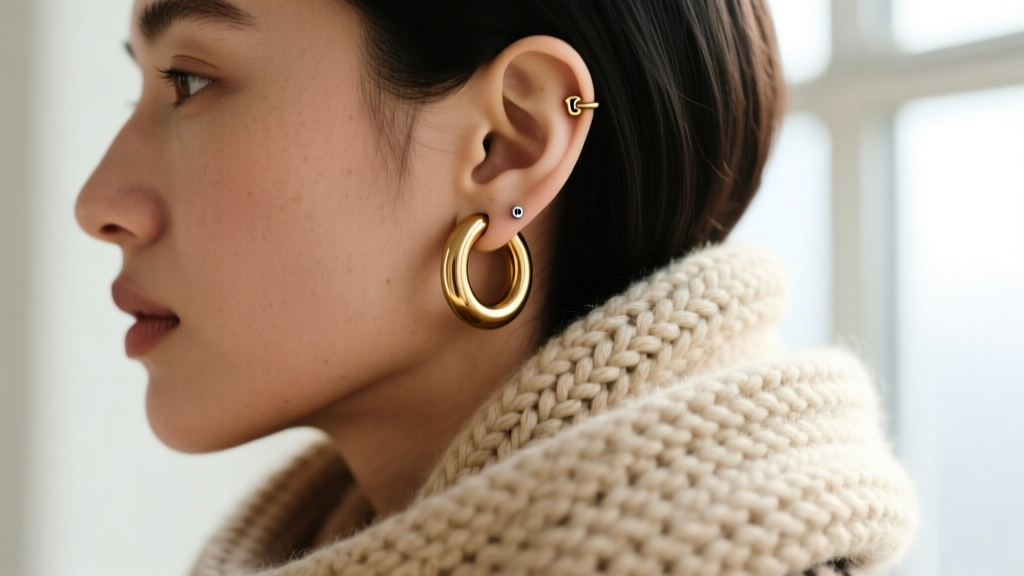
When incorporating wool or cashmere scarves into your daily rotation, the physical profile of your earrings becomes a matter of practicality. Prong-set gemstones and intricate filigree designs act like tiny grappling hooks, catching on loose knit threads and potentially damaging both the garment and the piercing. For scarf-heavy days, transition to sleek, continuous huggie hoops or flush-set stud earrings. Bezel settings, where a thin rim of metal completely surrounds the gemstone, are the ultimate fail-safe for autumn layering.
- Chunky Knit Sweaters: Pair with bold, geometric 14k gold studs to provide a sharp contrast to the soft, oversized fabric.
- Open Collar Blazers: Opt for medium-sized textured hoops (15mm - 20mm) that frame the face without getting lost in the lapels.
- High-Neck Outerwear: Choose ear cuffs and helix huggies that draw attention upward, bypassing the crowded collar area entirely.
Step 3: Gauging and Sizing for Layered Autumn Looks
One of the most overlooked aspects of styling heavy autumn earrings is the physics of the piercing itself. Standard fashion earrings are typically manufactured with 20-gauge (0.81mm) or 22-gauge (0.64mm) posts and wires. While these ultra-thin gauges are perfectly adequate for lightweight, minimalist studs, they pose a significant risk when supporting the heavier, more substantial silhouettes favored in fall fashion.
Consider a dramatic autumn drop earring featuring a 20-carat smoky quartz briolette suspended from a solid brass chain. This single piece can easily weigh upwards of 8 to 10 grams. When you hang 10 grams of weight on a 0.81mm wire, the sheer force concentrates entirely on the bottom millimeter of your earlobe fistula. Over the course of a long day, this localized pressure leads to the dreaded 'cheese-cutter effect,' where the thin wire slowly migrates downward through the tissue, causing pain, inflammation, and potential tearing.
To safely wear heavy autumn drops, you must upgrade your hardware. Look for earrings featuring 18-gauge (1.02mm) or, ideally, 16-gauge (1.29mm) French wires or lever-backs. The increased surface area of a thicker wire distributes the weight more evenly across the fistula, drastically reducing shear stress. If your current piercings are stretched to accommodate thicker gauges, consult a professional piercer to safely transition your jewelry.
Step 4: Cartilage vs. Lobe Placement for Cold Weather
The transition to autumn also means the return of beanies, earmuffs, and tight hoods. While lobe piercings are generally protected by the anatomy of the outer ear, cartilage piercings (such as the helix, tragus, and conch) are highly vulnerable to environmental friction. The Association of Professional Piercers (APP) consistently warns against the dangers of repetitive friction on healing or even fully mature cartilage fistulas, which can trigger irritation bumps and localized dermatitis.
If you have a curated cartilage stack, you must adapt your jewelry profile for the colder months. Standard butterfly-back studs feature a sharp, protruding post that will aggressively scrape against the inside of an acrylic beanie every time you adjust it. To winterize your cartilage, swap out standard studs for 16g or 14g flat-back titanium labrets. The flat disc sits flush against the back of the ear, eliminating the snag point entirely and providing a smooth surface that glides harmlessly against winter headwear.
'The key to maintaining healthy cartilage piercings through the winter is minimizing mechanical irritation. Flat-back, internally threaded titanium jewelry is the gold standard for anyone who frequently wears hats or tight hoods.' — Professional Piercing Guidelines, APP
Troubleshooting Common Autumn Earring Fails
Fail 1: The Wool Snag and Prong Damage
The Problem: You pull your cashmere scarf over your head, and the delicate prongs of your vintage garnet studs catch the yarn, bending the metal and loosening the stone.
The Solution: Reserve prong-set and pavé earrings for evenings out or days when you are wearing open-neck silk or cotton blouses. For daytime autumn wear where scarves and high collars are mandatory, strictly adhere to bezel-set, flush-set, or high-polish metal-only designs. If you must wear prong-set stones, opt for 'rubbed over' bezels or low-profile V-prongs that minimize the catching angle.
Fail 2: Rain-Induced Tarnish on Brass and Copper
The Problem: Autumn weather is notoriously damp. Unsealed brass, bronze, and copper earrings react rapidly with the moisture and oxygen in the air, leading to a dull, greenish-black patina that can temporarily stain the skin and ruin the aesthetic of your ear stack.
The Solution: If you love the warm, earthy tones of raw brass or copper for fall, you must proactively seal the metal. Apply a micro-thin layer of Renaissance Wax or a specialized jewelry sealant to the back and edges of the earrings before wearing them. Alternatively, invest in PVD-coated (Physical Vapor Deposition) stainless steel pieces that mimic the exact color of antique brass but offer complete immunity to moisture and tarnishing.
Fail 3: Static Cling and Hair Tangles
The Problem: The low humidity of autumn, combined with synthetic-lined coats and wool hats, creates a massive static electricity charge. Long, intricate dangle earrings become magnets for flyaway hair, resulting in painful tangles and ripped strands.
The Solution: Combat static by running a lightweight, anti-frizz hair serum over your hands and lightly grazing the ends of your hair before putting on your earrings. Additionally, favoring sleek, high-polish metal drops over textured or matte-finished jewelry reduces the microscopic surface friction that allows hair to wrap and bind around the metal.
Conclusion
Styling autumn earrings in 2026 is a masterclass in balancing aesthetic warmth with structural pragmatism. By understanding the metallurgical benefits of 14k gold, the durability of smoky quartz and garnet, and the vital importance of proper gauge sizing, you can build a fall jewelry wardrobe that is as resilient as it is beautiful. Remember to adapt your silhouettes to your layers, protect your cartilage from winter friction, and always prioritize snag-free settings when wrapping up against the cold. With these expert strategies, your ear stack will remain flawless from the first falling leaf to the first winter snow.


