Anchor Earrings: The Beginner's Guide to Nautical Jewelry Styles
Discover everything about anchor earrings in our beginner-friendly guide. Learn about materials, styles, gauge sizes, and how to style nautical jewelry.

Why Anchor Earrings Remain a Timeless Staple
When it comes to building a versatile jewelry collection, nautical motifs have held their ground for centuries. Anchor earrings, in particular, transcend seasonal fads, offering a subtle nod to maritime history while serving as a symbol of stability, hope, and steadfastness. For beginners stepping into the world of thematic jewelry, the anchor motif provides an excellent entry point. It is universally recognized, gender-neutral, and available in a vast array of silhouettes ranging from micro-studs to elaborate shoulder-duster dangles.
However, choosing the right pair requires more than just picking a design you like. Understanding the nuances of metal grades, post gauges, and structural weight is critical for ensuring your earrings are both comfortable and long-lasting. This guide will break down the essential specifications you need to know before purchasing your first pair of anchor earrings.
Decoding the Anatomy and Styles
The traditional anchor consists of a ring (the shackle), a central shaft (the shank), and curved arms with pointed ends (the flukes). Jewelry designers manipulate these elements to create distinct styles suited for different occasions and piercings.
The Classic Anchor Stud
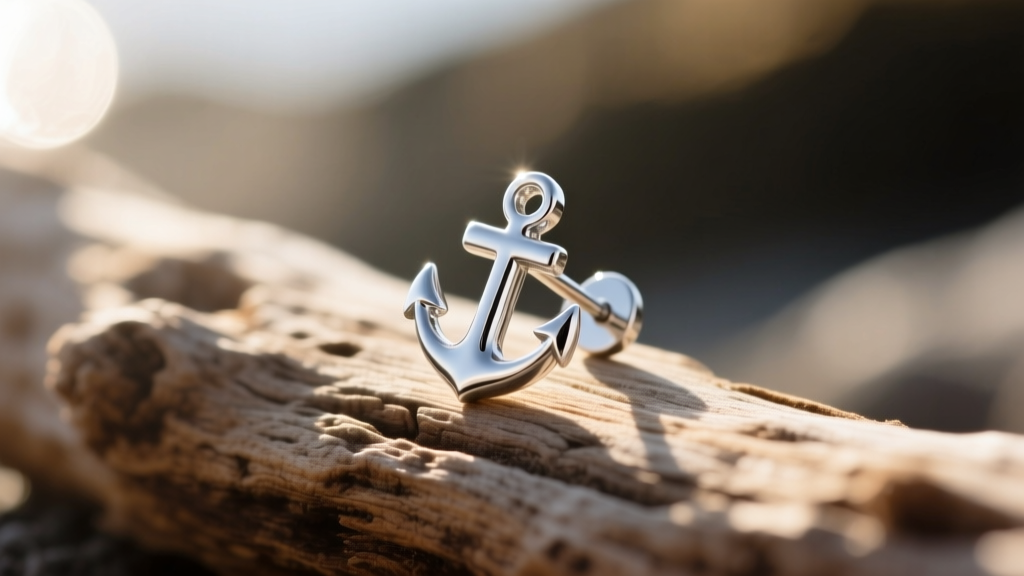
Stud earrings are the most beginner-friendly option. A standard anchor stud typically measures between 6mm and 10mm in height. Because the design is inherently top-heavy (due to the shackle ring at the top), high-quality studs feature a slightly thicker base or a specialized flat-back post to prevent the anchor from drooping forward on the earlobe. For everyday wear, look for studs with a 6mm to 8mm profile; anything larger can catch on hair and clothing.
Drop and Dangle Designs
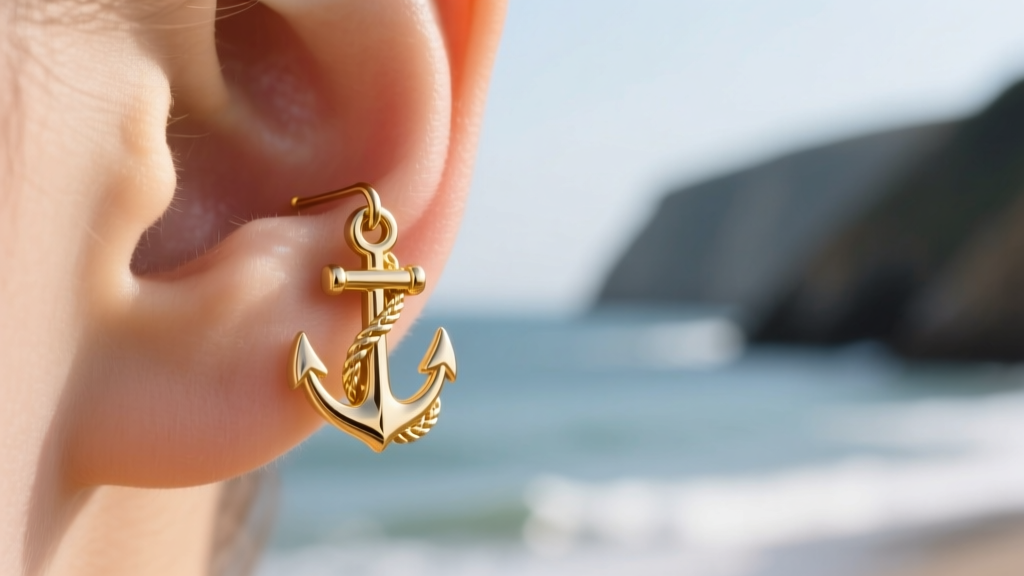 Drop earrings feature an anchor motif that hangs just below the earlobe, usually suspended from a small stud or a French wire hook. Dangles take this a step further, incorporating movement. A popular variation is the 'rope and anchor' dangle, where a textured metal rope wraps around the shank. When selecting dangles, weight is your primary concern. Opt for hollow-cast or stamped metal designs that weigh under 5 grams per earring to prevent lobe stretching and fatigue over prolonged wear.
Material Matters: What to Look For
The maritime theme might evoke images of salt water and ocean air, but these elements are actually the enemies of costume jewelry. Selecting the correct metal grade is paramount for preventing contact dermatitis and tarnish.
| Metal Grade | Composition & Standards | Price Range | Best For |
|---|---|---|---|
| 316L Surgical Steel | Iron-based alloy with low carbon and high chromium. Must be ASTM F138 compliant for body safety. | $15 - $35 | Beginners, sensitive skin, daily wear |
| 925 Sterling Silver | 92.5% pure silver, 7.5% copper. Prone to tarnish if exposed to moisture. | $25 - $60 | Occasional wear, classic aesthetics |
| 14k Gold Vermeil | Must have a sterling silver base with a minimum 2.5-micron thickness of 10k+ gold plating. | $60 - $120 | Long-term wear, luxury look on a budget |
| Solid 14k Gold | 58.5% pure gold alloyed with zinc, silver, or copper for durability. | $150 - $400+ | Lifetime wear, swimming, heirloom pieces |
Always avoid 'gold-plated' brass or nickel alloys. According to the Association of Professional Piercers (APP), nickel is a leading cause of allergic contact dermatitis, and unverified plated metals can flake into the piercing channel, causing severe irritation.
Sizing and Gauge: A Beginner's Blueprint
The 'gauge' refers to the thickness of the earring post that passes through your piercing. Getting this wrong can lead to discomfort or even tearing of the fistula (the piercing hole).
- 20 Gauge (0.81mm): The industry standard for most commercial fashion earrings, including lightweight anchor studs. It is thin and easy to insert into standard lobe piercings.
- 18 Gauge (1.02mm): Slightly thicker, offering better structural integrity for heavier dangle earrings. It provides a more secure fit and reduces the 'cheese-cutter effect' (where a thin wire slowly slices through the earlobe tissue under weight).
- 16 Gauge (1.29mm): Typically reserved for cartilage piercings like the helix or tragus. If you are buying an anchor ear cuff or a cartilage stud, verify that the post or wire is 16G to match standard cartilage piercing dimensions.
If you are transitioning between gauges, use a taper or consult a professional piercer to avoid micro-tears in the tissue.
Styling Anchor Earrings for Your Face Shape
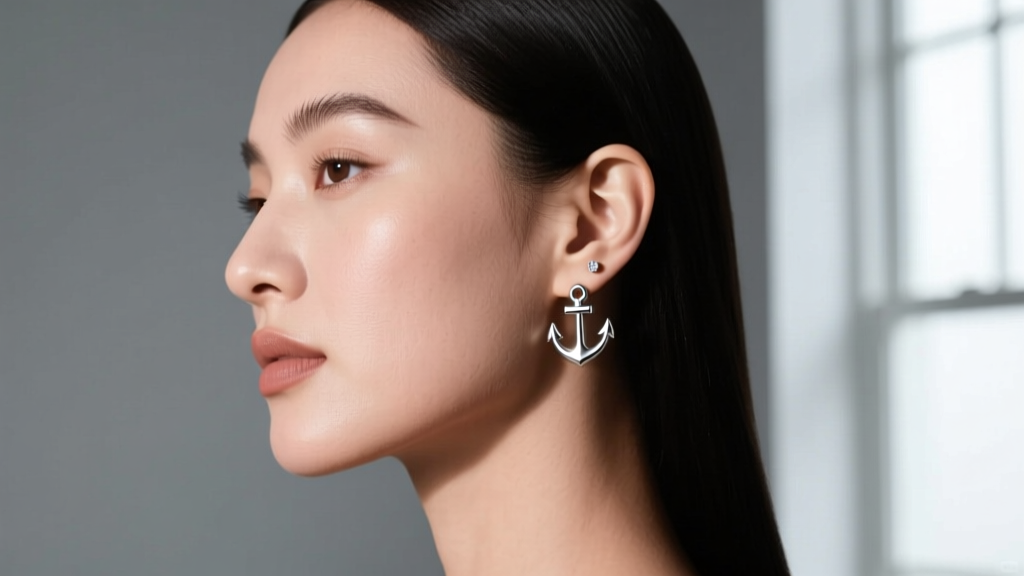 While personal preference always reigns supreme, understanding how the geometry of an anchor earring interacts with your facial structure can elevate your styling game.
- Round Faces: Avoid wide, chunky anchor studs that emphasize facial width. Instead, opt for elongated anchor drop earrings or vertical shank designs that draw the eye downward, creating an illusion of length.
- Square Faces: Soften strong jawlines with anchor dangles that feature curved elements, such as a rope wrapped around the shank or a small freshwater pearl suspended from the shackle ring. Avoid sharp, geometric, minimalist anchor outlines.
- Oval Faces: The most versatile shape. You can pull off oversized anchor hoops, heavy maritime dangles, and micro-studs with equal ease.
- Heart-Shaped Faces: Balance a narrower chin by wearing anchor studs or small huggie hoops that feature the anchor motif. This keeps the visual weight closer to the ear and upper cheekbones.
Care and Maintenance for Maritime Metals
Irony alert: Despite their nautical theme, anchor earrings should never be worn in the ocean. Salt water accelerates the oxidation of sterling silver and can degrade the porous layers of gold vermeil.
To maintain the brilliant shine of your anchor earrings, adopt a strict maintenance routine. After wearing sterling silver pieces, wipe them down with a microfiber cloth to remove natural skin oils and environmental sulfur. For gold vermeil, use only a mild, phosphate-free dish soap and warm water, gently scrubbing with a baby-hair brush to clean the crevices around the flukes and shackle.
When evaluating the longevity of gold pieces, the Gemological Institute of America (GIA) notes that the durability of gold jewelry heavily depends on its alloy composition and plating thickness. By investing in proper vermeil or solid gold, and storing your earrings in anti-tarnish flannel pouches, your nautical staples will remain a cornerstone of your wardrobe for years to come.
Whether you are buying your first pair of 316L steel studs or investing in solid 14k gold dangles, prioritizing material integrity and proper gauge sizing ensures your anchor earrings will be a cherished, comfortable, and stylish addition to your collection.


