How to Choose and Style Authentic Aquamarine Hoop Earrings
Learn how to authenticate, style, and clean aquamarine hoop earrings. Our step-by-step guide covers beryl grading, hoop gauges, and safe care.


The Ultimate Guide to Aquamarine Hoop Earrings
Aquamarine, the breathtaking blue variety of the beryl mineral family, has long been a favorite among gemstone enthusiasts. When set into hoop earrings, these pale blue stones offer a versatile, elegant look that transitions seamlessly from daytime casual to evening formalwear. However, buying, styling, and maintaining aquamarine jewelry requires specific gemological knowledge. Unlike diamonds or sapphires, aquamarine possesses unique physical properties, specific gravity, and distinct vulnerabilities that dictate how it should be set and cleaned.
This step-by-step guide will walk you through authenticating natural beryl, selecting the correct hoop hardware, mapping styles to face shapes, and executing a safe cleaning protocol to protect your investment.
Step 1: Verifying Authenticity and Gemological Quality
The market is flooded with blue topaz and synthetic spinel masquerading as aquamarine. To ensure you are purchasing genuine aquamarine hoop earrings, you must understand the stone's optical and physical characteristics.
The Beryl Family and Pleochroism
Aquamarine ranks between 7.5 and 8 on the Mohs hardness scale, making it durable enough for daily wear, provided the setting is secure. One of the most reliable ways to identify genuine aquamarine is through its pleochroism. When viewed from different angles, natural aquamarine exhibits a faint color shift between pale blue and nearly colorless. Blue topaz, its most common imitator, does not display this specific pleochroic behavior and typically possesses a higher refractive index, giving it a harsher, more glass-like sparkle compared to the soft, vitreous luster of beryl.
Understanding Heat Treatment
According to the Gemological Institute of America (GIA), the vast majority of natural aquamarine on the market is heat-treated to remove greenish or yellowish secondary hues, resulting in the highly prized pure blue color. This treatment is permanent, stable, and universally accepted in the gem trade. However, it should always be disclosed by the retailer. If a vendor claims their stones are 'untreated' but they possess a deep, flawless Santa Maria blue color at a bargain price, proceed with extreme caution.
Step 2: Selecting the Right Hoop Mechanism and Gauge
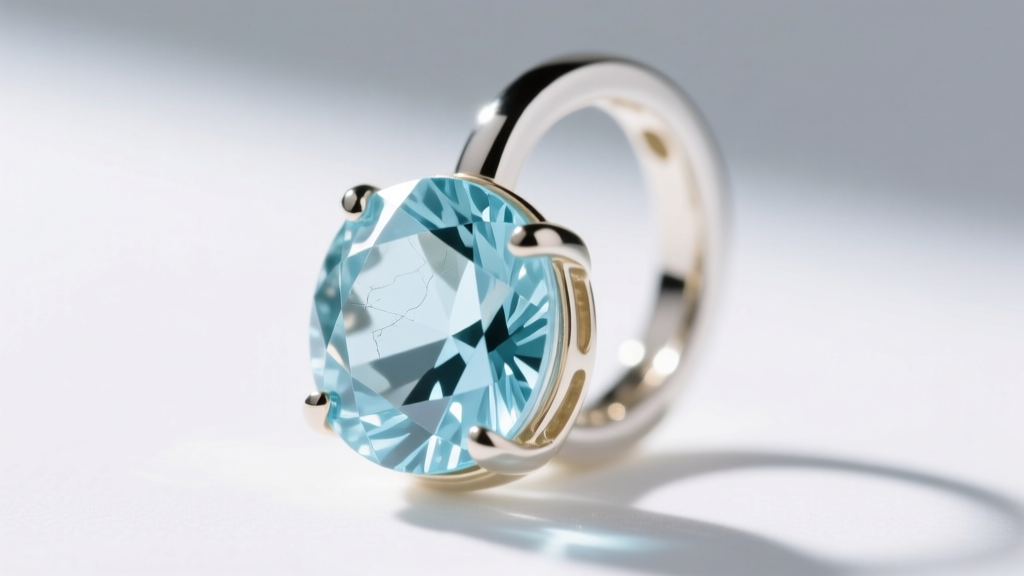
The longevity of your aquamarine hoop earrings depends heavily on the metal hardware. Because aquamarine has a distinct cleavage plane and can chip if struck against a hard surface, the hoop's weight distribution and closure mechanism are critical.
Wire Gauge and Piercing Compatibility
Standard earlobe piercings are typically done at 20-gauge (0.81mm) or 18-gauge (1.0mm). If you are buying aquamarine hoops for a cartilage or helix piercing, you will likely need a 16-gauge (1.2mm) wire to prevent the 'cheese-cutter effect,' where a thin wire migrates through the tissue under the weight of the gemstone.
Prong vs. Bezel Settings for Hoops
While prong settings allow maximum light entry, they leave the girdle of the aquamarine exposed to knocks. For hoop earrings, which naturally swing and move, a bezel or half-bezel setting is vastly superior. A bezel wraps a thin rim of metal entirely around the stone's edge, protecting it from lateral impacts.
| Closure Type | Security Level | Best Use Case |
|---|---|---|
| Clicker (Hinged) | High | Cartilage, Helix, and heavy gemstone hoops |
| Latch-Back | Medium-High | Standard lobe wear, medium-weight aquamarine drops |
| Continuous (Endless) | Low-Medium | Minimalist huggies, lightweight sleeper hoops |
| Snap Hinged | High | Thicker gauge hoops, secure daily wear |
Step 3: Styling Aquamarine Hoops for Your Face Shape
Aquamarine's cool, tranquil hue pairs beautifully with white metals like platinum and 14k white gold, which enhance its icy blue tones. Conversely, setting them in 14k or 18k yellow gold creates a striking, warm contrast that is highly trendy in contemporary jewelry design. Beyond metal color, the physical dimensions of the hoop should complement your facial structure.
- Round Faces: Avoid perfectly circular, wide hoops that mimic the face's natural geometry. Instead, opt for elongated oval hoops or medium-sized hoops featuring a vertical aquamarine drop. This creates an optical illusion of length, slimming the jawline.
- Square Faces: Angular jawlines benefit from softening curves. Classic, perfectly round medium-to-large aquamarine hoops (30mm to 40mm in diameter) will soften sharp facial features and draw the eye outward.
- Heart-Shaped Faces: With a broader forehead and narrow chin, teardrop-shaped hoops or huggies with a subtle aquamarine pavé bottom half add necessary visual weight to the lower half of the face.
- Oval Faces: The most versatile shape. You can confidently wear anything from tight 10mm aquamarine huggies to dramatic 50mm statement hoops.
Step 4: The Proper Cleaning Protocol (Avoiding Damage)
Cleaning aquamarine requires a delicate touch. While the stone itself is relatively hard, the internal structure can harbor vulnerabilities that standard jewelry cleaning methods will exploit.
Critical Warning: Never place aquamarine hoop earrings in an ultrasonic cleaner. Natural beryl frequently contains liquid inclusions and microscopic internal fractures. The high-frequency vibrations of an ultrasonic bath can cause these inclusions to expand, effectively shattering the stone from the inside out. Similarly, avoid steam cleaners, as sudden thermal shock can fracture the gem.
According to GIA care guidelines, the safest and most effective method for cleaning aquamarine is manual washing.
The 4-Step Manual Cleaning Method
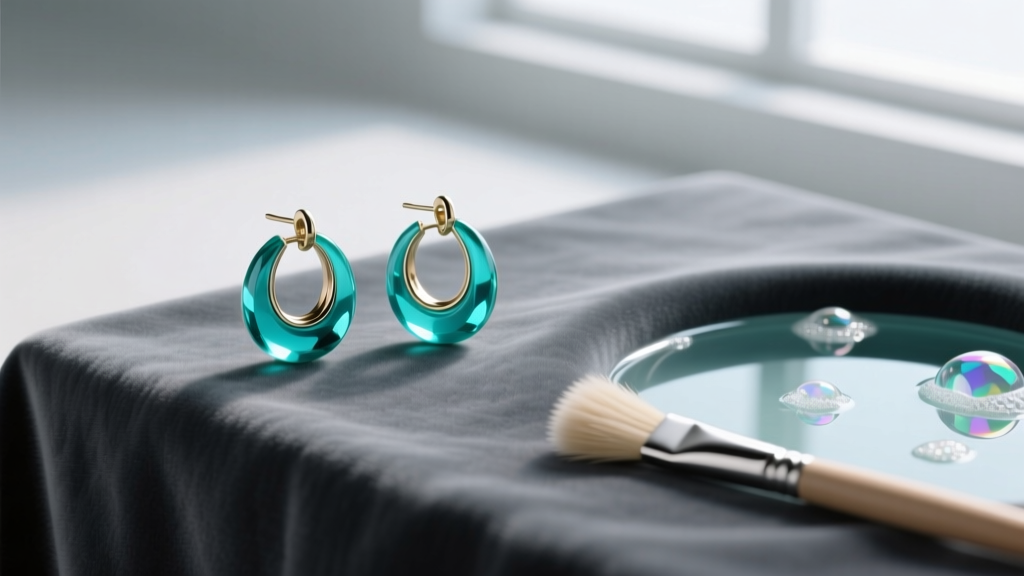
- Prepare the Solution: Fill a small ceramic bowl with lukewarm (never hot) water and add three drops of mild, phosphate-free dish soap.
- Soak Briefly: Submerge the aquamarine hoops for no more than 3 to 5 minutes to loosen sebum, lotion, and environmental dust.
- Agitate Gently: Using a brand-new, ultra-soft baby toothbrush, gently brush the back of the gemstone (the pavilion) where grease accumulates. Do not scrub the metal prongs or bezel aggressively, as this can wear down the metal over time.
- Rinse and Dry: Rinse the hoops under a gentle stream of lukewarm water. Ensure the drain is plugged. Pat dry with a lint-free microfiber cloth, ensuring no moisture is trapped in the hinge mechanism of the hoop.
Step 5: Pricing Expectations and Value Assessment
Understanding the pricing tiers of aquamarine hoop earrings will protect you from overpaying for lower-grade stones or synthetic alternatives.
- Commercial Grade (Pale/Included): $150 – $400. These stones often have visible inclusions or a very washed-out blue color. Usually set in sterling silver or 10k gold.
- Fine Grade (Medium Blue, Eye-Clean): $600 – $1,500. Excellent clarity with a distinct, pleasing blue hue. Typically set in 14k gold with secure bezel or prong settings.
- Premium / Santa Maria Grade: $2,000 – $5,000+. Deep, saturated, vivid blue with flawless clarity. Rare in hoop form due to the high cost of rough material, usually reserved for custom, high-karat gold settings.
Final Thoughts on Beryl Hoops
Aquamarine hoop earrings are a timeless investment that bridges the gap between classic elegance and modern versatility. By prioritizing secure bezel settings, verifying the stone's pleochroism, strictly avoiding ultrasonic cleaners, and matching the hoop silhouette to your face shape, you ensure that your jewelry remains as captivating as the day you acquired it. Always demand a certificate of authenticity from a reputable gemological lab when purchasing premium-grade stones, and treat your beryl with the specialized care it requires to maintain its oceanic brilliance.


