Teardrop Gold Earrings: 2026 Budget & Value Guide
Discover how to evaluate teardrop gold earrings in 2026. We break down solid vs. vermeil pricing, gold weight, and brand markups for smart buyers.

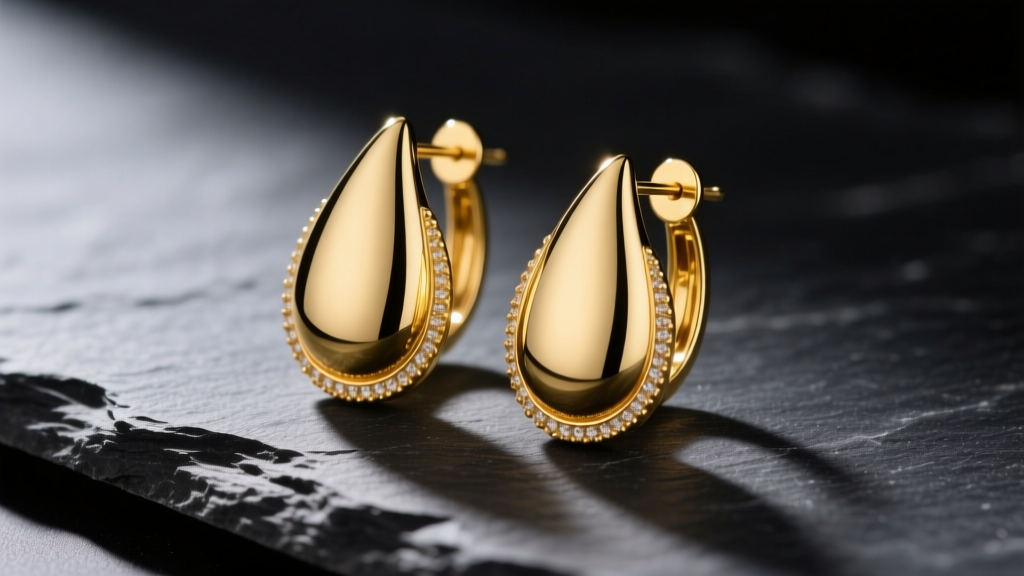
Teardrop gold earrings are a cornerstone of fine jewelry, offering a fluid, face-framing silhouette that transitions seamlessly from daily wear to evening elegance. However, the 2026 jewelry market is saturated with pieces that masquerade as luxury while carrying inflated price tags and subpar manufacturing. Whether you are eyeing a delicate 15mm drop or a bold 40mm statement piece, understanding the intersection of material science, manufacturing methods, and brand markup is critical. This guide provides a rigorous budget and value assessment to help you allocate your jewelry funds intelligently, ensuring you pay for intrinsic gold value rather than clever marketing.
The Anatomy of Value: Weight, Purity, and Manufacturing
When assessing the budget for teardrop gold earrings, the first variable to decode is the manufacturing method. Not all solid gold earrings are created equal, and the production technique drastically impacts both the price and the durability of the piece.
Cast vs. Electroformed vs. Stamped
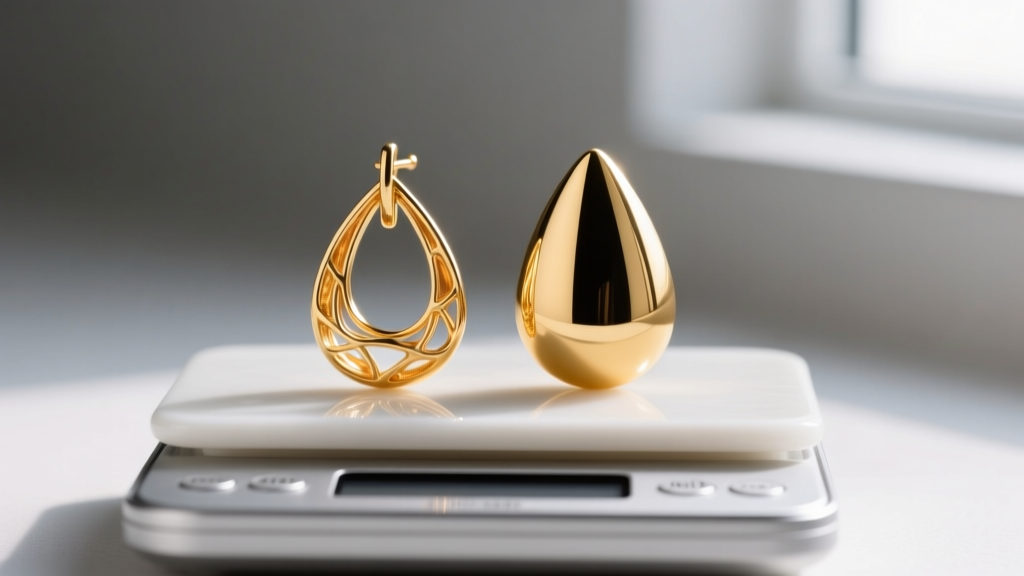
- Cast Solid Gold: This is the traditional lost-wax casting method. A 25mm x 15mm solid 14k cast teardrop will typically weigh between 2.2 and 3.5 grams per earring. They are durable, heavy, and carry a higher upfront cost due to the raw gold weight.
- Electroformed (Hollow): This process builds a thin shell of gold over a wax core, which is later melted out. The resulting teardrop is massive in volume but weighs less than 1 gram. While budget-friendly and comfortable for stretched lobes, hollow earrings dent easily and cannot be resized or repaired if crushed.
- Stamped Sheet Metal: Cut from a flat sheet of gold and pressed into a domed teardrop shape. These offer a middle-ground weight and price but can sometimes feature sharp seams if not polished correctly.
Purity also dictates the budget. The Gemological Institute of America (GIA) notes that 14k gold (58.3% pure gold) offers the optimal balance of tensile strength and color saturation for everyday drop earrings, which are prone to swinging and catching on clothing. While 18k gold boasts a richer yellow hue, its softer alloy structure makes it more susceptible to bending on the post of a heavy teardrop design.
Solid Gold vs. Vermeil vs. Plated: A Cost-Per-Wear Matrix
To accurately assess value, we must look beyond the sticker price and calculate the cost-per-wear over the item's lifespan. Below is a 2026 market analysis of the most common gold finishes used in teardrop earrings.
| Material Grade | Base/Core Metal | Gold Layer Thickness | 2026 Price Range | Expected Lifespan |
|---|---|---|---|---|
| Solid 14K Gold | Gold Alloy | 100% Gold | $180 - $450 | Lifetime (Heirloom) |
| Gold Vermeil | Sterling Silver | ≥ 2.5 microns | $60 - $120 | 2 - 5 Years |
| Gold Filled | Jeweler's Brass | 5% of total weight | $45 - $95 | 5 - 10 Years |
| Gold Plated | Brass/Copper | < 0.5 microns | $25 - $50 | 3 - 12 Months |
According to the Federal Trade Commission (FTC) Jewelry Guides, a piece can only be legally marketed as 'vermeil' if it consists of a sterling silver base coated with gold of at least 10k fineness, and the gold layer must be at least 2.5 microns thick. If a brand charges $150 for 'vermeil' teardrops without disclosing the micron thickness, you are likely overpaying for standard flash plating.
Decoding the 2026 Market Markup
Where is your money actually going when you buy teardrop gold earrings? To understand value, you must separate the 'melt value' (the raw commodity price of the gold) from the retail markup.
The Melt Value Baseline
As of early 2026, the spot price of gold remains historically high. Roughly speaking, one gram of 14k gold contains approximately $45 to $50 in raw melt value. If you purchase a pair of solid 14k cast teardrops weighing 4 grams total, the intrinsic gold value is around $190. If a direct-to-consumer (DTC) brand sells this exact pair for $220, you are paying a highly reasonable 15-20% markup for labor, casting, polishing, and shipping. If a traditional mall-brand jeweler sells that same 4-gram pair for $650, you are paying a 240% markup to cover brick-and-mortar overhead and aggressive sales commissions.
The DTC Pricing Illusion
Many modern Instagram-famous jewelry brands market themselves as 'disrupting' the industry with wholesale pricing. However, a closer look at their teardrop gold earrings reveals a reliance on lightweight, stamped, or hollow designs. A brand might sell a 'solid gold' teardrop for $98, which feels like a steal. But if the earring is electroformed and weighs only 0.8 grams, the melt value is under $40. You are still paying a 145% markup, just on a much cheaper, more fragile product. Always check the gram weight in the product specifications before checking out.
Hardware and Findings: The Hidden Value Indicators
Amateur buyers look at the teardrop charm; expert buyers inspect the findings. The hardware used to secure the earring is a massive indicator of overall manufacturing value and safety.
Post Gauge and Structural Integrity
Teardrop earrings are pendulum-shaped, meaning they catch on hair, scarves, and clothing. A standard teardrop earring post should be 18-gauge (1.0mm) or 16-gauge (1.2mm). If you see a flimsy 20-gauge (0.8mm) post on a heavy solid gold drop, it is a structural failure waiting to happen. The post will bend under the leverage of the teardrop's weight, eventually snapping or warping the earring hole.
Clutches and Backings
Standard friction backs (butterfly clutches) often fail on teardrops weighing over 3 grams per earring. The constant swinging loosens the metal tension. High-value teardrop earrings will feature La backs (flat disc clutches with a silicone or metal O-ring inside) or threaded screw-backs. If a brand is charging over $300 for solid gold drops but ships them with cheap, stamped butterfly backs, they have cut corners on the finishing details.
The Buyer's Checklist: Inspecting Before You Invest
Before finalizing your purchase, run the teardrop earrings through this rapid value-assessment checklist:
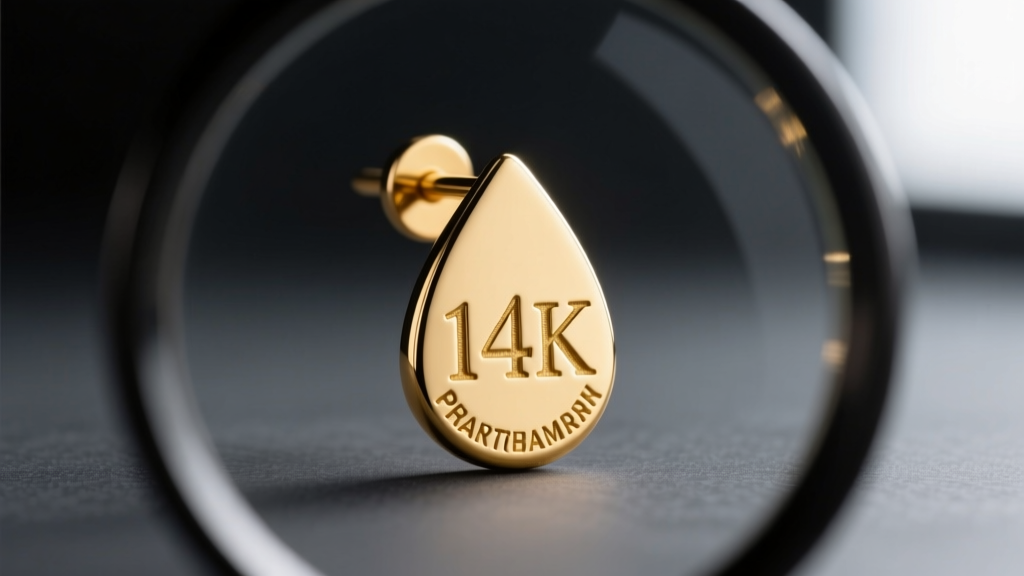
- Verify the Hallmark: Look for '14K', '585', '18K', or '750' stamped directly on the post, not just on the earring back. Use a jeweler's loupe if necessary.
- Demand the Weight: If the website does not list the gram weight, email customer service. If they cannot provide it, assume the piece is hollow or suspiciously lightweight.
- Check the Clasp Quality: Ensure the post is thick enough to handle the pendulum swing of the teardrop shape without bending.
- Audit the Vermeil Specs: If buying vermeil, confirm the base is 925 sterling silver and the gold layer is explicitly stated as 2.5 microns or thicker.
By shifting your focus from brand prestige to material reality, you can build a collection of teardrop gold earrings that offer genuine, lasting value. Whether you opt for the heirloom permanence of cast 14k gold or the accessible luxury of heavy-micron vermeil, making an informed choice ensures your budget is spent on true craftsmanship rather than empty markup.


