Screw Back vs Push Back Earrings: Security and Style Guide
Discover the pros and cons of screw back vs push back earrings. Compare security, comfort, materials, and styling trends for fine jewelry studs.

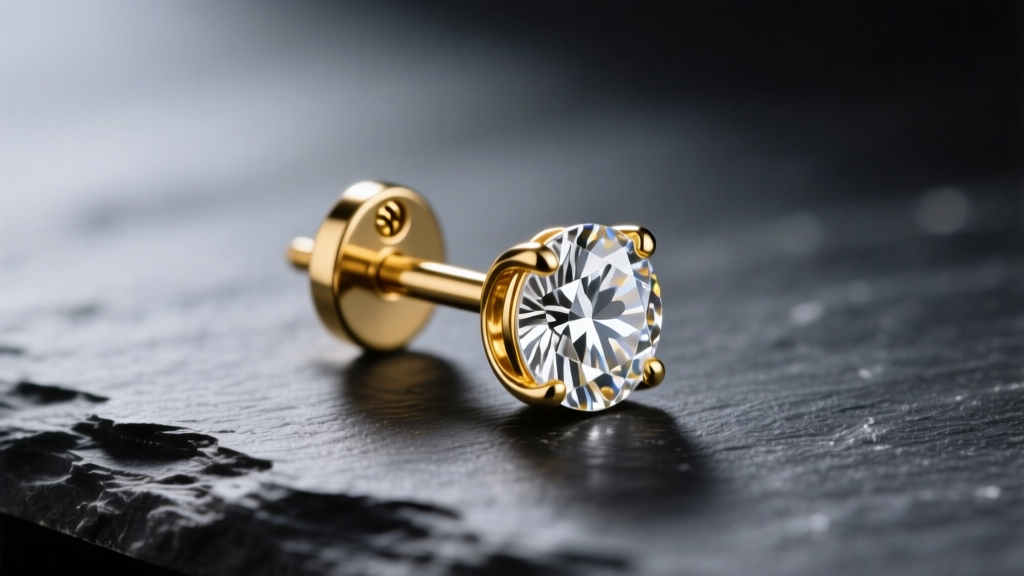
The Engineering of Fine Jewelry Studs
When investing in fine jewelry, the conversation almost always revolves around diamond clarity, gold purity, or gemstone carat weight. Yet, the most critical component for the longevity and safety of your jewelry is often the smallest: the earring backing. The debate of screw back vs push back earrings is not merely a matter of preference; it is a fundamental question of mechanical engineering, tissue safety, and lifestyle compatibility. As we move through 2026, the fine jewelry market has seen a massive shift toward high-security backings, driven by the popularity of curated ear projects and the rising cost of lab-grown and natural diamond studs.
Understanding the mechanics behind these backings requires looking past the aesthetic and examining the metallurgy, gauge thickness, and tension dynamics that keep your investment secure. Whether you are wearing a pair of 1-carat diamond solitaires or minimalist 14k gold geometric studs, the backing dictates how the earring interacts with your anatomy.
Deep Dive: Push Back (Friction) Earrings
Push backs, universally known as butterfly backs or friction clutches, are the undisputed standard in commercial and entry-level fine jewelry. They operate on a simple mechanical principle: a metal post with carved notches is pushed through a spring-loaded metal clutch. The internal wings of the clutch grip the notches, creating friction that holds the earring in place.
The Anatomy and Gauge Limitations
Most push back earrings utilize a 20-gauge (0.81mm) or 22-gauge (0.64mm) post. Because the post must be thin enough to allow the clutch to slide over it while still leaving room for the earlobe tissue, the structural integrity of the post is inherently limited. According to guidelines from the Association of Professional Piercers (APP), thinner posts can act like a 'cheese wire' effect in the earlobe, especially when supporting heavier gemstone settings.
Failure Modes and Wear-and-Tear
While push backs are incredibly easy to put on and take off, they suffer from predictable failure modes:
- Metal Fatigue: The butterfly wings rely on spring tension. Over months of daily wear, the metal fatigues, the wings spread, and the clutch loses its grip.
- Notch Slippage: If the post only features a single shallow notch, the backing can easily slide past it during sleep or when brushing hair.
- Hygiene Traps: The hollow tubes and intricate wings of a butterfly back are notorious for trapping dead skin cells, sebum, and hair products, requiring rigorous weekly cleaning.
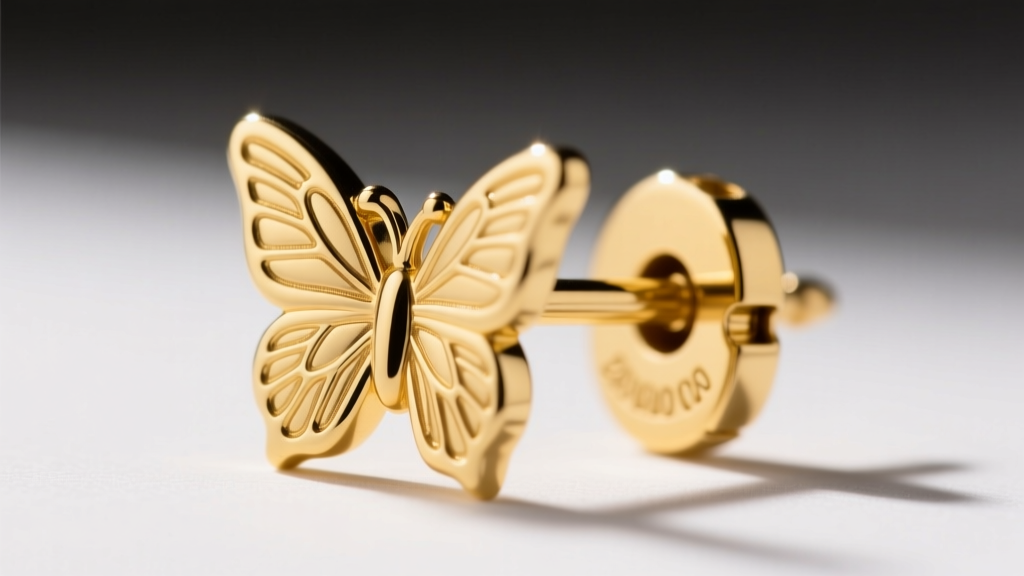
Deep Dive: Screw Back Earrings
Screw back earrings represent the gold standard for security in fine jewelry. Instead of relying on friction, the backing physically threads onto the post, creating a locked mechanical bond that cannot be pulled off by accident. However, not all screw backs are created equal, and the distinction between external and internal threading is vital for both comfort and piercing health.
External vs. Internal Threading
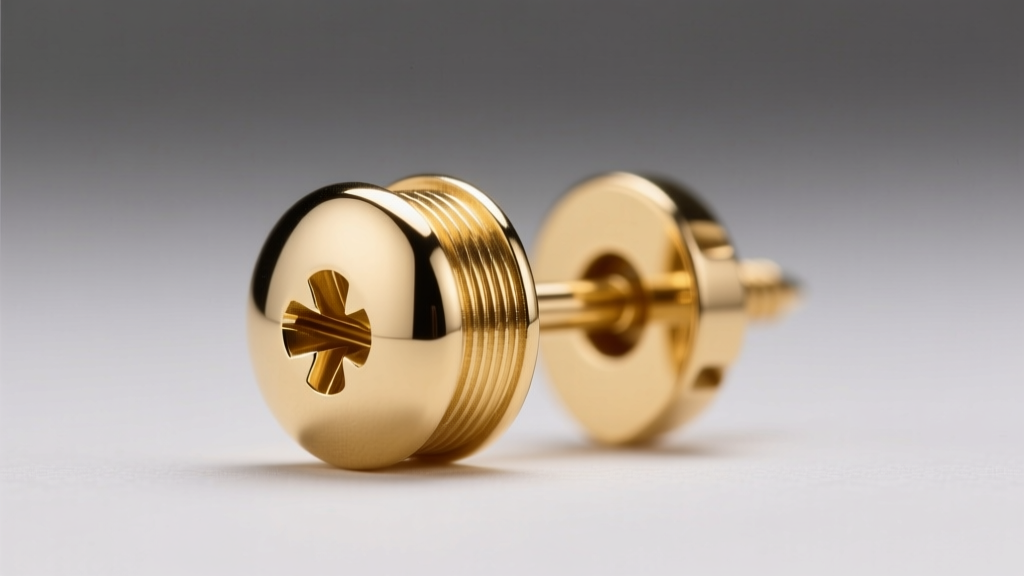
Cheap, mass-produced screw backs often feature external threading, where the screw ridges are carved into the post itself. Dragging these sharp threads through a healed piercing can cause micro-tears and irritation. High-end jewelers and professional piercers exclusively use internally threaded posts. In this superior design, the post is completely smooth, and the threading is hidden inside the backing cap. The smooth post glides effortlessly through the tissue, while the backing screws onto a threaded pin at the very end of the post.
Thread Pitch and Precision Machining
High-quality screw backs utilize precision machining with specific thread pitches (commonly 0.9mm or 1.2mm). Because these posts are structurally robust, they are typically crafted in 18-gauge (1.02mm) or 16-gauge (1.29mm) thicknesses. This thicker gauge not only supports heavier diamond settings without bending but also promotes healthier, more stable piercing channels.
Head-to-Head Comparison: Screw Back vs Push Back Earrings
To visualize the functional differences, here is a direct comparison of how these two systems perform across critical metrics for fine jewelry wearers.
| Feature | Push Back (Friction) | Screw Back (Internally Threaded) |
|---|---|---|
| Security Level | Moderate (Prone to slipping) | Maximum (Virtually loss-proof) |
| Standard Post Gauge | 20g (0.81mm) to 22g (0.64mm) | 18g (1.02mm) to 16g (1.29mm) |
| Application Speed | Instant (Push and click) | Slow (Requires precise alignment) |
| Sleep Comfort | Poor (Prongs dig into neck) | Excellent (Smooth, rounded caps) |
| Typical Price Range | $50 - $800 | $300 - $5,000+ |
| Best Use Case | Lightweight, temporary wear | Heavy diamonds, active lifestyles |
Material Grades and Hypoallergenic Factors
The security of your earring is only as good as the biocompatibility of the metal touching your skin. When evaluating screw back vs push back earrings, you must also scrutinize the alloy composition.
For push backs, the butterfly clutch is frequently made from lower-karat gold alloys or silver-plated brass to maintain spring tension, which can introduce nickel or copper to the skin. Conversely, premium internally threaded screw backs are typically milled from a single block of 14k or 18k solid gold, platinum, or ASTM F136 implant-grade titanium. According to Jewelers Mutual, maintaining the integrity of hypoallergenic metals requires avoiding harsh chemical cleaners that can degrade the precise threading of screw backs or weaken the tension springs of push clutches.
Pro Tip: If you have newly pierced lobes or sensitive skin, avoid push backs entirely. The micro-movements and potential for mixed-metal allergies in friction clutches make internally threaded titanium or 14k gold screw backs the only safe choice for healing tissue.
Styling Trends: The 2026 Curated Ear
The modern 'curated ear' trend has heavily influenced earring mechanics. While traditional push backs feature bulky butterfly wings that stick out awkwardly behind the earlobe, the high-end market has pivoted toward flat-back screw and threadless systems. Flat-back screw earrings sit completely flush against the back of the ear, making them invisible from behind and entirely comfortable for side-sleepers.
Furthermore, the rise of lab-grown diamonds has allowed consumers to purchase larger carat weights (1.5ct to 2.0ct per ear) at accessible price points. However, a 2-carat diamond is heavy. A standard 20-gauge push back will slowly droop under this weight, causing the diamond to face downward. An 18-gauge or 16-gauge screw back provides the rigid structural support necessary to keep heavy stones facing perfectly forward, maximizing light return and brilliance.
Final Verdict: Which Should You Choose?
The choice between screw back vs push back earrings ultimately depends on your lifestyle, budget, and the value of the jewelry in question.
Choose push backs if you are buying lightweight, everyday fashion jewelry, if you struggle with the manual dexterity required for threading, or if you frequently swap out your earrings to match daily outfits. They are convenient, accessible, and perfectly adequate for stones under 0.25 carats.
Choose screw backs (specifically internally threaded) for any significant fine jewelry investment. If you are purchasing diamond studs over 0.50 carats, if you lead an active lifestyle, or if you suffer from metal sensitivities, the superior security, thicker gauge posts, and biocompatible materials of screw backs make them the undisputed champion of earring engineering. Your jewelry should be a source of joy, not anxiety; a precision-machined screw back ensures your investment stays exactly where it belongs.


