Troubleshooting Your Rai Earring: Fixing Weight, Fit, and Tarnish
Struggling with a heavy rai earring? Discover expert troubleshooting tips to fix lobe tearing, secure loose clasps, and prevent artisan metal tarnish.

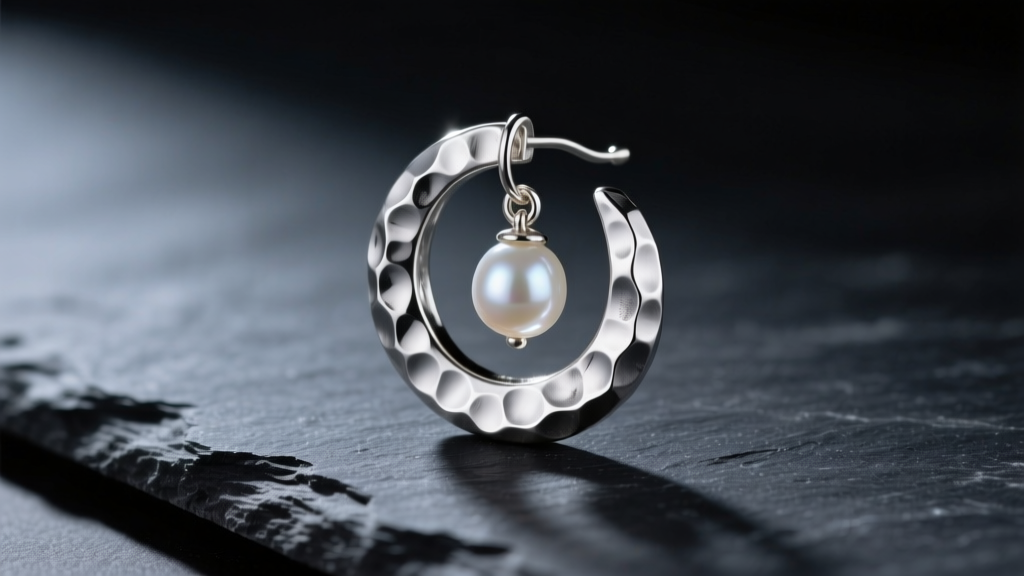
The artisan rai earring has become a staple in contemporary jewelry collections, celebrated for its kinetic movement, hammered metallic discs, and suspended gemstones or freshwater pearls. However, the very design elements that make these earrings visually striking—front-heavy drops, intricate wire-wrapping, and textured metals—also make them notorious for causing physical discomfort, lobe strain, and rapid material degradation. If your favorite pair is currently sitting in a drawer because it stretches your piercing, triggers contact dermatitis, or constantly slips out, you are not alone.
In this comprehensive 2026 troubleshooting guide, we break down the biomechanics of heavy drop earrings, provide actionable hardware upgrades, and detail the exact metallurgical care required to keep your artisan jewelry in pristine condition. Whether you are dealing with a 15-gram brass statement piece or a delicate 18k gold-filled rai design, these professional jewelry repair techniques will restore both comfort and security.
The Biomechanics of the Rai Earring: Why Lobes Tear
The most common complaint regarding the rai earring style is the 'cheese-cutter effect.' This occurs when a heavy earring rests on a thin post, creating localized pressure that slowly migrates through the earlobe tissue. A standard lobe piercing is typically performed at 20-gauge (0.81mm) or 18-gauge (1.02mm). While these gauges are perfectly adequate for lightweight studs, they fail under the pendulum-like leverage of a hammered rai disc.
According to the Association of Professional Piercers (APP), prolonged wear of jewelry exceeding 7-10 grams on a standard 20G post significantly increases the risk of tissue thinning and eventual tearing. A large artisan rai earring featuring a 12mm hammered brass disc and a 10mm baroque pearl can easily weigh between 12 and 18 grams. The center of gravity pulls the post forward, forcing the bottom edge of the metal wire to slice into the lower fistula of the piercing.
Immediate Triage: Lobe Support Patches
If you need to wear your heavy drops for an event but are experiencing pain, utilize adhesive earlobe support patches. These medical-grade, invisible silicone stickers feature a pre-punched hole that distributes the earring's weight across a 15mm surface area on the back of the ear. This immediately neutralizes the downward shear force, preventing acute tearing while you arrange for permanent hardware modifications.
Upgrading Your Backing System: A Hardware Guide
The standard 'butterfly' friction back is entirely inadequate for a heavy rai earring. The friction grip relies on a tiny metal scroll that easily loosens when subjected to the kinetic swinging of a drop earring. To solve this, you must upgrade to a locking or high-surface-area backing system.
| Backing Type | Mechanism | Max Weight Capacity | Estimated Cost (2026) |
|---|---|---|---|
| La Pousette (Locking) | Spring-loaded push button with a secondary safety catch | Up to 25g | $18 - $30 / pair |
| Silicone O-Rings | High-friction elastomer that grips the post groove | Up to 12g | $4 - $8 / pack |
| EarLocks (Barrel) | Threaded barrel that screws securely onto a custom post | Up to 35g | $45 - $60 / pair |
| Jumbo Silicone Discs | Wide 10mm flat disc that supports the lower lobe | Up to 20g | $6 - $10 / pack |
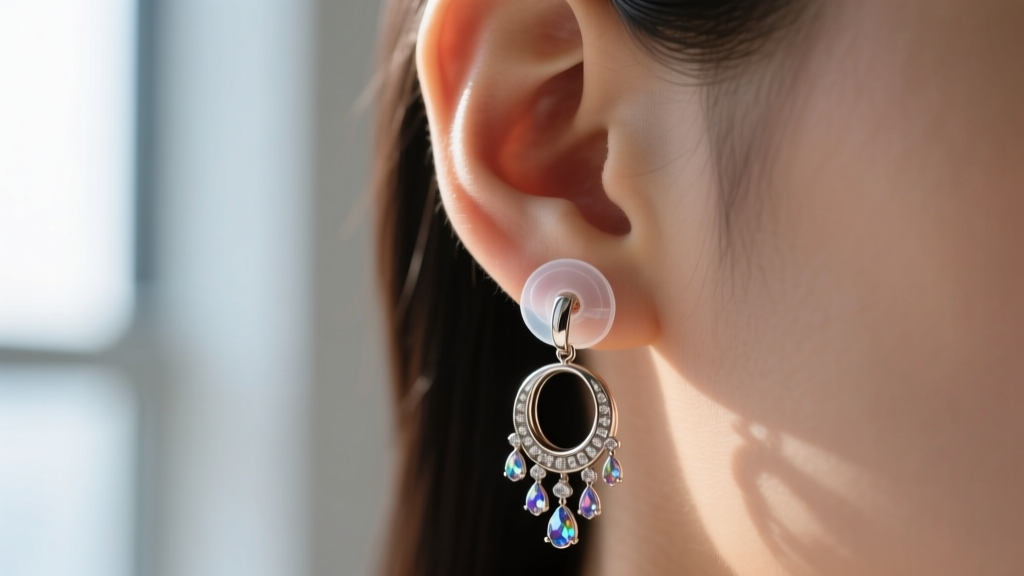
Expert Recommendation: For a rai earring weighing over 15 grams, pair an 18-gauge post with a Jumbo Silicone Disc. The wide surface area cradles the bottom of the lobe, pushing the earring face forward and eliminating the downward drag that causes migration.
Troubleshooting Wire-Wrap Fatigue and Hook Slippage
Many rai earrings utilize a French hook or a hand-wrapped loop to connect the main hammered disc to the ear wire. Over time, the repeated swinging motion causes metal fatigue, leading to two major failures: the jump ring pulls open, or the ear wire bends outward, causing the earring to slip out of the lobe.
Step-by-Step Loop Tightening
Never pull the ends of a jump ring apart laterally to close them; this distorts the circle and weakens the structural integrity of the wire. Instead, use two pairs of flat-nose jewelry pliers to perform a twist closure.
- Secure the left side of the jump ring with your non-dominant hand.
- Grip the right side with your dominant hand and twist it toward you by 2 millimeters.
- Push the ends together so they overlap slightly, then twist back into perfect alignment.
- This 'work-hardens' the metal at the seam, creating a closure that is highly resistant to the pendulum tension of a heavy drop.
Correcting French Hook Slippage
If your rai earring constantly falls forward and slips out, the French hook has likely stretched. Using a nylon-jaw plier (to prevent marring the metal), gently squeeze the front curve and the back tail of the hook together to reduce the gap to exactly 1.5mm. For a permanent fix, add a tiny 2mm clear silicone stopper to the back of the wire.
Managing Tarnish and Contact Dermatitis
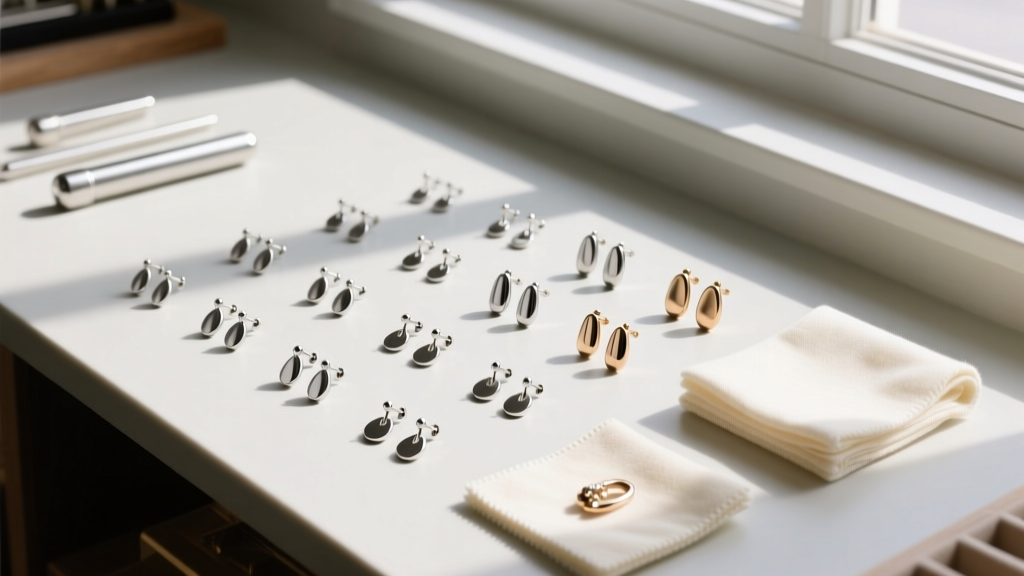
The hammered texture of a rai earring is a magnet for environmental sulfur, cosmetic residues, and sebum. Furthermore, many affordable artisan rai earrings are crafted from brass or nickel-silver alloys, which frequently trigger contact dermatitis in sensitive ears. The Gemological Institute of America (GIA) notes that silver sulfide (tarnish) forms rapidly in the micro-crevices of hammered metals where polishing cloths cannot reach.
The Electrochemical Cleaning Method
To clean deep hammer marks without abrasive pastes that would ruin the metal's intentional patina, use an electrochemical reduction bath. This reverses the oxidation process safely.
- Line a glass bowl with heavy-duty aluminum foil (shiny side up).
- Add 1 tablespoon of baking soda and 1 teaspoon of non-iodized salt.
- Pour boiling water over the mixture to activate the chemical reaction.
- Submerge your sterling silver or silver-plated rai earring for exactly 60 to 90 seconds.
- The sulfur transfers from the silver to the aluminum foil. Rinse with distilled water and dry immediately with a microfiber cloth.
Warning: Do not use this method if your rai earring features glued-in pearls or porous gemstones like turquoise, as the boiling water and alkaline solution will destroy the adhesive and damage the stone's nacre.
Solving Alloy Allergies with Barrier Coatings
If your rai earrings are brass and cause your earlobes to itch or flake, you are likely reacting to the zinc or trace nickel in the alloy. While re-plating the jewelry with rhodium is the professional solution (costing roughly $40-$75 at a local bench jeweler), a temporary at-home fix involves applying a specialized jewelry barrier coating. Products like Eurotool's 'Jewelry Shield' create a micrometer-thin polymer layer over the post and the back of the hammered disc, preventing metal ions from leaching into the skin's moisture barrier.
Final Sizing: When to Upgrade Your Piercing Gauge
If you have implemented locking backs, silicone support discs, and balanced the wire loops, but your lobe still feels tender after four hours of wear, the fundamental issue is the post thickness. A 20-gauge post simply lacks the structural diameter to support a 15-gram rai earring safely.
Visit an APP-certified professional piercer to discuss stretching your lobe to a 16-gauge (1.29mm) or 14-gauge (1.60mm). A thicker post acts like a wider beam in construction, dispersing the kinetic weight of the hammered disc across a broader cross-section of tissue. Many high-end artisan jewelers now offer custom soldering services to replace thin, mass-produced posts with 14-gauge, implant-grade titanium (ASTM F136) wire, which is not only thicker but entirely hypoallergenic and biocompatible. By addressing the physics, hardware, and metallurgy of your jewelry, you can comfortably wear your favorite kinetic designs without compromising your ear health.


