Mastering 6mm Earrings: Technical Sizing for Cartilage & Lobes
Master the technical sizing of 6mm earrings. Discover expert guides on post length, hoop diameter, gauge compatibility, and cartilage downsizing.

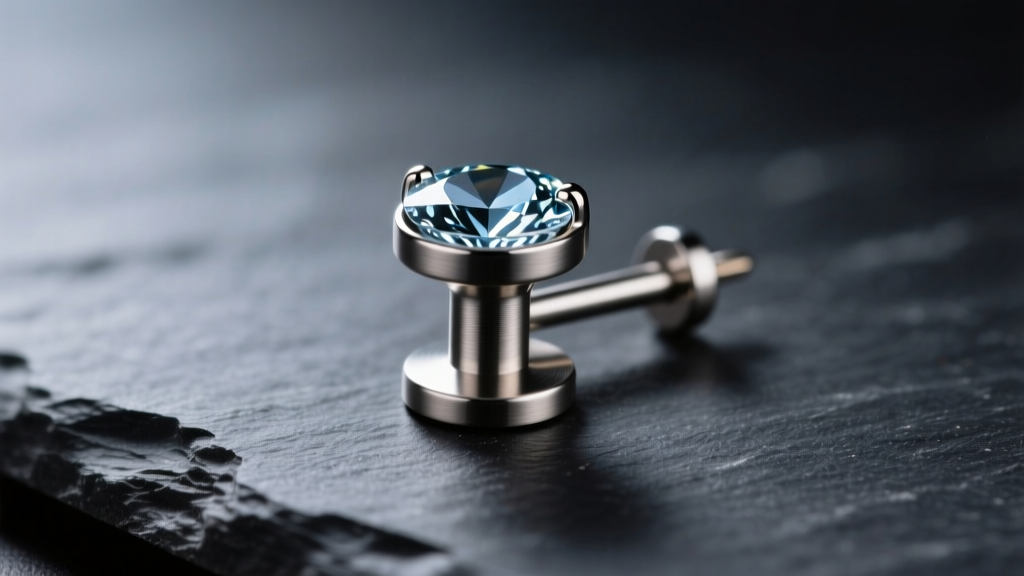
The 6mm Standard: Post Length vs. Inner Diameter
In the precision-driven world of body jewelry, the term "6mm earrings" represents a critical threshold for both comfort and biomechanical stability. However, a common point of confusion among consumers and novice piercers alike is the distinction between post length and inner diameter. When discussing straight barbells, flat back labrets, and threadless pins, 6mm refers strictly to the wearable post length—the exact distance between the decorative end and the backing plate. This measurement dictates how much tissue the jewelry can comfortably accommodate without exerting compressive force on the fistula (the piercing tunnel).
Conversely, when evaluating hoops, clickers, and continuous rings, 6mm refers to the inner diameter. A 6mm inner diameter hoop (roughly equivalent to a 1/4 inch) is exceptionally small, designed exclusively for snug placements on standard earlobes, tight helix rims, or specific orbital configurations. Misinterpreting these two metrics is the leading cause of jewelry rejection, migration, and hypertrophic scarring. Understanding the biomechanical application of 6mm wearables is essential for anyone curating a curated, multi-piercing ear project.
The Downsizing Protocol: Why 6mm is the Cartilage Holy Grail
For cartilage piercings—specifically the helix, tragus, conch, and flat—the 6mm flat back labret is universally recognized by professional piercers as the ultimate "downsize" target. When a fresh cartilage piercing is performed, the initial jewelry typically features an 8mm to 10mm post. This excess length is a medical necessity to accommodate the acute inflammatory phase, lymph buildup, and localized edema that occurs during the first 8 to 12 weeks of healing.
Once the swelling subsides, leaving an 8mm post in a tissue tract that has compressed to 4mm creates a biomechanical hazard. The excess post acts as a lever, catching on hair, clothing, and headphones. This repetitive micro-trauma alters the angle of the fistula and frequently triggers hypergranulation tissue (commonly known as irritation bumps). According to the Association of Professional Piercers (APP), timely downsizing to a flush-fitting 6mm post eliminates the lever effect, stabilizes the piercing angle, and dramatically accelerates the maturation phase of the fistula.
"Downsizing to a 6mm or 5mm post is not merely an aesthetic choice; it is a critical intervention in the healing cascade of cartilage piercings. Failure to downsize is the primary preventable cause of delayed healing and angular migration." — Advanced Body Jewelry Biomechanics, 2025 Edition
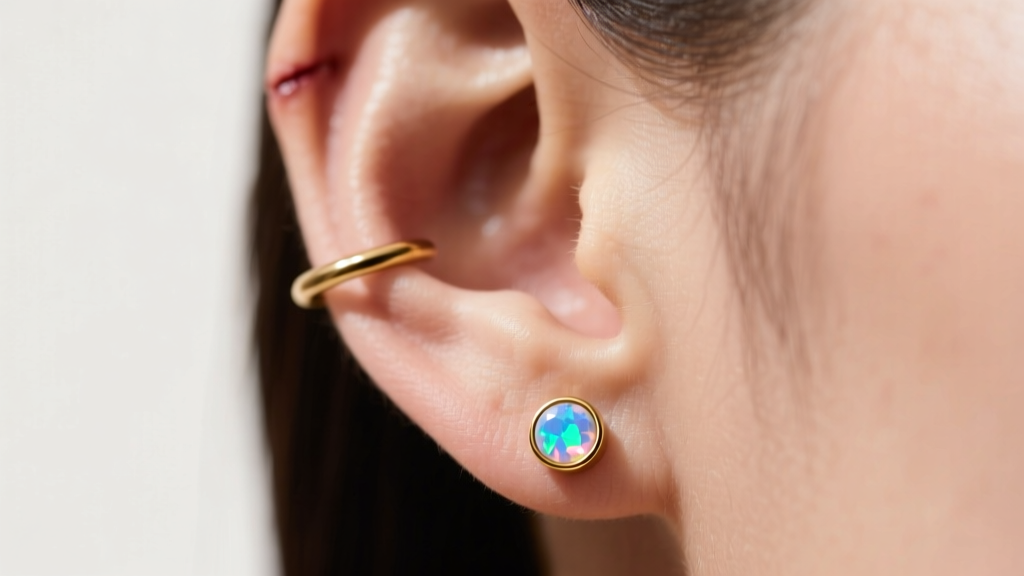
Material Metallurgy for 6mm Wearables
Because 6mm earrings sit flush against the skin and within dense avascular cartilage tissue, material biocompatibility is non-negotiable. The confined space beneath a flat back disc restricts airflow, creating a micro-environment where sweat, sebum, and dead skin cells accumulate. Inferior alloys will rapidly oxidize and cause contact dermatitis.
Implant-Grade Titanium (ASTM F136)
The undisputed baseline for 6mm cartilage posts is Ti6Al4V ELI (Extra Low Interstitial) titanium, compliant with ASTM F136 standards. This specific alloy contains virtually zero nickel, eliminating the risk of allergic contact dermatitis. Furthermore, its surface can be polished to a mirror finish (Ra < 0.2 µm), which prevents bacteria from adhering to microscopic surface scratches—a common flaw in cheaper, mass-produced "surgical steel" alternatives.
Solid Gold Alloys: 14k vs. 18k
While gold is a premium choice, its alloy composition dictates its safety. 14k and 18k solid gold from reputable manufacturers like BVLA or Anatometal are alloyed with silver, copper, and zinc. Avoid any 6mm gold jewelry that utilizes nickel or cadmium as whitening or hardening agents. For threadless 6mm pins, 14k gold is often preferred over 18k because the higher copper content provides the necessary tensile strength to maintain the tension-bend of the pin without permanent deformation.
Technical Sizing and Gauge Compatibility Matrix
Selecting the correct 6mm earring requires cross-referencing the post length or diameter with the appropriate wire thickness (gauge). The following matrix outlines the standard applications for 6mm jewelry across different anatomical placements.
| Jewelry Type | Standard Gauge | 6mm Application | Optimal Placement |
|---|---|---|---|
| Flat Back Labret | 16g (1.2mm) | Post Length (Downsize) | Helix, Flat, Conch |
| Flat Back Labret | 18g (1.0mm) | Post Length (Downsize) | Tragus, Nostril, Standard Lobe |
| Continuous Hoop | 20g (0.8mm) | Inner Diameter | Snug Standard Lobe, Secondary Lobe |
| Segment Ring | 16g (1.2mm) | Inner Diameter | Tight Helix Rim, Daith (rare) |
Troubleshooting 6mm Fit and Biomechanical Failures
Even with precise measurements, anatomical variations can cause 6mm earrings to fail. Understanding these failure modes allows for rapid troubleshooting and prevents long-term tissue damage.
The Embedding Risk
If a client's cartilage is exceptionally thick, or if they experience a sudden spike in localized swelling (often due to dietary sodium or hormonal fluctuations), a 6mm post may become too short. When the decorative end compresses the epidermis, it restricts blood flow, leading to ischemia and eventual embedding. If the jewelry cannot be rotated freely with gentle resistance, an immediate upsize to 8mm is required.
Threadless Tension Failures
Threadless jewelry relies on a slight bend in the pin to create friction against the inside of the shaft. For 6mm 18g pins, the bend must be precisely calibrated. If the bend is too shallow, the decorative end will eject during sleep. If the bend is too severe, inserting the pin will scrape the internal titanium wall, creating microscopic metal shavings that can irritate the fistula. The ideal insertion requires a firm, audible "pop" at the final millimeter of closure.
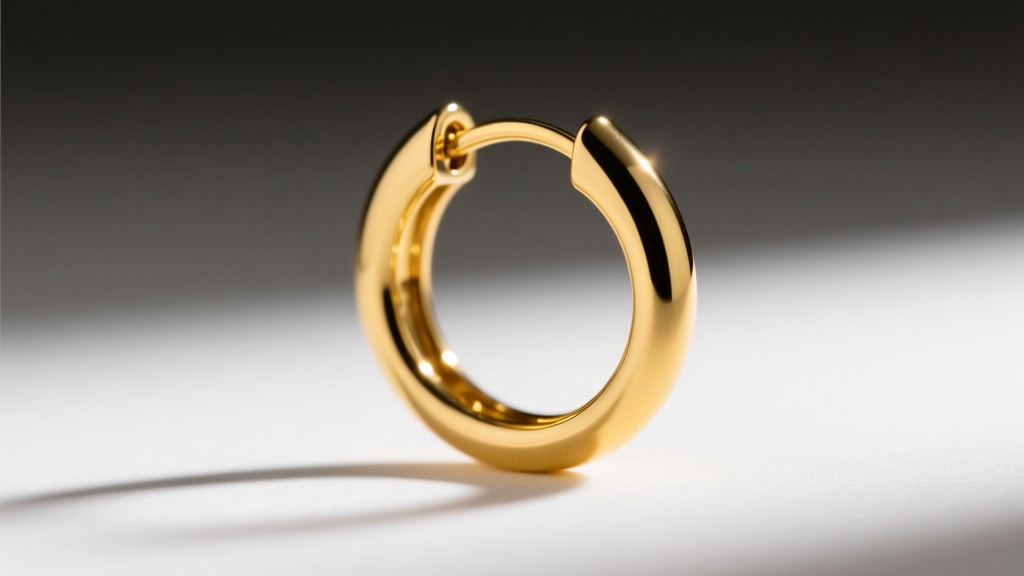
Investment Tier: Pricing and Precision Brands
When sourcing 6mm earrings, precision machining is paramount. A post that is actually 5.8mm or 6.2mm due to poor manufacturing tolerances can disrupt a carefully planned ear curation. Investment-grade brands utilize CNC Swiss lathes to guarantee exact millimeter specifications.
- BVLA (Body Vision Los Angeles): The industry benchmark for threadless 14k and 18k gold jewelry. A standard 16g 6mm titanium post retails for approximately $12-$15, while 14k gold posts range from $60 to $90. Gemstone ends are sold separately, ranging from $40 to over $300 for genuine diamonds and sapphires.
- Anatometal: Renowned for their internally threaded titanium and gold options. Their 6mm flat backs feature a low-profile disc that is exceptionally comfortable for tragus piercings. Expect to pay $35-$50 for a complete titanium setup.
- Maria Tash: Offers proprietary 6mm clickers and diamond studs tailored for high-end retail. Their precision hinges on 6mm hoops allow for a seamless closure that will not catch on fine hair. Pricing typically starts at $150 for basic gold styles and scales significantly with diamond carat weight.
Ultimately, mastering the use of 6mm earrings requires a synthesis of anatomical knowledge, material science, and precision manufacturing. By respecting the distinct differences between post lengths and inner diameters, and by insisting on ASTM-compliant materials, you ensure that every piercing remains stable, comfortable, and visually flawless for decades.


