The Ultimate Guide to Safe Kid Earrings: Materials, Gauges, and Care
Discover the safest kid earrings for sensitive ears. Learn about hypoallergenic metals, correct gauge sizes, and aftercare tips for new piercings.


Introduction to Safe Ear Piercing for Children
Piercing a child’s ears is a significant milestone, often accompanied by excitement and a few nervous tears. However, as a parent, your primary concern should extend far beyond the initial procedure. The market for kid earrings is unfortunately flooded with low-quality metals and outdated jewelry designs that can lead to allergic contact dermatitis, tissue tearing, and chronic irritation. According to the Mayo Clinic, nickel allergy is one of the most common causes of allergic contact dermatitis, affecting up to 20% of the population. Because children's skin is exceptionally delicate, selecting the right materials and jewelry mechanics is non-negotiable.
This beginner-friendly explainer will demystify the metallurgy of safe body jewelry, break down the ideal gauge sizes for growing lobes, and provide a modern, evidence-based aftercare routine to ensure your child’s piercing heals beautifully.
The Metallurgy of Kid Earrings: What is Actually Safe?
When shopping for kid earrings, terms like “hypoallergenic” and “surgical steel” are frequently used as marketing buzzwords, but they hold little medical weight. To ensure safety, you must look for specific material grades that are proven to be biocompatible and nickel-free.
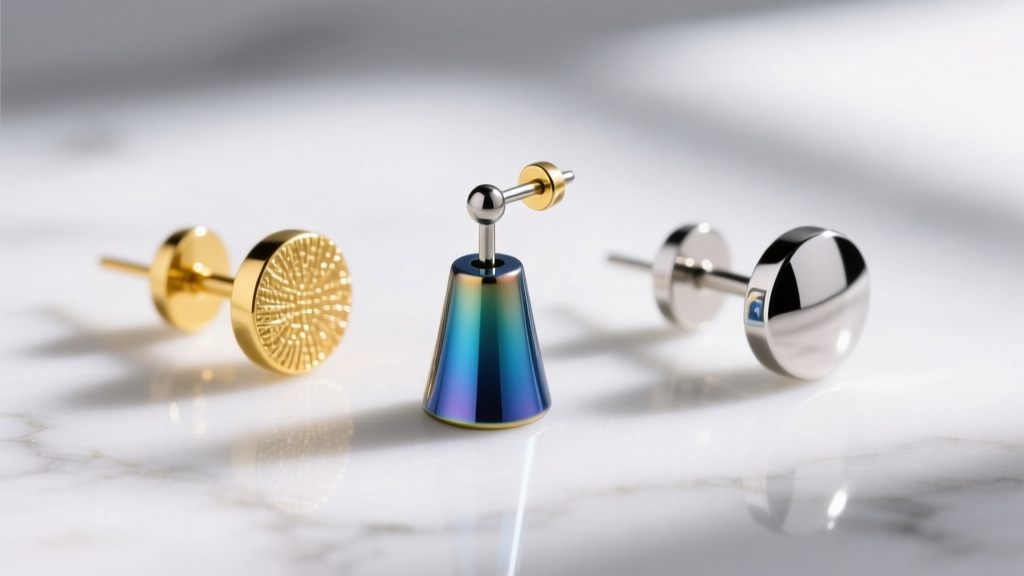
Implant-Grade Titanium (ASTM F136 or F67)
This is the undisputed gold standard for initial piercings and sensitive ears. Implant-grade titanium is completely nickel-free, lightweight, and highly resistant to corrosion. Because it is the same metal used in orthopedic implants, the human body does not recognize it as a foreign threat, drastically reducing the risk of rejection or irritation.
Solid 14k or 18k Gold
High-quality gold is safe for children, provided it is solid and properly alloyed. You must avoid gold-plated or gold-filled jewelry, as the thin layer of gold will quickly wear away, exposing the reactive base metals underneath. Additionally, be cautious with white gold, which is sometimes alloyed with nickel to achieve its silver color. Always opt for palladium-alloyed white gold or stick to yellow and rose gold from reputable body jewelers.
The “Surgical Steel” Myth
Many commercial piercing studios and retail stores use “surgical stainless steel” (typically 316L). While fine for medical tools, 316L steel contains between 8% and 10% nickel. In a fresh, healing wound, the saline environment of the body can cause nickel ions to leach into the tissue, triggering severe allergic reactions. The Association of Professional Piercers (APP) strongly advises against using stainless steel for initial piercings, especially in children.
| Material | Nickel Content | Price Range (Per Pair) | Best Use Case |
|---|---|---|---|
| Implant-Grade Titanium | 0% | $25 - $60 | Initial piercings, highly sensitive ears |
| Solid 14k/18k Gold | 0% (if properly alloyed) | $40 - $150+ | Long-term wear, special occasions |
| Niobium | 0% | $20 - $50 | Hypoallergenic alternative, color options |
| Surgical Stainless Steel | 8% - 10% | $5 - $15 | NOT recommended for fresh or sensitive piercings |
Piercing Methods: Needle vs. Gun
The tool used to create the piercing is just as critical as the jewelry itself. Piercing guns, commonly found in mall kiosks, rely on blunt force trauma to push a sharpened earring stud through the tissue. This causes significant bruising, crushes the cellular structure of the earlobe, and increases healing time. Furthermore, the plastic components of piercing guns cannot be sterilized in an autoclave, posing a cross-contamination risk.
Conversely, a professional body piercer uses a single-use, sterilized hollow needle. A hollow needle cleanly removes a tiny crescent of tissue, creating a smooth channel that heals much faster and with significantly less trauma. The American Academy of Pediatrics notes that while ear piercing is generally safe, it should be performed under sterile conditions by trained professionals to minimize infection risks.
Understanding Gauge Sizes and Post Lengths
The dimensions of the earring post play a massive role in the longevity and safety of the piercing, particularly for active children who are prone to snagging their jewelry on clothing or hair.
Why Gauge Thickness Matters
Gauge refers to the thickness of the earring post. Most retail earrings are 20-gauge (0.8mm) or even 22-gauge (0.6mm). However, professional piercers typically use an 18-gauge (1.0mm) or 16-gauge (1.2mm) needle for earlobes. A thicker post provides structural stability. If a child snags a thin 22-gauge earring, it can easily slice through the delicate healing tissue—a phenomenon known in the industry as the “cheese-cutter effect.” An 18-gauge post offers far more resistance to tearing.
The Importance of Post Length and Downsizing
When a lobe is first pierced, it will swell. To accommodate this, the initial jewelry must have a longer post, typically 1/4-inch (6mm) or 5/16-inch (8mm). If the post is too short, the back of the earring will embed into the swelling tissue, requiring emergency removal by a professional.
However, once the initial swelling subsides (usually around the 4-to-6-week mark), that long post becomes a liability. It can easily catch on hairbrushes, sweaters, and towels. Scheduling a “downsize” appointment with your piercer to swap the post for a shorter 3/16-inch (5mm) or 1/8-inch (3mm) length is a critical step in preventing long-term irritation bumps.
The Best Earring Backs for Active Children
The mechanism that secures the earring is just as important as the front design. Traditional backs are often poorly suited for the anatomy and activity levels of children.
- Butterfly Friction Backs: These are the most common but least ideal. The grooves on the post trap dead skin cells, soap, and bacteria. Furthermore, the sharp end of the post protrudes past the backing, which can poke the child’s neck or mastoid bone while sleeping.
- Screw-In Backs: While more secure than friction backs, the external threads on the post can act like a microscopic file, tearing the delicate healing fistula (the tube of tissue forming the piercing channel) every time the jewelry is removed or adjusted.
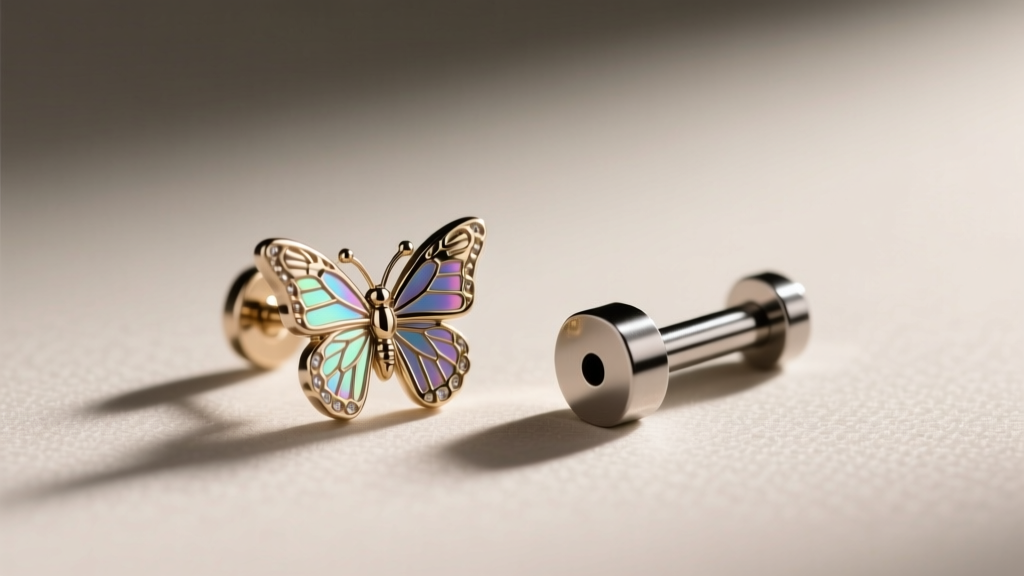
- Threadless Flat-Back Labrets: This is the modern gold standard for kid earrings. The post is completely smooth and flat against the back of the ear, eliminating the “poke” factor. The decorative front secures via a tiny, bent pin that creates tension inside the hollow post. This tension is incredibly secure, making it very difficult for a toddler or young child to pull the earring out on their own, yet easy for a parent to remove with the proper technique.
A Modern, Evidence-Based Aftercare Routine
Gone are the days of twisting the earring and applying harsh chemicals. Modern aftercare is focused on leaving the piercing alone and keeping it clean with gentle, sterile solutions.
Expert Rule of Thumb: Never twist or rotate a healing piercing. Twisting tears the fragile new tissue forming inside the channel, resetting the healing process and introducing surface bacteria into the wound.
The Daily Routine:
- Sterile Saline Only: Purchase a can of sterile wound wash (0.9% sodium chloride with no added preservatives or fragrances). Spray the front and back of the piercing once or twice a day.
- Gentle Drying: After spraying, gently dry the area using a hairdryer on the lowest, coolest setting, or pat it dry with non-woven gauze. Avoid cotton swabs (Q-tips) and tissue paper, as they leave behind microscopic lint fibers that can become embedded in the healing wound.
- Avoid Bathroom Products: Keep shampoo, conditioner, and body wash away from the piercing. Clean the child’s hair by tilting their head back in the sink or tub to prevent soapy runoff from irritating the earlobes.
Troubleshooting Common Healing Issues
Even with perfect aftercare, minor hiccups can occur. Understanding the difference between normal healing and actual complications will save you unnecessary panic.
Irritation Bumps (Granulomas)
Small, fleshy, or red bumps next to the piercing hole are rarely infections. They are usually irritation bumps caused by pressure (such as sleeping on the piercing), snagging, or using jewelry that is too long. The solution is to eliminate the source of friction, downsize the jewelry, and apply warm saline compresses.
Embedment
If the earring back disappears into the earlobe, this is a medical urgency. It happens when the jewelry is too short for the swelling. Do not try to dig it out at home, as this causes severe tissue damage. Take the child to a professional piercer or a pediatric urgent care clinic immediately to have the jewelry safely removed or swapped for a longer post.
Signs of True Infection
While redness and mild swelling are normal in the first week, thick yellow or green discharge, extreme heat radiating from the lobe, a foul odor, or a fever are signs of bacterial infection. If you suspect an infection, do not remove the earring. Removing the jewelry can cause the surface of the hole to close, trapping the infection inside and forming an abscess. Consult your pediatrician immediately for appropriate medical treatment.
Final Thoughts on Upgrading Jewelry
Earlobes typically take 3 to 6 months to heal fully. Once the piercing is completely healed and the fistula is mature, you can begin exploring the vast world of kid earrings. From bezel-set gemstone studs to small, seamless titanium hoops, the options are endless. By starting with high-quality, biocompatible materials and respecting the anatomy of the healing process, you ensure that your child’s first pair of earrings is a beautiful, safe, and lasting accessory.


