Vintage Heart Earrings Buying Guide: What to Look For
Discover how to authenticate, price, and choose vintage heart earrings. Learn era-specific hallmarks, hardware checks, and care tips for antique gems.

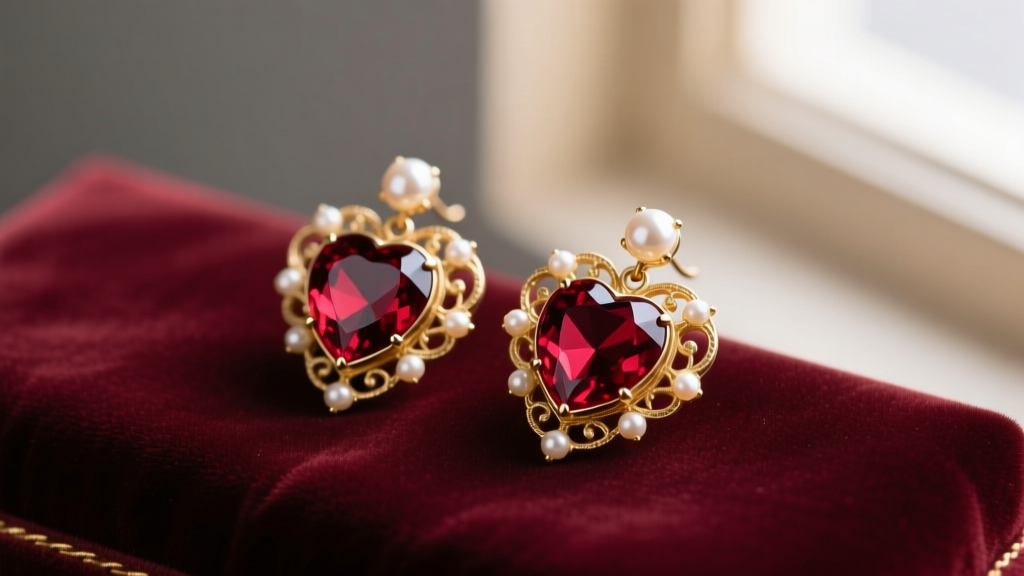
Collecting vintage heart earrings is an exercise in romantic archaeology. Unlike modern mass-produced jewelry, antique and vintage heart motifs carry the weight of historical sentiment, evolving from mourning tokens in the 19th century to bold, cocktail-party statements in the mid-20th century. As we navigate the 2026 estate jewelry market, the demand for authentic vintage heart earrings has surged, driven by a desire for sustainable luxury and unique, narrative-rich accessories. However, the secondary market is fraught with reproductions, franken-pieces (jewelry assembled from unrelated vintage parts), and misleading descriptions. This comprehensive buying guide will equip you with the horological and gemological frameworks needed to authenticate, evaluate, and purchase vintage heart earrings with absolute confidence.
Decoding the Eras: Which Vintage Heart Earrings Fit Your Style?
The heart motif has been a staple in jewelry design for centuries, but its execution changes drastically depending on the era. Identifying the correct period is the first step in assessing value and authenticity.
Victorian (1837-1901): Sentimental and Symbolic
Victorian heart earrings are deeply tied to sentimentality, romance, and mourning. Early Victorian (Romantic) pieces often feature intricate gold filigree, cannetille work, and seed pearls, which symbolized tears. Later Victorian pieces might incorporate garnets, turquoise, or even woven hairwork. If you are looking at a Victorian heart earring, expect yellow gold (often 15k or 18k in the UK) or silver-topped gold. According to the Lang Antiques era guide, genuine Victorian hearts are typically smaller, more delicate, and feature closed-back foil settings to enhance the sparkle of rose-cut diamonds or cabochon garnets.
Retro (1935-1950): Bold, Mechanical, and Golden
Due to platinum restrictions during World War II, the Retro era saw a massive shift toward rose and yellow gold. Retro heart earrings are distinctly chunky, often featuring large, polished gold surfaces accented with calibrated rubies and sapphires. A highly prized sub-category from this era is the 'mechanical heart'—earrings or brooches that physically open to reveal a hidden photograph or a smaller gemstone-encrusted heart. When shopping for Retro hearts, look for 14k rose gold, which has a distinct copper-heavy pinkish hue that modern alloys rarely replicate perfectly.
Mid-Century (1950s-1960s): Rhinestones and Aurora Borealis
Post-war prosperity led to an explosion of high-end costume jewelry. Mid-century vintage heart earrings are dominated by brands like Dior, Miriam Haskell, and Coro. Look for aurora borealis (AB) rhinestones, introduced by Swarovski in 1956, which give the glass stones an iridescent, oily sheen. These pieces are often silver-plated over base metal and feature elaborate pave settings. In 2026, pristine mid-century AB heart clip-ons are highly sought after by collectors of vintage couture fashion.
Material Authenticity and Metal Hallmarks
Never rely solely on a seller’s description of the metal. Authenticating the material requires a close inspection of hallmarks, wear patterns, and magnetism.
Gold and Silver Stamps
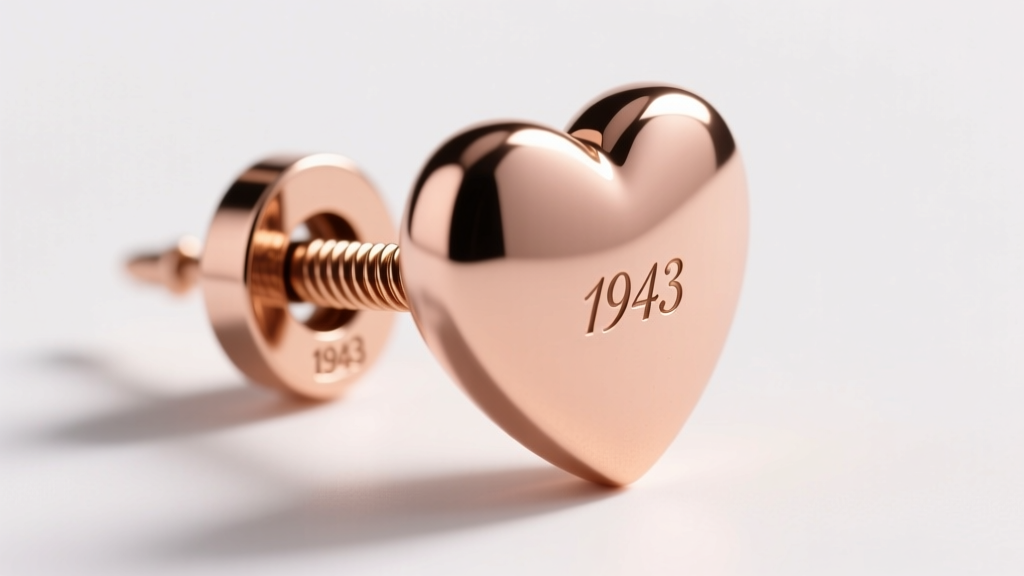
Use a 10x jeweler’s loupe to inspect the earring post, the back of the heart face, and the interior of any tubular hoops. European vintage pieces are heavily regulated. For instance, The Assay Office notes that a French eagle’s head guarantees a minimum of 18k gold, while a boar’s head indicates 14k. In the UK, look for the crown and the number 750 (18k) or 585 (14k), accompanied by a leopard’s head for London or an anchor for Birmingham. American vintage pieces from the early 20th century may simply be stamped '14K' or 'Sterling', but be wary of pieces stamped '14K HGE' (Heavy Gold Electroplate), which are vintage gold-plated costume pieces, not solid gold.
Testing Porous Gemstones
Victorian and Art Nouveau heart earrings frequently feature porous stones like opals, turquoise, and pearls. The GIA Gem Encyclopedia emphasizes that these stones should never be subjected to ultrasonic cleaners or harsh chemical dips, which a reckless seller might use to 'restore' a piece. Check for signs of chemical damage: chalky opals, discolored turquoise, or pearls with stripped nacre. Furthermore, ensure that seed pearls are natural river pearls (slightly irregular, off-white) rather than perfectly round, bright white modern cultured pearls, which indicate a modern reproduction or a replaced stone.
Structural Integrity: Assessing Vintage Hardware
The hardware of an earring tells a massive story about its age, wearability, and whether it has been altered. Vintage earring posts were historically thicker than modern standards. While contemporary lobe piercings are typically done at 20-gauge (0.81mm) or 22-gauge, vintage screw-backs and early leverbacks were often forged at 18-gauge (1.0mm) or even 16-gauge (1.29mm). If you have sensitive or tightly healed lobes, you may need a jeweler to carefully file or replace the post.
| Hardware Type | Era of Prominence | Pros for Modern Wear | Cons & Red Flags |
|---|---|---|---|
| Screw-Back | 1890s - 1950s | Highly secure; indicates true vintage age. | Thick posts (18g) can stretch modern piercings; threads can strip. |
| Lever-Back | 1880s - Present | Comfortable; accommodates heavier heart drops. | Hinges wear out over decades; springs can lose tension. |
| Clip-On (Paddle) | 1930s - 1980s | No piercing required; great for heavy Retro gold. | Can cause lobe pain after 2 hours; tension screws require adjusting. |
| Shepherd’s Hook | Victorian - Present | Easy to insert; lightweight. | High risk of loss if the heart motif is heavy and pulls the wire forward. |
Expert Tip: Many vintage heart earrings originally designed as screw-backs have been converted to modern friction posts by well-meaning jewelers. While this makes them easier to wear, it technically diminishes their collector value. Always ask a dealer if a piece has been 'converted' or if it retains its 'original fittings.'
Pricing Tiers and Market Valuation
Understanding the financial landscape of vintage heart earrings prevents overpaying for costume pieces disguised as fine jewelry. In the current 2026 market, prices are heavily dictated by the era, the karat of the gold, and the presence of natural, untreated gemstones.
- Tier 1: Vintage Costume ($45 - $250)
Mid-century rhinestone, enamel, and base-metal heart clip-ons or screw-backs. Value is driven by brand name (e.g., Trifari, Coro) and condition of the plating and stones. - Tier 2: Antique Silver & Semi-Precious ($300 - $900)
Victorian and Edwardian sterling silver or 9k gold heart earrings featuring garnets, amethysts, or turquoise. Price scales with the intricacy of the filigree and the presence of original hallmarks. - Tier 3: Retro & Mid-Century Fine Gold ($1,200 - $4,500)
14k and 18k solid gold heart motifs from the 1940s and 1950s, often set with calibrated rubies, sapphires, or early brilliant-cut diamonds. Mechanical hearts command a 30% premium. - Tier 4: High Victorian & Signed Art Nouveau ($5,000+)
Extremely rare, museum-quality pieces featuring old mine cut diamonds, natural pearls, and signed maker’s marks from legendary houses like Boucheron or Lalique.
Sourcing Safely: Where to Buy and Red Flags
Where you buy is just as critical as what you buy. The safest routes for acquiring authentic vintage heart earrings include established estate jewelry dealers, vetted auction houses, and specialized antique jewelry shows. When shopping on peer-to-peer platforms or online auction sites, you must adopt a defensive buying strategy.
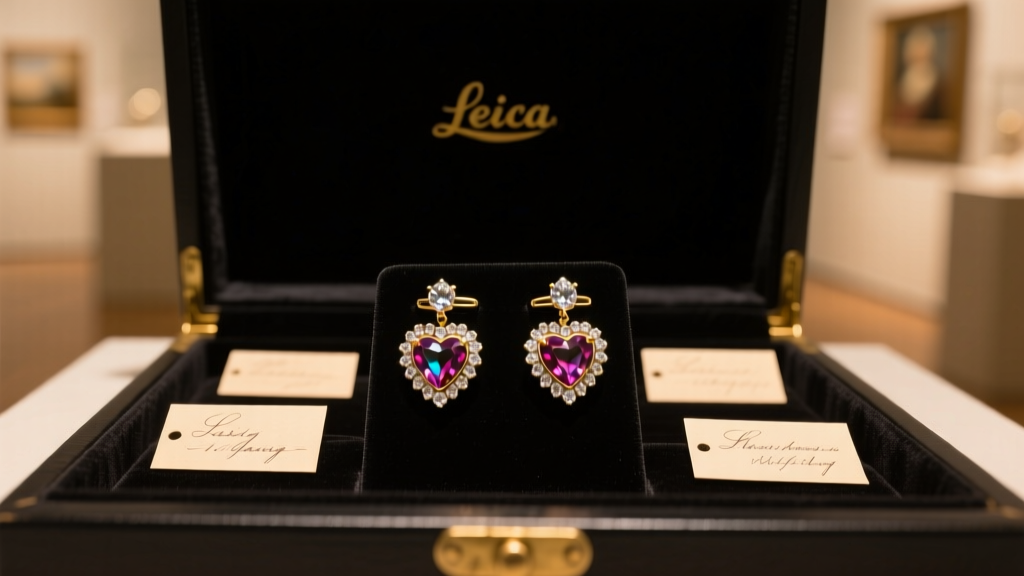
"Always request high-resolution, macro-photography of the earring posts, the back of the heart face, and any clasp mechanisms. If a seller claims a piece is ‘Victorian’ but the photos show modern laser-welded jump rings or bright, rhodium-plated white gold, walk away."
Major Red Flags to Avoid:
- The 'Franken-Earring': A Victorian heart drop attached to a modern 1980s earring post. Look for solder marks where the original top loop was cut and a modern post was brazed on.
- Synthetic Stones in Antique Settings: Bright, flawless, bubble-free rubies or sapphires in a supposed 1890s setting are likely synthetic flame-fusion stones, which were not commercially viable in jewelry until the early 20th century.
- Over-Polishing: A Victorian silver heart should have a soft, grayish patina in the crevices of the engraving. If the piece is blindingly white and the engraving lines look soft or melted, it has been aggressively machine-polished, destroying its antique value.
Caring for Antique and Vintage Heart Motifs
Once you have secured your vintage heart earrings, proper maintenance is vital to preserving their historical integrity. Never use commercial silver dips on Victorian or Art Nouveau pieces, as these chemicals will strip the oxidized contrast that makes the engraving pop, and they will permanently ruin porous stones like opals and seed pearls. Instead, use a soft, untreated microfiber cloth and a gentle brush with mild Castile soap and distilled water for gold and diamond pieces. For intricate filigree, a wooden toothpick is safer than a metal pin for dislodging decades of cosmetic buildup. Store your vintage earrings in individual acid-free tissue pouches or anti-tarnish flannel bags to prevent the softer gold alloys and silver from scratching against each other in your jewelry box.


