Gay Earrings for Men: Troubleshooting Myths & Styles
Debunk the gay ear myth and troubleshoot fit, metals, and modern queer coding with our expert guide to gay earrings for men.


When men search for gay earrings for men, they are usually colliding with a frustrating mix of outdated cultural stereotypes and genuine styling anxiety. The internet is still cluttered with decades-old forum posts debating which ear signifies what, leaving many queer men—and straight men who simply appreciate queer aesthetics—paralyzed by the fear of sending the "wrong" signal. But it is 2026, and the landscape of men's jewelry has evolved far beyond the binary codes of the 1980s.
As a senior style editor and jewelry specialist, I see two distinct problems when men try to navigate this space. First, the cultural anxiety of outdated signifiers. Second, the physical troubleshooting of poorly executed piercings, cheap metals, and improper gauge sizes that lead to discomfort and the dreaded "cheese-cutter effect." This guide will dismantle the myths, decode modern queer aesthetics, and provide a masterclass in troubleshooting the physical fit of your earrings.
The "Gay Ear" Myth: Troubleshooting Outdated Stereotypes
Let us address the elephant in the room: the idea that piercing the right ear exclusively signals homosexuality, while the left ear signifies heterosexuality. This "left is right, right is wrong" hanky-code adjacent myth peaked in the late 1980s and early 1990s. It was a survival mechanism and a subtle signaling tool during a highly hostile cultural era for LGBTQ+ men.
Today, this code is entirely obsolete. In contemporary men's fashion, ear piercings are completely decoupled from sexual orientation. Trying to troubleshoot your identity through ear placement is a solution to a problem that no longer exists. Modern queer coding is far more nuanced, relying on material choices, asymmetry, and styling rather than arbitrary lobe selection. If you are worried about wearing gay earrings for men and being misread, the solution is to focus on the quality and style of the jewelry, not the side of your head it occupies.
Modern Queer Coding: How Men Actually Signal Identity
If the "right ear" rule is dead, how do queer men express identity through jewelry today? Modern signaling is about subverting traditional masculine norms through specific aesthetic choices. Here is how to troubleshoot a bland jewelry wardrobe and inject authentic, modern queer energy into your look:
- The Pearl Revival: Once strictly relegated to vintage womenswear, pearls have been aggressively reclaimed by queer men. A single, imperfect baroque pearl stud or a delicate pearl drop offers a soft, subversive contrast to traditional menswear.
- Asymmetrical Cartilage Curations: Rather than a single lobe piercing, modern queer aesthetics favor a "curated ear" approach. This involves multiple piercings on one side—such as a lobe, helix, and tragus—worn with mixed metals or coordinated gemstones.
- Ear Cuffs and No-Commitment Hardware: For men who want the aesthetic without the needle, tension-fit ear cuffs on the upper cartilage provide an edgy, punk-adjacent look that reads as distinctly alternative and queer-coded.
- Vibrant Gemstones: Moving away from standard clear diamonds, queer men are increasingly opting for stones like amethyst, turquoise, or opal, which carry historical ties to bohemian and queer subcultures.
For more on how men are breaking traditional jewelry rules, style authorities like GQ's men's earring guides frequently highlight how celebrities and everyday men are blending masculine silhouettes with traditionally feminine materials.
Troubleshooting Fit and Anatomy: The Cheese-Cutter Effect
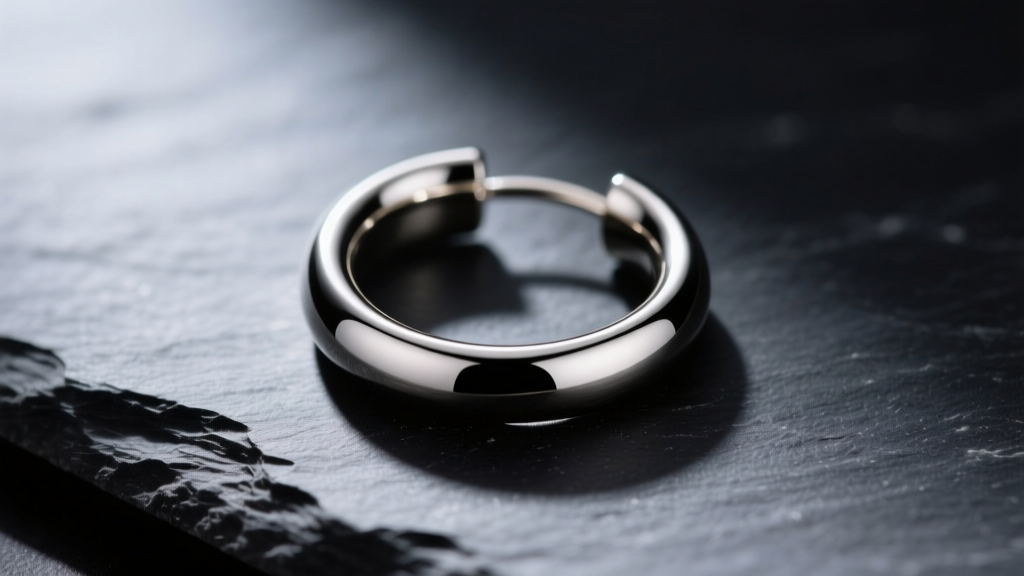
The most common physical problem men face after getting their ears pierced is the "cheese-cutter effect." This occurs when a thin wire hoop rests in a standard, thin-gauge piercing hole. The weight of the hoop pulls downward, and the thin wire slowly slices through the earlobe tissue, causing pain, migration, and eventual tearing.
If you are buying gay earrings for men and want them to last a lifetime without destroying your anatomy, you must understand gauge sizes. Most mall kiosks and piercing guns use 20-gauge (0.81mm) or 18-gauge (1.02mm) needles. This is far too thin for anything heavier than a tiny, lightweight stud.
The Gauge Size Troubleshooting Chart
| Gauge Size | Millimeter (mm) | Best Jewelry Type | Troubleshooting Notes |
|---|---|---|---|
| 20G | 0.81mm | Tiny push-in studs | Avoid hoops entirely. High risk of cheese-cutter effect and lobe tearing. |
| 18G | 1.02mm | Lightweight studs, small huggies | Standard professional piercer size. Okay for light hoops, but not heavy drops. |
| 16G | 1.29mm | Standard hoops, cartilage labrets | The ideal starting point for men. Provides structural integrity for the lobe. |
| 14G | 1.60mm | Statement hoops, heavy drops | Highly recommended for long-term lobe health. Prevents migration and tearing. |
The Fix: If your lobes are currently pierced at 20G or 18G and you want to wear substantial hoops, visit a professional piercer to have your lobes gradually stretched to 16G or 14G using a taper. This minor troubleshooting step will save you from painful lobe reconstructions later in life.
Material Allergies: Solving the "Green Ear" and Itch Problem
Another massive point of failure for men new to earrings is contact dermatitis. You buy a stylish hoop, wear it for three days, and your earlobe becomes red, itchy, and flaky. This is almost always a nickel allergy. Approximately 10% to 15% of the male population has a nickel sensitivity, and it can develop suddenly, even if you previously tolerated cheap metals.
The "Surgical Steel" Trap
Many men mistakenly believe that "surgical steel" is hypoallergenic. It is not. Surgical steel is an umbrella term that often includes alloys containing up to 10% nickel. When your skin's moisture interacts with the nickel, it creates nickel salts, leading to an allergic reaction and that tell-tale green or black oxidation on the skin.
The ultimate troubleshooting solution for metal allergies is ASTM F-136 Implant-Grade Titanium. This is the exact same material used in medical joint replacements and bone screws. It contains zero nickel and is biocompatible. When shopping for gay earrings for men, ignore terms like "nickel-free brass" or "surgical steel" and look exclusively for implant-grade titanium or solid 14k/18k gold. The Association of Professional Piercers (APP) provides exhaustive, scientifically backed guidelines on safe body jewelry materials that every man should read before buying jewelry.
Upgrading to Threadless Jewelry: The End of Lost Earrings
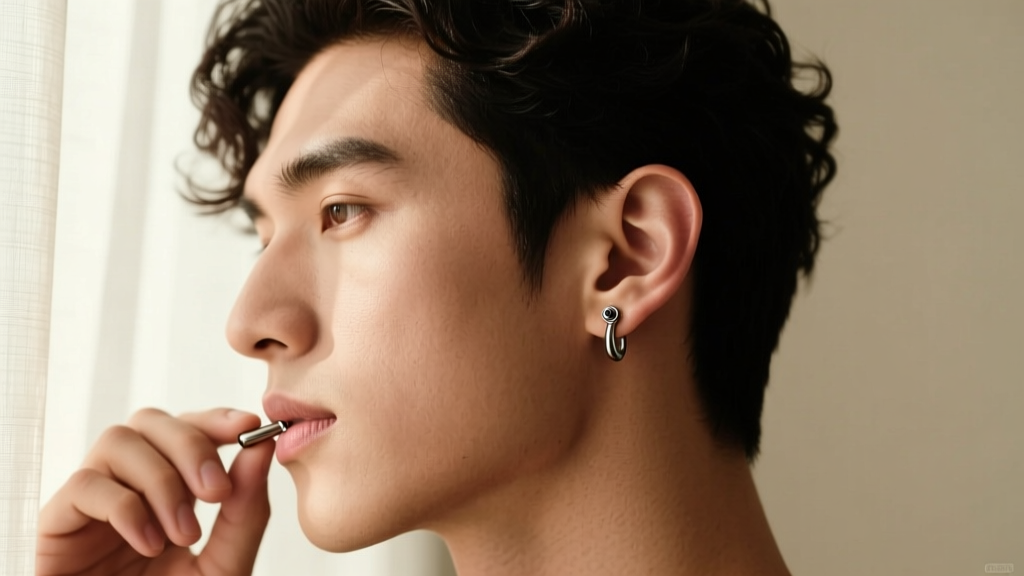
If you are constantly losing the butterfly backs of your stud earrings, or if the sharp post is scratching your neck while you sleep, it is time to troubleshoot your jewelry mechanism. The traditional "butterfly clutch" or "push back" is an outdated, insecure design that harbors bacteria and easily falls out.
The professional standard in 2026 is threadless (push-pin) jewelry. Here is how it works and why it solves multiple problems at once:
- The Mechanism: Instead of screwing a back onto a post, the decorative front piece has a slightly bent pin that pushes into a hollow receiving tube in the back piece.
- Tension Fit: The slight bend in the pin creates internal spring tension against the walls of the tube. The harder you pull, the tighter it grips.
- Troubleshooting Removal: To remove it, you do not pull. You gently bend the jewelry in a bowing motion, and the tension releases, allowing it to slide out smoothly.
Threadless labret studs are perfect for both lobes and cartilage. They sit completely flush against the back of the ear, eliminating neck scratches and ensuring your jewelry never falls out in the shower or at the gym.
Curated Styles: Moving Beyond the Basic Hoop
Once you have secured the correct gauge and safe materials, the final step is styling. The goal is to choose pieces that complement your facial structure and personal aesthetic. Here is a quick framework for selecting the right silhouette:
"The best men's earrings don't scream for attention; they act as a subtle punctuation mark to your overall style. A well-placed, high-quality piece of jewelry shows an attention to detail that elevates even a basic t-shirt and denim."
- For Angular Jawlines: Soften sharp features with circular silhouettes. Opt for 10mm to 12mm inner-diameter seamless titanium hoops or small, rounded huggie earrings.
- For Rounder Faces: Create the illusion of length and structure with geometric drops, rectangular bar studs, or vertical threadless labrets in the upper cartilage.
- For the Minimalist: Stick to flat-disc threadless studs in matte black titanium or solid yellow gold. A 3mm or 4mm disc offers a refined, masculine glint without overpowering the face.
Final Verdict: Wear What Fits Your Vibe
The search for gay earrings for men ultimately leads to a simple truth: the most attractive thing you can wear is confidence, backed by high-quality, anatomically correct jewelry. Stop worrying about which ear to pierce, and start focusing on upgrading your 20-gauge mall piercings to 14-gauge implant-grade titanium. Embrace modern queer coding through pearls, asymmetry, and bold gemstones. By troubleshooting the physical fit and discarding outdated cultural myths, you free yourself to wear exactly what makes you feel powerful, authentic, and undeniably stylish.


