Beaded Halloween Earrings: Technical Guide to Weight & Materials
An expert technical guide to beaded halloween earrings. Learn about lobe weight limits, wire gauges, bead specific gravity, and hypoallergenic findings.

The Biomechanics of Earlobe Stress During Seasonal Wear
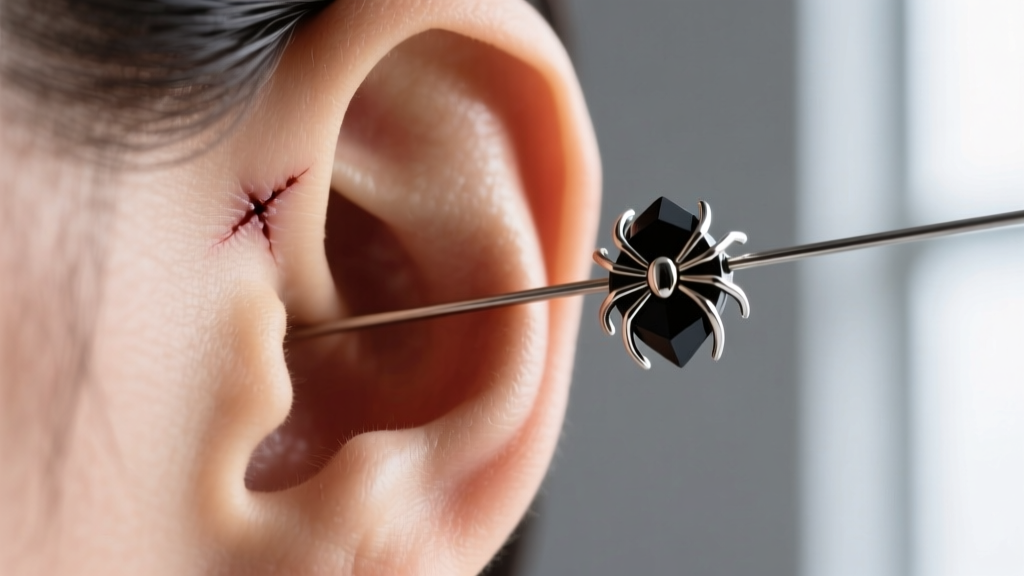
Seasonal jewelry manufacturing frequently prioritizes aesthetic novelty over structural integrity. This is especially true for beaded halloween earrings, which often feature dense glass beads, oversized resin charms, and heavy metallic accents. From a biomechanical perspective, the standard human earlobe fistula (the piercing channel) is not engineered to support prolonged static loads exceeding specific thresholds.
According to data reviewed by the Association of Professional Piercers (APP), a standard healed lobe piercing can comfortably support between 7 to 10 grams of total weight for an 8-hour period. When beaded halloween earrings exceed 14 grams per ear, the localized pressure restricts capillary blood flow, leading to ischemia. This manifests as the familiar 'heavy ear' ache, followed by micro-tearing of the fistula tissue and accelerated migration or stretching of the piercing hole.
To engineer or select safe beaded designs for all-night wear, one must calculate the cumulative mass of the beads, the metal findings, and the wire, ensuring the total assembly remains under the 10-gram safety threshold.
Material Matrix: Bead Types and Specific Gravity
The weight of any beaded assembly is dictated by the specific gravity (SG) of its constituent materials. Specific gravity is the ratio of the density of a substance to the density of water. Understanding SG is critical when designing beaded halloween earrings, as a 12mm glass bead will weigh more than double a 12mm acrylic bead of the exact same volume.
| Bead Material | Specific Gravity (SG) | Avg. Weight (8mm Round) | Impact on Earlobe | Durability & Failure Modes |
|---|---|---|---|---|
| Acrylic / Lucite | 1.18 - 1.20 | ~0.35g | Minimal (Safe for multi-tier dangles) | Prone to micro-scratching; degrades with prolonged UV/chemical exposure. |
| Epoxy Resin | 1.10 - 1.25 | ~0.40g | Low (Excellent for oversized shapes) | Can yellow over time; brittle under sheer stress. |
| Soda-Lime Glass | 2.40 - 2.60 | ~0.95g | Moderate (Limit to 2-3 beads per drop) | Highly durable but shatters upon hard surface impact. |
| Lead Crystal | 3.00 - 3.20 | ~1.30g | High (Avoid for long dangles) | Extremely brittle; poses toxicity risks if chipped and ingested. |
| Natural Agate / Quartz | 2.60 - 2.65 | ~1.05g | Moderate to High | Highly durable; heavy mass requires reinforced wire wrapping. |
For lightweight, high-volume designs—such as large pumpkin or skull silhouettes—cast acrylic or UV-cured resins are the superior technical choice. They allow for dramatic visual scale without crossing the ischemia-inducing weight threshold. For a comprehensive breakdown of gemstone and glass density metrics, the Gemological Institute of America (GIA) provides extensive specific gravity databases that inform advanced jewelry engineering.
Wire Gauge and Finding Specifications
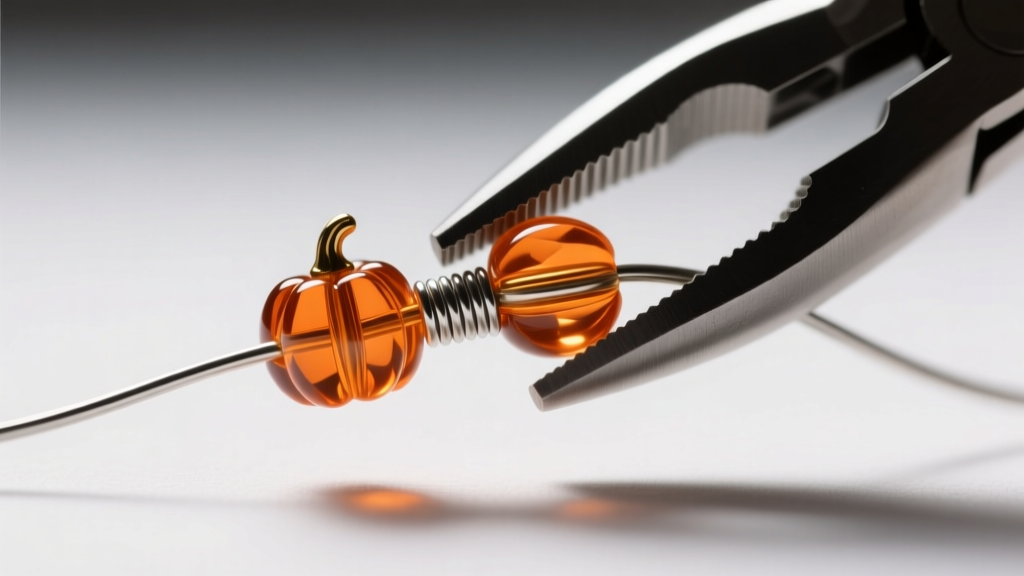
The structural failure point of most seasonal beaded jewelry is the wire. Mass-produced beaded halloween earrings typically utilize 24-gauge or 26-gauge 'dead-soft' wire to minimize manufacturing costs and allow for rapid hand-assembly. This is a critical engineering flaw.
The Physics of Wire Hardness
- Dead-Soft Wire: Has been fully annealed. While easy to bend, it lacks the tensile strength to support heavy glass beads. Under the dynamic load of walking or dancing, dead-soft wire will slowly unspool, leading to bead loss.
- Half-Hard Wire: Has been work-hardened or drawn to increase its yield strength. For any beaded dangle exceeding 4 grams, 22-gauge or 21-gauge half-hard wire is mandatory to maintain the structural loop integrity.
- Full-Hard Wire: Too brittle for tight wrapping; it will snap if bent past a 45-degree angle without heat treatment.
Furthermore, the gauge of the ear wire itself must be considered. A standard healed lobe piercing rests between 18-gauge (1.0mm) and 20-gauge (0.81mm). Inserting a thick 18-gauge ear wire can cause friction and micro-trauma to the fistula lining. The optimal technical specification for the ear wire is 22-gauge (0.64mm), which glides through the tissue without friction, while the structural headpins holding the beads should be 21-gauge half-hard to prevent bending.
Engineering the Dangle: Center of Gravity and Balance
A common failure mode in beaded halloween earrings is the 'forward flip,' where the decorative dangle rotates 180 degrees, hiding the design behind the earlobe. This occurs when the center of gravity (CoG) of the bead assembly sits above or perfectly parallel to the pivot point of the ear wire loop.
To engineer a stable dangle that remains forward-facing:
- Drop the Pivot Point: Use an eye-pin rather than a standard headpin, and create the connection loop at least 3mm below the top bead. This lowers the CoG relative to the ear wire.
- Add a Counterweight: For asymmetrical designs (e.g., a bat silhouette with one extended wing), add a micro-bead (1mm to 2mm) to the lighter side of the assembly to re-center the mass.
- Use Rigid Connectors: Flexible beading wire (e.g., 0.015-inch 49-strand stainless steel) allows the earring to fold and tangle. For structured, geometric Halloween designs, rigid brass or copper core wire maintains the intended spatial orientation.
Hypoallergenic Findings: Avoiding the 'Halloween Itch'
Contact dermatitis is the most frequently reported adverse reaction to seasonal jewelry. The culprit is almost universally nickel, which is used as a brightening agent and hardener in cheap brass and copper alloys. As of 2026, the EU Nickel Directive and global dermatological standards dictate that jewelry intended for prolonged skin contact must release less than 0.5 micrograms of nickel per square centimeter per week.
Mass-market beaded halloween earrings routinely bypass these standards. To ensure biocompatibility, technical specifications for findings (ear wires, headpins, and jump rings) must adhere to recognized medical implant standards:
Acceptable Implant-Grade Materials:
- ASTM F138: 316LVM (Vacuum Melted) Surgical Steel. Note: 'Surgical steel' is a marketing term; only ASTM F138 certified steel guarantees low nickel leaching.
- ASTM F67: Unalloyed Commercially Pure Titanium (Grades 1-4). The gold standard for hyper-sensitive tissue.
- Niobium: A highly reactive elemental metal that forms a stable, biocompatible oxide layer. Anodized niobium is excellent for achieving vibrant Halloween colors (purples, greens, blacks) without the use of toxic surface paints or nickel plating.
When sourcing or manufacturing beaded halloween earrings, always verify the ASTM F138 certification of the metal findings. Upgrading from standard brass ear wires to 22-gauge anodized niobium hooks increases the per-unit cost by approximately $0.15 to $0.30, but entirely eliminates the risk of acute allergic contact dermatitis, ensuring the earrings can be worn safely from dusk until dawn.
Summary of Technical Best Practices
Designing and selecting high-quality beaded halloween earrings requires moving beyond superficial aesthetics to evaluate the physics and metallurgy of the assembly. By restricting total mass to under 10 grams, utilizing half-hard 21-gauge structural wires, calculating the specific gravity of bead materials, and mandating ASTM-certified hypoallergenic findings, you ensure a product that is both visually striking and biomechanically sound. True expertise in jewelry design lies in the invisible engineering that protects the wearer's anatomy.


