11mm Earrings: Material Weight and Hypoallergenic Guide
Discover how material density impacts 11mm earrings. Compare titanium, gold, and steel weights, biocompatibility, and ideal piercing placements.

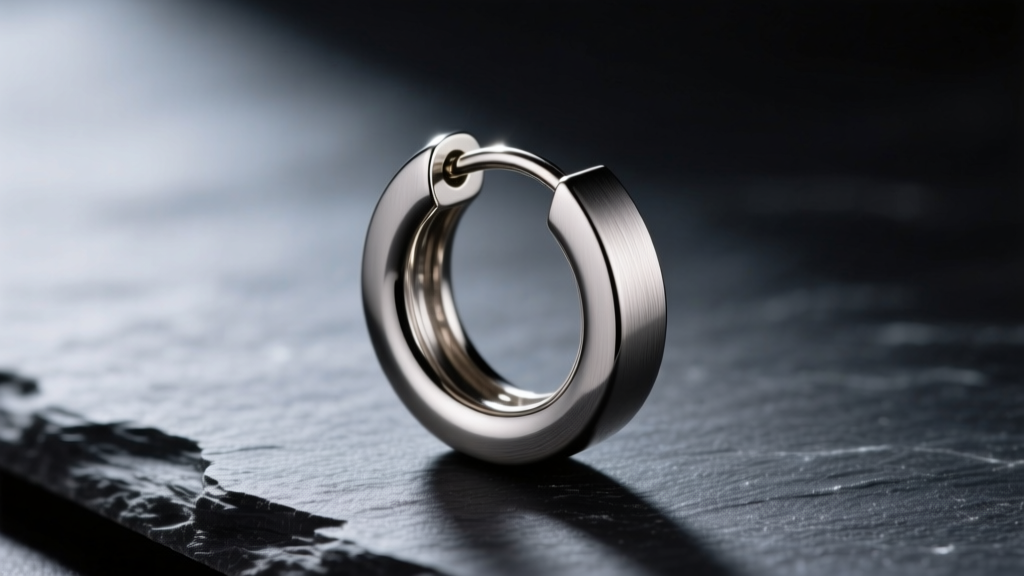
The Physics of 11mm Earrings: Why Material Density Matters
When selecting jewelry for healed piercings, the 11mm size represents a fascinating transitional threshold. While 10mm is the industry standard for a snug 'huggie' fit on a standard earlobe, and 12mm begins to enter the realm of medium drops or larger cartilage hoops, an 11mm inner diameter sits precisely in the middle. It is the Goldilocks dimension for snug conch piercings, thicker lobe huggies, and specialized rook placements. However, because the volume of an 11mm hoop—especially when crafted in a structural 2.5mm to 3mm wire thickness—is substantial, material density becomes the single most critical factor in long-term comfort, tissue health, and wearability.
As of 2026, advancements in micro-CNC machining have allowed jewelers to create highly complex, seamless 11mm huggies and clickers. Yet, the fundamental laws of physics remain unchanged. The mass of your earring directly correlates to the specific gravity of the alloy used. Wearing a heavy 11mm hoop in a delicate cartilage piercing can lead to migration, while wearing it in a standard lobe can cause the dreaded 'cheese-cutter effect'—where the weight of the jewelry slowly slices through the tissue over time. To make an informed decision, we must look past the aesthetic finish and examine the metallurgical properties of the metals used to craft 11mm earrings.
Material Breakdown: Density, Weight, and Biocompatibility
Implant-Grade Titanium (ASTM F136)
Titanium is the undisputed champion of lightweight biocompatibility. According to the ASTM International F136 Standard, implant-grade titanium alloys (specifically Ti-6Al-4V ELI) are entirely nickel-free and possess a specific gravity of just 4.43 g/cm³. For an 11mm huggie with a 3mm wire thickness, this translates to an exceptionally light wear. Titanium's high tensile strength also means that micro-hinges and internal threading on 11mm clickers are less prone to stripping or warping under daily stress. It is the mandatory choice for fresh piercings and the safest bet for those with severe contact dermatitis.
14k and 18k Solid Gold
Gold offers unmatched prestige, warmth, and heirloom longevity, but it is incredibly dense. 14k gold has a specific gravity of approximately 13.5 g/cm³, while 18k gold pushes closer to 15.5 g/cm³. An 11mm solid gold huggie will weigh more than three times as much as its titanium counterpart. While this provides a satisfying, premium 'heft' in the hand, it can cause lobe fatigue if worn 24/7. Furthermore, gold is a soft metal; an 11mm gold hoop with a thin 1.5mm wire is highly susceptible to bending out of its perfect circular geometry if snagged on clothing or hair.
Niobium vs. 316L Surgical Steel
Niobium is a reactive metal highly prized in the body modification community for its ability to be anodized into vibrant, permanent colors without the use of toxic dyes or platings. With a density of 8.57 g/cm³, it is heavier than titanium but completely hypoallergenic. 316L Surgical Steel, conversely, is the most common budget option. While it polishes to a brilliant mirror finish, it contains 8-10% nickel. The Association of Professional Piercers strictly advises against using surgical steel in unhealed piercings due to the high risk of nickel sensitization, which can develop suddenly even after years of problem-free wear.
The 11mm Weight Matrix: Comparative Data
To understand the real-world impact of material choice, we must calculate the actual mass of the jewelry. Using the geometric formula for the volume of a torus (V = 2π²Rr²), we can determine the weight of a standard 11mm inner-diameter huggie hoop with a robust 3mm wire thickness (1.5mm radius). The cross-sectional radius (r) is 1.5mm, and the distance from the center of the torus to the center of the tube (R) is 7mm (5.5mm inner radius + 1.5mm wire radius). This yields a volume of roughly 0.311 cm³ per earring.
| Material | Specific Gravity (g/cm³) | Calculated Weight (per 11mm x 3mm Hoop) | Biocompatibility Rating | Ideal Piercing Placement |
|---|---|---|---|---|
| Implant-Grade Titanium | 4.43 | 1.38 grams | Excellent (Nickel-Free) | All placements, including fresh |
| Niobium | 8.57 | 2.66 grams | Excellent (Nickel-Free) | Healed lobes, conch, daith |
| 316L Surgical Steel | 8.00 | 2.49 grams | Poor (Contains Nickel) | Healed lobes only (if tolerated) |
| 14k Solid Gold | 13.50 | 4.20 grams | Good (Alloy Dependent) | Healed standard lobes |
| 18k Solid Gold | 15.50 | 4.82 grams | Very Good (Higher Purity) | Healed standard lobes |
Note: A pair of 18k gold 11mm huggies will add nearly 10 grams of continuous downward force to your earlobes. Over a decade, this static load will permanently stretch the piercing fistula.
Anatomical Fit: Where to Wear 11mm Hoops and Studs
The 11mm dimension is not a one-size-fits-all metric. The inner diameter dictates how the jewelry wraps around the tissue, while the wire gauge (thickness) dictates how it interacts with the piercing channel.
- Standard Earlobe (Huggie Fit): An 11mm inner diameter provides a 'kiss' fit on most standard lobe piercings, resting gently against the bottom edge of the ear without dangling. It is ideal for sleepers if the hinge mechanism is flush and the metal is lightweight (titanium).
- Conch Piercing: The conch is a deep, expansive cartilage bowl. An 11mm hoop is often the perfect size to wrap snugly around the outer helix rim from a mid-conch puncture, provided the ear's anatomy is relatively compact.
- Rook and Daith: These intricate inner-ear folds usually require 10mm or 12mm clickers. However, an 11mm inner diameter with a thinner 2mm wire can bridge the gap for individuals whose rook fold is slightly too thick for a standard 10mm ring, preventing the dreaded 'pinching' effect.
- 11mm Studs (Face Diameter): When discussing 11mm in the context of flat-back studs or push-pins, this refers to the face of the gem or bezel. An 11mm face is exceptionally large, functioning as a statement piece for stretched lobes or industrial piercing ends, requiring a heavy-duty 14g or 12g post to support the visual weight.
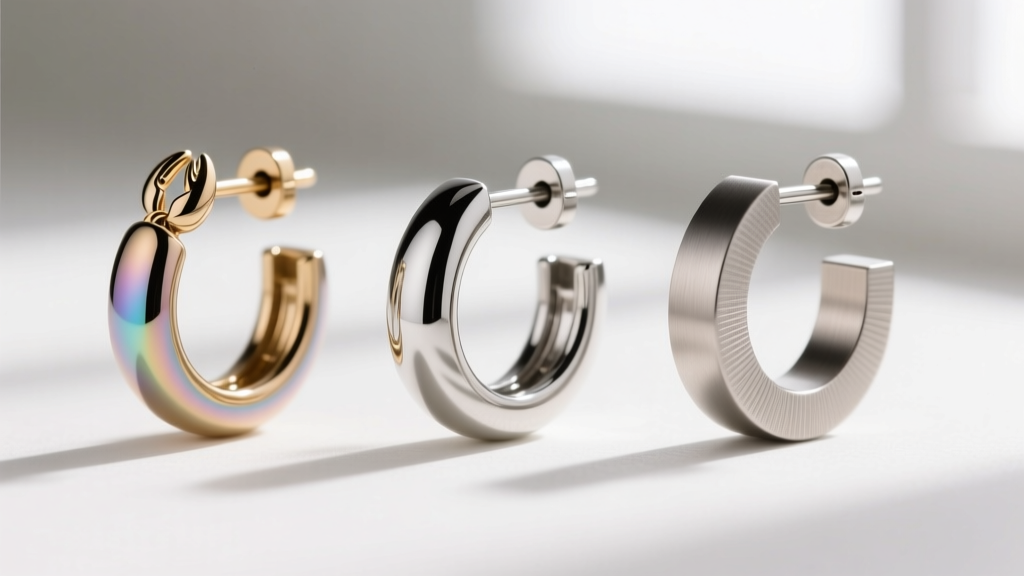
Troubleshooting Common 11mm Material Failures
Even with premium materials, the specific geometry of an 11mm earring introduces unique mechanical stress points. Understanding these failure modes will save you from losing expensive jewelry or damaging your piercings.
The Hinge Stress Fracture: On 11mm huggies, the micro-hinge must support the leverage of a relatively wide arc. If you buy a hollow-core gold or steel huggie to save weight, the thin walls will eventually crush or snap at the hinge pin. Always opt for solid-core wire or cast hinges for 11mm diameters.
Thread Stripping in Soft Metals
If your 11mm earring utilizes a screw-in mechanism (common in high-end gold clickers or flat-back studs), the metal's hardness matters. 18k gold is notoriously soft. If cross-threaded even once, the external threads will strip, rendering the earring useless. Always demand internal threading—where the screw is on the post and the threads are inside the thicker, more durable receiving tube of the earring. This protects the delicate threads from daily wear and tear.
The Anodizing Fade on Niobium
While niobium is fantastic for 11mm cartilage hoops due to its hypoallergenic nature, its anodized colors (achieved via electrical voltage altering the oxide layer) can scratch. Unlike gold plating, the color is the metal itself, but deep scratches will reveal the raw, dark grey niobium beneath. For high-friction areas like the tragus or daith, stick to polished raw niobium or titanium to maintain a pristine look over time.
Final Verdict: Choosing Your 11mm Metal
When investing in 11mm earrings, you are balancing the physics of weight against the biology of your skin. For daily wear, sleep-friendly huggies, or any cartilage placement, Implant-Grade Titanium (ASTM F136) is the undisputed technical winner, offering a featherlight 1.38g profile that eliminates tissue drag. If you desire the prestige and warmth of gold, 14k Solid Gold is preferable to 18k for 11mm hoops, as its slightly lower density and higher alloy hardness provide better structural integrity for hinges and clasps, though you must accept the 4.2g weight penalty. Avoid 316L surgical steel entirely if you have a history of metal sensitivities, as the nickel content in a heavy, snug-fitting 11mm hoop creates a perfect storm for contact dermatitis. By prioritizing material density and biocompatibility over mere aesthetics, your 11mm earrings will remain comfortable, safe, and structurally sound for a lifetime of wear.


