How to Clean and Maintain Your Studs Earring Collection
Learn expert cleaning and maintenance tips for your studs earring collection. Discover material-specific care for gold, titanium, and gemstones.

The Anatomy of a Stud: Post, Threading, and Backing Hygiene
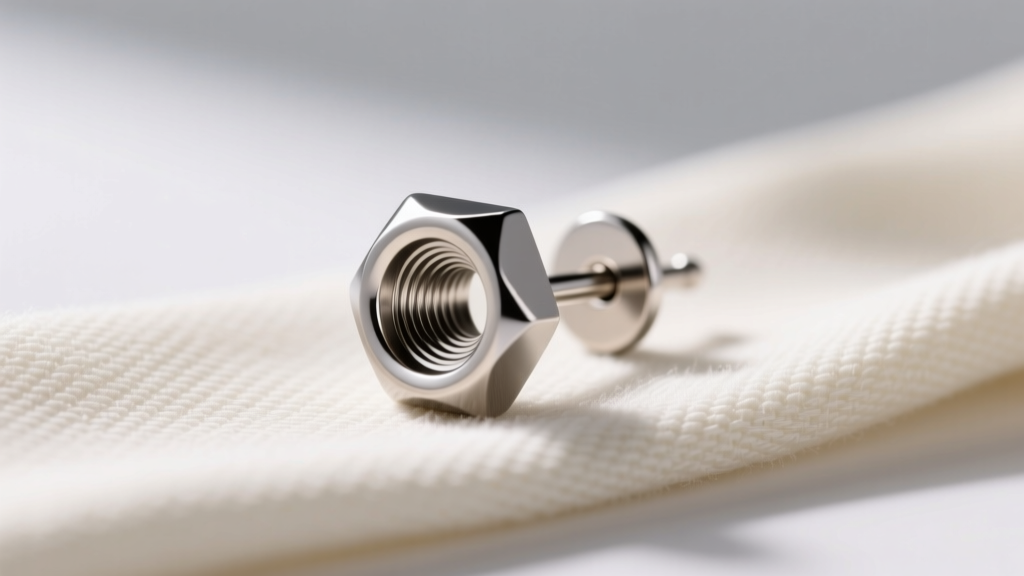
When evaluating your studs earring collection, the first point of failure is rarely the gemstone itself; it is the post and backing mechanism. As we navigate 2026, the jewelry industry's shift toward biocompatible materials and precision engineering means your cleaning routines must evolve beyond a simple wipe-down. Understanding the physical anatomy of your jewelry is the first step in proper maintenance.
Standard lobe studs typically feature a 20-gauge (0.81mm) or 18-gauge (1.02mm) post, while cartilage and helix studs often require a thicker 16-gauge (1.29mm) post for structural integrity. The threading type dictates how you should handle the piece during cleaning. Externally threaded posts (where the screw pattern is on the post itself) are largely considered obsolete by professionals because the sharp threads can tear the delicate fistula tissue upon insertion. Internally threaded and threadless (push-pin) designs are the modern standard.
Furthermore, traditional friction backs (butterfly backs) are notorious for trapping sebum, dead skin cells, and hair products in their tiny crevices. This buildup creates an anaerobic environment that leads to contact dermatitis and unpleasant odors. Upgrading to flat-back labrets or precision screw-backs not only improves comfort but drastically reduces the surface area where bacteria can hide, making your cleaning routine far more effective.
Material-Specific Cleaning Protocols
Every studs earring type requires a tailored approach based on its metallurgical and gemological properties. Using a one-size-fits-all cleaning solution is a primary cause of irreversible jewelry damage.
Solid Gold and Platinum
While pure 24k gold is highly resistant to tarnish, jewelry is typically crafted in 14k or 18k gold, meaning it is alloyed with metals like copper, silver, or zinc for durability. These alloys are susceptible to chemical reactions. Chlorine, found in tap water and swimming pools, can cause stress corrosion cracking in gold alloys, leading to microscopic fractures in the prongs holding your gemstones. Platinum, being denser and more chemically inert, is far more forgiving but can develop a natural patina over time that requires professional polishing to restore its high-shine finish.
Implant-Grade Titanium and Surgical Steel
According to the Association of Professional Piercers (APP), implant-grade titanium (ASTM F136) remains the gold standard for biocompatibility. Unlike commercial 'surgical steel' (316L), which contains nickel that can leach and cause allergic reactions, ASTM F136 titanium is virtually nickel-free. Titanium studs can be safely cleaned with sterile saline or a mild, fragrance-free liquid soap. Avoid harsh abrasives, as they can scratch the anodized surface if your titanium jewelry has been color-treated.
Porous and Delicate Gemstones
The Gemological Institute of America (GIA) emphasizes that hardness (resistance to scratching) does not equal toughness (resistance to breaking). Diamonds rank a 10 on the Mohs scale and can withstand rigorous cleaning. However, organic and porous gems require extreme caution:
- Pearls: Composed of calcium carbonate, pearls will dissolve when exposed to acidic cleaners, ammonia, or ultrasonic waves. Wipe them gently with a damp microfiber cloth after each wear to remove body oils.
- Opals: Containing up to 21% water, opals are prone to 'crazing' (internal cracking) if exposed to sudden temperature changes, ultrasonic cleaners, or harsh chemicals.
- Emeralds: Most commercial emeralds are fracture-filled with cedar oil or synthetic resins. Ultrasonic cleaners and hot water will strip this oil, leaving the stone looking cloudy and heavily included.
The 5-Step Deep Cleaning Routine
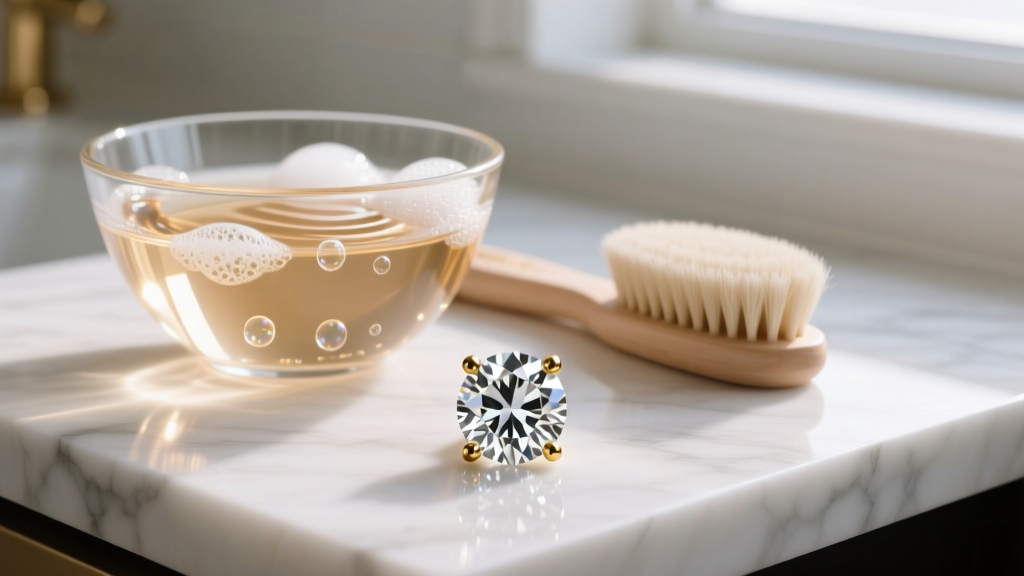
For your everyday diamond, sapphire, or plain metal studs earring pieces, this deep cleaning routine should be performed every two to three weeks to maintain maximum light return and hygiene.
- Prepare the Solution: Fill a small glass bowl with warm (not hot) distilled water and add three drops of mild, phosphate-free dish soap. Avoid soaps with heavy moisturizers, which leave a filmy residue.
- Soak: Submerge the earrings for 10 to 15 minutes. This softens hardened sebum and cosmetic buildup around the prongs and backing.
- Agitate Gently: Using a brand-new, ultra-soft baby toothbrush, gently sweep the bristles across the back of the setting and the post. Never scrub the top of the gemstone aggressively, as trapped dust (which often contains quartz, Mohs 7) can scratch softer stones or precious metal settings.
- Rinse Thoroughly: Rinse the pieces under a gentle stream of lukewarm distilled water. Ensure the drain is securely plugged or use a mesh strainer to prevent catastrophic loss.
- Dry and Polish: Pat dry with a lint-free microfiber cloth. For high-polish metal parts, use a dedicated jewelry polishing cloth infused with microscopic jeweler's rouge to restore the mirror finish.
Troubleshooting Common Studs Earring Issues
Even with meticulous care, mechanical and environmental issues can arise. Use this diagnostic table to address common problems without damaging your jewelry.
| Issue | Root Cause | Expert Solution |
|---|---|---|
| Stuck Butterfly Backing | Sebum buildup or bent post | Soak in warm soapy water for 20 mins. Use two pairs of rubber-gripped tweezers to gently pull. Do not force, or the post will bend. |
| Dull or Cloudy Gemstone | Lotion/hairspray film on pavilion | Clean the underside (pavilion) of the stone with a soft interdental brush to remove light-blocking grease. |
| Post Bending Easily | Low-karat gold or thin 22g wire | Straighten gently with nylon-jaw pliers. Consider upgrading to an 18-gauge or 16-gauge post for structural rigidity. |
| Dark Tarnish on Silver | Oxidation from sulfur in the air | Use an aluminum foil, baking soda, and hot water electrolytic bath. Avoid abrasive silver dips that strip the metal. |
What to Avoid: The Ultrasonic and Chemical Trap
"The convenience of an at-home ultrasonic cleaner is vastly outweighed by the risk it poses to treated gemstones and fragile antique settings. Cavitation bubbles can easily shake a micro-pave diamond loose from its bead setting."
While ultrasonic cleaners use high-frequency sound waves to create microscopic cavitation bubbles that blast dirt away, they are not universally safe. They are excellent for plain diamond solitaires in secure bezel or prong settings. However, the intense vibrations can shatter internally flawed stones, strip the oil from emeralds, and completely dissolve the nacre on pearls. Similarly, commercial 'jewelry dips' often contain thiourea and sulfuric acid, which can cause irreversible pitting on karat gold and leave a porous, matte surface on silver.
Storage and Long-Term Preservation
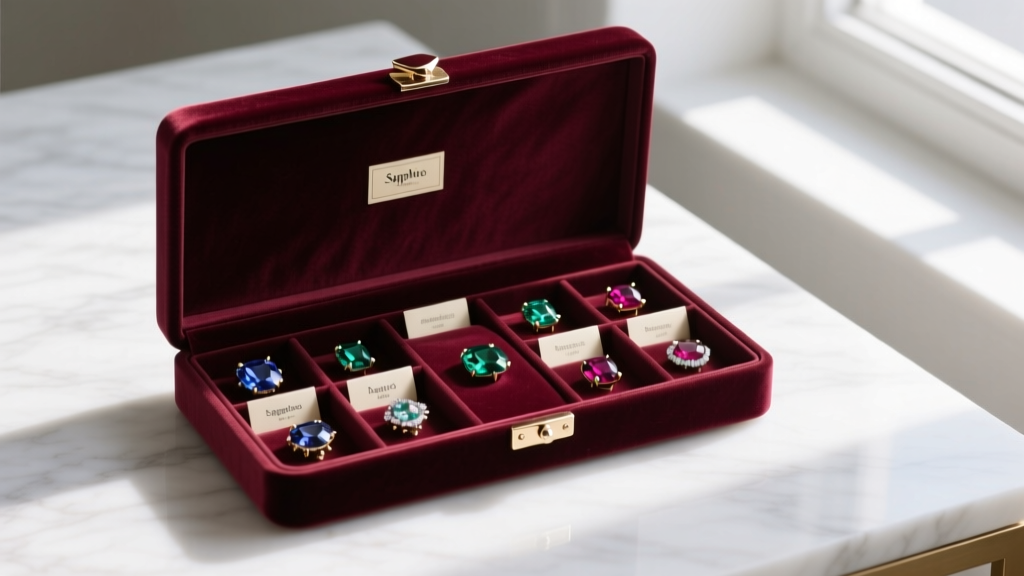
Proper storage is the final pillar of jewelry maintenance. Tossing your studs earring pieces into a communal jewelry box guarantees microscopic scratching, as harder gems will easily abrade softer metals and stones. Diamonds, for instance, can only be scratched by other diamonds, meaning two diamond studs stored loose together will eventually scuff each other's girdles.
Store each pair in an individual soft pouch or a dedicated compartment lined with anti-tarnish fabric. For silver and white gold pieces, include a small silica gel packet in the storage area to control ambient humidity, which accelerates oxidation. Finally, keep your collection away from direct sunlight and heat sources, as prolonged UV exposure can fade color-treated stones like kunzite, amethyst, and certain sapphires. By combining material science with mindful daily habits, your collection will remain pristine, hygienic, and brilliant for decades to come.


