Cube Earrings Buying Guide: How to Choose the Perfect Pair
Discover how to choose the perfect cube earrings. Our buying guide covers material weights, gauge sizes, hollow vs. solid designs, and styling tips.

The Geometry of Style: Why Cube Earrings Dominate
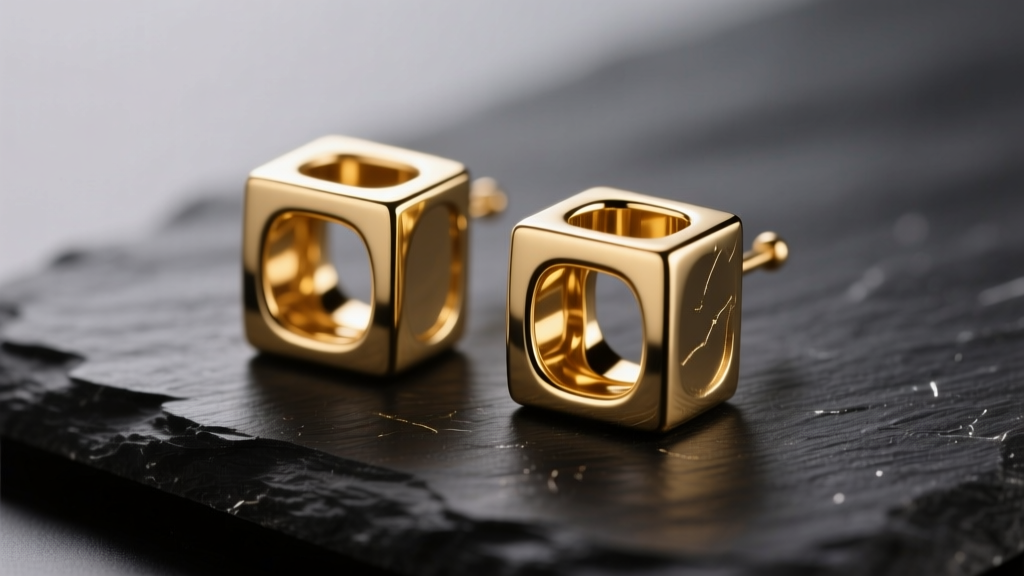
Cube earrings have transcended their 1980s Memphis Design roots to become a permanent staple of modern brutalist, minimalist, and architectural jewelry. Unlike organic shapes or traditional hoops, the geometric precision of a cube demands specific structural considerations. Whether you are evaluating micro-cube studs for a subtle cartilage stack or oversized hollow cube dangles for a statement lobe look, the interplay of light against flat facets and sharp 90-degree angles creates a striking visual impact. However, the very geometry that makes cube earrings so visually appealing also introduces unique challenges regarding weight distribution, metal tarnish, and piercing health. This comprehensive buying guide breaks down the exact metallurgy, weight distributions, and hardware requirements you need to evaluate before purchasing cube earrings.
The Physics of Cubes: Weight and the 'Cheese-Cutter' Effect
The most critical factor when buying cube earrings is understanding volumetric scaling. Because volume scales cubically, a seemingly small increase in millimeter size results in a massive increase in weight. A 5mm solid cube has a volume of 125mm³, while a 10mm cube has a volume of 1000mm³—making it exactly eight times heavier, despite only doubling in width.
A solid 10mm sterling silver cube weighs approximately 10.5 grams. If this earring is hung on a standard, thin 22-gauge (0.64mm) wire, gravity will relentlessly pull the heavy cube downward. Over time, this causes the 'cheese-cutter effect,' where the thin wire slowly migrates through the earlobe tissue, causing pain, thinning, and eventual tearing.
Actionable Gauge Sizing Rules
- Micro Cubes (2mm - 5mm): Safe on standard 20-gauge (0.81mm) or 22-gauge wires.
- Medium Cubes (6mm - 9mm): Require an 18-gauge (1.02mm) post to distribute weight safely across the lobe.
- Statement Cubes (10mm+): Must be worn on 16-gauge (1.29mm) or 14-gauge (1.63mm) posts, or opt for hollow/wireframe designs to reduce mass.
Solid vs. Hollow vs. Wireframe: A Structural Comparison
To combat the weight issues of solid geometric shapes, jewelers utilize different construction methods. Understanding these variations is crucial for matching the earring to your specific piercing placement and lifestyle.
| Design Type | Avg. Weight (10mm) | Best Placement | Maintenance Level |
|---|---|---|---|
| Solid Metal | 8g - 12g | Lower Lobe (18g+ post) | High (crevice tarnish) |
| Hollow Box | 1.5g - 3g | Lobe or Helix | Medium (dents easily) |
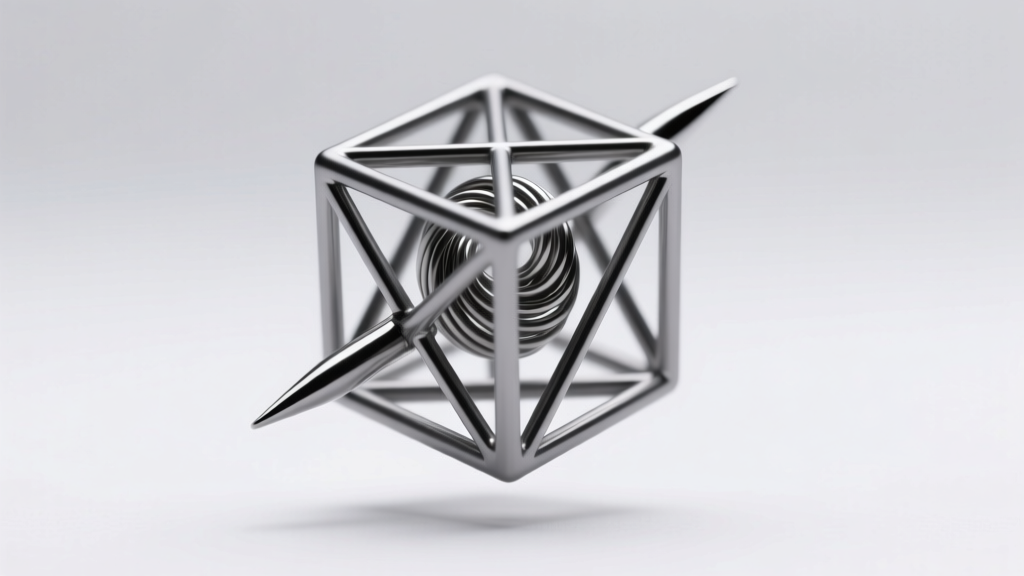
| Wireframe / Skeletal | 0.5g - 1.5g | Cartilage / Helix / Flat | Low (easy to clean) |
Pro Tip: If you love the look of solid metal but have stretched or sensitive lobes, look for 'chamfered' or beveled hollow cubes. These feature shaved edges that catch the light similarly to solid blocks but weigh a fraction of the mass.
Material Grades and the Tarnish Trap
The defining feature of a cube is its 90-degree interior angles. In jewelry maintenance, these sharp inner corners are notorious traps for sweat, dead skin cells, and oxidation. Standard jewelry polishing cloths cannot reach deep into these crevices, making material selection paramount.
The Sterling Silver Dilemma
Sterling silver (925) is highly prone to oxidation in low-oxygen, high-moisture environments—exactly the conditions found in the inner corners of a cube stud. If you buy solid sterling silver cube earrings, you must commit to regular cleaning using an ultrasonic jewelry cleaner or a liquid silver dip. Alternatively, seek out rhodium-plated sterling silver. Rhodium is a precious metal from the platinum family that provides a brilliant, tarnish-resistant shield, keeping the sharp inner angles of your cubes permanently bright without the need for aggressive polishing.
Implant-Grade Titanium for Cartilage
For cartilage placements like the helix or flat, where healing times are long and irritation bumps are common, material purity is non-negotiable. You must look for ASTM F136 compliant implant-grade titanium (Ti-6Al-4V). Commercial 'titanium' jewelry often contains nickel alloys that can trigger severe reactions. According to the American Academy of Dermatology, nickel is the leading cause of allergic contact dermatitis, which can cause a cartilage piercing to reject or form hypertrophic scars. Always verify the ASTM F136 certification when buying titanium cube studs for fresh or sensitive piercings.
Gold Alloys and Durability
When buying hollow 14k or 18k gold cubes, consider the karat weight. According to the GIA Gem Encyclopedia, higher karat gold is softer. An 18k hollow cube is more prone to denting if dropped or slept on compared to a 14k hollow cube, which contains more alloyed metals like copper and zinc for structural rigidity. For everyday hollow geometric shapes, 14k gold offers the best balance of precious metal value and physical durability.
Cartilage vs. Lobe: Hardware and Backing Mechanisms
The hardware used to secure cube earrings is just as important as the cube itself. Geometric shapes have a high center of gravity and a tendency to rotate or droop.
Securing the Lobe
Standard butterfly friction backs are inadequate for heavy cube earrings. The small surface area of a butterfly back will dig into the back of your neck, and the earring will inevitably droop forward, ruining the geometric alignment. Instead, look for cube earrings that come with La Pousette locking backs or jumbo silicone discs. These provide a wide, flat surface area that supports the weight of the cube and keeps the front facet perfectly parallel to the ground.
Securing the Cartilage
For helix or conch placements, cube earrings should be mounted on flat-back labret posts rather than standard butterfly posts. A flat-back disc sits flush against the back of the ear, preventing the post from shifting. Furthermore, ensure the cube front is either threadless (push-pin) or internally threaded. Externally threaded posts will tear the delicate cartilage tissue upon insertion and can harbor bacteria in the threads.
Face Shape and Proportion Styling
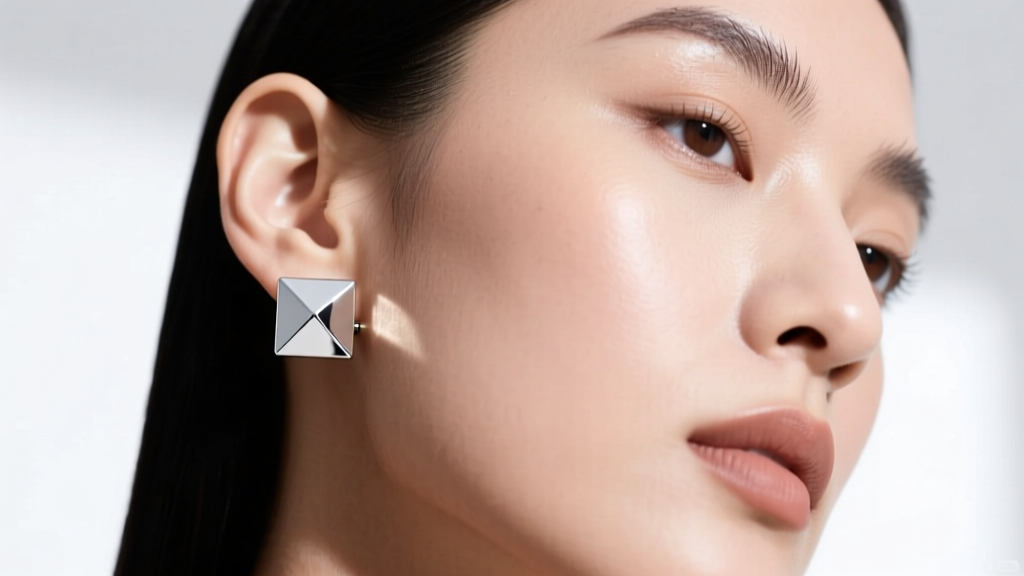
Because cubes are inherently angular and rigid, they interact strongly with the natural curves of your face. Use these styling frameworks to balance your proportions:
- Round Face Shapes: Opt for elongated cuboids (rectangular cubes) or cube dangles that drop below the jawline. This introduces vertical lines that elongate the face and counterbalance soft curves.
- Square Face Shapes: Choose wireframe cubes, skeletal cubes, or solid cubes with heavily rounded, chamfered edges. The negative space in wireframe designs softens the overall look without adding harsh, competing angles to a strong jawline.
- Oval Face Shapes: You have the versatility to pull off almost any geometric design. Micro-cube huggies or perfectly symmetrical 8mm solid cube studs will highlight your natural facial balance.
Final Checklist: What to Verify at Checkout
Before adding a pair of cube earrings to your cart, run through this expert checklist to ensure you are getting a high-quality, structurally sound piece of jewelry:
- Verify the Weight: If the cube is solid and over 8mm, ensure the product description lists the weight. If it exceeds 6 grams per earring, verify the post gauge is 18g or thicker.
- Check the Inner Corners: Look at macro photos of the jewelry. Are the inner 90-degree angles polished, or do they look rough and cast? Rough inner corners will trap debris and tarnish rapidly.
- Confirm the Metal Grade: Ensure 'implant-grade' is explicitly stated for titanium, and look for rhodium plating if purchasing sterling silver.
- Evaluate the Backing: Reject heavy cube studs that only include standard butterfly backs. Plan to purchase La Pousette locks or flat silicone stoppers separately if necessary.
- Inspect the Post Connection: For cartilage cubes, ensure the design utilizes a flat-back labret post to prevent rotation and ear irritation.
By prioritizing structural integrity, precise gauge sizing, and intelligent material selection, your cube earrings will remain a sharp, comfortable, and striking addition to your jewelry rotation for years to come.


