2025 Earring Trends: The Ultimate 2026 Buying Guide
Discover the top 2025 earring trends transitioning into 2026. Our buying guide covers cartilage gauges, implant-grade titanium, and curated ear styling.

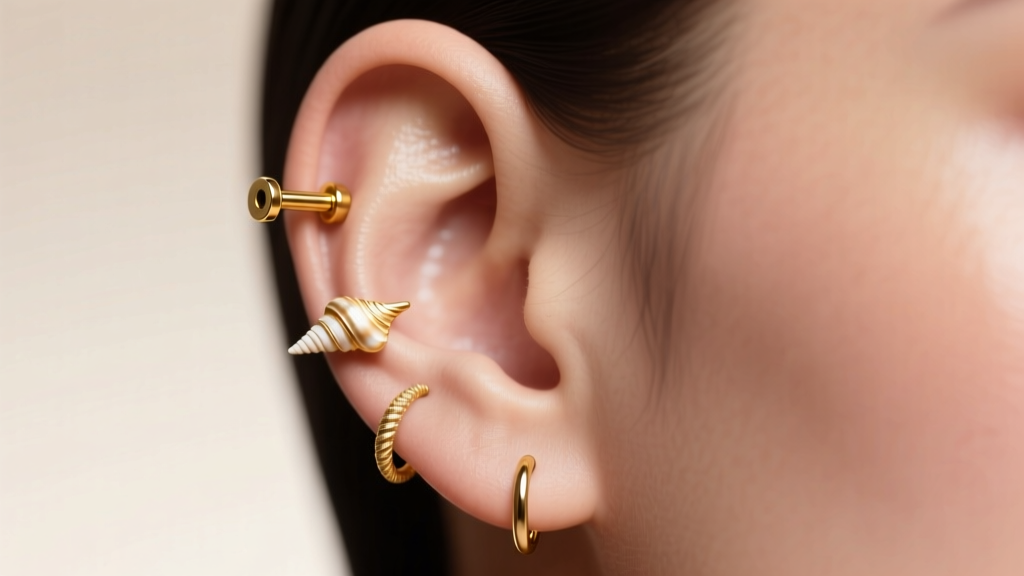
The Shift: From 2025 Earring Trends to 2026 Staples
When analyzing the trajectory of the 2025 earring trends, one thing becomes abundantly clear: the era of haphazard, fast-fashion ear curation is over. As we move deeper into 2026, collectors and first-time buyers alike are prioritizing anatomical precision, biocompatible materials, and modular styling. The maximalist 'curated ear' look that dominated social media feeds has matured into a sophisticated, highly technical pursuit. This buying guide dissects the technical specifications you must demand from jewelers this year, ensuring your investments are both aesthetically striking and biologically safe.
Trend 1: The Curated Cartilage Constellation
The hallmark of recent 2025 earring trends was the dense, multi-piercing cartilage constellation. However, the 2026 buying paradigm shifts the focus from mere quantity to the structural integrity of the jewelry itself. Cartilage piercings—ranging from the helix to the conch and tragus—are notoriously unforgiving. The avascular nature of cartilage means it heals slowly and is highly susceptible to irritation bumps (hypertrophic scarring) caused by poor jewelry geometry and low-grade alloys.
Internal vs. External Threading: A Buyer's Mandate
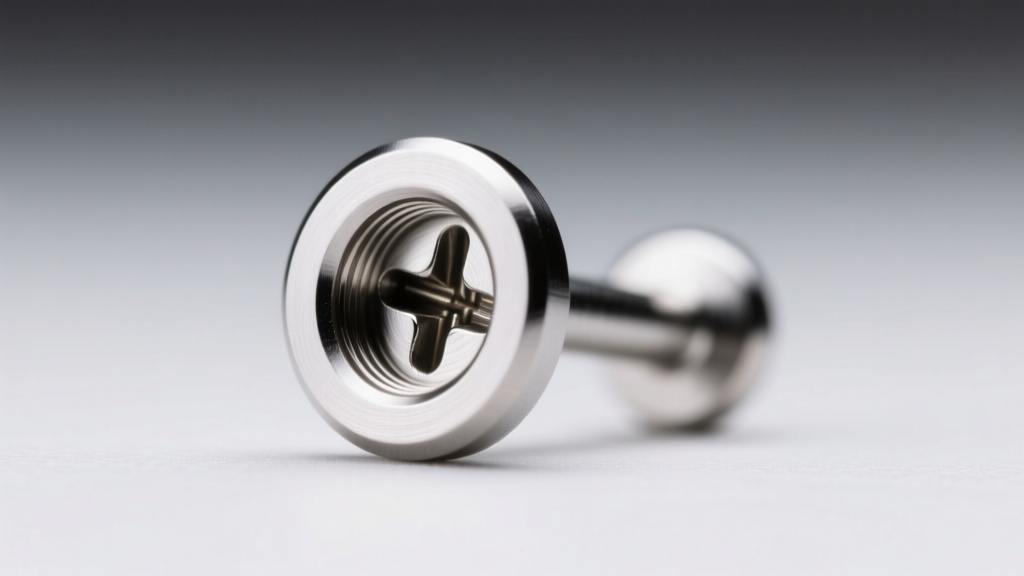
If you are purchasing threaded jewelry for any cartilage placement, externally threaded pieces are an immediate red flag. External threading features the screw pattern on the post itself, which acts like a cheese grater against the delicate fistula (the piercing channel) every time it is inserted or removed. According to the Association of Professional Piercers (APP), only internally threaded or threadless (push-pin) jewelry should be used. Internally threaded posts have a smooth surface with the screw hole inside the post, while the decorative end has the screw. Threadless jewelry uses tension-bent pins that snap securely into a hollow post, offering a seamless insertion that eliminates tissue micro-tears.
Material Grades: Decoding Biocompatibility Standards
When navigating the secondary market for vintage or trend-driven pieces, consumers are often bombarded with buzzwords like 'hypoallergenic' and 'surgical steel.' In 2026, these terms are functionally obsolete for serious buyers. 'Surgical steel' (often 316L stainless steel) contains up to 14% nickel, a known contact allergen that can trigger severe contact dermatitis in healing or sensitive cartilage.
Instead, demand jewelry that meets specific ASTM (American Society for Testing and Materials) standards. For titanium, look for ASTM F136 (Ti-6Al-4V ELI), which is the gold standard for implant-grade body jewelry. For those preferring the aesthetic of steel without the nickel risk, ASTM F138 implant-grade stainless steel or Niobium (which is naturally nickel-free and highly malleable) are superior alternatives. According to European Union nickel release directives, any jewelry intended for prolonged skin contact must release less than 0.5 micrograms of nickel per square centimeter per week—a threshold that standard 316L steel frequently fails when exposed to sweat and moisture.
Trend 2: Asymmetrical Drop Earrings & Ear Cuffs
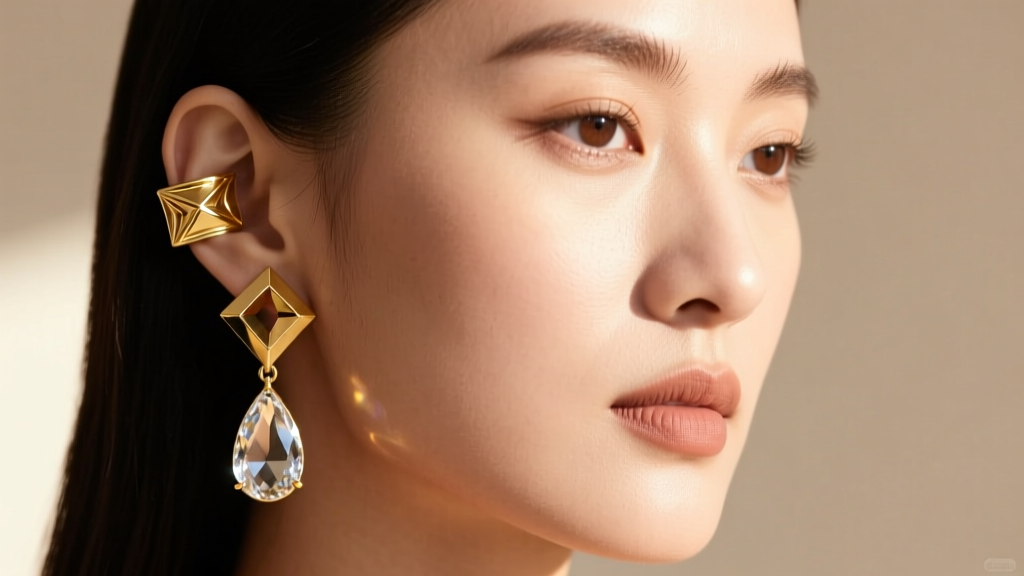
Asymmetry remains a dominant force, evolving from the 2025 earring trends into a staple of avant-garde styling. Pairing a heavy, sculptural drop earring on one lobe with a constellation of delicate ear cuffs and flat-back studs on the opposite ear creates dynamic visual tension. However, buying asymmetrical drops requires a strict understanding of weight distribution and lobe tolerance.
Weight Tolerance & Lobe Stretching Prevention
A standard 18-gauge (1.0mm) lobe piercing can comfortably support approximately 4 to 6 grams of weight for extended daily wear. Exceeding this threshold with heavy brass or solid stone drops will cause gradual, irreversible lobe stretching and potential migration. When shopping for statement drops, look for hollowed-out casting techniques or lightweight materials like anodized niobium and aerospace-grade aluminum. If you prefer the aesthetic of heavy drops, restrict wear to under four hours or invest in specialized silicone lobe support patches that distribute the tensile stress across a wider surface area of the earlobe.
Trend 3: Mixed-Metal Huggies and Textured Hoops
The juxtaposition of yellow gold, white gold, and oxidized silver in a single huggie or hoop was a defining aesthetic of recent years. In 2026, the challenge lies in sourcing mixed-metal pieces that do not rely on degrading plating.
The Vermeil Trap vs. Solid Alloys
Many commercial brands achieve the mixed-metal look through gold vermeil (a thick layer of gold over sterling silver). While vermeil is superior to standard gold plating, it is ultimately a surface treatment. The friction of a huggie hinge, combined with the acidic pH of human sweat, will inevitably wear through the gold layer on the interior curve of the hoop within 6 to 12 months of daily wear. For a permanent mixed-metal aesthetic, seek out jewelers who use soldered solid alloys or mechanical inlays. The Gemological Institute of America (GIA) notes that solid 14k and 18k gold alloys maintain their structural and chromatic integrity indefinitely, making them the only viable choice for high-friction hinge jewelry.
Gemstone Settings: Prong vs. Bezel in Cartilage
Cluster studs and intricate gemstone constellations remain highly sought after. However, the setting style dictates the longevity and comfort of the piece. Prong settings, while allowing maximum light return for diamonds and sapphires, are notorious for snagging on hair, sweaters, and pillowcases. This micro-trauma can twist the post inside the fistula, leading to irritation bumps. For cartilage placements like the helix or flat, bezel settings—where a continuous metal rim encircles the gemstone—are vastly superior. They offer a smooth, snag-free profile that protects both the stone and your healing tissue.
Sourcing & Specifications: The 2026 Matrix
To navigate the market effectively, you must match the jewelry specifications to the exact anatomical placement. Use the following matrix as your baseline when auditing product descriptions from online retailers.
| Placement | Standard Gauge | Recommended Metal | Threading Type |
|---|---|---|---|
| Standard Lobe | 18g (1.0mm) | 14k/18k Solid Gold | Threadless / Internal |
| Helix / Forward Helix | 16g (1.2mm) | ASTM F136 Titanium | Threadless / Internal |
| Conch | 14g (1.6mm) | ASTM F136 Titanium | Threadless / Internal |
| Tragus | 16g (1.2mm) | Niobium / Titanium | Threadless / Internal |
E-Commerce Red Flags: What to Avoid
When shopping for pieces that reflect the best of the 2025 earring trends, scrutinize the product details for these immediate disqualifiers:
- 'Gold Plated' or 'Gold Dipped' over Brass or Copper: These will oxidize rapidly, turning your skin green and causing allergic reactions.
- 'Butterfly Backs' for Cartilage: The tension-based friction backs trap bacteria and dead skin cells, and the long posts can dig into the side of your head while sleeping. Always opt for flat-back labret posts.
- Vague Metal Descriptions: If a listing says 'alloy' or 'mixed metals' without specifying the exact karat of gold or the grade of titanium, assume it contains high levels of nickel and lead.
Final Verdict: Building a Trend-Proof Wardrobe
The evolution from fleeting viral aesthetics into the refined landscape of 2026 demands a more educated consumer. By prioritizing ASTM F136 implant-grade titanium for fresh or sensitive piercings, insisting on threadless or internally threaded mechanisms, and respecting the weight limits of your lobe tissue, you transition from buying disposable accessories to investing in permanent, body-safe art. Always request mill certificates or material breakdowns from independent jewelers before purchasing high-ticket cartilage pieces.


