The Science of Durable Earrings: Materials, Gauges, and Settings
Discover the engineering behind durable earrings. Explore metallurgical hardness, gauge thickness, and structural settings for lifelong wear.

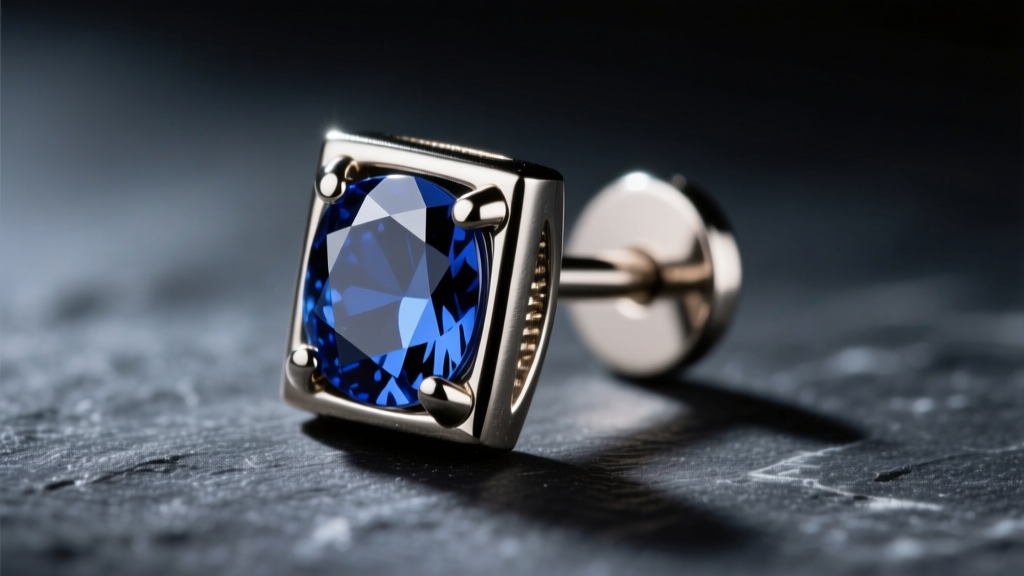
When consumers search for durable earrings, they are usually reacting to a negative experience: a bent post, a lost gemstone, or a snapped friction back. True durability in fine jewelry is not merely about scratch resistance; it is a complex interplay of metallurgical hardness, structural geometry, and closure mechanics. As a domain expert, I will deconstruct the engineering principles that separate disposable fashion jewelry from heirloom-grade, structurally sound pieces designed for lifelong, 24/7 wear.
Understanding the material science and structural integrity of earrings is critical, especially for cartilage piercings or active lifestyles where jewelry is subjected to sheer stress, tensile loading, and environmental degradation. Below, we explore the exact specifications that dictate whether an earring will last a season or a lifetime.
Metallurgical Breakdown: Ranking Metals for Structural Integrity
The foundation of any durable earring is its base metal. However, the jewelry industry often conflates "hardness" with "durability." In metallurgy, hardness (measured on the Vickers scale, HV) dictates scratch resistance, while tensile strength and malleability dictate how a metal handles physical impact and deformation.
Implant-Grade Titanium (ASTM F-136)
Titanium is the undisputed king of lightweight strength. With a Vickers Hardness of approximately 334 HV, it is highly resistant to surface scratching. More importantly, its strength-to-weight ratio is exceptional. A 16-gauge (1.2mm) titanium post will not bend under the pressure of a heavy sleeper hoop. However, titanium lacks malleability; if subjected to extreme, sudden sheer force, it is more likely to snap cleanly rather than bend. For this reason, titanium is best utilized in straight posts, barbells, and rigid clickers rather than intricate, hand-bent wire designs.
Platinum (Pt950 / Ruthenium Alloy)
Platinum presents a fascinating metallurgical paradox. At roughly 135 HV, it is significantly softer than titanium and will develop a "patina" of micro-scratches relatively quickly. Yet, according to the Association of Professional Piercers, platinum is arguably the most durable metal for gemstone settings. Because of its high density and malleability, platinum displaces rather than loses material when scratched. Furthermore, when a platinum prong is struck, it bends and can be pushed back into place, whereas a brittle white gold prong might simply fracture and lose the stone.
14k vs. 18k Gold Alloys
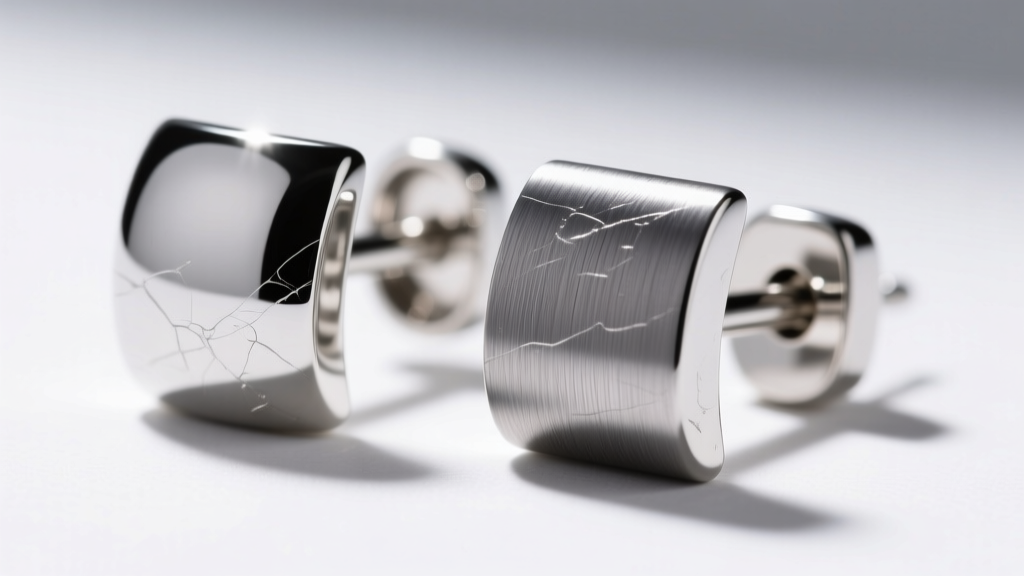
Pure 24k gold is far too soft for structural jewelry. Durability in gold earrings comes from the alloy mix. 14k gold (58.5% gold) is alloyed with copper, silver, and zinc, yielding a harder, more rigid metal ideal for intricate clasps and thin posts. 18k gold (75% gold) is softer, richer in color, and highly resistant to tarnish, but more prone to denting in thin-gauge applications. For heavy tension-set hoops or thin wire huggies, 14k gold offers superior structural memory.
The Engineering of Earring Backs and Closures
The most common point of catastrophic failure in earrings is the closure mechanism. A heavy diamond drop earring is only as secure as the 2mm of metal holding it to the earlobe.
- Friction Backs (Butterfly Clutches): These rely on the tensile spring of the metal arms gripping a notched post. Over time, repeated removal and the oils from the skin cause "work hardening," leading to a loss of tension or a complete snap of the metal arm. They are the least durable option for high-value jewelry.
- Internally Threaded Screw Backs: The gold standard for security. The threads are cut into the inside of the receiving tube, while the post is smooth. This prevents the "cheese grater" effect on the fistula during insertion. A standard 1.2mm pitch thread provides immense mechanical lock, though it requires occasional ultrasonic cleaning to prevent cross-threading from debris buildup.
- Hinge and Clicker Mechanisms: Common in hoops and cartilage rings, clickers use a captive pin that snaps into a recessed housing. Failure occurs when the housing deforms over years of opening and closing, resulting in a loose fit. High-end manufacturers use laser-welded hinge barrels to prevent this micro-deformation.
"A structurally sound earring must account for the kinetic energy of daily life. If a closure relies solely on friction rather than mechanical interlocking, it is operating on borrowed time."
Gemstone Setting Durability: Prong vs. Bezel vs. Flush
How a gemstone is secured to the metal framework drastically impacts the earring's overall durability, particularly for active individuals or those who wear their earrings to sleep.
The Vulnerability of Prong Settings
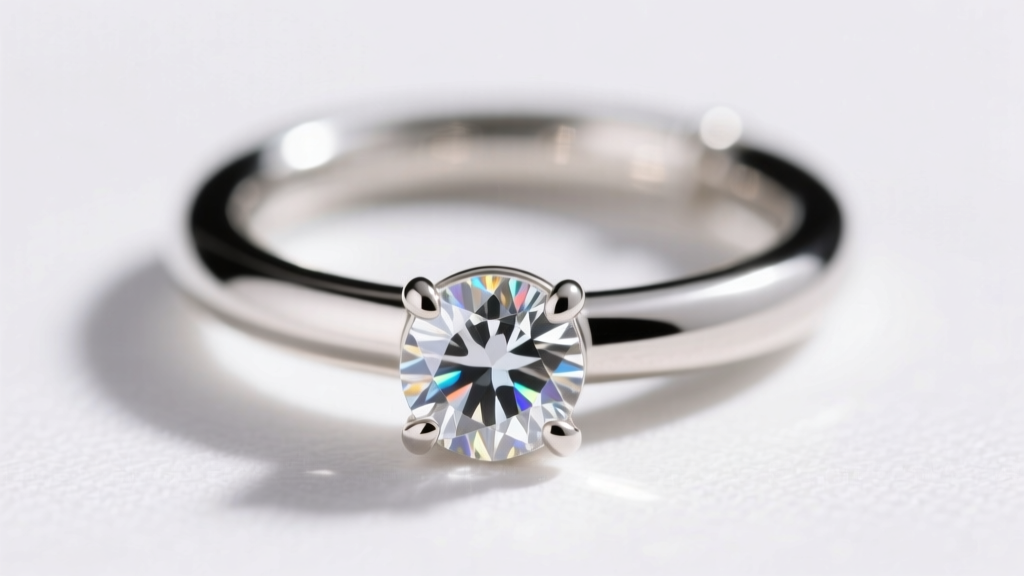
Prong settings maximize light return but are structural liabilities in active environments. Prongs are essentially tiny metal claws bent over the girdle of a stone. They are highly susceptible to snagging on textiles, which can lift the prong and release the gem. If you require prongs for maximum brilliance, ensure the jeweler uses platinum or palladium white gold, which possess the yield strength to withstand minor impacts without snapping.
Bezel and Flush Settings for Maximum Impact Resistance
For truly durable earrings, bezel and flush (gypsy) settings are superior. A full bezel involves pushing a continuous rim of metal entirely over the stone's edge, protecting the girdle from lateral impacts. Flush settings go a step further: the stone is set directly into a drilled cavity in the metal and burnished down. As noted in the GIA Gem Encyclopedia, flush settings offer the lowest profile possible, eliminating any raised edges that could catch on hair or clothing. This makes them the mandatory choice for cartilage studs and active-wear huggies.
Gauge Thickness and Tensile Stress in Cartilage
Gauge refers to the thickness of the wire or post passing through the piercing. Ignoring gauge requirements is a primary cause of jewelry migration and tissue damage, which compromises the long-term wearability of the piece.
The "cheese cutter effect" occurs when a wire that is too thin rests under tension in a piercing. Over time, the mechanical pressure causes the body to slowly resorb the tissue in the path of the wire, causing the piercing to migrate and eventually reject the jewelry. To prevent this and ensure the structural durability of the earring itself, strict gauge minimums must be observed:
- Standard Earlobes: 18-gauge (1.0mm) is acceptable for lightweight studs, but 16-gauge (1.2mm) provides vastly superior bending resistance for heavier drops or hoops.
- Cartilage (Helix, Conch, Tragus): 16-gauge (1.2mm) is the absolute minimum. 14-gauge (1.6mm) is highly recommended for hoops and clickers to prevent warping and tissue migration.
- Daith and Rook: 14-gauge (1.6mm) is mandatory due to the density of the tissue and the structural requirements of the curved barbells or clickers used in these placements.
Data Matrix: Material and Structural Durability
The following matrix synthesizes the technical specifications required to select durable earrings based on your specific anatomical placement and lifestyle requirements.
| Material / Alloy | Hardness (HV) | Tensile Behavior | Optimal Closure Type | Best Setting for Active Wear | Relative Price Tier |
|---|---|---|---|---|---|
| ASTM F-136 Titanium | ~334 HV | Rigid; snaps under extreme sheer | Internally Threaded | Bezel / Flush | $$ |
| Pt950 (Platinum/Ru) | ~135 HV | Malleable; bends and displaces | Hinge / Friction-Lock | Prong / Bezel | $$$$ |
| 14k Yellow Gold | ~135 HV | High structural memory | Clicker / Screw-back | Bezel | $$$ |
| 18k White Gold | ~125 HV | Brittle if nickel-alloyed | Friction / Hinge | Flush | $$$ |
| 316L Surgical Steel | ~220 HV | Rigid; prone to galvanic corrosion | External Thread (Avoid) | Bezel | $ |
Final Verdict: Building a Lifelong Wardrobe
Investing in durable earrings requires looking past the aesthetic surface and evaluating the mechanical engineering beneath. For everyday, never-take-out studs, ASTM F-136 titanium with flush-set stones and internally threaded flat-backs offer unmatched structural integrity and biocompatibility. For heirloom pieces meant to be passed down, Pt950 platinum with bezel settings and secure screw-backs provides the ultimate defense against gemstone loss and metal degradation. By prioritizing gauge thickness, appropriate metallurgy, and mechanical closures over friction-based alternatives, you ensure your jewelry withstands the rigors of daily life without compromise.


