Guys One Earring Guide: Troubleshooting Style and Piercing Pain
Rocking the guys one earring look? Solve asymmetry, fix single-side piercing irritation, and choose the right hardware with our expert guide.

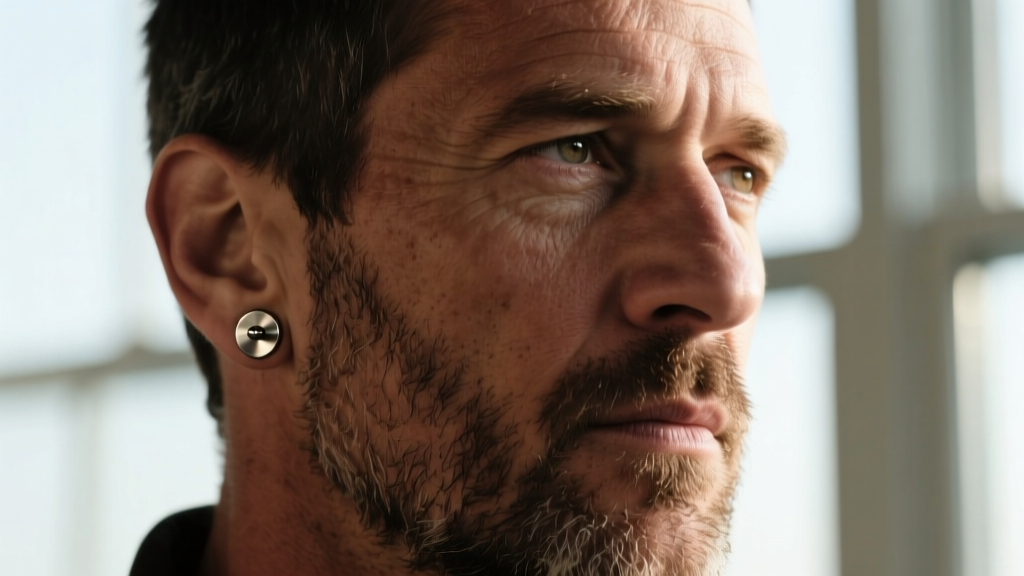
The single earring for men has transcended its rebellious 80s and 90s roots, evolving into a staple of modern minimalist, high-fashion, and streetwear aesthetics. However, committing to the guys one earring look introduces unique biomechanical and styling challenges that dual-pierced individuals rarely face. From uneven lobe stretching to the dreaded 'sleeping on the earring' irritation bump, solo ear adornment requires a targeted troubleshooting approach.
Whether you are dealing with a stubborn cartilage bump, trying to balance your facial asymmetry, or wondering which ear to pierce, this comprehensive guide will help you troubleshoot the most common issues associated with wearing a single earring.
The Asymmetry Equation: Balancing the Solo Look
When you only wear jewelry on one side of your head, you inherently introduce visual weight to that specific hemisphere of your face. If not styled correctly, this can make your features look unbalanced. The key to mastering the guys one earring aesthetic lies in counterbalancing.
Hair Parting and Ear Exposure
The golden rule of single-ear styling is to place the earring on the side where your hair naturally parts, or the side that is most frequently exposed. If you sweep your hair to the right, your left ear becomes the focal point. Placing a striking piece of jewelry on the hidden side defeats the purpose and creates a lopsided silhouette when viewed from the front.
Facial Hair and Jawline Weight
Men with asymmetrical beard growth or a naturally heavier jawline on one side can use a single earring to create optical balance. If your jawline is more prominent on the left, wearing a slightly larger or brighter earring on the right lobe draws the eye across the face, neutralizing the asymmetry. For men with sharp, angular features, a curved huggie or small hoop softens the face, while those with rounder faces benefit from the sharp, geometric lines of a flat-back stud or a small barbell.
Troubleshooting Single-Side Piercing Irritation
The most frequent complaint among men with a single piercing is localized irritation. Because you only have one earring, you are statistically more likely to sleep on that specific side, leading to chronic friction, pressure, and the formation of hypertrophic scarring or irritation bumps.
The 'Sleeping on It' Problem
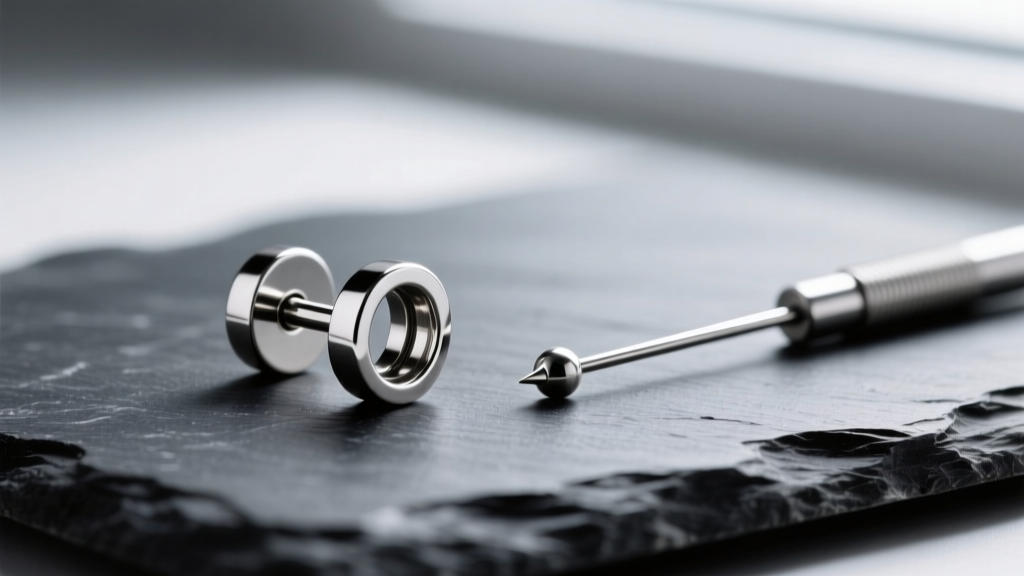
Standard butterfly-back studs are the enemy of side-sleepers. The sharp metal post and bulky backing dig into the mastoid bone and tragus, causing micro-trauma to the fistula (the piercing channel). According to the Association of Professional Piercers (APP), internal threading or threadless systems with flat backs are the gold standard for healing and long-term comfort.
The Fix: Switch to an implant-grade titanium (ASTM F136) flat-back labret. The flat disc sits flush against the back of the earlobe or cartilage, distributing pressure evenly when your head rests on a pillow. Threadless ends (where the pin bends slightly to create tension inside the hollow post) are particularly secure, ensuring you do not lose your earring in the bedsheets.
The Cheese-Cutter Effect
If your single earring is a hoop or dangle, you must pay strict attention to the wire gauge. Wearing a heavy piece of jewelry on a thin 20-gauge (0.8mm) or 18-gauge (1.0mm) wire creates a 'cheese-cutter' effect. Over time, the thin wire slowly slices through the lobe tissue, leading to migration and eventual tearing.
The Fix: Upgrade your hardware to a minimum of 14-gauge (1.6mm) or 12-gauge (2.0mm). Thicker wire distributes the gravitational pull across a wider surface area of tissue, preventing migration.
Hardware Selection: What Actually Works for Men's Solo Ears
Choosing the right hardware is critical for the guys one earring look. The piece must be substantial enough to stand alone as a focal point, yet practical enough for daily wear. Below is a troubleshooting matrix to help you select the right style based on your lifestyle and piercing placement.
| Earring Type | Best Gauge | Pros for Solo Wear | Cons & Troubleshooting | Avg. Price Range |
|---|---|---|---|---|
| Threadless Flat Back | 16G - 14G | 100% sleep-friendly, highly secure, minimalist. | Requires a specific removal tool; can be hard to insert initially. | $35 - $90 |
| Clicker Segment Ring | 16G - 14G | Sleek, continuous look; easy to open for cleaning. | Seam can snag on towels or hair if not perfectly aligned. | $30 - $75 |
| Huggie Hoop | 14G - 12G | Masculine, hugs the lobe tightly, low profile. | Hinge mechanisms on cheap brands break easily; buy solid gold/titanium. | $50 - $150 |
| Single Flare Plug | 8G - 00G | Great for stretched lobes; lightweight materials available. | Heavy materials (brass/stone) cause uneven stretching on one side. | $20 - $60 |
Dealing with Lobe Stretching and Migration on One Side
A unique problem for men wearing a single earring is uneven tissue stretching. If you favor heavy signet drops, thick brass tunnels, or stone plugs on only one ear, gravity will slowly stretch that lobe while the other remains completely intact. While asymmetrical stretching is a valid stylistic choice, it is often an accidental byproduct of poor weight management.
Weight Distribution Strategies
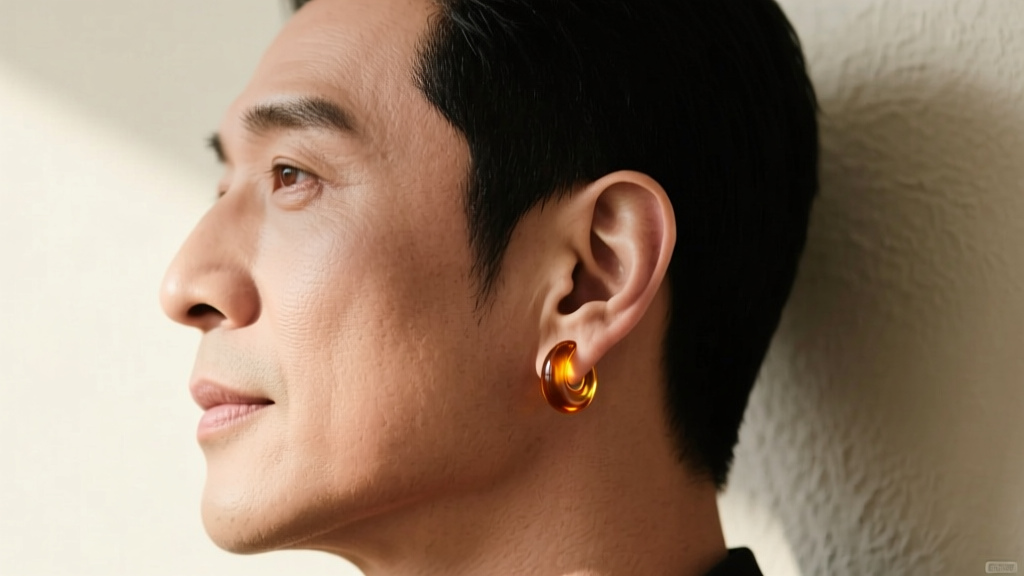
If you want to maintain a standard, unstretched lobe on your solo pierced ear, avoid wearing heavy dangles for more than a few hours at a time. For daily wear, opt for lightweight materials. Hollow gold tubes, acrylic, and borosilicate glass offer the visual impact of larger jewelry without the gravitational drag.
Reversing Early Migration
If you notice your piercing hole elongating or moving closer to the edge of the earlobe, you are experiencing early migration. Stop wearing heavy jewelry immediately. Switch to a lightweight, 14-gauge titanium flat-back stud and allow the tissue to rest and contract for at least 4 to 6 weeks. Massaging the lobe with pure jojoba oil or vitamin E oil can help improve tissue elasticity and promote healing, according to dermatological guidelines on skin tension and scarring.
Which Ear? Navigating the Modern Rules
Historically, the 'left is right, right is wrong' code dictated which ear men could pierce without signaling specific subcultural affiliations. In 2026, this archaic rule is entirely dead. Today, the decision of which ear to pierce should be based purely on ergonomics, dominant hand usage, and facial symmetry.
The Phone Hand Rule
From a purely practical troubleshooting perspective, you should pierce the ear opposite to your dominant 'phone hand.' If you spend hours on conference calls holding your smartphone to your right ear, piercing the right lobe will result in constant friction, bacterial transfer from the screen to the fistula, and chronic irritation. Pierce the left ear to keep your jewelry free from daily technological friction.
Maintenance Routine for the Solo Piercing
Because you only have one earring, it becomes a subconscious fidgeting target. Men with a single piercing touch, twist, and adjust it far more often than those with multiple piercings, introducing bacteria and causing mechanical irritation.
The Anti-Fidget Protocol
1. Stop Twisting: Never rotate your earring. The American Academy of Dermatology (AAD) explicitly warns against twisting jewelry, as it tears the delicate healing tissue and introduces surface bacteria deep into the channel.
2. Sterile Saline Only: Ditch the harsh alcohol, hydrogen peroxide, and tea tree oil. Spray the piercing twice a day with sterile 0.9% sodium chloride wound wash.
3. The LITHA Method: 'Leave It The Hell Alone.' The best troubleshooting step for a minor irritation bump on a solo piercing is to downsize the post length with a professional piercer and stop touching it entirely for two weeks.
Final Thoughts on the Single Earring
The guys one earring look is a powerful, confident style choice, but it demands respect for the biomechanics of your tissue. By upgrading to implant-grade titanium, respecting gauge thickness to prevent the cheese-cutter effect, and balancing your facial asymmetry through deliberate styling, you can ensure your single piercing remains healthy, comfortable, and undeniably sharp.


