How to Clean Star Trek Earrings: Enamel, Silver & Resin Care
Learn how to safely clean Star Trek earrings made of enamel, sterling silver, or resin. Prevent tarnish, protect paint, and avoid green ears.


Fandom jewelry occupies a unique space in the accessories world, bridging the gap between novelty costume pieces and fine jewelry. For Trekkies, Star Trek earrings are more than just accessories; they are wearable tributes to the Federation, the Klingon Empire, and the Bajoran Provisional Government. However, because these pieces range from $15 zinc-alloy combadge studs to $150 sterling silver Vulcan IDIC dangles, a one-size-fits-all cleaning approach will ruin them.
Whether you are rocking heavy 16-gauge resin Bat'leth dangles or delicate Bajoran ear cuffs with interlocking chains, understanding the specific material science behind your jewelry is critical. Using the wrong solvent can strip cold enamel, shatter 3D-printed resin, or accelerate oxidation on base metals. This comprehensive guide breaks down the exact care, maintenance, and cleaning protocols for every type of Star Trek earring in your collection.
The Material Breakdown: What Are Your Earrings Made Of?
Before applying any cleaning agent, you must identify the core material and the finishing technique. Star Trek jewelry typically falls into four categories:
- Cold Enameled Base Metals: Common for affordable Starfleet and faction crest studs. Usually zinc alloy or brass plated with gold or silver tone, filled with epoxy resin (cold enamel) for color.
- Sterling Silver (925): Used for high-end replicas, such as the Vulcan IDIC pendant earrings or solid silver Romulan bird-of-prey silhouettes.
- 3D-Printed SLA Resin & Acrylic: Popular for intricate, lightweight, oversized dangles (like the TNG-era communicator badges) that would be too heavy in metal.
- Mixed-Metal Ear Cuffs: Bajoran earring replicas often feature complex filigree, ear cuffs, and dangling chains made from mixed base metals or plated brass.
Cleaning Enameled Combadge & Faction Crest Studs
The vibrant reds of a Klingon crest or the deep blues of a Starfleet delta are usually achieved using cold enamel (a pigmented epoxy resin). Unlike vitreous enamel (glass fused to metal at high temperatures), cold enamel has a Mohs hardness rating of only 2 to 3. It is highly susceptible to micro-scratching and chemical degradation.
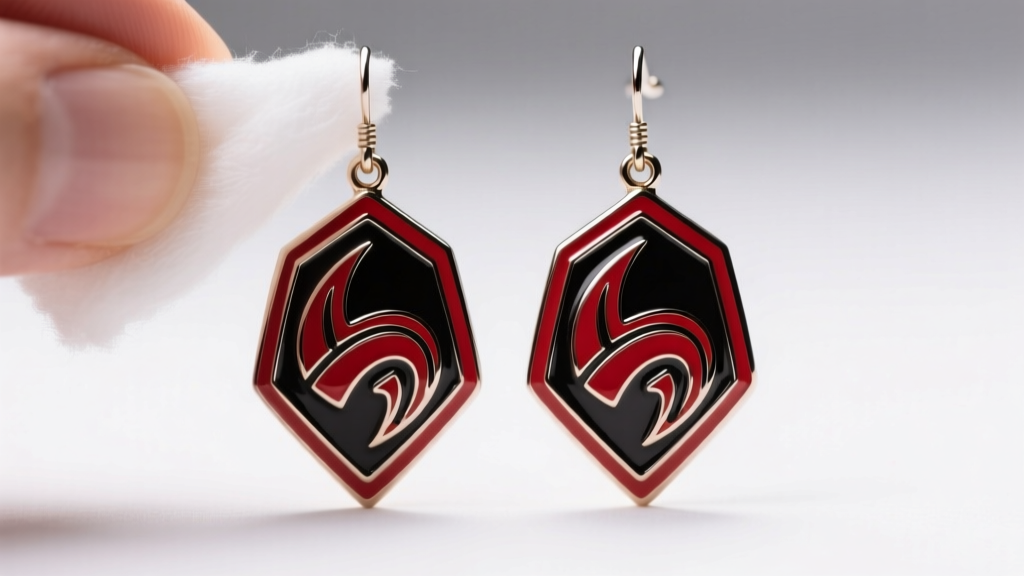
The Safe Cleaning Protocol
- Mix a Mild Solution: Combine lukewarm distilled water with a single drop of pH-neutral dish soap (like Dawn).
- Targeted Swabbing: Dip a cotton swab into the solution, roll it on a paper towel to remove excess moisture, and gently trace the enameled grooves.
- Avoid Ultrasonic Cleaners: Never put enameled fandom jewelry in an ultrasonic cleaner. The high-frequency vibrations will shatter the bond between the epoxy resin and the metal backing, causing the color to pop out entirely.
- Dry Immediately: Use a dry microfiber cloth. Leaving water to air-dry on base metal joints can cause flash rusting where the enamel meets the metal.
Polishing Sterling Silver Vulcan & Enterprise Pieces
Sterling silver (92.5% silver, 7.5% copper) is the gold standard for premium Star Trek jewelry. However, the copper alloy reacts with hydrogen sulfide in the air to form silver sulfide—the black tarnish that ruins the mirror finish of your Vulcan IDIC earrings. According to the Gemological Institute of America (GIA), abrasive silver polishes can remove microscopic layers of silver over time, dulling intricate engravings.
The Electrochemical Reduction Bath:
Instead of polishing away tarnish, you can reverse the chemical reaction. Line a glass bowl with aluminum foil (shiny side up). Add 1 tablespoon of baking soda and 1 tablespoon of sea salt. Pour in boiling water. Drop your silver Star Trek earrings in for 60 seconds. The aluminum acts as a sacrificial anode, pulling the sulfur atoms off the silver and binding to them. Rinse with distilled water and buff with a microfiber cloth. Note: Do not use this method if the silver piece contains glued-in gemstones or enamel.
Caring for Bajoran Ear Cuffs and Filigree
Bajoran earring replicas are notoriously complex, often featuring interlocking chains, ear cuffs, and intricate filigree that trap sebum and dead skin cells. To clean these without bending the delicate wirework, use a soft-bristled baby toothbrush dipped in warm soapy water. Gently agitate the chain links and the interior of the ear cuff where it grips the cartilage. Rinse thoroughly and use a hairdryer on the "cool" setting to blow water out of the tiny crevices, preventing hidden corrosion.
Maintaining 3D-Printed Resin & Acrylic Dangles
For cosplayers and daily wearers who want oversized Star Trek earrings without the burden of heavy metal, 3D-printed SLA (Stereolithography) resin is a popular choice. However, cured resin is highly sensitive to UV radiation and harsh alcohols.

- Never Use Isopropyl Alcohol: While IPA is used to wash uncured resin during the printing process, applying it to fully cured, painted resin earrings will cause micro-cracking and strip the protective UV-clear coat.
- Wipe with Distilled Water: Simply wipe resin dangles with a damp microfiber cloth. If they have accumulated body oils, use a tiny amount of baby shampoo, which lacks the harsh degreasing agents found in standard dish soaps.
- Monitor for Yellowing: UV exposure breaks down the polymer chains in resin, causing a yellow tint. If your resin earrings are painted with metallic acrylics, seal them annually with a UV-resistant clear acrylic spray (like Krylon UV-Resistant Clear) to lock in the color.
Preventing the "Green Ear" Effect on Base Metal Replicas
Many affordable Star Trek earrings are stamped from brass or copper alloys. When these metals mix with the natural acids in your sweat (which has a pH ranging from 4.5 to 7.0), they create copper chloride—a green salt that stains your earlobes. This is not a sign of infection, but a simple chemical reaction. The American Academy of Dermatology notes that base metals can also trigger contact dermatitis in those with nickel sensitivities.
Material Vulnerability & Prevention Chart
| Material / Plating | Vulnerability | Prevention Method | Reapplication Frequency |
|---|---|---|---|
| Raw Brass / Copper | High (Green staining, rapid oxidation) | Coat posts with Jewelerskin or clear polyurethane nail polish. | Every 2-3 weeks |
| Gold-Plated Zinc Alloy | Medium (Plating wears off, exposing base metal) | Wipe with a dry cloth after every wear to remove acidic sweat. | N/A (Daily habit) |
| Surgical Steel (316L) | Low (Hypoallergenic, no green staining) | Standard soap and water cleaning. | N/A |
| Nickel Silver (German Silver) | High (Contains no actual silver; high nickel allergy risk) | Avoid wearing; replace ear wires with sterling silver or titanium hooks. | N/A |
Pro-Tip for Heavy Dangles: If you are wearing heavy resin or metal Star Trek dangles, the kinetic swinging can stretch your earlobe piercing, creating micro-tears that allow base metals to bypass the skin's surface barrier and cause severe irritation. Always opt for 16-gauge (1.2mm) or 14-gauge (1.6mm) ear wires for heavy fandom pieces to distribute the weight more evenly and reduce friction inside the piercing channel.
Proper Storage for Your Fandom Collection
How you store your Star Trek earrings between conventions and daily wear dictates their lifespan. Tossing enameled combadge studs into a communal jewelry box guarantees they will scratch against harder metals.
Store each pair in individual polyethylene ziplock bags. Polyethylene is chemically inert and will not off-gas chemicals that degrade resin or enamel. For your sterling silver Vulcan and Romulan pieces, drop a 3M anti-tarnish strip into the bag; these strips absorb airborne sulfur compounds before they can reach your jewelry. Finally, keep your entire collection in a cool, dark drawer. UV light and ambient humidity are the twin enemies of both cold enamel pigments and 3D-printed resins. By following these material-specific protocols, your Star Trek earrings will remain ready for the next away mission, looking as pristine as the day they left the replicator.


