Ultimate Care for Men's Square Earrings Diamond Settings
Discover expert cleaning and maintenance tips for men's square earrings diamond settings. Protect your gold, platinum, and stones from daily wear.


The landscape of men's jewelry has evolved dramatically, and the surge in popularity of men's square earrings diamond styles represents a definitive shift toward bold, architectural aesthetics. Unlike traditional round brilliant studs, square diamonds—typically princess or cushion cuts—feature sharp 90-degree corners, distinct facet junctions, and a top-heavy geometric profile. While visually striking, these structural characteristics introduce unique maintenance challenges. Sebum, dead skin cells, and environmental grit easily become trapped in the sharp corners of the setting, dulling the stone's brilliance and compromising the metal's integrity over time.
Whether you are wearing a 0.50-carat bezel-set square stud or a 2.00-carat princess cut in a four-prong basket, proper care is non-negotiable. This comprehensive guide delves into the metallurgy, gemology, and daily maintenance protocols required to keep your square diamond earrings in pristine condition, ensuring they remain a lifelong staple in your collection.
The Anatomy of Square Settings and Vulnerability Points
Square diamond earrings require specialized setting techniques that directly impact their maintenance needs. The most common square cut is the princess cut, characterized by its sharp, uncut 90-degree corners. These corners are the most fragile points of the diamond's crystalline structure. If the metal securing these corners wears down or lifts, a simple bump against a hard surface can cause the diamond to chip or fracture.
Prong vs. Bezel: Maintenance Differences
- V-Prong Settings: High-quality men's square diamond earrings often utilize V-prongs at the corners. These wrap around the 90-degree angle, offering superior protection. However, dirt accumulates in the crevice where the V-prong meets the diamond girdle, requiring targeted brushing.
- Standard Prong Settings: Four standard round prongs holding a square stone leave the corners exposed. These require frequent professional inspection to ensure the prongs haven't flattened or pulled away from the stone.
- Bezel Settings: A full square bezel encases the entire diamond in a metal rim. This is the most secure and low-maintenance option for active men, as it eliminates snagging and protects the corners entirely. Cleaning is straightforward, though grime can still build up beneath the pavilion (the bottom of the stone) if the setting is open-backed.
Hardware Considerations: Posts and Backings
The maintenance of your earrings extends beyond the diamond to the structural hardware. Square diamonds, particularly those over 0.75 carats, are inherently top-heavy due to their wide surface area and deep pavilions. This weight distribution places significant stress on the earlobe and the earring post.
For men's square studs, an 18-gauge post is the minimum standard for stones up to 0.50 carats. For larger square diamonds (1.00 carat and above), a thicker 16-gauge or 14-gauge post is highly recommended to prevent the metal from bending, which can cause the diamond to sit crookedly and collect uneven dirt. Furthermore, standard friction backs (butterfly backs) are inadequate for heavy square settings. They frequently slip down the post, causing the earring to tilt forward. Always opt for screw backs or locking jumbo backs to maintain the earring's upright posture, which in turn prevents the back of the setting from rubbing against your neck and accumulating sweat and oils.
The Environmental Threat Matrix
Daily exposure to various elements accelerates the degradation of both the precious metal and the diamond's optical performance. Understanding how different metals react to your environment is crucial for preventative care.
| Metal Type | Hardness & Durability | Primary Environmental Threat | Maintenance Focus |
|---|---|---|---|
| 14k Yellow Gold | High (Alloyed for strength) | Chlorine (weakens solder joints) | Regular polishing to remove micro-scratches |
| 18k Yellow Gold | Medium (Higher pure gold content) | Abrasion and impact denting | Gentle cleaning; avoid wearing during heavy lifting |
| Platinum (950) | High density, develops a patina | Sebum buildup in prong crevices | Occasional professional polishing to restore luster |
| 14k/18k White Gold | Hard, but plated with Rhodium | Acidic sweat strips rhodium plating | Re-plating every 1-2 years; gentle pH-neutral washing |
The 4-Step Deep Cleaning Protocol
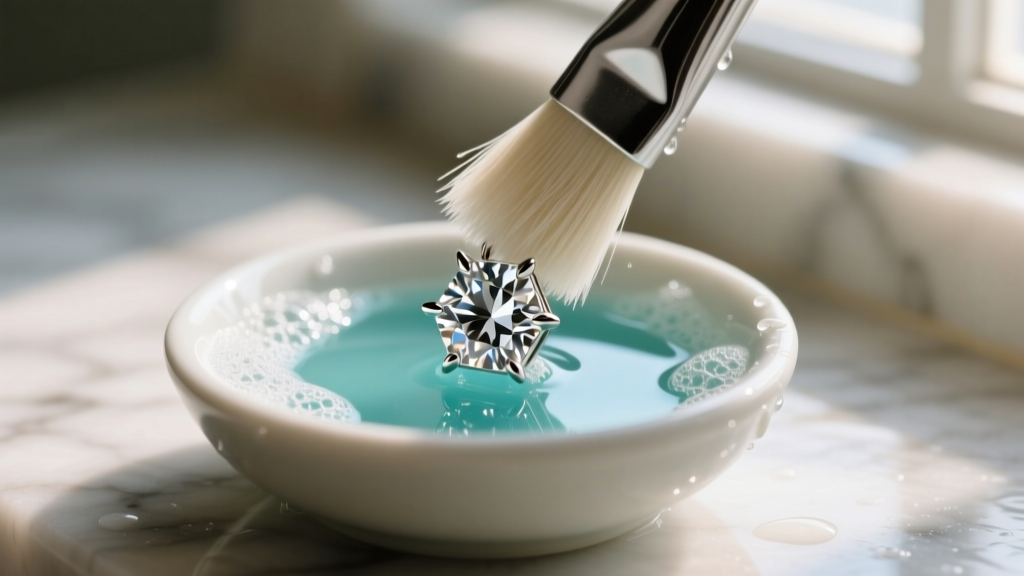
To maintain the fire and brilliance of your men's square earrings diamond settings, a bi-weekly deep cleaning is essential. The Gemological Institute of America (GIA) emphasizes that diamonds are naturally lipophilic, meaning they attract and hold onto oils from your skin, lotions, and hair products. This oil film drastically reduces light return, making a square diamond look cloudy and lifeless.
- The Degreasing Soak: Fill a small ceramic bowl with warm (not hot) water and add three drops of a mild, degreasing dish soap (such as original Dawn). Avoid soaps with heavy moisturizers or lotions. Let the earrings soak for 20 to 30 minutes. This breaks down the sebum trapped beneath the pavilion and in the sharp corner prongs.
- Targeted Agitation: Remove the earrings and use an extra-soft infant toothbrush. Gently brush the stone in circular motions. Critical technique: When cleaning the sharp corners of a princess cut, brush away from the prongs, not toward them. Brushing directly into the prong can snag the bristles and inadvertently pull a weakened prong away from the diamond.
- The Distilled Rinse: Rinse the earrings under a gentle stream of lukewarm distilled water. Tap water contains minerals like calcium and magnesium that leave hard water spots on the flat, table facet of a square diamond, creating a cloudy appearance that is difficult to wipe away.
- Microfiber Drying: Pat the earrings dry with a clean, lint-free jeweler's microfiber cloth. Never use paper towels or tissues, as the wood fibers can scratch softer gold alloys and leave microscopic lint caught in the setting's crevices.
Expert Warning: Never clean your diamond earrings over an open sink drain. The weight and slickness of square settings make them notoriously difficult to catch if they slip from your fingers. Always use a rubber stopper or a dedicated cleaning bowl.
Ultrasonic Cleaners: Proceed with Extreme Caution
Many men invest in at-home ultrasonic jewelry cleaners for convenience. While these devices use high-frequency sound waves to dislodge microscopic dirt, they pose specific risks to square diamond earrings. According to the American Gem Society (AGS), ultrasonics should never be used on fracture-filled or clarity-enhanced diamonds, as the intense vibrations can shatter the stone or dissolve the glass-like fillers used to mask internal inclusions.
Furthermore, the intense vibration can loosen the microscopic tension settings or micro-prongs often used in modern square halo designs. If your square diamond earrings feature a cluster of smaller diamonds surrounding the center stone, skip the ultrasonic and stick to the manual soaking method to prevent losing the accent stones.
Routine Prong Inspection and Professional Servicing
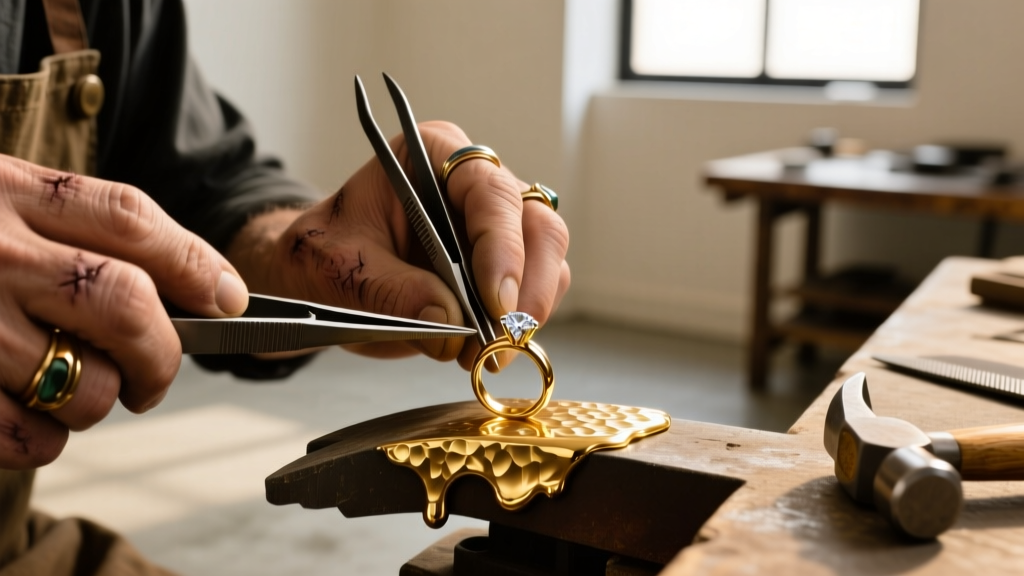
Even with meticulous home care, the physical wear and tear on men's earrings necessitate professional oversight. Men tend to be harder on their jewelry, often wearing studs to the gym, in the shower, or while sleeping. This constant friction wears down the metal securing the diamond.
When to See a Jeweler
- The Snag Test: If you run a piece of silk or a soft cotton cloth over the earring and it snags on a corner prong, the metal has lifted. Stop wearing the earring immediately and take it to a jeweler for re-tipping.
- The Rattle Test: Gently tap the earring against your finger or hold it near your ear and shake it. If you hear a faint clicking or rattling, the diamond is loose within the square setting. This is an emergency maintenance issue.
- Rhodium Replating: If your square earrings are set in white gold, the acidic pH of male sweat can accelerate the wear of the rhodium plating. When the metal begins to look dull or slightly yellowish, it requires professional re-plating, typically needed every 12 to 18 months for daily wearers.
Storage and Travel Best Practices
Proper storage is the final pillar of earring maintenance. The sharp, geometric edges of square diamond settings act like tiny blades when tossed loosely into a jewelry box or drawer. They can easily scratch the polished surfaces of other gold or platinum pieces. Always store your square diamond studs in individual, soft-lined microfiber pouches or in a dedicated compartment of a leather travel roll. When traveling, ensure the locking backs are fully secured and place the pouch in a hard-shell case to prevent the posts from bending under the pressure of packed luggage.
By adhering to these specialized care protocols, your men's square earrings diamond settings will maintain their sharp, architectural brilliance and structural integrity for decades, serving as a timeless testament to refined, modern style.


