Gold Sun Earrings: Troubleshooting Weight, Tarnish, and Fit
Learn how to fix common issues with gold sun earrings, including forward droop, ray breakage, and tarnish in intricate sunburst crevices.

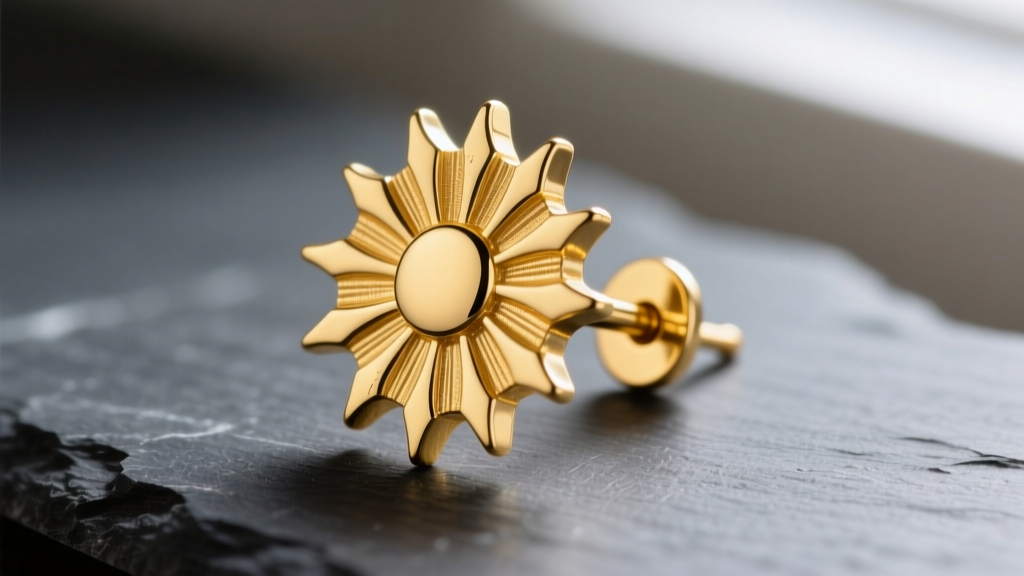
Gold sun earrings are a timeless staple in fine jewelry, celebrated for their bold geometry and radiant aesthetic. However, their unique architectural design—featuring a dense central disk with radiating spikes or rays—introduces specific structural and wearability challenges. Whether you are dealing with a forward-tilting droop, recurring tarnish in the crevices, or fragile ray joints, troubleshooting these issues requires a deep understanding of jewelry mechanics and metallurgy.
As a senior jewelry stylist, I frequently see clients struggle with heavy statement pieces that simply do not sit flush against the earlobe. In this comprehensive guide, we will dissect the physics of the sunburst design, explore the exact material grades required for longevity, and provide actionable, step-by-step solutions to restore your gold sun earrings to their former glory.
The Physics of the Sunburst: Why Your Earrings Fail
Unlike a standard solitaire stud where the center of mass rests directly against the earlobe, gold sun earrings feature a wide surface area that shifts the fulcrum. The radiating rays act as a lever. When the earring's total weight exceeds 8 to 10 grams, gravity pulls the bottom rays downward, causing the top of the earring to pivot away from the ear. This is known in the industry as the 'forward droop.'
Die-Struck vs. Cast Construction
The manufacturing method heavily influences the weight and durability of your earrings. Cast gold sun earrings, made by pouring molten gold into a 3D-printed resin mold, are often solid and excessively heavy. Die-struck versions, stamped from sheets of gold, are lighter and possess a tighter grain structure, making them more resistant to bending. If your cast sun earrings are sagging, you are fighting physics, not poor craftsmanship.
Troubleshooting the Forward Droop and Lobe Sag
The most common complaint with oversized gold sun earrings is that they point toward the floor. To fix this, you must address both the post gauge and the backing mechanism.
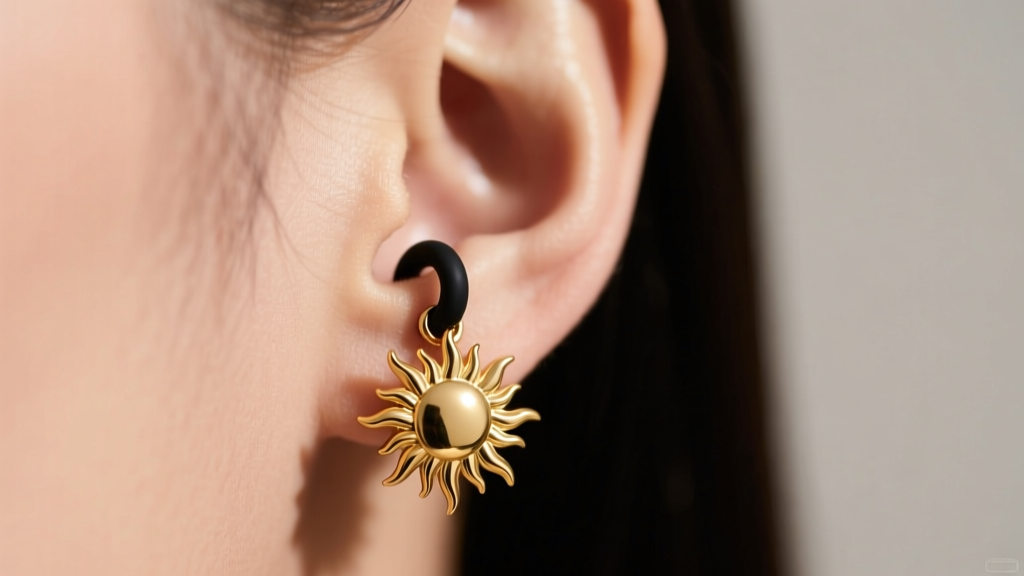
- Upgrade the Post Gauge: Standard earrings use a 20-gauge (0.81mm) post. For sun earrings weighing over 12 grams, a 20G post will physically bend under the torque. Have a bench jeweler swap the post for an 18-gauge (1.02mm) or 16-gauge (1.29mm) threaded post. This provides the necessary rigidity to hold the sunburst flush.
- Implement Silicone O-Ring Backs: Traditional butterfly friction backs fail on heavy pieces because they lack surface area, allowing the earring to tilt. Replacing them with medical-grade silicone O-rings (often called 'Shields' or 'Donuts') creates a wide, flush barrier against the back of the earlobe, counteracting the forward pull of the rays.
- Counter-Weighting: For extreme cases (18g+), a jeweler can solder a small, discreet gold bead to the bottom of the earring post on the back side. This shifts the center of gravity backward, naturally pulling the sun face upright.
Metallurgical Traps: Tarnish in the Rays
The intricate crevices where the sun rays meet the central disk are prime real estate for sebum, dead skin cells, and environmental pollutants. When these organic acids mix with the alloy metals in your gold, rapid oxidation occurs. Understanding your gold's karat weight is critical for troubleshooting tarnish.
| Karat Grade | Gold Purity | Common Alloy Mix | Tarnish Risk in Crevices |
|---|---|---|---|
| 10k Gold | 41.7% | High Copper/Silver/Zinc | High. Copper oxidizes quickly when trapped in sunburst joints. |
| 14k Gold | 58.5% | Balanced Copper/Silver | Moderate. Requires monthly deep cleaning to prevent dark buildup. |
| 18k Gold | 75.0% | Mostly Silver/Copper | Low to Moderate. Highly resistant, but silver can cause slight sulfur tarnish. |
| 22k Gold | 91.6% | Trace Copper/Silver | Negligible. Will not tarnish, but too soft for rigid sun rays. |
According to the Gemological Institute of America (GIA), the copper content in yellow and rose gold alloys is the primary culprit behind green or black smudging on the earlobe. In sunburst designs, this oxidized copper dust accumulates in the acute angles of the rays, eventually transferring to your skin.
Ray Fractures and Snagging Hazards
The elongated rays of a gold sun earring are highly susceptible to mechanical fatigue. Catching a ray on a heavy knit sweater or a hairbrush can bend the metal. Repeated bending causes work-hardening, leading to microscopic fractures and eventual snapping at the solder joint.
In 2026, micro-laser welding has completely revolutionized how we repair delicate jewelry joints. Unlike traditional torch soldering, which requires heating the entire piece and risks melting the intricate ray tips, laser welding uses a concentrated beam to fuse a microscopic drop of matching gold alloy directly into the fracture point without thermal shock to the surrounding metal.
The Fix: If a ray is bent, do not repeatedly bend it back into place with your fingers. Take it to a jeweler who utilizes laser welding technology to reinforce the base of the ray with a micro-bead of gold, increasing the joint's structural integrity by up to 40%.
Deep Cleaning Protocol for Sunburst Crevices
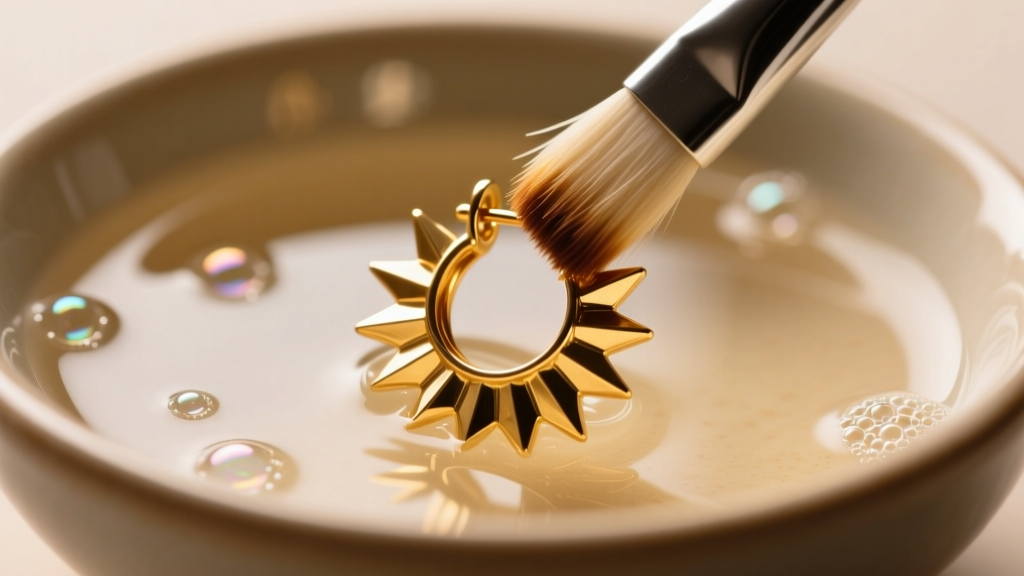
Because standard polishing cloths cannot reach the acute angles between the sun rays, you must use a combination of chemical and mechanical agitation to restore the earring's brilliance.
Step-by-Step Restoration
- The Chemical Bath: Mix warm distilled water with a few drops of ammonia-free dish soap (ammonia can damage certain center-set gemstones like turquoise or opals often found in bohemian sun designs). Let the earrings soak for exactly 15 minutes to break down sebum bonds.
- Mechanical Agitation: Use an extra-soft baby toothbrush or a specialized jewelry detailing brush. Brush in a circular motion, focusing specifically on the V-shaped joints where the rays meet the center disk.
- Ultrasonic Caution: While ultrasonic cleaners are excellent for diamond jewelry, they should never be used on gold sun earrings that feature bezel-set stones in the center. The high-frequency vibrations can shatter stones with internal inclusions or loosen the delicate adhesive used in hollow-cast sun designs.
- Drying: Use a can of compressed air to blow water out of the crevices. Air-drying leaves hard water spots that dull the gold's reflective surface.
Converting to Screw-Backs for Active Lifestyles
If you frequently lose your gold sun earrings due to the friction backs sliding off through hair friction, consider a permanent hardware conversion. The Association of Professional Piercers (APP) notes that threaded jewelry provides vastly superior security for heavy or awkwardly shaped pieces.
A jeweler can cut the standard push-post and solder on an internally threaded 18-gauge post. By pairing this with a threaded, low-profile gold disc back, you eliminate the risk of the earring falling off entirely, while the flat disc provides the necessary support to keep the sunburst facing forward.
Preventative Maintenance Checklist
To ensure your gold sun earrings remain structurally sound and visually radiant, adopt the following maintenance schedule:
- Weekly: Wipe the back of the central disk with an alcohol prep pad to remove skin oils before they harden into the crevices.
- Monthly: Perform the deep cleaning protocol outlined above to prevent copper oxidation buildup.
- Annually: Have a bench jeweler inspect the solder joints at the base of each ray using a 10x loupe to catch micro-fractures before a ray snaps off completely.
By understanding the unique mechanical and metallurgical properties of gold sun earrings, you can transform a frustrating, heavy piece of jewelry into a comfortable, lifelong staple that sits perfectly on the earlobe.


