Pear Diamond Drop Earrings: The Ultimate Buying Guide
Discover how to choose the perfect pear diamond drop earrings. Learn about the bow-tie effect, ideal 4Cs, setting styles, and pricing in our expert guide.

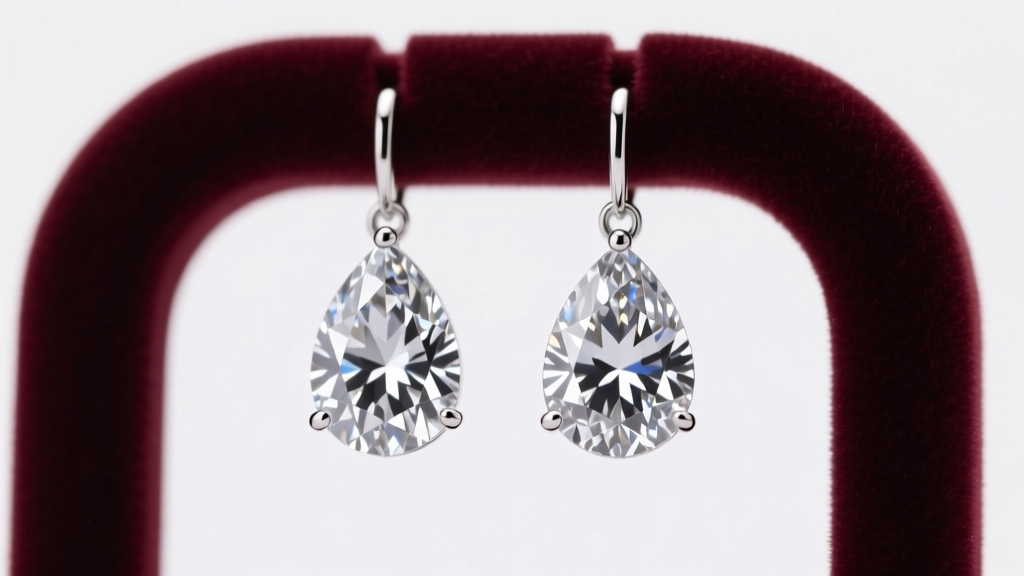
The Allure and Engineering of Pear Drops
Pear diamond drop earrings represent a masterclass in kinetic jewelry design. Unlike static studs, drop earrings are engineered to move, catching ambient light with every turn of the head. The pear cut—often referred to as the teardrop—combines the rounded brilliance of an oval with the tapered elegance of a marquise. However, buying pear diamond drop earrings requires a significantly higher level of scrutiny than purchasing round brilliant studs. The elongated facet structure introduces unique optical phenomena, and the physical vulnerability of the diamond's pointed tip demands specialized setting mechanics. Whether you are navigating the natural diamond market or exploring the rapidly advancing lab-grown sector in 2026, understanding the precise anatomy, setting requirements, and hardware mechanics of these earrings is essential for making a sound investment.
Decoding the 4Cs for Elongated Teardrops
The traditional 4Cs (Cut, Color, Clarity, Carat) must be recalibrated when evaluating fancy shapes like the pear cut. According to the Gemological Institute of America (GIA), fancy shapes do not receive a traditional cut grade on standard grading reports, making visual inspection and proportion analysis entirely up to the buyer.
Cut and Proportions: Chasing the Perfect Teardrop
The most critical metric for a pear diamond is the length-to-width (L/W) ratio. For drop earrings, a ratio between 1.45 and 1.55 is widely considered the aesthetic sweet spot, providing a balanced teardrop that elongates the neck without looking overly stretched. Symmetry is non-negotiable. The shoulders (the upper rounded edges) and wings (the sides leading to the point) must be perfectly mirrored. If one shoulder is higher than the other, the earring will appear crooked when dangling.
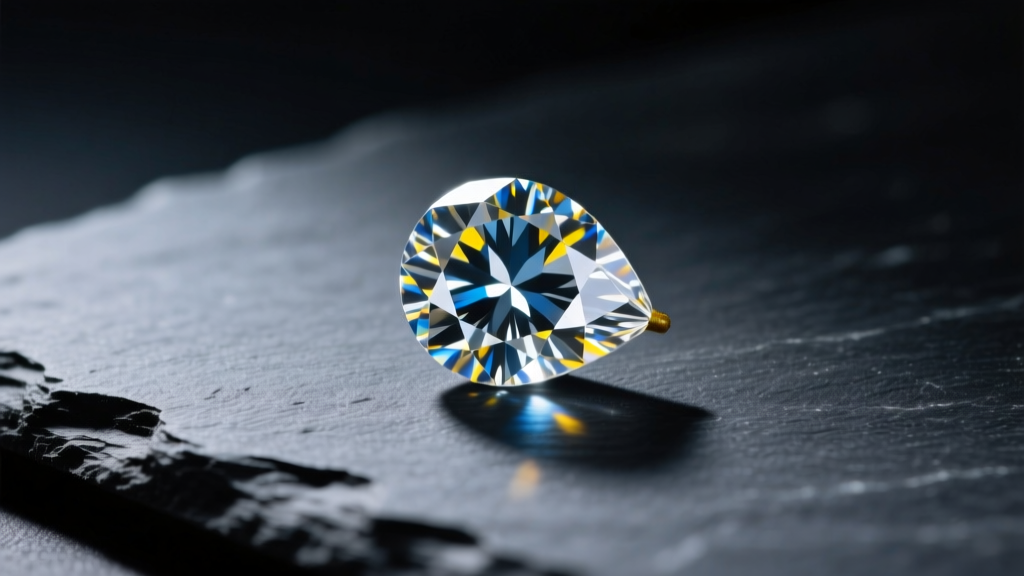
The Bow-Tie Effect: An Optical Hazard
Elongated diamonds frequently suffer from the "bow-tie effect"—a dark, bow-tie-shaped shadow stretching across the width of the stone's center. This occurs when light leaks out the bottom of the pavilion due to improper facet alignment or when the observer's head blocks light from entering the stone. In drop earrings, which constantly shift angles, a severe bow-tie will cause the diamond to intermittently "black out," destroying its brilliance. Always request 360-degree high-definition video from the jeweler; static images are heavily retouched and will hide a prominent bow-tie.
Color and Clarity: The Tip Concentration Factor
Pear diamonds are notorious for color concentration at their pointed tips. A diamond graded 'J' or 'K' may face up relatively white in the center but will display a distinct yellow or brownish tint at the tip. For platinum or 18k white gold drop earrings, stick to a color grade of G or better to ensure the tip remains icy white. Regarding clarity, the large, open facet pattern of the pear's crown makes inclusions highly visible. A minimum grade of VS2 is recommended to ensure the stone is eye-clean, particularly near the tip where inclusions can create structural weaknesses.
Critical Setting Mechanics: Protecting the Point
The pointed tip of a pear diamond is its most vulnerable anatomical feature. A single hard impact against a countertop or mirror can cause the tip to chip or fracture entirely. Because drop earrings are kinetic—swinging and bouncing as the wearer moves—they are at a much higher risk of impact than stationary rings or pendants.
Never purchase pear drop earrings set in a standard 3-prong or 4-prong setting that leaves the tip exposed. You must look for a 5-prong setting that includes a dedicated V-prong or a heavy cap prong wrapping securely over the apex of the point. The V-prong acts as a metallic bumper, absorbing shock and shielding the fragile crystal lattice of the diamond's tip. Additionally, ensure the jeweler uses laser welding or high-temperature solders to secure the prongs, as traditional torch soldering can sometimes cause thermal shock to the diamond if not executed with extreme precision.
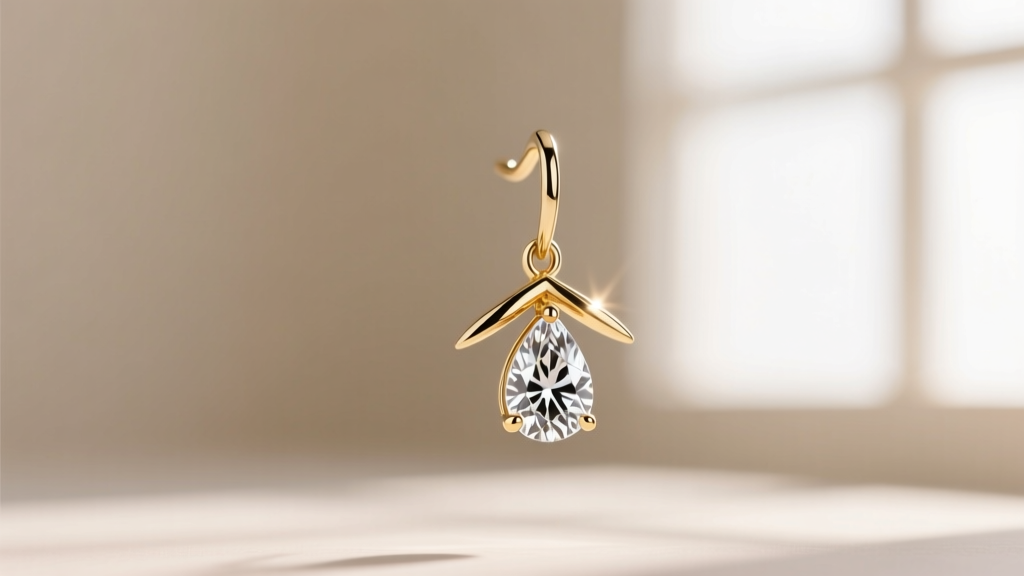
Hardware and Post Security
A beautiful diamond is useless if the earring falls out and is lost. The hardware mechanics of drop earrings must be matched to the total carat weight and physical dimensions of the piece.
- Post Gauge: Standard earrings use 20-gauge (0.81mm) posts. However, if your pear drops exceed 1.50 Carat Total Weight (CTW), the weight of the stones will cause a 20G post to bend downward, making the earring droop awkwardly on the lobe. Opt for a thicker 18-gauge (1.02mm) post for heavier drops to maintain structural rigidity.
- Friction Backs vs. Jumbo Backs: Standard butterfly friction backs are insufficient for heavy drops. Upgrade to La Poussante backs (jumbo push-backs with a wider silicone or metal grip) or screw-backs, which thread onto the post and cannot be pulled off accidentally.
- Leverbacks and Omega Closures: For highly active lifestyles, consider pear drops mounted on leverback wires or omega-back clips. These mechanisms lock securely behind the earlobe and distribute the weight of the drop across a wider surface area of the ear, preventing lobe tearing over time.
2026 Market Pricing: Natural vs. Lab-Grown
The pricing landscape for diamond jewelry has shifted dramatically. Lab-grown diamonds have achieved market saturation, driving prices down significantly, while natural diamonds retain their scarcity premium. Below is a realistic pricing guide for pear diamond drop earrings (assuming G-H color, VS clarity, and excellent symmetry) in the current market.
| Total Carat Weight (CTW) | Weight Per Earring | Natural Diamond Price Range | Lab-Grown Diamond Price Range |
|---|---|---|---|
| 0.50 CTW | 0.25 ct each | $1,200 - $1,800 | $350 - $550 |
| 1.00 CTW | 0.50 ct each | $3,500 - $5,500 | $800 - $1,200 |
| 2.00 CTW | 1.00 ct each | $12,000 - $18,000 | $1,800 - $2,800 |
| 3.00 CTW | 1.50 ct each | $25,000 - $38,000 | $2,800 - $4,200 |
Note: Prices fluctuate based on the specific metal used (platinum commands a premium over 14k gold) and the presence of secondary diamond halos or pave accents along the drop chain.
Certification and Ethical Sourcing
Never purchase pear diamond drop earrings without independent, third-party certification. For natural diamonds, the GIA (Gemological Institute of America) remains the undisputed gold standard. Their grading is strict, and their inclusion plotting maps are highly accurate. For lab-grown diamonds, both GIA and IGI (International Gemological Institute) provide excellent reports, though IGI is currently more prevalent in the lab-grown market and provides detailed cut analysis that GIA sometimes omits for synthetics.
Furthermore, ensure the metals used in the settings comply with the Federal Trade Commission (FTC) Jewelry Guides, which mandate accurate stamping and hallmarking of precious metal purity (e.g., 'PT950' for platinum or '750' for 18k gold). Reputable jewelers will also provide a Kimberley Process certificate for natural stones, ensuring your purchase is entirely conflict-free and ethically sourced from mine to market.
Final Thoughts on Styling and Wearability
Pear diamond drop earrings are inherently directional. When putting them on, the standard convention is to wear the pointed tip facing downward, toward the floor, allowing the rounded end to rest near the earlobe. This orientation visually elongates the neck and jawline, making them an exceptional choice for individuals with round or square face shapes. By prioritizing precise L/W ratios, demanding V-prong protection, and selecting robust 18-gauge hardware, you will secure a pair of heirloom-quality drops that offer a lifetime of kinetic brilliance.


