Troubleshooting Plated Earrings: Fix Tarnish and Allergies
Learn how to troubleshoot plated earrings. Discover expert methods to remove tarnish, prevent green skin, and extend the life of your gold or silver plating.

The Anatomy of Plated Earrings: Why They Fail
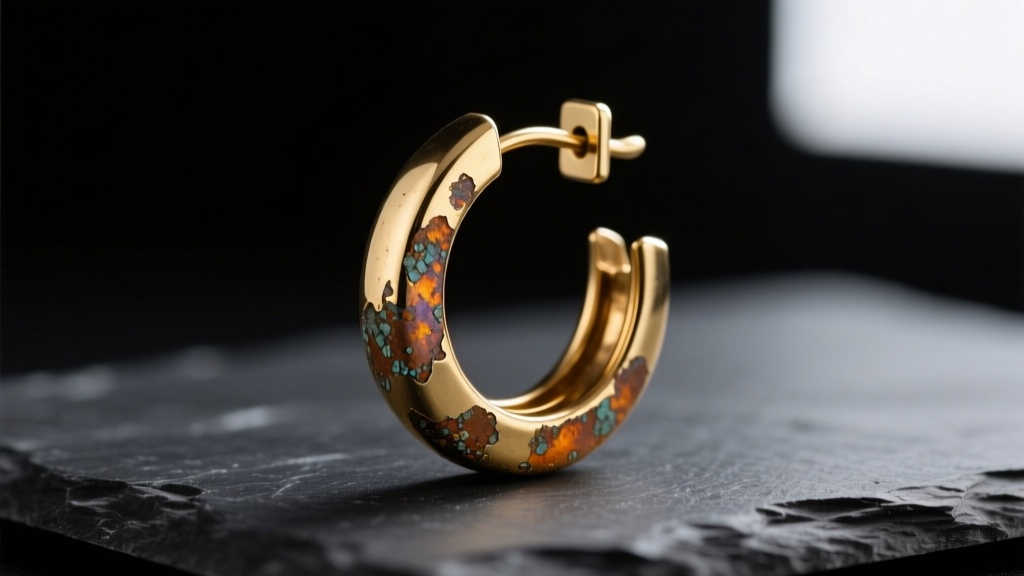
Plated earrings are a staple in modern jewelry boxes, offering the luxurious aesthetic of solid gold or platinum at a fraction of the cost. However, the frustration of watching a favorite pair of gold-plated hoops turn your earlobes green or develop a patchy, tarnished finish is a universal experience. To effectively troubleshoot plated earrings, you must first understand their metallurgical anatomy.
Plating is an electrochemical process where a microscopically thin layer of precious metal is bonded to a base metal core. According to the Federal Trade Commission (FTC) Jewelry Guides, the terminology used to describe these layers is strictly regulated based on thickness:
- Flash Plated: Less than 0.175 microns of gold. This is essentially a molecular wash that will wear off within weeks of daily friction.
- Gold Electroplate: At least 0.175 microns. Standard for most mid-tier fashion jewelry.
- Heavy Gold Electroplate / Vermeil: 2.5 microns or more. Vermeil specifically requires a sterling silver base, making it the most durable and hypoallergenic option in the plated category.
When plated earrings fail, it is rarely the precious metal itself that is tarnishing. Instead, the microscopic pores in the plating allow sweat, cosmetics, and oxygen to reach the reactive base metal underneath, triggering a cascade of chemical and galvanic reactions.
Troubleshooting Common Plated Earring Disasters
Problem 1: The 'Green Ear' Effect
If your plated earrings are leaving a dark green or black smudge on your skin, you are experiencing a classic acid-base reaction. The base metal in most affordable plated earrings is brass (an alloy of copper and zinc) or pure copper. Human sweat has a pH ranging from 4.5 to 7.0. When the thin plating wears away on the earring post or the inner curve of a hoop, the acidic sweat reacts with the copper, creating copper chloride—a green salt that transfers directly to your skin.
The Fix: Remove the earrings and wash your earlobe with mild soap and water. To salvage the earrings, thoroughly clean the exposed base metal with rubbing alcohol to halt the oxidation. Apply a micro-layer of clear, polyurethane-based nail polish to the earring post and any high-friction contact points. This creates an inert, waterproof barrier between the copper and your skin.
Problem 2: Flaking and Peeling Plating
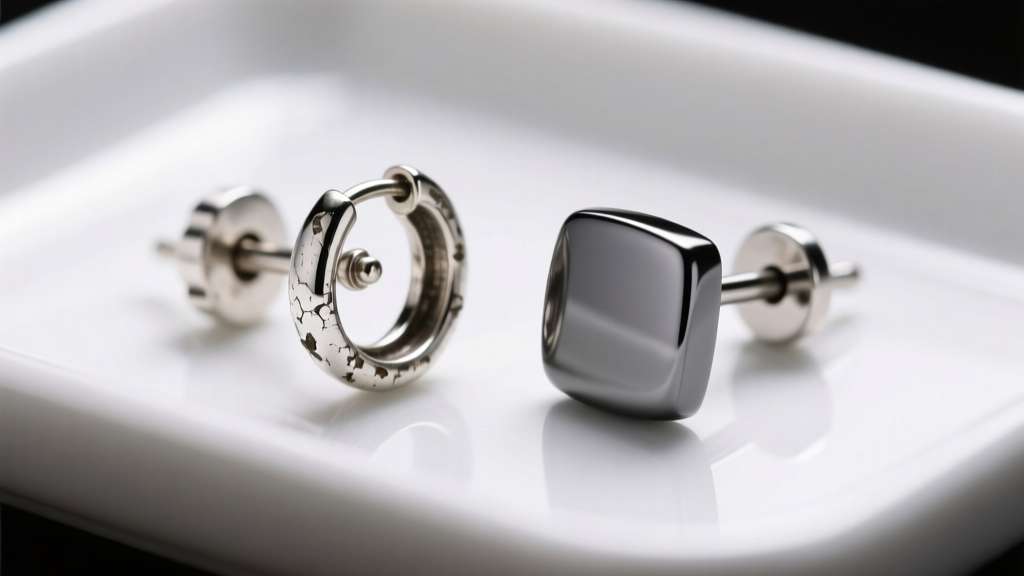
Unlike tarnish, which can be polished, peeling plating is a structural failure. This occurs when the base metal was not properly prepped (cleaned and struck with a nickel or palladium barrier layer) before the final gold or rhodium bath. Environmental factors like chlorine in swimming pools or sulfur in hot springs can also penetrate microscopic fissures, causing the base metal to expand and literally push the plating off.
The Fix: You cannot reverse peeling plating at home. Attempting to buff it will only strip the surrounding intact layers. Your only option is professional re-plating. A local jeweler can strip the remaining finish via ultrasonic electrolysis and re-plate the piece. Expect to pay between $35 and $85 for a standard pair of studs or small hoops, which is often only cost-effective for pieces with high sentimental value.
Problem 3: Contact Dermatitis and Nickel Leaching
If your earlobes become red, itchy, and weeping after wearing plated earrings, you are likely experiencing Allergic Contact Dermatitis (ACD) caused by nickel. Nickel is frequently used as an adhesive 'strike' layer between the brass core and the gold exterior because it creates a bright, smooth surface. As the top layer wears thin, nickel ions leach out and bind with the proteins in your skin, triggering an immune response.
The American Academy of Dermatology notes that nickel allergy is one of the most common causes of allergic contact dermatitis worldwide, affecting roughly 18% of adults. Once you develop a nickel allergy, it is permanent.
The Fix: Immediately remove the offending earrings and apply an over-the-counter hydrocortisone cream to the lobe. Discard or relegate the earrings to occasional, short-term wear over a layer of clear nail polish. For long-term wear, you must transition to earrings made of ASTM F136 implant-grade titanium, niobium, or solid 14k/18k gold, which are inherently nickel-free.
Step-by-Step Restoration: Cleaning vs. Re-Plating
When your plated earrings look dull, the instinct is to grab a silver polishing cloth or a chemical dip. This is a catastrophic mistake. Polishing cloths are embedded with micro-abrasives designed to remove tarnished layers of solid silver; on plated earrings, they will strip the gold right down to the brass in seconds.
| Cleaning Agent | Effect on Plated Earrings | Verdict |
|---|---|---|
| Silver Dip / Chemical Baths | Strips plating and causes immediate, irreversible darkening of the base metal. | NEVER USE |
| Baking Soda & Aluminum Foil | Creates a galvanic reaction that can blister thin gold layers. | NEVER USE |
| Ultrasonic Cleaners | High-frequency vibrations can shatter porous plating and loosen glued gemstones. | AVOID |
| Mild Dish Soap & Lukewarm Water | Safely removes sebum, lotion, and dead skin cells without abrading the metal. | HIGHLY RECOMMENDED |
The Safe DIY Cleaning Protocol
To safely restore the shine to dull but intact plated earrings, follow this precise methodology:
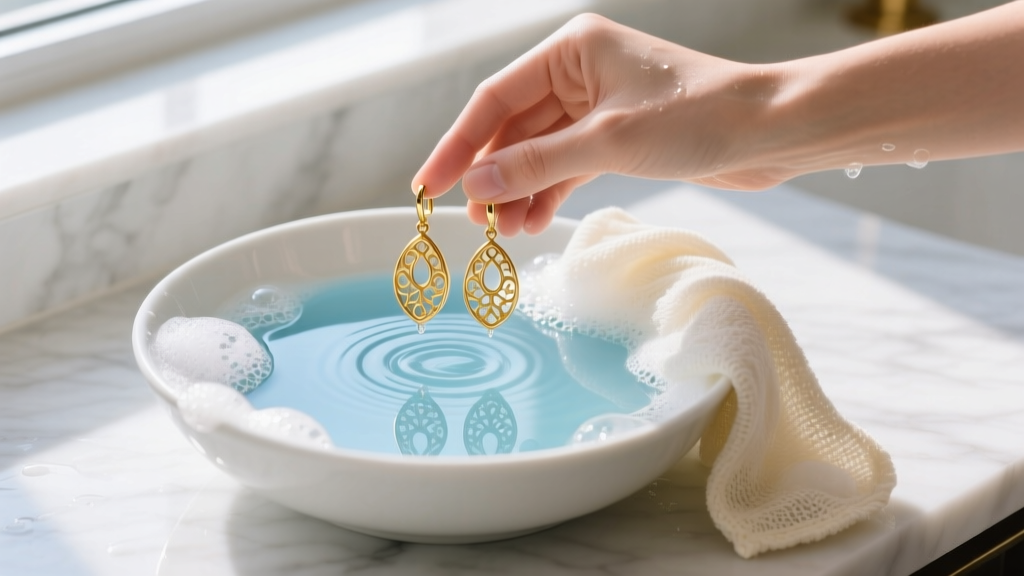
- Mix three drops of phosphate-free, mild dish soap (like Dawn) into a bowl of lukewarm distilled water. Avoid tap water, as trace minerals and chlorine can leave micro-spots.
- Submerge the earrings for exactly 3 to 5 minutes to loosen sebum and cosmetic buildup.
- Use a baby-hair brush (not a standard toothbrush, which is too abrasive) to gently sweep the crevices around the gemstone settings and the earring clutch.
- Rinse briefly under a slow stream of distilled water.
- Pat dry immediately with a lint-free microfiber cloth. Do not air dry, as water spots will etch into the porous plating over time.
Preventative Maintenance: Extending Plating Lifespan
The lifespan of plated earrings is dictated by friction, moisture, and chemical exposure. By altering how you store and wear your jewelry, you can extend the life of a 1-micron gold plate from six months to several years.
- The 'Last On, First Off' Rule: Hairspray, perfumes, and setting sprays contain alcohols and aerosols that rapidly degrade gold and rhodium plating. Always apply your cosmetics and allow them to dry completely before putting on your earrings.
- Silicone O-Rings for Friction: The most common point of failure on a stud earring is the post, where the metal butterfly clutch creates constant friction. Swap metal clutches for medical-grade silicone O-rings or flat silicone backs. They grip securely without scraping the plating off the post.
- Desiccant Storage: Store plated earrings in individual, airtight ziplock bags with a small silica gel desiccant packet. This eliminates ambient humidity, which is the primary catalyst for base-metal oxidation when the jewelry is not being worn.
Expert Insight: 'The longevity of plated earrings isn't just about how thick the gold is; it's about the hardness of the base metal. A 1-micron gold plate over hardened stainless steel will outlast a 2.5-micron plate over soft, porous brass simply because the rigid base prevents the microscopic flexing that causes plating to crack and flake.' — Master Jeweler and Metallurgist
Upgrade Paths: Modern Alternatives to Traditional Plating
If you are exhausted by the constant maintenance cycle of traditional electroplated jewelry, the jewelry industry has developed advanced alternatives that solve the inherent flaws of liquid electroplating.
PVD (Physical Vapor Deposition) Coating
As of 2026, PVD coating has become the gold standard for durable, gold-toned fashion jewelry. Instead of using liquid chemicals, PVD vaporizes titanium nitride or real gold in a vacuum chamber, bonding it to a stainless steel core at an atomic level. PVD coatings are up to 10 times thicker and significantly harder than traditional electroplating. They are entirely impervious to sweat, UV radiation, and salt water, making them the ultimate troubleshooting upgrade for those who live in humid climates or have highly acidic skin chemistry.
Gold Vermeil (The Hypoallergenic Standard)
If you prefer the warmth and tradition of precious metals, strictly limit your purchases to Gold Vermeil (pronounced ver-may). Because the FTC mandates that vermeil must have a sterling silver (925) base, you completely eliminate the risk of copper-induced green skin and nickel-induced allergies. While the gold layer will eventually wear down with years of heavy friction, the exposed sterling silver underneath is a precious metal that will not turn your skin green or cause severe dermatitis, making it a vastly superior long-term investment than standard brass-based plated earrings.


