Troubleshooting Beaded Wire Earrings: Fix Snaps & Slips
Learn how to troubleshoot beaded wire earrings. Expert fixes for snapped wire, slipping beads, kinked wraps, and allergic reactions to ear hooks.

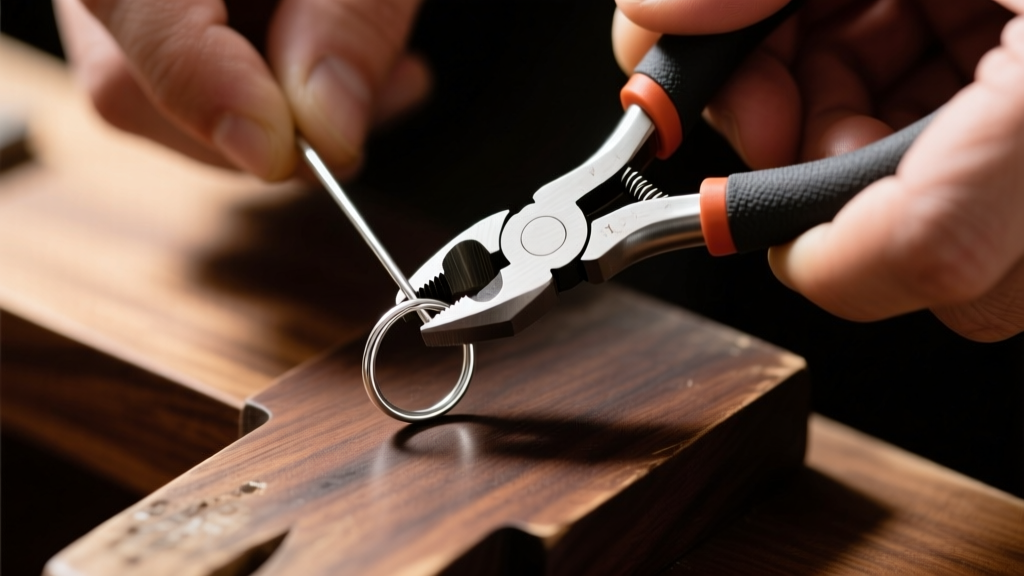
Handcrafted beaded wire earrings offer a delicate, artisanal aesthetic that mass-produced jewelry simply cannot replicate. However, the very nature of wire wrapping leaves these pieces vulnerable to specific structural failures. Whether you are a jewelry maker troubleshooting your own designs or a collector trying to salvage a favorite pair of vintage drops, understanding the metallurgy and mechanics of wire is essential. In this comprehensive guide, we diagnose the most common failures in beaded wire earrings and provide actionable, professional-grade solutions to repair and reinforce them.
Diagnosing Wire Snaps and Kinks
The most frequent point of failure in beaded wire earrings is the ear hook or the structural loop connecting the bead to the clasp. When wire snaps, it is rarely a coincidence; it is almost always the result of improper wire temper or work-hardening fatigue. Wire hardness dictates how the metal behaves under stress. According to metallurgical guidelines from Rio Grande, bending wire alters its crystal lattice structure, increasing tensile strength but decreasing ductility.
Understanding Wire Hardness and Gauge
If you are replacing a broken ear wire or rebuilding a wrapped loop, selecting the correct temper is non-negotiable. Using dead-soft wire for an ear hook guarantees it will pull open under the weight of the earring. Conversely, using full-hard wire for a tight wrapped loop will cause it to snap mid-wrap.
| Wire Temper | Best Application | Failure Mode if Misused | Repair Strategy |
|---|---|---|---|
| Dead Soft | Coiling, weaving, weaving around cabochons | Loops pull open; ear wires bend out of shape | Work-harden with a rawhide mallet after forming |
| Half-Hard | Ear wires, jump rings, structural wrapped loops | Kinks if bent back and forth repeatedly | Straighten with nylon-jaw pliers; do not re-bend |
| Full-Hard | Clasps, pins, rigid structural elements | Snaps immediately if bent past 45 degrees | Cannot be repaired; must be replaced |
Troubleshooting Kinks: If your 20-gauge half-hard sterling silver ear wire has developed a sharp kink, do not use standard steel chain-nose pliers to bend it back. Steel-on-steel contact will mar the silver, and sharp bending will cause a stress fracture. Instead, use nylon-jaw pliers to gently roll the kink out, or pull the wire through a folded piece of leather to smooth the curve.
Solving the Spinning and Slipping Bead Dilemma
Nothing ruins the elegance of a beaded wire earring faster than a bead that constantly spins off-center or slides down the wire, rattling against the bottom loop. This issue occurs when the diameter of the wire is significantly smaller than the drill hole of the gemstone or glass bead.
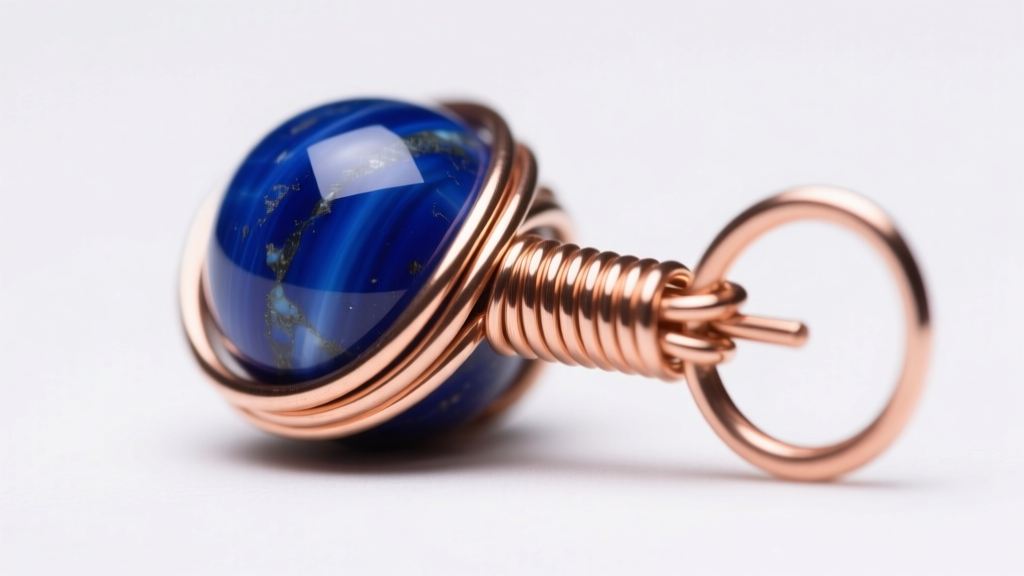
Mapping Wire Gauge to Bead Hole Sizes
To stop a bead from slipping, you must either increase the wire gauge or introduce a mechanical stopper. According to lapidary data from the International Gem Society, different materials are drilled with different tolerances. Here is how to match your wire to your beads to prevent slipping:
- Freshwater Pearls (0.5mm - 0.7mm holes): Require 24-gauge (0.51mm) or 26-gauge (0.40mm) wire. If the bead spins on a 24g wire, thread a size 11/0 glass seed bead onto the wire first to act as a flush, invisible stopper at the base of the pearl.
- Standard Glass and Crystal (0.8mm - 1.0mm holes): Best suited for 22-gauge (0.64mm) or 20-gauge (0.81mm) wire. If you must use a thinner 24g wire for wrapping, you must use a 2mm crimp bead or a tightly coiled 28g wire stopper at the base of the loop.
- Hard Gemstones like Quartz or Beryl (0.6mm - 0.8mm holes): Use 22-gauge wire. Never force a 20-gauge wire through a gemstone, as the outward pressure during the wrapping process can cause the stone to cleave or fracture along its natural inclusions.
Pro-Tip for Wrapped Loops: A simple loop (bending the wire 90 degrees and hooking it) will eventually pull open due to the kinetic energy of the earring swinging against the neck. Always use a fully wrapped loop, where the tail of the wire coils tightly down the stem at least three times, locking the bead in a rigid cage.
Fixing Ear Wire Allergies and Fit Issues
Many wearers assume they are allergic to 'surgical steel' ear wires, but 'surgical steel' is a largely unregulated marketing term that often contains nickel. If a client or customer experiences itching, redness, or weeping at the piercing site, the beaded wire earring must be immediately re-strung onto a hypoallergenic alternative.
Upgrading to Biocompatible Metals
To troubleshoot contact dermatitis caused by base metal ear wires, replace the hooks with one of the following certified materials:
- ASTM F136 Implant-Grade Titanium: This is the gold standard for sensitive piercings. It contains zero nickel and is polished to a mirror finish that resists bacterial adhesion. Note that titanium is difficult to bend by hand; purchase pre-formed titanium ear wires rather than trying to wrap your own.
- Niobium: Highly biocompatible and can be anodized using a simple battery setup to match the color of the beads in your earring. Niobium is dead-soft, so it requires work-hardening with a rawhide mallet after bending to ensure the ear hook retains its shape.
- Argentium Silver: Unlike traditional sterling silver (which contains 7.5% copper that can oxidize and irritate), Argentium replaces some copper with germanium. It is highly tarnish-resistant and generally well-tolerated by those with mild metal sensitivities.
The Right Tools for Precision Repair
Attempting to fix delicate beaded wire earrings with hardware store tools will result in crushed wire, scratched beads, and structural weakness. Professional jewelry repair requires specialized, precision-machined tools.
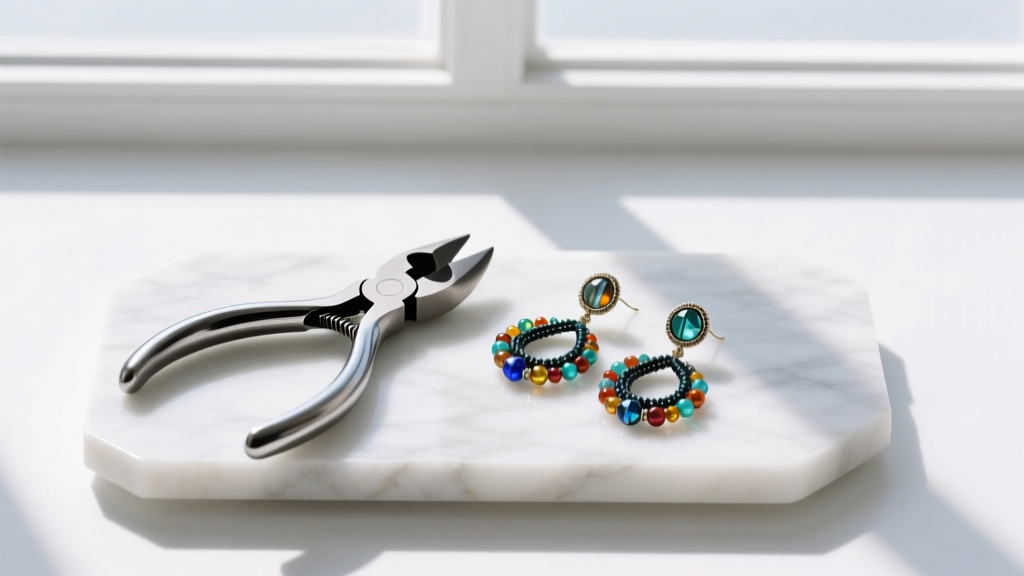
- Flush Cutters (e.g., Lindstrom or Tronex): Standard wire cutters leave a sharp, angled 'pinch' on the wire end. Flush cutters have a flat cutting face that leaves a perfectly smooth, level end, which is critical when tucking the tail of a wrapped loop so it doesn't snag on hair or clothing.
- Smooth-Jaw Chain Nose Pliers: Most standard chain-nose pliers feature serrated 'teeth' for gripping. These teeth will permanently gouge soft metals like sterling silver, gold-filled, and copper. Always use smooth-jaw variants for wire wrapping and loop closing.
- Round Nose Pliers with Stepped Barrels: Standard round nose pliers create loops of varying sizes depending on how far up the jaw you grip. Stepped barrel pliers feature machined grooves at exact millimeter intervals (e.g., 2mm, 3mm, 4mm), ensuring that both the left and right beaded wire earrings have identically sized top loops.
- Cup Bur and Brass Brush: After cutting an ear wire, the end is sharp enough to scratch the inside of the ear canal. Use a rotary tool with a cup bur to round the tip, followed by a brass wire brush to polish the end to a smooth, safe finish.
Preventative Maintenance for Longevity
Troubleshooting is only half the battle; preventing failure in beaded wire earrings ensures they remain wearable for years. Wire fatigue is accelerated by environmental factors and improper storage.
Ultrasonic Cleaning Warnings: Never place wire-wrapped earrings with porous beads (like turquoise, opal, or pearls) into an ultrasonic cleaner. The high-frequency vibrations can not only shatter delicate stones but also loosen the tight coils of a wrapped loop, causing the bead to rattle. Instead, clean the wire components with a mild dish soap and a soft-bristled baby toothbrush, carefully avoiding the bead drill holes.
Storage Protocols: Store beaded wire earrings hanging from a jewelry rack or laid completely flat. Tossing them into a communal jewelry box causes the ear wires to tangle with other chains, which is the leading cause of wire kinking and loop deformation. For travel, use a hard-shell jewelry case with dedicated, velvet-lined slots that prevent the earrings from being crushed.
By understanding the physics of wire temper, matching gauge sizes to bead tolerances, and utilizing biocompatible metals, you can effectively troubleshoot and rescue any pair of beaded wire earrings from the brink of the scrap bin. Mastery of these small details is what separates amateur crafters from true jewelry artisans.


