Technical Anatomy of Simple Diamond Earrings: An Expert Guide
Explore the technical anatomy of simple diamond earrings. Learn about setting architecture, post gauges, 4C optimization, and micro-metallurgy.

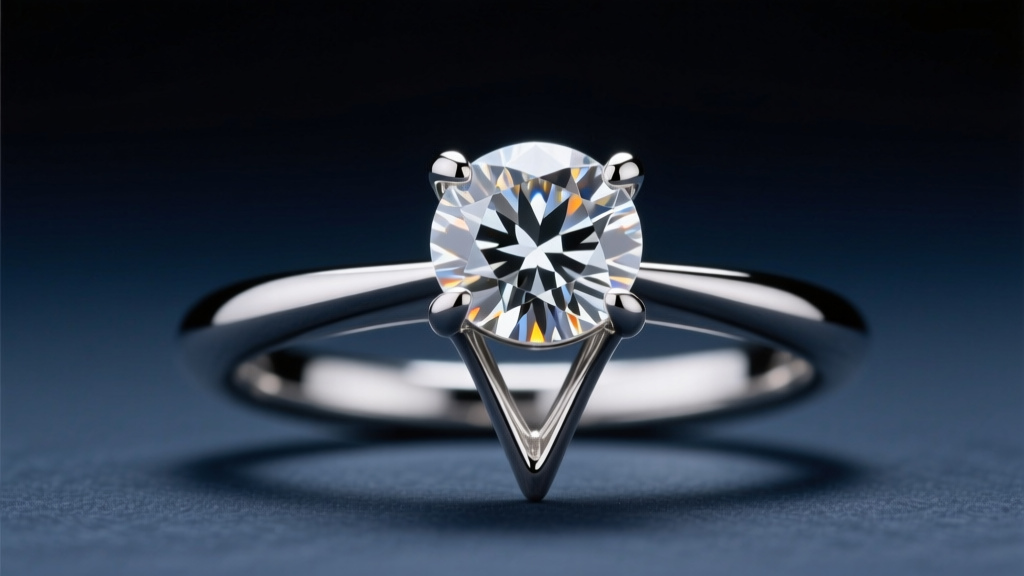
The Engineering Behind Simple Diamond Earrings
When consumers search for simple diamond earrings, they often mistake the word 'simple' for 'basic'. In reality, the engineering required to balance a high-refractive-index gemstone on a flexible, vascularized tissue lobe is a masterclass in micro-metallurgy and structural physics. A diamond stud is not merely a stone glued to a post; it is a carefully calibrated system of weight distribution, light return optimization, and tensile strength. As we navigate the 2026 jewelry market, where lab-grown diamonds have fundamentally shifted pricing paradigms, understanding the technical anatomy of these pieces is critical for both collectors and everyday wearers.
The primary challenge in designing simple diamond earrings is the center of gravity. Unlike a ring, which rests on a solid bone structure, an earring hangs from the earlobe, a matrix of fat, cartilage, and skin that deforms under stress. If the setting is too heavy, or the post is positioned incorrectly relative to the diamond's culet, the earring will droop, obscuring the stone's brilliance and causing long-term tissue stretching. This guide deconstructs the exact specifications, material grades, and mechanical tolerances that separate a masterfully engineered stud from a poorly balanced one.
Optimizing the 4Cs for Social Distance
The Gemological Institute of America (GIA) established the 4Cs for diamonds, but the criteria for evaluating stones meant for earrings differ vastly from those meant for engagement rings. According to the Gemological Institute of America (GIA), a diamond's interaction with light is paramount, but the viewing distance changes the hierarchy of importance.
Cut: The Non-Negotiable Metric
For simple diamond earrings, Cut is the single most important variable. Because studs are typically viewed from a social distance of two to four feet, the human eye cannot resolve minor inclusions or subtle color variations. However, it can instantly detect poor light return. An 'Excellent' or 'Ideal' cut grade is mandatory. A poorly cut diamond will appear as a dull, glassy void from three feet away, regardless of its clarity or color grade.
Color and Clarity: The Efficiency Sweet Spot
Over-indexing on color and clarity is the most common financial mistake buyers make with studs. For white gold or platinum settings, a color grade of G or H is visually indistinguishable from a D or F grade once mounted and viewed in motion. Similarly, SI1 (Slightly Included 1) clarity is perfectly acceptable for earrings, provided the inclusions are not directly under the table facet. By dropping from VVS1 to SI1, and D to H, you can increase the carat weight by up to 40% without sacrificing visible beauty.
Carat Weight vs. Millimeter Spread
Carat is a measure of weight, not physical size. A deeply cut 0.50-carat diamond may face up smaller than a well-cut 0.45-carat stone. When selecting simple diamond earrings, always request the millimeter (mm) measurements of the girdle diameter. Below is the technical conversion chart for round brilliant cuts in the current market:
| Diameter (mm) | Approx. Carat Weight (Each) | Total Carat Weight (TCW) | 2026 Market Estimate (Natural G/VS2) |
|---|---|---|---|
| 4.1 mm | 0.25 ct | 0.50 ct | $1,400 - $1,800 |
| 5.1 mm | 0.50 ct | 1.00 ct | $3,800 - $4,600 |
| 6.5 mm | 1.00 ct | 2.00 ct | $9,500 - $12,000 |
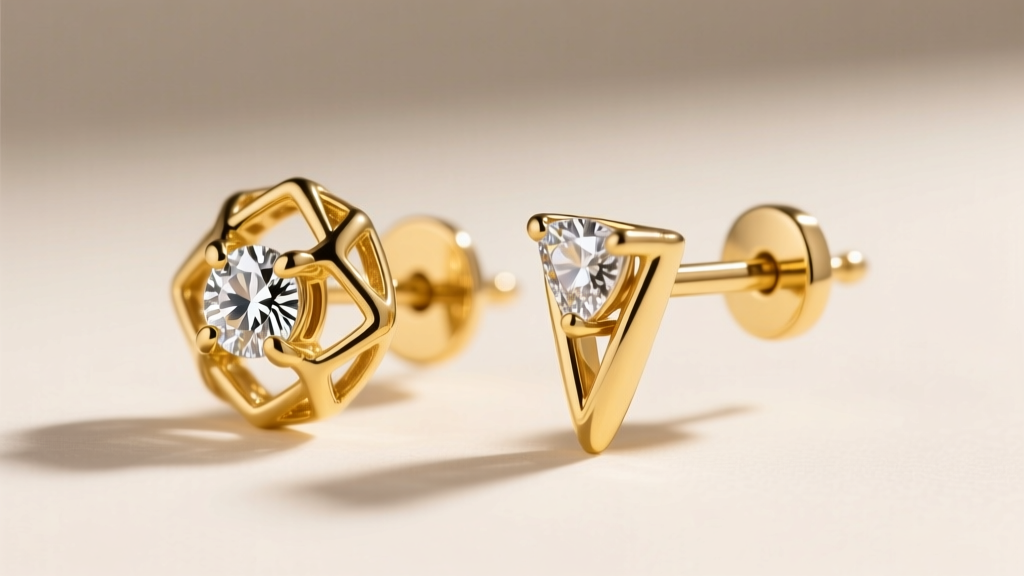
Setting Architecture: Martini vs. Basket vs. Crown
The setting is the mechanical interface between the diamond and the post. The choice of setting dictates the earring's weight, its vulnerability to snagging, and how much ambient light can enter the pavilion of the diamond.
The Martini Setting (3-Prong)
The martini setting is shaped like a cocktail glass, utilizing three prongs to secure the stone. Technical Advantage: By using only three prongs, more of the diamond's crown and table are exposed to ambient light, maximizing brilliance. It is also the lightest setting, reducing lobe fatigue. Failure Mode: The triangular base can dig into the earlobe if the post is not perfectly centered, and the three-prong geometry offers slightly less impact resistance than a four-prong design.
The Basket Setting (4-Prong)
The basket setting uses a horizontal gallery wire to connect four prongs, creating a basket-like structure. Technical Advantage: Superior structural integrity and a lower center of gravity, making it ideal for heavier stones (1.00 ct and above per ear). Failure Mode: The gallery wire blocks light from entering the lower pavilion facets, which can reduce the stone's overall scintillation. It also adds precious metal weight, which can cause drooping on thin lobes.
The Crown Setting
The crown setting elevates the diamond significantly above the base, resembling a royal tiara. This is highly recommended for individuals with thick or fleshy earlobes, as the elevation prevents the diamond's culet from pressing uncomfortably against the tissue behind the lobe.
Metallurgy and Post Mechanics
The post is the structural spine of simple diamond earrings. The industry standard for post thickness is 20-gauge (0.81mm) or 18-gauge (1.02mm). While 20-gauge is standard for lightweight studs, any diamond exceeding 0.75 carats per ear requires an 18-gauge post to prevent the metal from bending under the lever-action force of accidental impacts.
Alloy Selection
- 950 Platinum: The gold standard for high-value studs. Platinum is dense, hypoallergenic, and possesses high tensile strength. Its natural white color does not require rhodium plating, meaning it will never fade to yellow over time.
- 18k White Gold (75% Gold): Harder than pure gold but requires rhodium plating to achieve a bright white finish. Over 3 to 5 years, the rhodium will wear off, revealing the slightly yellowish alloy beneath, requiring re-plating.
- 14k Gold (58.3% Gold): Highly durable and cost-effective, but the higher alloy content (often containing nickel or copper) can cause contact dermatitis in sensitive wearers. Always verify nickel-free compliance with FTC guidelines if choosing 14k.
Backing Mechanisms
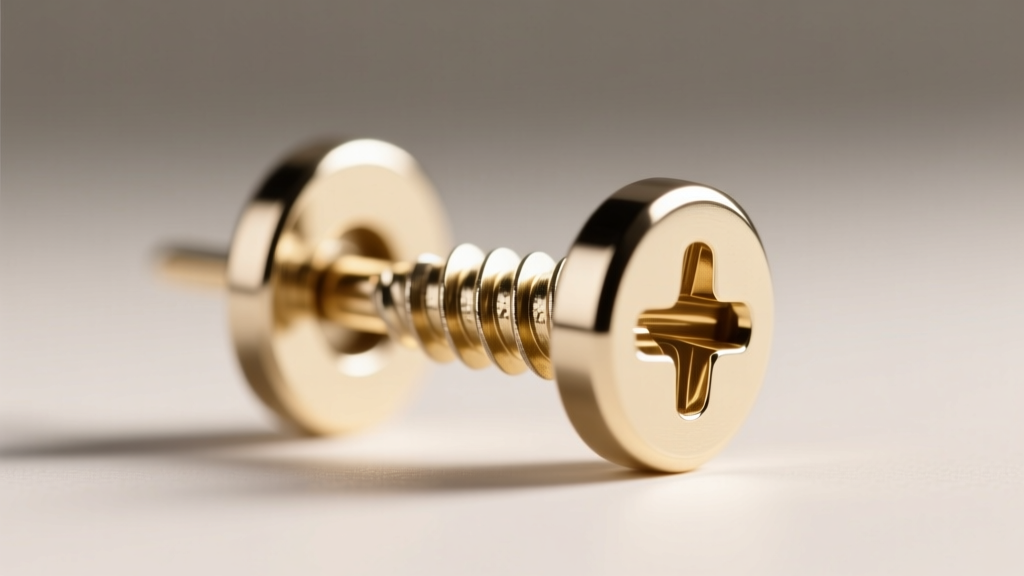
The friction push-back (butterfly clutch) is the most common, but it is mechanically flawed for heavy earrings. The tension in the metal loops fatigues over time, leading to lost earrings. For simple diamond earrings valued over $2,000, upgrade to La Pousette backs (which use a spring-loaded internal locking mechanism) or threaded screw-backs. Screw-backs feature precision-cut threads on the post and inside the backing, ensuring the earring cannot be removed without intentional, multi-rotational force.
Troubleshooting Common Failure Modes
Even masterfully crafted simple diamond earrings can experience mechanical or aesthetic issues over time. Here is how to diagnose and resolve them:
The 'Drooping' Lobe Syndrome
If your studs point downward, the issue is rarely the weight of the diamond itself; it is the distance between the diamond's culet and the earlobe. If the setting sits too far forward, gravity pulls the top of the post down. The Fix: A bench jeweler can carefully bend the post upward at a 15-degree angle relative to the setting base, compensating for the gravitational pull and forcing the diamond to sit flush and upright.
Ultrasonic Cleaning Hazards
While ultrasonic cleaners are excellent for removing sebum and cosmetic buildup from the pavilion facets, they pose a severe risk to fracture-filled diamonds or stones with deep, surface-reaching feathers. The high-frequency vibrations can cause these inclusions to expand, potentially shattering the stone. Always verify your diamond's clarity enhancement status before using ultrasonic technology. For daily maintenance, a simple soak in warm water with a few drops of degreasing dish soap and a soft-bristled baby toothbrush is the safest, most effective protocol.
Expert Pro-Tip: When purchasing simple diamond earrings, always inspect the 'culet clearance'. There should be at least 1.5mm of space between the sharp point of the diamond's culet and the base of the setting. If the culet touches the metal backing, it can chip upon impact, and it prevents light from reflecting properly through the bottom of the stone.
Final Technical Considerations
Buying simple diamond earrings is an exercise in applied physics and optical engineering. By prioritizing an Ideal cut, selecting a setting that matches your specific lobe thickness, and insisting on proper post gauges and locking mechanisms, you ensure that your investment remains secure and brilliant for decades. Whether you opt for the traditional light-return of a martini setting or the structural security of a basket, understanding the micro-mechanics of your jewelry transforms a simple accessory into a marvel of wearable engineering.


