Styling the "griet girl with a pearl earring" Look: Modern Drops
Discover how to style the iconic griet girl with a pearl earring aesthetic. We analyze modern pearl drop earrings, materials, and face-shape matching.


The Legacy of the Griet Girl With A Pearl Earring
Johannes Vermeer’s 1665 masterpiece, Girl with a Pearl Earring, has captivated art historians and jewelers for centuries. However, it was Tracy Chevalier’s 1999 historical novel that gave the mysterious subject a name: Griet. Today, when literary fans and jewelry enthusiasts search for the griet girl with a pearl earring aesthetic, they are looking for more than just a historical costume piece. They are seeking the ultimate masterclass in asymmetrical, statement jewelry styling. The single, oversized pearl drop represents a masterful balance of weight, light, and focal dominance.
According to the Mauritshuis Museum, the pearl in Vermeer's painting is exceptionally large, likely an exaggerated or varnished glass imitation for the era, as natural pearls of that magnitude (estimated at 12mm to 14mm) were astronomically rare and expensive in the 17th-century Dutch Republic. Today, modern pearl culturing techniques have democratized this look, allowing us to recreate the exact visual weight and luster of Griet’s iconic accessory without the historical impossibility.
Deconstructing the "Griet" Drop: Anatomy of the Perfect Pearl
To achieve the authentic, heavy-drop aesthetic seen in the painting, you must look beyond standard stud earrings. The Griet look requires a pearl with substantial physical weight, a deep satin luster, and a perfectly round or slightly baroque shape that catches directional light. According to the Gemological Institute of America (GIA), luster is the most critical quality factor for pearls, dictating how sharply light reflects off the nacre layers.
Pearl Varieties and Sizing for the Heavy Drop
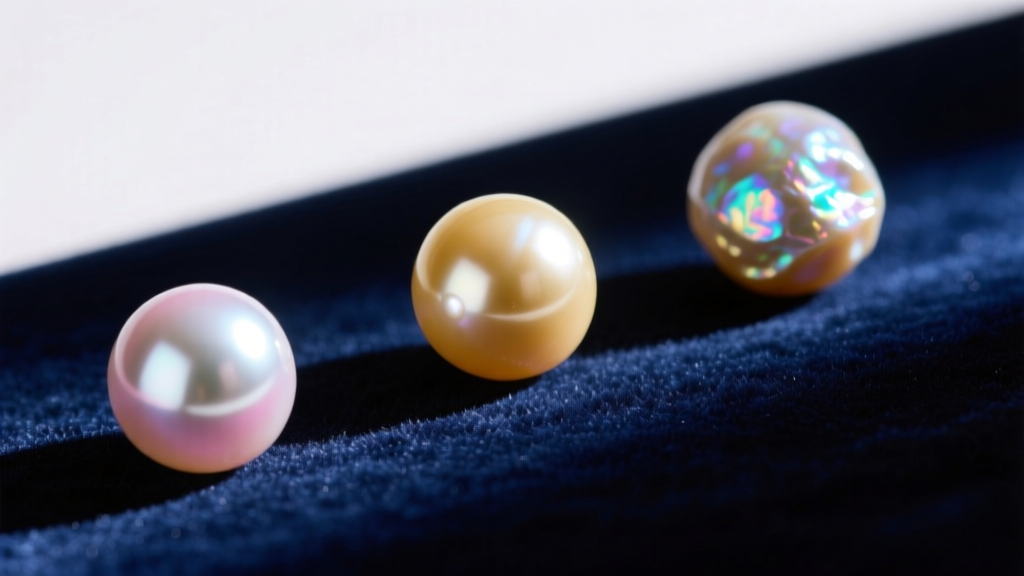
Not all pearls can replicate the dramatic, elongated silhouette required for this style. Akoya pearls, while brilliant, rarely exceed 9mm, making them too small for the true "Griet" effect. Instead, we look to South Sea and Edison pearls for the necessary volume.
| Pearl Type | Average Size | Luster Profile | Price Range (per drop) | Best For |
|---|---|---|---|---|
| Akoya | 7-9mm | Mirror-like, sharp | $150 - $400 | Classic, lightweight drops |
| White South Sea | 10-15mm | Satin, deep glow | $500 - $2,500+ | The authentic "Griet" heavy look |
| Tahitian | 9-13mm | Metallic, peacock | $300 - $1,200 | Edgy, asymmetrical modern styles |
| Edison (Freshwater) | 11-16mm | High luster, varied | $100 - $500 | Budget-friendly statement pieces |
The Hardware: Gauges and Backings for Heavy Drops
A 12mm South Sea pearl can weigh between 2.5 and 4 grams. When suspended from a standard 20-gauge (0.8mm) earring wire, this concentrated weight creates a pendulum effect that can lead to "cheese-cutter syndrome"—a gradual elongation and tearing of the earlobe fistula. To safely wear heavy Griet-style drops, structural jewelry mechanics are non-negotiable.
- Wire Gauge: Opt for 18-gauge (1.0mm) or 16-gauge (1.2mm) shepherd hooks or leverbacks. The thicker wire distributes the shear force across a wider surface area of the piercing.
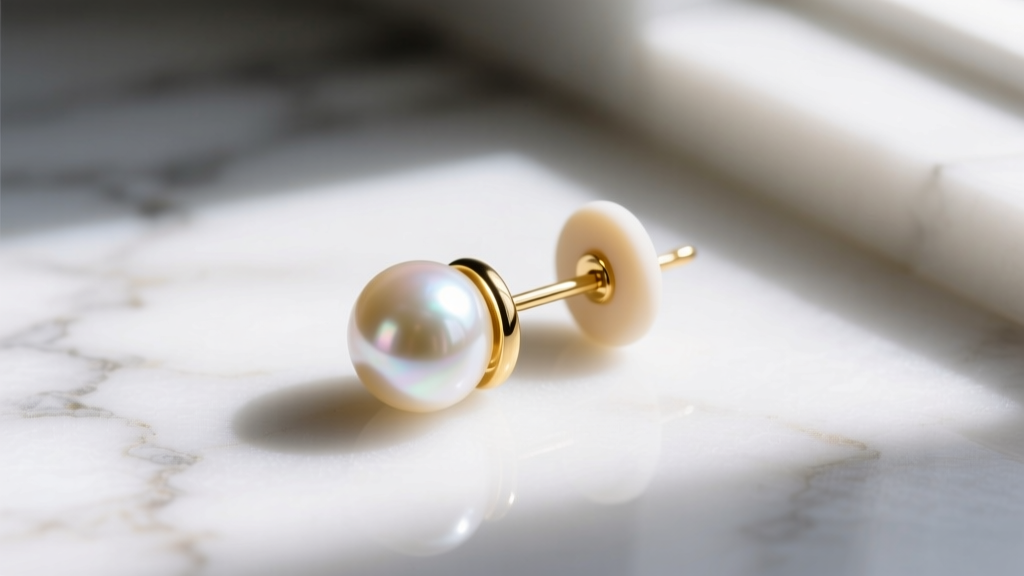
- Friction Backs: If using a post-style drop, discard the standard metal butterfly clutch. Use jumbo 10mm silicone lifting discs (like those from Chrysmela or generic O-rings) to provide a wide base of support against the back of the lobe, preventing the pearl from pulling the lobe downward.
- Leverback Closures: For drops over 14mm, a secure leverback or a French wire with a silicone stopper is mandatory to prevent loss, as the weight of the pearl can easily pull an open wire through the lobe during movement.
Modernizing the Asymmetrical Aesthetic
The most striking element of Vermeer’s painting is the asymmetry: Griet wears only one visible pearl, allowing the light to hit it without competition. In 2026, the single-ear curation trend perfectly mirrors this historical styling. Instead of wearing a matching pair, modern stylists recommend dedicating one ear to the heavy pearl drop, while keeping the opposite ear minimal.
Pair a 12mm White South Sea drop on the left lobe with a flush-set diamond huggie or a simple 14k gold sleeper hoop on the right. This honors the "griet girl with a pearl earring" focal-point philosophy while updating it for contemporary ear-scaping. The contrast between the massive, organic gemstone and the precise, geometric metal on the opposite ear creates a sophisticated, editorial tension.
Face Shape Matching for Elongated Drops
Because the Griet drop is inherently elongated and heavy, it alters the visual geometry of the jawline and neck. Understanding how this specific silhouette interacts with different face shapes is crucial for stylists and collectors.
- Round Faces: The elongated drop is highly flattering. The vertical line of the pearl draws the eye downward, creating an illusion of length and softening the width of the cheekbones.
- Square Faces: The spherical curve of a large South Sea pearl provides a necessary contrast to sharp, angular jawlines, softening the lower half of the face without adding harsh geometric lines.
- Oblong/Long Faces: Proceed with caution. A heavy, elongated drop can over-extend the face. If you have an oblong face shape, opt for a wider, slightly shorter baroque pearl (like an 11mm Edison) or a stud-drop hybrid that sits closer to the lobe to maintain horizontal balance.
- Heart-Shaped Faces: The volume of a 12mm pearl at the bottom of the earlobe perfectly balances a narrower chin, adding visual weight exactly where the face tapers.
Sourcing Authentic Pieces: What to Look For
When hunting for the perfect Griet-inspired drop, beware of "pearlized" glass or shell-bead imitations coated in synthetic nacre. True South Sea and Edison pearls possess a deep, inner glow (orient) that synthetic beads cannot replicate. Look for a nacre thickness of at least 0.8mm for freshwater Edison pearls, and 2.0mm+ for saltwater South Sea varieties. A high-quality pearl will show slight surface imperfections under a 10x jeweler's loupe; a completely flawless, mirror-like surface on a 14mm drop is almost certainly a synthetic imitation or a heavily treated stone.
Ultimately, channeling this iconic aesthetic is about understanding the interplay of light, weight, and negative space. By selecting the correct pearl variety, reinforcing your hardware, and embracing the power of asymmetry, you can seamlessly translate a 17th-century Dutch masterpiece into a masterclass of modern jewelry styling.