The True Value of J Hoop Earrings: A Budget & Material Guide
Discover if j hoop earrings are worth your money. We break down pricing tiers, material grades, and clasp mechanics to help you find the best value.
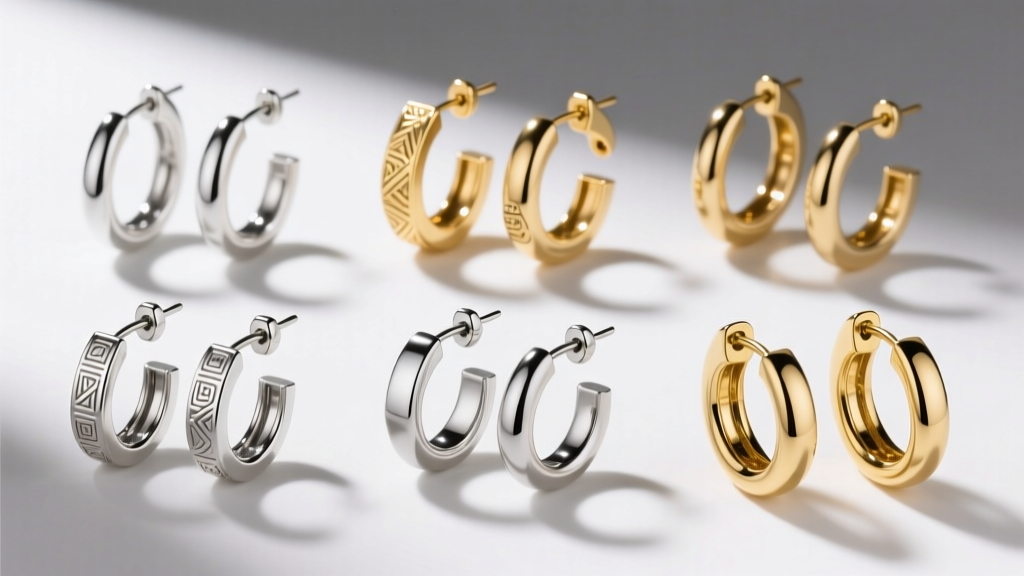
Decoding the Architecture of J Hoop Earrings
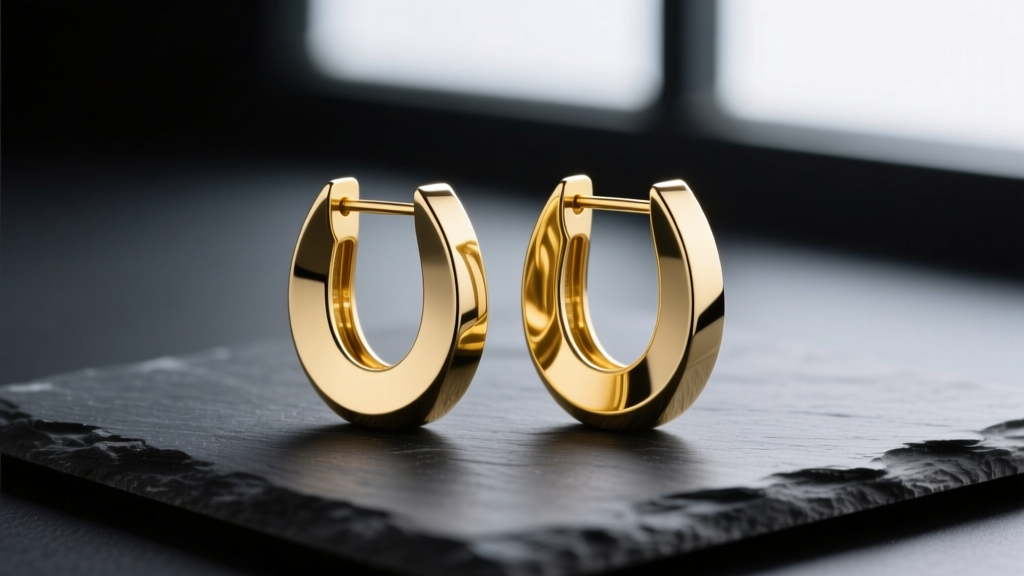
In the evolving landscape of fine and fashion jewelry, the silhouette of the classic hoop has undergone a massive structural shift. Enter j hoop earrings: an architectural, modernist take on the traditional circle. Unlike standard continuous hoops, a J hoop features a straight or slightly angled post that transitions into a sharp, elongated curve, mimicking the letter 'J'. This design creates a striking vertical drop that frames the jawline beautifully, making it a dominant trend heading into 2026.
However, the unique geometry of j hoop earrings introduces specific structural vulnerabilities and manufacturing challenges. The sharp bend where the straight post meets the curved drop is a major stress point. When evaluating the budget and true value of these earrings, consumers must look far beyond the price tag. A $30 pair and a $300 pair might look identical in a digital shopping cart, but their material integrity, clasp mechanics, and longevity are worlds apart. This guide breaks down exactly where your money goes when investing in this sculptural style.
Material Grades: The Hidden Cost of the 'J' Bend
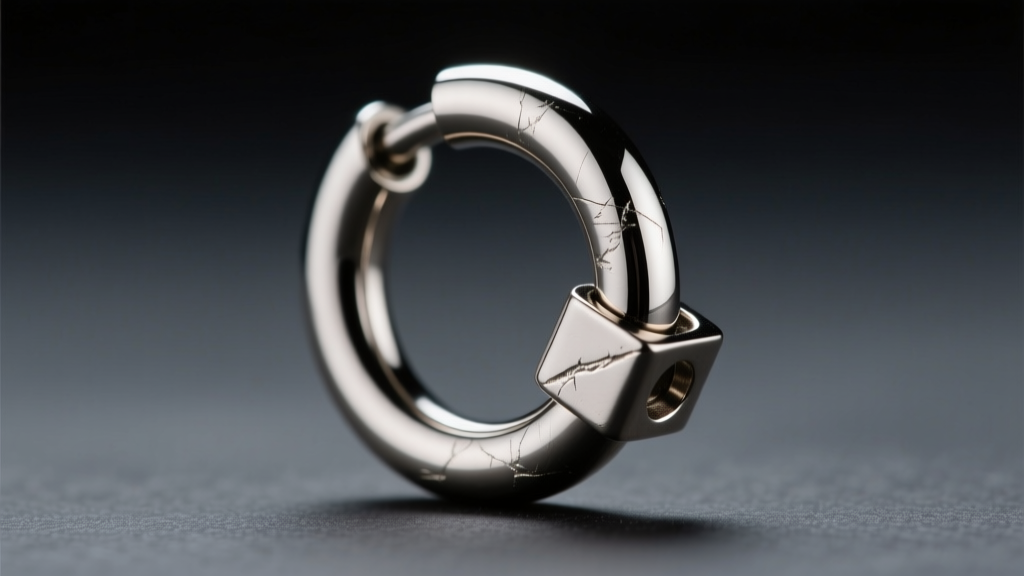
The most critical factor in assessing the value of j hoop earrings is the metal composition, specifically how the material behaves at the earring's sharpest curve. Many budget brands use hollow tubing to keep costs down and reduce weight. While a hollow circular hoop can withstand minor bending, a hollow J hoop will almost inevitably kink or crimp at the angular transition point when subjected to the leverage of daily wear.
To avoid this failure mode, mid-tier and fine jewelry brands use solid wire or cast metal. Solid 925 sterling silver or 14k gold ensures the earring maintains its rigid, sculptural shape over time. When shopping, always check the product specifications for terms like 'solid wire' or 'cast construction.' If the brand advertises 'lightweight hollow hoops,' consider it a red flag for the J-hoop silhouette.
The Plating Spectrum: Flash vs. Vermeil
For those who want the look of gold without the solid gold price tag, understanding plating thickness is non-negotiable. The Gemological Institute of America (GIA) notes that gold plating thickness dictates the lifespan of the jewelry. Fast fashion brands typically use 'flash plating,' applying a microscopic layer of gold (less than 0.5 microns) over a brass or nickel base. This wears off in weeks, exposing the base metal to sweat and causing rapid tarnishing or skin irritation.
True value lies in Gold Vermeil. By FTC and international standards, vermeil requires a base of 925 sterling silver plated with a minimum of 2.5 microns of 10k, 14k, or 18k gold. This thickness provides years of wear before any re-plating is necessary, making it the sweet spot for budget-conscious buyers who refuse to compromise on skin safety and longevity.
Pricing Matrix: What Should You Actually Pay?
To help you benchmark the market, we have categorized the current pricing landscape for j hoop earrings based on material integrity and manufacturing quality. Use this table to determine if a retailer is overcharging for inferior materials.
| Material Tier | Base Metal | Plating / Finish | Price Range | Expected Lifespan |
|---|---|---|---|---|
| Fast Fashion | Brass or Nickel Alloy | Flash Gold (under 0.5 microns) | $15 - $35 | 1 - 3 Months |
| Mid-Tier Value | 925 Sterling Silver | Gold Vermeil (2.5+ microns) | $65 - $140 | 2 - 5 Years |
| Cartilage Specific | Implant Grade Titanium | Anodized or PVD Coated | $40 - $90 | Lifetime (Hypoallergenic) |
| Fine Jewelry | 14k or 18k Solid Gold | Solid (No plating) | $350 - $850+ | Generational |
As the table illustrates, the $65 to $140 range offers the highest return on investment for most buyers. You are paying for a safe, durable base metal and a thick gold coating that will not flake away after a few wears.
Clasp Mechanics: The Unsung Hero of Value
The clasp mechanism heavily influences both the security and the price of j hoop earrings. Because the J silhouette is inherently bottom-heavy, the elongated drop creates a pendulum effect. If the clasp is weak, the earring will pull forward, stretching the piercing or falling out entirely.
Friction Posts vs. Clicker Hinges
Budget j hoops usually rely on standard friction posts with butterfly backs. This is the cheapest manufacturing method, but the heavy drop of the J-curve often causes the post to tilt, making the butterfly back uncomfortable against the neck and prone to slipping off.
Higher-value j hoops utilize a hinged clicker mechanism or a secure locking sleeve. A clicker hinge snaps into place with an audible 'click,' securing the earring without the need for a separate backing. This requires precise CNC machining, which increases the manufacturing cost but drastically improves the user experience and security. When assessing a $100+ pair of vermeil or solid gold J hoops, a clicker hinge or a threaded flat-back post should be expected as a standard feature.
Red Flags: How to Spot Overpriced J Hoops
Not all expensive earrings are inherently valuable. The jewelry market is saturated with misleading marketing terms designed to inflate prices. Watch out for these common traps when shopping for j hoop earrings:
- The 'Gold Tone' Deception: If a brand uses the term 'gold tone' or 'gold dipped' without specifying the base metal or micron thickness, you are likely paying premium prices for cheap brass coated in a microscopic layer of gold. The American Academy of Dermatology frequently warns against unspecified base metals due to the high risk of nickel contact dermatitis.
- Excessive Brand Markups: Many mall-brand retailers charge upwards of $200 for hollow, flash-plated brass hoops simply because of their logo. Always cross-reference the material specifications, not just the brand name.
- Poor Gauge Sizing: Standard lobe piercings are usually 20g (0.8mm) or 18g (1.0mm). If a brand is selling thick, heavy J hoops with a flimsy 22g (0.6mm) wire to save on gold weight, the wire will easily bend out of shape and irritate the piercing channel.
Styling Value: Face Shape Compatibility
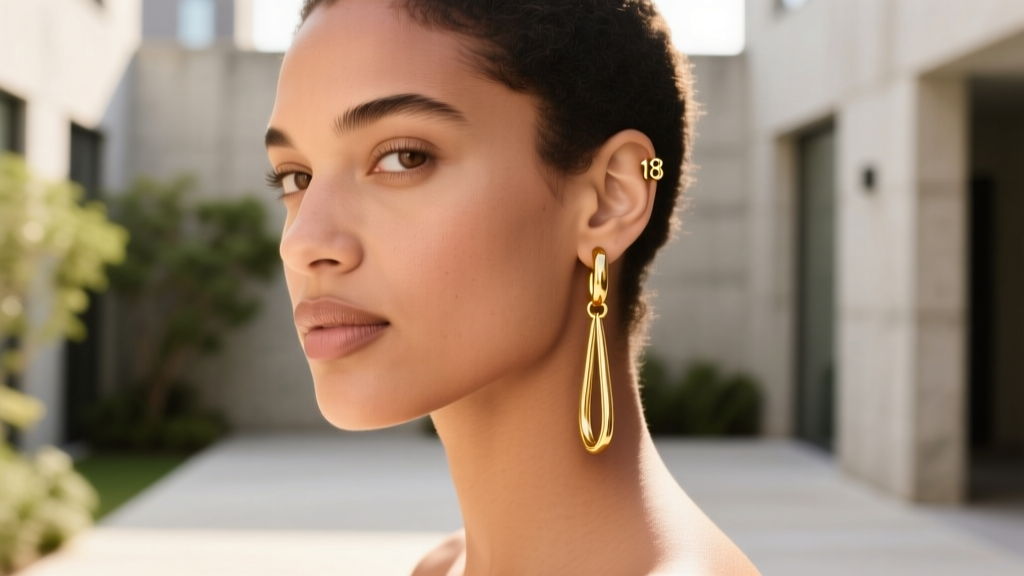
Part of assessing the 'value' of a jewelry piece is determining its versatility and how well it flatters your specific features. J hoop earrings offer a distinct aesthetic advantage over traditional circular hoops. Because circular hoops add horizontal width to the face, they can sometimes make round or square face shapes appear wider.
The J hoop, conversely, draws the eye downward. The elongated, architectural drop creates a strong vertical line that visually lengthens the face and highlights the jawline. This makes j hoop earrings an exceptionally high-value addition to the wardrobe of individuals with round, square, or heart-shaped faces who want the movement of a hoop without the width of a circle.
Maintenance and Care for Maximum Longevity
To protect your investment, especially if you opt for the mid-tier gold vermeil route, proper maintenance is required. Never use ultrasonic cleaners or harsh chemical dips on vermeil j hoop earrings, as the high-frequency vibrations and acids can strip the 2.5-micron gold layer. Instead, clean them weekly with a few drops of mild, phosphate-free dish soap and warm water, gently scrubbing the J-curve with a soft-bristled baby toothbrush. Always store them in an anti-tarnish pouch to prevent the sterling silver base from oxidizing if the gold layer is ever compromised.
Final Verdict: Which Tier Should You Buy?
If you are buying j hoop earrings as a temporary, seasonal trend to test the silhouette, a $25 pair of surgical steel or brass fashion hoops is acceptable. However, if you appreciate the modernist, sculptural aesthetic and plan to wear them weekly, bypass the fast-fashion tier entirely. The structural risks of hollow tubing and the skin irritation risks of flash-plated brass simply are not worth the short-term savings.
The ultimate sweet spot for budget and value lies in the $75 to $130 range. By targeting independent jewelers or reputable mid-tier brands that offer 18k gold vermeil over solid 925 sterling silver, paired with a secure clicker hinge and an 18-gauge thickness, you secure a piece of architectural jewelry that will retain its shape, its shine, and its elegance for years to come.


