2026 Trend Analysis: How to Style Large Dangle Earrings
Discover the 2026 trends for large dangle earrings. Learn expert styling tips, weight distribution hacks, and face-shape pairings.

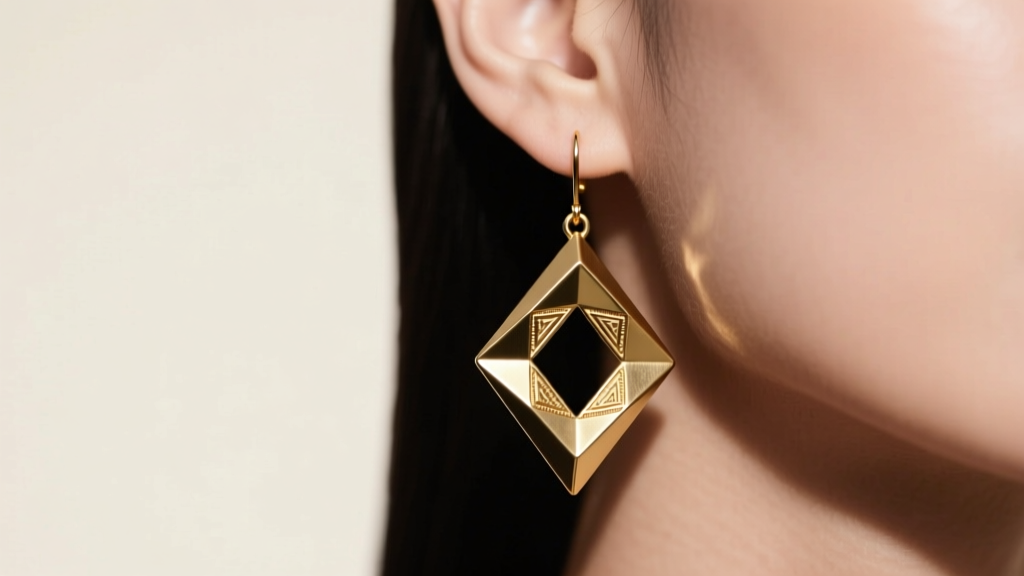
The 2026 Shift: From Quiet Luxury to Expressive Volume
For the past few years, the jewelry industry has been dominated by the "quiet luxury" movement, favoring micro-studs and whisper-thin chains. However, as we navigate the 2026 fashion landscape, a definitive pivot has occurred. Runways and street-style icons alike are embracing expressive volume, with large dangle earrings emerging as the undisputed focal point of contemporary styling. Defined generally as any earring with a drop length exceeding 2.5 inches, these statement pieces are no longer reserved for galas; they are being integrated into everyday wardrobes through innovative materials and architectural designs.
According to recent trend forecasting by Vogue, the modern consumer is seeking jewelry that acts as a standalone garment accessory, capable of elevating a minimalist outfit instantly. But wearing oversized dangles requires more than just an eye for aesthetics; it demands an understanding of ear anatomy, material physics, and proportional styling. This comprehensive guide breaks down the engineering, styling, and maintenance of large dangle earrings for the modern jewelry enthusiast.
Engineering the Drop: Weight, Gauges, and Ear Health
The most common failure mode when wearing large dangle earrings is not the jewelry breaking, but the earlobe giving way. The average human earlobe can comfortably support between 15 and 20 grams of weight before experiencing micro-tears, inflammation, or the dreaded "cheese-cutter effect" (where a thin wire slowly slices downward through the piercing tract). The American Academy of Dermatology frequently warns against the prolonged use of heavy, unsupported earrings, noting that chronic traction can lead to permanent lobule ptosis (sagging) or complete lobe splitting.
To mitigate this, the gauge (thickness) of the earring post is critical. Standard fashion earrings are typically 20-gauge (0.8mm) or 18-gauge (1.0mm). For large dangles exceeding 15 grams, an 18-gauge post will concentrate too much pressure on a tiny surface area. Upgrading to a 16-gauge (1.2mm) or even 14-gauge (1.6mm) wire distributes the weight more evenly. If your piercing only accommodates standard sizes, you must use mechanical aids.
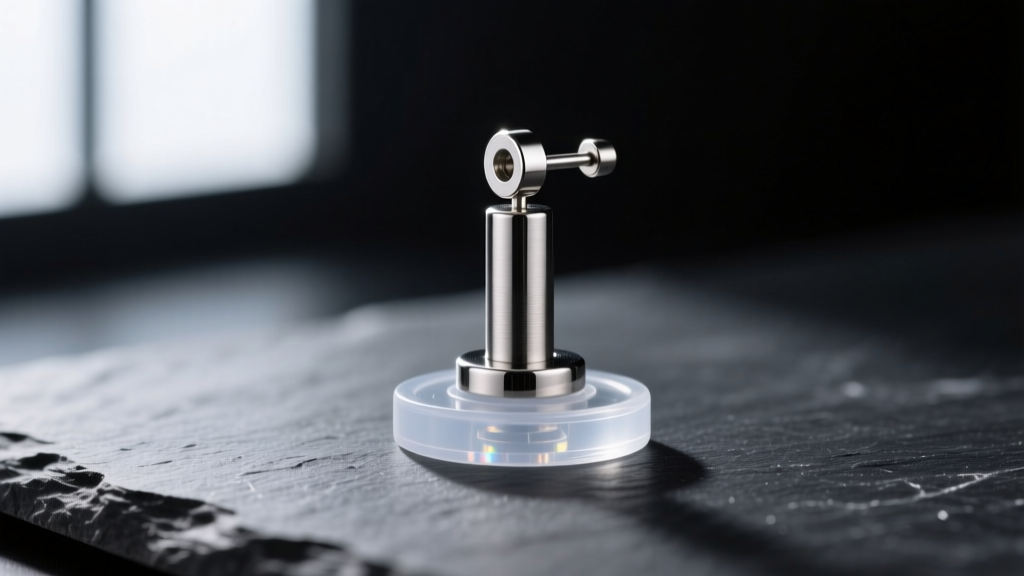
The Gauge & Weight Matrix
Use this reference table to determine the necessary hardware and support systems based on the material and size of your dangles.
| Material / Style | Typical Weight (3-inch drop) | Recommended Gauge | Required Backing / Support |
|---|---|---|---|
| Hollow-Cast Brass | 8 - 12 grams | 18g (1.0mm) | Standard friction back + Silicone disc |
| Solid Sterling Silver | 18 - 24 grams | 16g (1.2mm) | Leverback with silicone sleeve |
| Bio-Acetate / Resin | 5 - 9 grams | 18g or 20g | Omega clip or wide friction back |
| Solid Gemstone Drops | 25+ grams | 14g (1.6mm) | Ear wire + Silicone support patch (e.g., BlingWraps) |
Face Shape Architecture: Pairing Silhouettes
Large dangle earrings alter the perceived geometry of the face. In 2026, the styling approach is highly architectural, using the earrings to either balance or accentuate natural bone structure. The goal is not to "hide" your face shape, but to create a harmonious visual flow from the jawline to the clavicle.
- Round Faces: Opt for angular, geometric large dangles. Elongated hexagons, sharp rectangular drops, and linear chain styles introduce verticality and structure, countering the soft curves of a round face. Avoid wide, circular hoops that mirror the face's natural width.
- Square Faces: Choose fluid, curved silhouettes. Cascading chain dangles, oval teardrops, and organic, asymmetrical shapes help soften a strong, angular jawline. The movement of the pieces draws the eye downward in a sweeping motion rather than a harsh line.
- Heart-Shaped Faces: Look for bottom-heavy chandelier styles or teardrops that widen at the base. This adds visual weight to the lower half of the face, balancing a narrower chin and wider forehead.
- Oval Faces: The universal canvas. In 2026, oval faces are leaning into avant-garde, mismatched, or highly sculptural large dangles that wrap around the earlobe and extend down the neck.
"Proportion is everything. A four-inch earring on a petite frame with a short neck will overwhelm the wearer, while the same piece on someone with a longer neck and broader shoulders will look impeccably balanced. Always measure the drop against your own neck length, not just the mannequin."
Material Innovations Dominating the Market
The surge in popularity of oversized earrings is directly tied to breakthroughs in material science. Designers are no longer limited to heavy metals; they are engineering volume without the gravitational penalty.
Bio-Acetate: Moving away from petroleum-based plastics, the 2026 market is flooded with bio-acetate derived from cotton and wood pulp. Brands like Mazzucchelli are supplying designers with vibrant, translucent sheets that can be laser-cut into massive, 4-inch geometric shapes weighing less than 8 grams. According to the Gemological Institute of America (GIA), these alternative materials are also highly durable and resist the UV-yellowing that plagued older acrylics.
Hollow-Cast Recycled Brass: Using 3D wax printing and electroforming techniques, jewelers are creating thick, voluminous brass tubes and spheres that are entirely hollow. This allows for the luxurious, light-catching polish of solid brass at a fraction of the weight.
Anodized Niobium and Titanium: For those with metal sensitivities, niobium and titanium remain the gold standard. In 2026, anodization techniques have evolved to produce deep, iridescent hues—like oil-slick purples and electric blues—without the need for heavy enamel coatings or nickel-laden alloys.
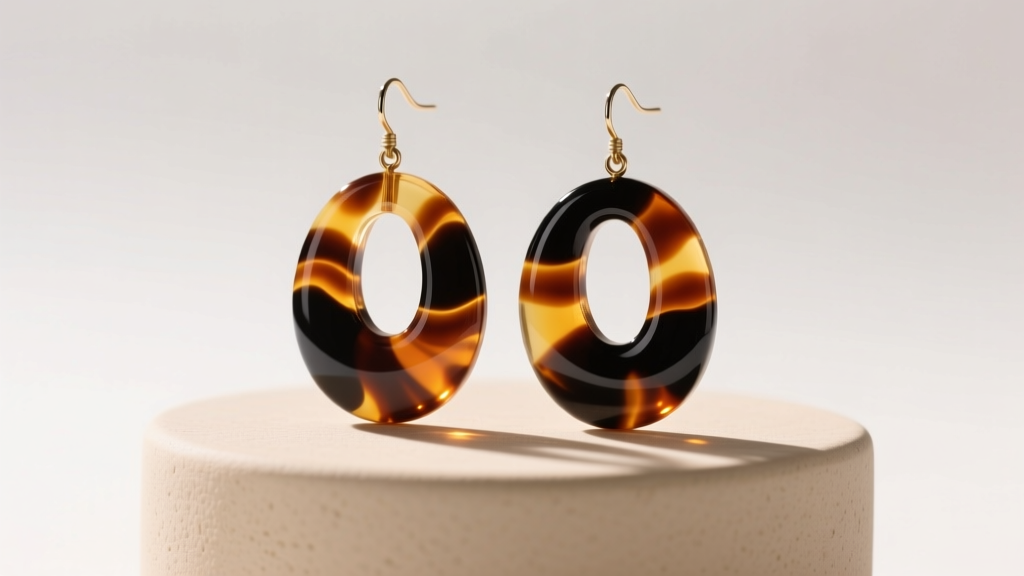
Styling Frameworks: Necklines and Hair Pairings
Large dangle earrings demand a curated canvas. If the surrounding elements are too busy, the jewelry gets lost; if they are too stark, the earrings can look like a costume. Here is the 2026 framework for styling oversized drops:
The Neckline Matrix
- Asymmetrical / One-Shoulder: The ultimate pairing. The bare shoulder provides a negative-space frame that allows a 3-to-4-inch dangle to shine without competing with fabric.
- Deep V-Neck: Creates a continuous vertical line from the earlobe down to the chest, elongating the torso.
- Strapless / Sweetheart: Ideal for chandelier or wide-stance dangles, as the exposed collarbones balance the horizontal volume of the earrings.
- Avoid: High turtlenecks or ruffled Victorian collars. The fabric will physically tangle with the earring posts and create severe visual clutter around the face.
Hair Architecture
When wearing large dangles, the hair must be intentional. A sleek, low chignon or a blunt bob tucked meticulously behind the ears ensures the jewelry remains the protagonist. If wearing hair down, opt for a deep side part, sweeping the bulk of the hair over one shoulder to expose the ear on the opposite side.
Maintenance and Storage for Oversized Pieces
The structural integrity of large dangle earrings is highly susceptible to improper storage. Tossing a 4-inch wire drop into a standard jewelry box guarantees a bent post and tangled chains.
Post Straightening: If an 18g or 16g wire post bends, do not bend it back with your bare fingers, as this creates a weak point that will eventually snap. Use two pairs of smooth-jawed nylon pliers to gently realign the wire.
Hanging Storage: Invest in a hanging jewelry organizer with individual slots. Large dangles must be stored vertically, hanging freely to prevent the chains from knotting and the structural wires from warping under their own weight.
Tarnish Prevention: For hollow brass and silver pieces, store them in anti-tarnish ziplock bags with a silica gel packet. The increased surface area of large dangles means they are exposed to more ambient humidity, accelerating oxidation if left out on a vanity.
By understanding the biomechanics of the earlobe, leveraging modern lightweight materials, and applying strict proportional styling, large dangle earrings transition from a daunting trend to a sophisticated, everyday signature.


