Why Do Guys Wear Earrings in Their Left Ear? Style Guide
Discover why guys wear earrings in their left ear, from historical meanings to modern style. Follow our step-by-step guide to choosing yours.


For decades, the question of why do guys wear earrings in their left ear has been tangled in maritime myths, 20th-century subculture codes, and outdated fashion rules. Today, in 2026, men's ear styling has completely transcended these archaic boundaries. Whether you are considering your first lobe piercing or adding a curated cartilage stack, understanding the history and the modern step-by-step approach to jewelry selection is essential. This guide breaks down the historical context and provides a professional, actionable framework for choosing, placing, and healing your left ear piercing.
The Historical Context: Decoding the Left Ear Myth
Before diving into gauge sizes and titanium grades, it is vital to address the cultural elephant in the room. The widespread belief that a left-ear piercing signifies a specific sexual orientation stems from the 1970s and 1980s 'hanky code' era, where the phrase 'left is right, right is wrong' was used as a covert signaling system among gay men. However, this code has been entirely obsolete for over thirty years.
Historically, sailors and pirates pierced their left ears with gold hoops for deeply practical and superstitious reasons: gold was believed to improve eyesight, and it served as payment for a proper burial if they drowned and washed ashore.
Today, men choose the left ear simply because it aligns with their personal aesthetic, dominant hand, or existing piercing layout. The modern approach to men's jewelry is entirely gender-neutral and focused on anatomy, face shape, and biocompatible materials.
Step 1: Map Your Anatomy and Choose the Correct Gauge
The first step in your piercing journey is selecting the correct placement and needle gauge. Men's ear cartilage is often denser, and the lobes can vary significantly in thickness. Skipping this step leads to migration, rejection, or uncomfortable healing.
- Standard Lobe (18g or 16g): While 20g (0.8mm) is common for cheap mall-kiosk jewelry, professional piercers recommend 18g (1.0mm) or 16g (1.2mm) for men's lobes. A thicker gauge provides stability and prevents the 'cheese-cutter effect' if the earring is snagged.
- Helix / Cartilage (16g or 14g): If you are moving beyond the lobe to the upper ear, 16g (1.2mm) is the industry standard. It accommodates the swelling typical of cartilage piercings and supports heavier, high-quality jewelry.
- Tragus / Conch (16g): These thicker cartilage folds require precise angle mapping to avoid hitting nerve clusters or blood vessels.
Always seek a professional who uses single-use, sterilized hollow needles. Never use a piercing gun, which causes blunt-force trauma to the tissue and cannot be properly autoclaved.
Step 2: Select Biocompatible Metals (Material Guide)
Men's skin can be highly reactive to the alloys found in commercial fashion jewelry. According to the Association of Professional Piercers, initial jewelry must be made from implant-grade materials to prevent contact dermatitis and heavy metal toxicity. Below is a breakdown of the best metals for a fresh men's piercing.
| Metal Grade | Pros | Cons | Price Range (Stud/Hoop) |
|---|---|---|---|
| ASTM F-136 Titanium | 100% nickel-free, lightweight, MRI-safe, ideal for sensitive skin. | Limited to natural silver/grey color unless anodized. | $30 - $80 |
| 14k / 18k Solid Gold | Prestigious, highly polished, holds intricate designs (e.g., BVLA). | Must be nickel-free (palladium alloyed); softer than titanium. | $120 - $450+ |
| Niobium | Hypoallergenic, easily anodized to any color, highly malleable. | Heavier than titanium, less common in high-end gem settings. | $25 - $60 |
| 'Surgical' Steel | Cheap, widely available in mall stores. | Contains 8-12% nickel; high risk of allergic reaction and delayed healing. | $5 - $20 |
Pro Tip: Invest in brands like Anatometal, Industrial Strength, or Maria Tash. Their threading is internally tapped or threadless (push-pin), meaning the sharp screw threads won't tear your healing fistula when you change the jewelry.
Step 3: Match the Earring Style to Your Face Shape
Once your piercing is healed (usually 6-8 weeks for lobes, 6-12 months for cartilage), you can begin curating your look. The right earring should balance your facial proportions.
For Square and Angular Jawlines
Avoid sharp, geometric studs that mimic your jawline. Instead, opt for seamless 16-gauge gold huggie hoops or curved barbells that soften the lower half of your face.
For Round and Oval Faces
Angular shapes, such as square-cut onyx studs or geometric titanium shields, add necessary structure and definition to softer facial features.
For Longer Face Shapes
Keep the jewelry compact. A simple 4mm bezel-set diamond or black spinel stud draws the eye horizontally, preventing the face from looking overly elongated.
Step 4: Execute the 6-Week Aftercare Protocol
Healing a piercing is an exercise in patience and hygiene. Men often make the mistake of over-cleaning or using harsh chemicals, which destroys the delicate new skin cells forming the fistula. Follow this strict protocol, aligned with Healthline's dermatological guidelines:
- Spray Twice Daily: Use only 0.9% sterile saline solution (e.g., NeilMed Piercing Aftercare). Spray directly onto the front and back of the lobe.
- Leave It Alone: Do not twist, turn, or rotate the jewelry. The old advice of 'twisting to prevent it from sticking' is a myth that introduces bacteria and tears healing tissue.
- Avoid Irritants: Keep shampoo, body wash, and cologne away from the ear. Rinse thoroughly in the shower and gently pat dry with non-woven gauze (never cotton balls, which leave fibers wrapped around the post).
- Sleep on Your Back: Use a travel neck pillow with your ear in the center hole to avoid putting pressure on the fresh wound while sleeping.
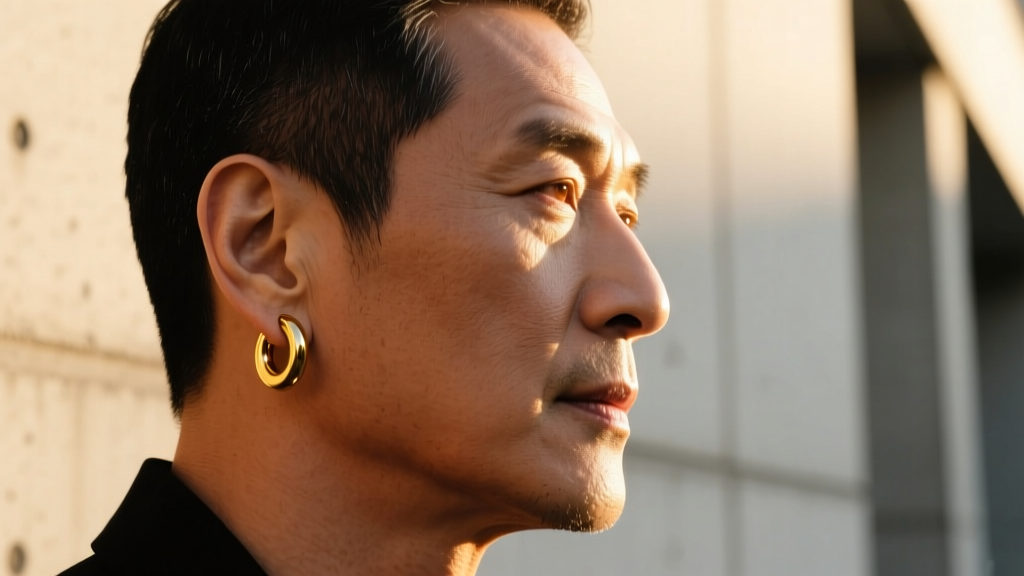
By understanding the true history behind the left-ear question and applying professional piercing standards to your jewelry selection, you can confidently build a curated, masculine ear stack that stands the test of time.


