Blue Ivy Earring Stuck Beyonce Hair: The Anatomy of a Snag
We analyze the viral blue ivy earring stuck beyonce hair incident, exploring the technical jewelry design flaws that cause hair entanglement.

The Viral Mishap: Beyond the Headlines
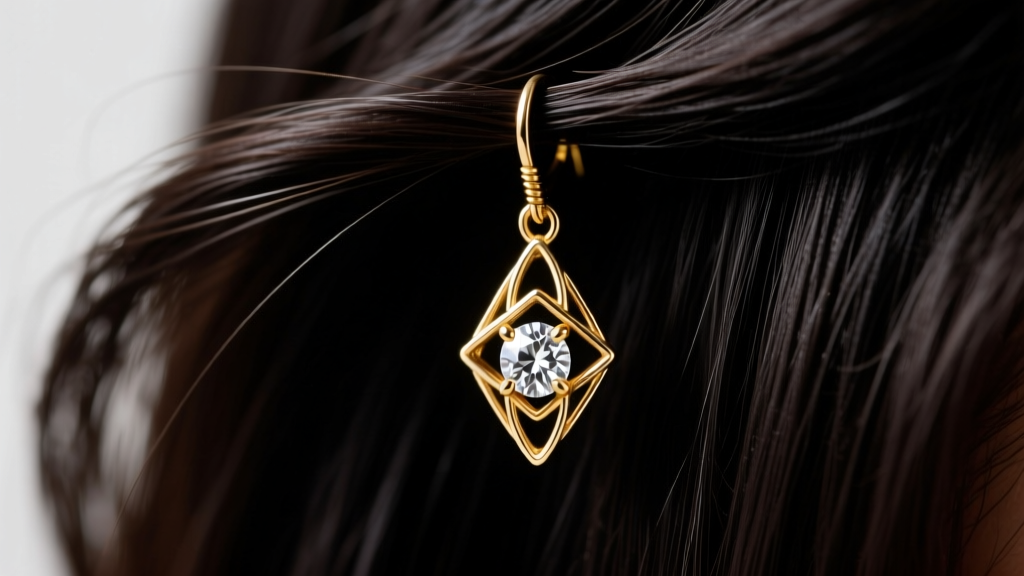
When the internet fixated on the viral moment involving a blue ivy earring stuck beyonce hair, most observers saw a fleeting red-carpet or backstage wardrobe malfunction. However, for master jewelers, CAD designers, and gemologists, this incident served as a high-profile case study in the mechanical failures of fine jewelry design. High-end drop earrings and intricate dangles are notorious for interacting catastrophically with human hair. As of 2026, despite advancements in 3D printing and precision casting, the fundamental geometry of many luxury earrings still harbors micro-tolerances that act as snares. Understanding why this happens requires a deep dive into the physics of entanglement, metallurgical finishing, and the morphological structure of textured hair.
The Physics of Entanglement: Hair vs. Metal Tolerances
To understand how a heavy gold and diamond earring becomes irreparably wedged in hair, we must look at the microscopic level. According to the American Academy of Dermatology, human hair diameter ranges from 17 to 180 micrometers (0.017 to 0.18 millimeters). Textured hair, particularly Type 3 and Type 4 coils, features a complex helical structure with varying diameters along the shaft. This coiled geometry acts like a microscopic spring.
When a textured hair strand encounters a micro-burr on a gold earring post, or a 0.5-millimeter gap in a filigree gallery, it does not simply slide off. The helical coil wraps around the protrusion. Once the hair loops around a component like a push-pin, a V-prong, or the hinge of an omega back, the natural tensile strength of the hair (which can withstand up to 100 grams of tension per strand) locks it in place. The more the wearer moves or attempts to pull away, the tighter the coil winds, creating a friction knot that is nearly impossible to unravel without mechanical intervention.
High-Risk Setting Architectures
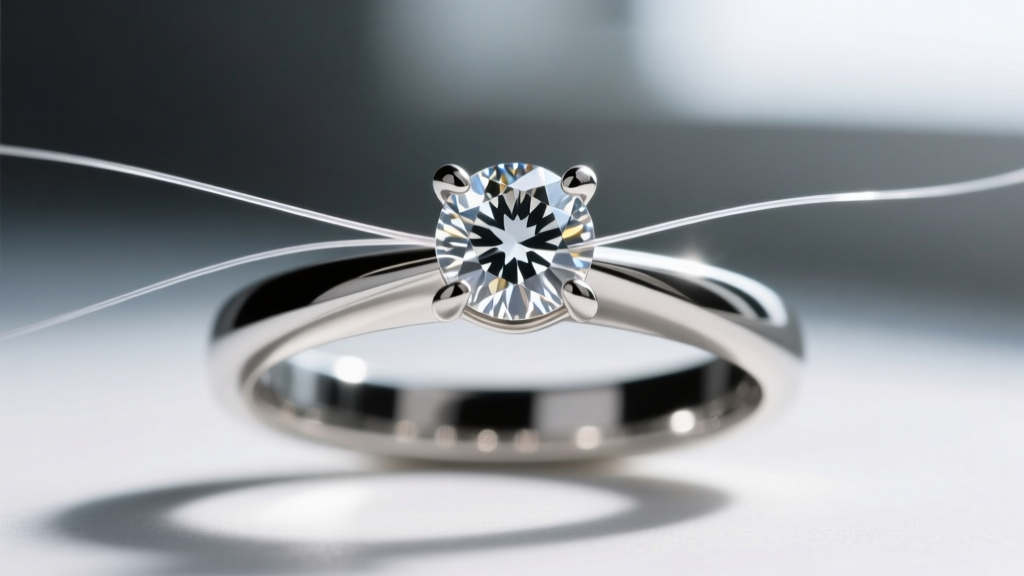
The architecture of the gemstone setting plays a massive role in snagging. Based on guidelines from the GIA Gem Encyclopedia, certain setting styles are inherently more dangerous for active wearers or those with long, textured hair:
- V-Prongs for Marquise and Pear Cuts: The sharp, folded metal at the points of a marquise diamond creates a microscopic hook. If the jeweler does not perfectly polish the inner curve of the V-prong, it acts as a one-way ratchet for hair strands.
- Openwork Filigree Galleries: Drop earrings often feature a 'basket' or gallery beneath the main stone to allow light entry. These open spaces, typically ranging from 1mm to 3mm, are massive voids where hair can easily enter but struggles to exit due to the intersecting angles of the support struts.
- Threaded Posts for Screw Backs: While screw-backs are lauded for security, the helical groove cut into an 18-gauge (1.02mm) or 20-gauge (0.81mm) post creates a continuous spiral channel. Fine hair slips into the thread and is pulled deeper as the earring shifts against the neck.
Earring Backing Matrix: Security vs. Snag Risk
Choosing the right earring backing is a compromise between holding power and surface smoothness. Below is a technical comparison of standard backing mechanisms used in high-end jewelry.
| Backing Type | Mechanism | Snag Risk (1-10) | Security (1-10) | Best Application |
|---|---|---|---|---|
| Friction Butterfly | Tension-based metal wings gripping a grooved post | 8 | 4 | Lightweight studs, short-term wear |
| Screw Back | Threaded post with a mating threaded nut | 9 | 8 | High-value diamond studs |
| La Pousette (Locking) | Spring-loaded internal mechanism inside a smooth barrel | 2 | 10 | Heavy drops, active wear, red carpet |
| Omega Clip | Hinged, spring-tensioned clip closing against a flat post | 6 | 7 | Clip-on conversions, vintage styles |
| Hinged Snap | Click-closure wire passing through the lobe | 3 | 6 | Huggies, small hoops |
As the matrix demonstrates, the La Pousette (or locking clutch) offers the highest security with the lowest snag risk because the exterior barrel is completely smooth and lacks the exposed, winged crevices of a traditional butterfly back that catch on hair.
Clinical Extraction: How to Untangle Fine Jewelry
When an intricate earring becomes deeply embedded in hair, brute force is the enemy. Pulling can bend 18k gold prongs (which have a lower yield strength than platinum) or snap the hair shaft, leaving a microscopic fragment trapped in the setting, which can eventually lead to skin irritation or stone loosening. Professional jewelers use a clinical extraction protocol:
- Stabilization: Secure the earring body with a padded bench pin or holding clamp to prevent torque from transferring to the gemstone's girdle.
- Lubrication: Apply a high-slip, non-oily detangling agent or medical-grade mineral oil to the hair-metal interface. Avoid silicone-heavy products that can gum up the micro-pavé settings.
- Magnification: Use a 10x triplet loupe or a stereo microscope. The naked eye cannot track the overlapping coils of textured hair around a 0.2mm prong tip.
- Precision Tools: Utilize titanium hemostats or a fine-tipped dental pick to gently unspool the hair. Titanium is preferred over steel as it is less likely to scratch high-polish gold or platinum if the tool slips.

Preventative Engineering for Active Wearers
The incident where the blue ivy earring stuck beyonce hair highlights the need for better preventative engineering in children's and active-wear fine jewelry. For clients who demand high-carat weight drops but lead active lifestyles, jewelers must pivot toward bezel or semi-bezel settings. A bezel setting completely encircles the gemstone's girdle with a smooth wall of metal, eliminating the exposed gaps inherent in prong settings.
Furthermore, the transition from traditional butterfly backs to silicone-lined locking clutches or smooth-barrel La Pousette backs should be mandatory for any drop earring exceeding 5 grams in weight. By eliminating the microscopic hooks and helical grooves found in standard jewelry manufacturing, we can preserve both the structural integrity of the hair and the pristine condition of the metalwork. In 2026, luxury jewelry must marry aesthetic brilliance with biomechanical awareness, ensuring that a piece of art never becomes a painful trap.


