Style Analysis: Button Earrings Gold Trends for 2026
Discover the 2026 style evolution of button earrings gold. Expert analysis on sizing, karat weights, textured finishes, and modern styling frameworks.

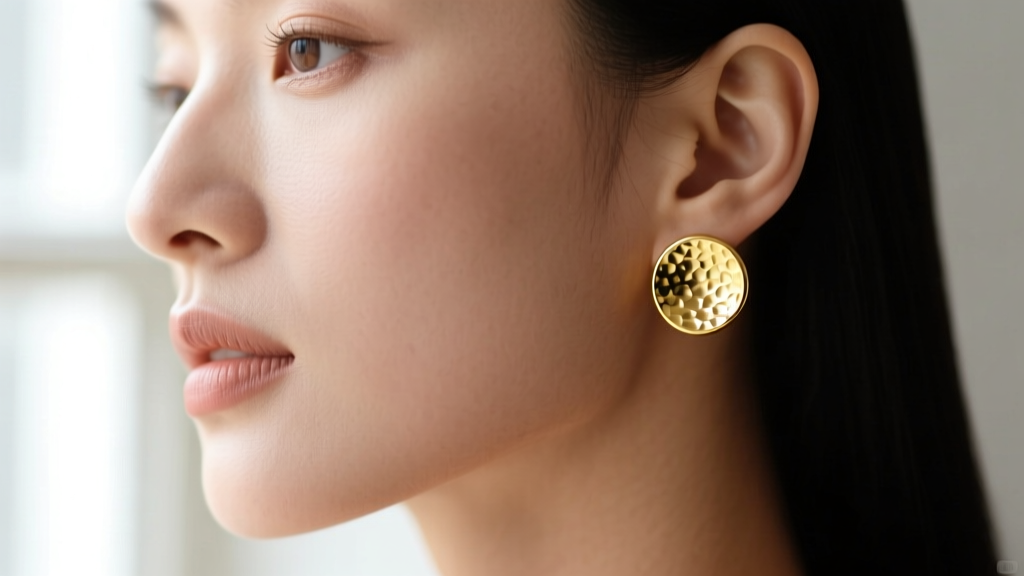
The trajectory of classic jewelry silhouettes often moves in cyclical waves, but the current renaissance of the dome stud is anything but repetitive. When analyzing the contemporary market for button earrings gold, we are witnessing a fundamental departure from the rigid, high-polish aesthetics of the late 20th century. In 2026, the gold button has evolved into a canvas for advanced metallurgical texturing, architectural hardware, and nuanced karat blending. This style analysis breaks down the technical and aesthetic parameters driving the button earrings gold trend, offering a definitive framework for collectors, stylists, and jewelry designers.
The 2026 Shift: Redefining the Gold Button
The 'power suit' era button was a status symbol of smooth, reflective perfection, often stamped from thin sheets of gold to maximize size while minimizing weight. Today, the 2026 consumer prioritizes organic imperfection, tactile engagement, and substantial gram weights. The modern button earring is less about mirror-like shine and more about light diffusion and artisanal craftsmanship. According to trend forecasting from Vogue's fine jewelry desk, the demand for hand-finished, textured gold studs has vastly outpaced traditional polished domes this year, signaling a permanent shift toward 'quiet luxury' and wearable art.
Metallurgy and Karat Selection for Top-Heavy Studs
A critical, often overlooked aspect of button earrings gold is the structural physics of the dome. Because the center of gravity sits away from the earlobe, the alloy's hardness dictates the earring's longevity and resistance to deformation. Pure 24k gold (Vickers hardness ~25 HV) is entirely unsuitable for domed structures exceeding 10mm, as it will dent under minor pressure and warp the post.
| Gold Alloy | Vickers Hardness (HV) | Avg. Price/Gram (2026) | Structural Integrity for 15mm+ Buttons |
|---|---|---|---|
| 22k (91.6%) | 60-70 HV | $75 - $82 | Poor (Bends under torque, dents easily) |
| 18k (75.0%) | 130-150 HV | $58 - $65 | Moderate (Requires thick casting or alloying) |
| 14k (58.3%) | 160-180 HV | $42 - $48 | Excellent (Ideal for heavy, daily-wear domes) |
The Gemological Institute of America (GIA) notes that alloying metals like copper, silver, and zinc not only alter the color profile but fundamentally change the crystalline lattice of the gold, increasing its tensile strength. For a 15mm button earring, 14k or a specially hardened 18k alloy is mandatory to prevent the 'pancaking' effect that occurs when a soft dome is accidentally compressed during storage or wear.
Surface Textures: The End of the High-Polish Dome
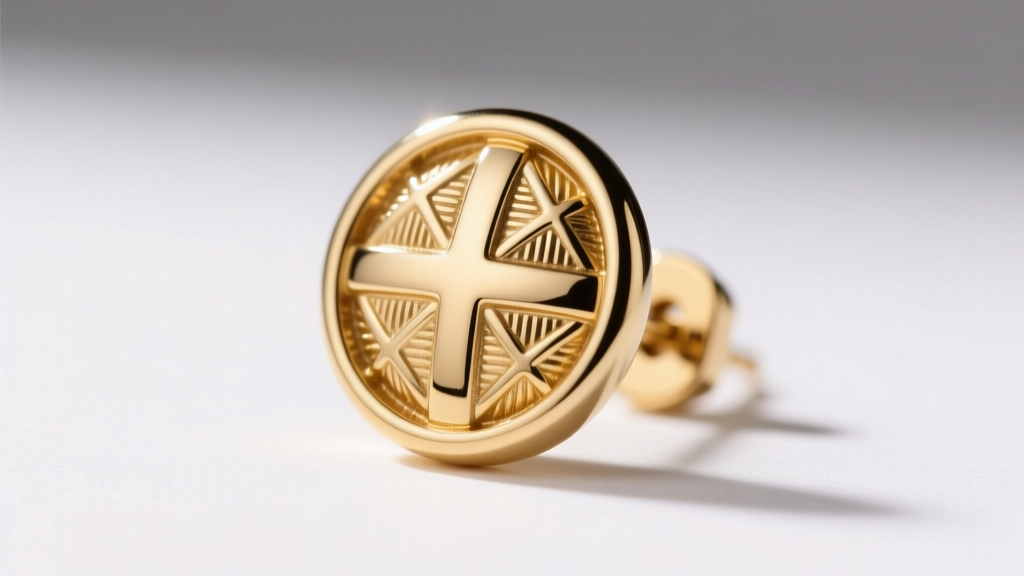
The visual weight of gold is heavily influenced by its surface treatment. In 2026, the most sought-after button earrings gold designs utilize light-scattering techniques to create depth without adding physical mass. Designers are moving away from the flawless, machine-stamped look in favor of finishes that require master-level bench skills.
- Florentine Finish: A meticulous cross-hatched engraving technique that reduces glare and gives the gold a woven, fabric-like appearance. This finish hides micro-scratches exceptionally well, making it ideal for daily wear.
- Molten or Lava Textures: Achieved through controlled reticulation or lost-wax casting with organic models, this finish mimics the surface of cooled magma. It appeals to the modern demographic seeking understated but highly tactile pieces.
- Granulation Borders: Borrowing from ancient Etruscan techniques, modern designers are framing smooth domes with microscopic spheres of gold, creating a shadow-rich perimeter that anchors the earring visually to the lobe.
The Millimeter Matrix: Sizing and Face Shape Architecture
Proportion is the cornerstone of styling button earrings gold. Unlike drop earrings that elongate, buttons create lateral volume. Selecting the correct millimeter diameter based on facial geometry and lobe surface area is critical for a flattering silhouette.
- 8mm - 10mm (The Micro-Button): Ideal for square and heart-shaped faces where the goal is to add a subtle focal point without widening the jawline. These sit perfectly within the standard lobe footprint and require only a standard friction back.
- 12mm - 15mm (The Standard Dome): The universal sweet spot. This size provides enough surface area to showcase complex textures like hammering or guilloché. Best for oval and diamond face shapes, offering a balanced anchor to the cheekbones.
- 18mm - 25mm (The Statement Shield): Reserved for round and oblong face shapes, these oversized buttons act as structural counterweights. However, any gold button exceeding 16mm enters a new category of hardware requirements due to its sheer mass.
Hardware Mechanics: Solving the Lobe Droop
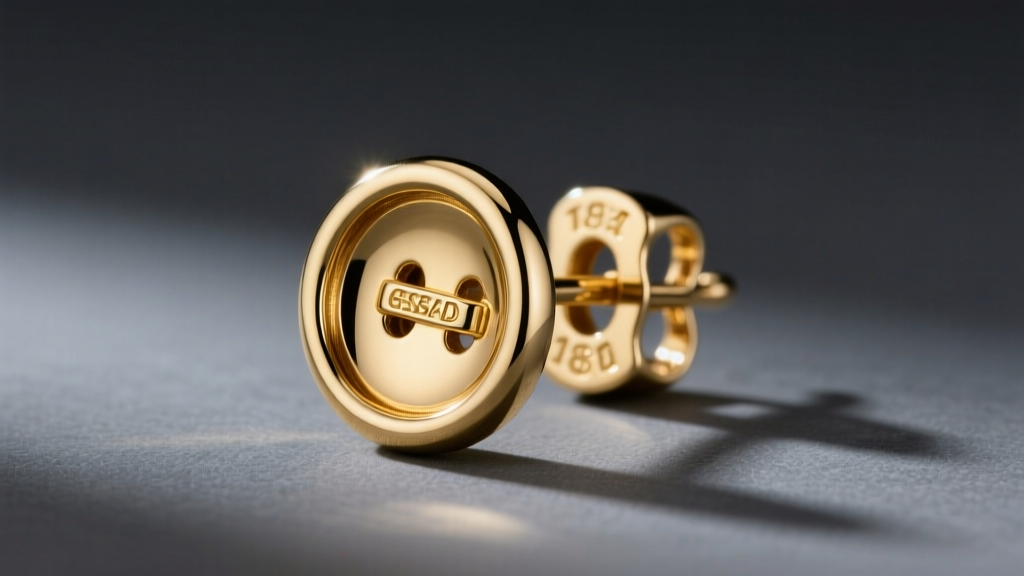
The most common failure mode for premium button earrings gold is the 'forward droop,' where the weight of the dome pulls the post downward, causing the earring to face the floor rather than sit flush against the lobe. A standard 9mm butterfly back is mechanically insufficient for any solid gold button over 4 grams.
To combat this, 2026's luxury manufacturers have standardized three backing mechanisms:
- The La Pousette (Locking) Back: Utilizing a dual-spring mechanism that clicks securely into a grooved post, this is the gold standard for heavy domes. It distributes the clamping force evenly across a wider area of the posterior lobe.
- Omega Clips: Often integrated into the earring's basket, the omega clip provides a broad, curved surface that hugs the back of the earlobe. This is essential for 20mm+ buttons, transforming the earring from a piercing-dependent accessory to a structural clamp.
- Concave Silicone Discs: For those preferring friction posts, oversized 12mm concave silicone backs with a metal core provide the necessary surface area to prevent the earring from tilting forward.
According to master jewelers, the true test of a luxury button earring is not its face, but its basket. A reinforced, hollowed-gallery basket reduces weight by 30% without sacrificing the structural integrity required to prevent the dome from collapsing under lateral pressure.
Market Pricing and Investment Benchmarks
Navigating the pricing of button earrings gold requires an understanding of gram weight versus craftsmanship premiums. Based on World Gold Council market data, the raw material cost is only the baseline for fine jewelry valuation.
A pair of 12mm, 14k gold hammered buttons (approx. 4.5 grams total weight) should retail between $450 and $650, reflecting the labor-intensive hand-hammering process. Conversely, a pair of 18k gold, high-polish 15mm buttons (approx. 8 grams) might command $900 to $1,200 due to the premium on the 18k alloy and the precision casting required for a flawless dome. Collectors in 2026 are increasingly prioritizing limited-run, artisanal textures over mass-produced polished domes, viewing the former as wearable art with higher long-term retention value and superior stylistic versatility.


