Beginner Guide to Croissant Hoop Earrings: Fit, Care & Style
Discover everything about croissant hoop earrings. Learn how to choose the right gauge, avoid dents, and style these lightweight, puffy hoops daily.

What Exactly Are Croissant Hoop Earrings?
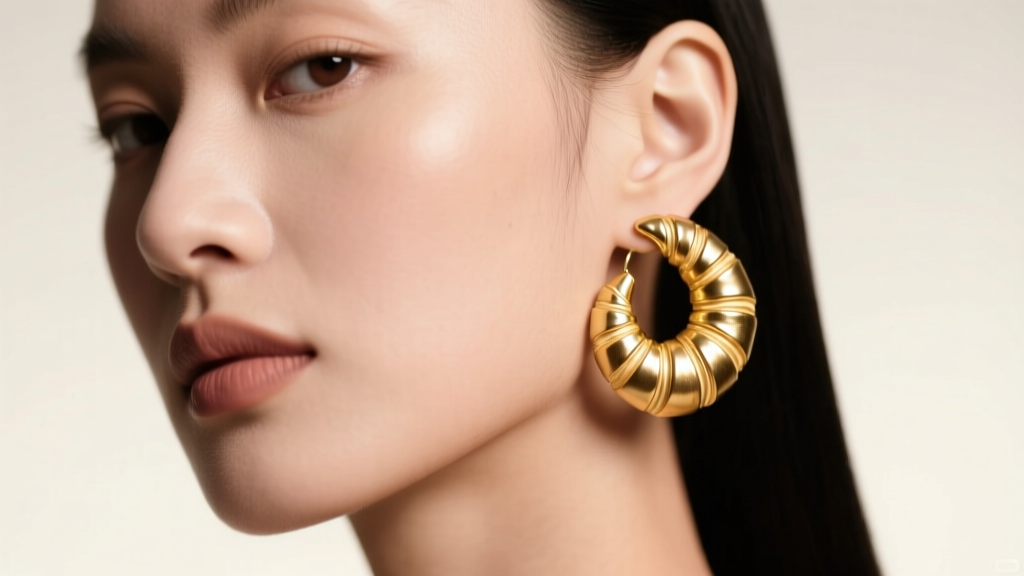
If you have browsed any jewelry trend reports over the last few years, you have undoubtedly encountered the croissant hoop earring. Named after the beloved French pastry, these earrings are characterized by their puffy, voluminous, and slightly tapered silhouette. Unlike traditional wire hoops that maintain a uniform thickness, croissant hoops feature a wider, rounded center that gently tapers toward the post and the clasp. Some designs feature smooth, high-polish surfaces, while others incorporate ribbed or twisted textures to mimic the flaky layers of baked dough.
The primary appeal of the croissant hoop is the illusion of weight. Because they are almost exclusively crafted using hollow manufacturing techniques, they offer the bold, statement-making presence of a heavy solid gold hoop while remaining feather-light. This makes them exceptionally comfortable for all-day wear, allowing you to achieve a high-impact look without stretching your earlobes. However, their hollow nature introduces specific vulnerabilities that every beginner must understand before making a purchase.
The Anatomy of a Puffy Hoop: Gauges and Metals
When shopping for your first pair of croissant hoops, it is crucial to look past the aesthetic and examine the structural specifications. The comfort and longevity of the earring depend heavily on the post gauge and the base metal used.
Understanding Wire Gauges
The "gauge" refers to the thickness of the wire that actually passes through your piercing. Despite the bulky appearance of the hoop itself, the post is usually quite standard. According to the Association of Professional Piercers, standard lobe piercings are typically done at 20-gauge (0.81mm) or 18-gauge (1.02mm).
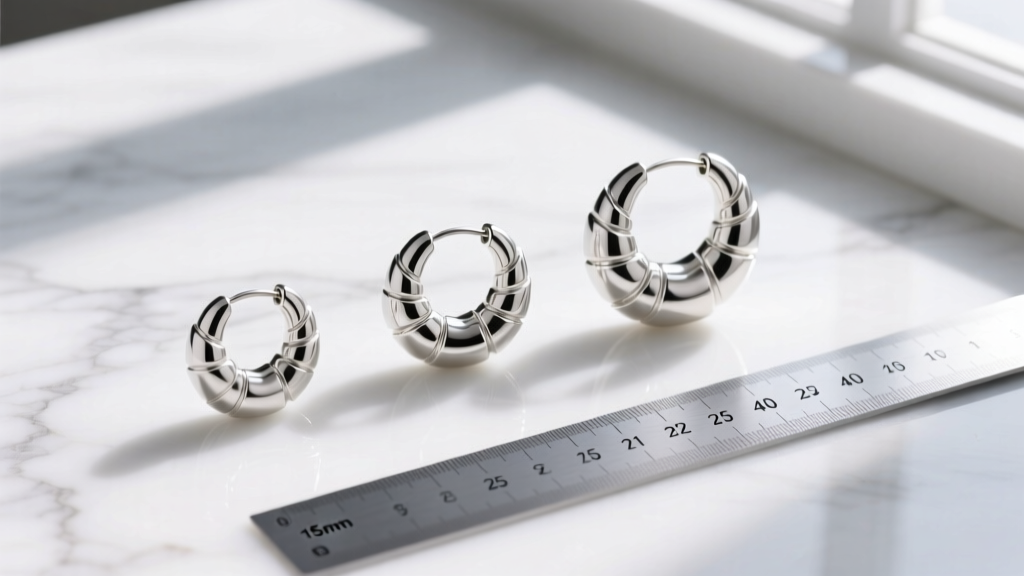
- 20-Gauge (0.81mm): The most common post size for small to medium croissant hoops (15mm to 25mm). It is lightweight and easily fits standard healed lobe piercings.
- 18-Gauge (1.02mm): Often used for larger, statement-sized croissant hoops (30mm to 45mm). The slightly thicker wire provides necessary structural support to prevent the heavier hollow body from bending the post or sagging on the ear.
Metal Purity and Plating Standards
Because solid gold croissant hoops of a substantial size would be prohibitively expensive (and uncomfortably heavy), most on the market are plated. If you are buying gold-tone croissant hoops, you must understand the difference between "gold plated" and "gold vermeil." The Gemological Institute of America (GIA) and FTC guidelines note that gold vermeil requires a sterling silver base with a gold layer of at least 2.5 microns thick. Standard gold plating is often just 0.5 microns applied over brass or copper. For an everyday earring that will encounter friction, sweat, and hair products, always insist on 14k or 18k gold vermeil, or solid sterling silver for a cool-toned look.
The "Crush" Factor: Manufacturing Methods Explained
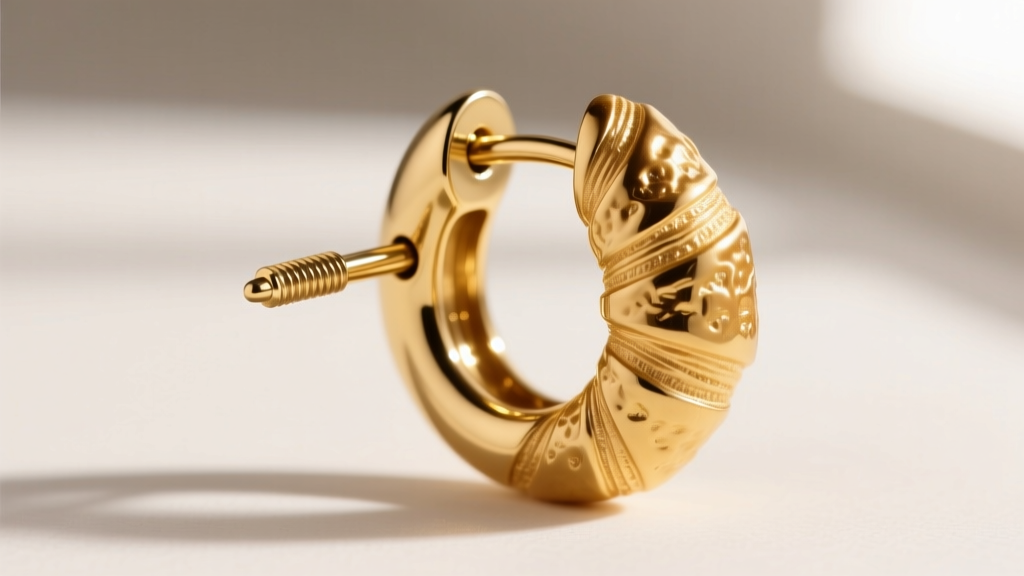
The most common complaint among beginners who buy cheap croissant hoops is that they dent, crush, or collapse after a few weeks of wear—often just from sleeping on them. This failure mode is directly tied to how the earring was manufactured. Not all hollow hoops are created equal.
| Manufacturing Method | Weight | Durability & Crush Resistance | Typical Price Range |
|---|---|---|---|
| Stamped Hollow | Ultra-Light | Low. Two thin sheets of metal are pressed and soldered. Highly prone to denting and crushing under pressure. | $25 - $75 |
| Electroformed | Light | High. Gold is deposited atom-by-atom over a wax mold, which is later melted out. Creates a seamless, rigid shell. | $90 - $200 |
| Solid Cast | Heavy | Indestructible. Cast from solid metal. Will not dent, but will stretch lobe piercings over time due to weight. | $250 - $800+ |
Expert Tip: If you want the durability of a solid hoop with the weight of a hollow one, seek out brands that explicitly advertise electroforming. This technique creates a much thicker, more resilient outer wall than traditional stamping, meaning you can accidentally nap in them without waking up to a flattened earring.
Sizing Guide: Millimeters and Face Shapes
Croissant hoops are incredibly versatile, but their puffy profile means they take up more visual space than a standard wire hoop of the exact same diameter. Here is a practical framework for choosing your size based on your face shape and styling needs.
Petite and Huggie Sizes (12mm - 18mm)
These sit tightly against the earlobe, mimicking the popular "huggie" style. Because the croissant shape is wider than a standard huggie, a 15mm croissant hoop will look significantly chunkier than a 15mm wire hoop. These are ideal for round or heart-shaped faces, as they add a subtle, textured accent without elongating the face further. They are also the safest size to sleep in.
Standard Everyday Sizes (20mm - 30mm)
The sweet spot for most wearers. A 25mm croissant hoop frames the jawline beautifully and provides enough surface area to show off ribbed or twisted textures. This size is universally flattering and works exceptionally well for square or oval face shapes, softening angular jawlines with its curved, voluminous silhouette.
Statement Sizes (35mm - 50mm+)
Large croissant hoops are showstoppers, but they require careful consideration. On a long face shape, a massive 45mm puffy hoop can exaggerate facial length. However, on wider face shapes, they provide a gorgeous, balanced proportion. Warning: Any electroformed or hollow hoop over 35mm will act like a sail in the wind. Avoid wearing these in high-wind environments or crowded spaces where they can easily be snagged by scarves or hairbrushes.
The Hidden Flaw: Moisture Trapping and "Ear Cheese"
There is a specific hygiene issue inherent to hollow jewelry that beginners are rarely warned about: the moisture trap. Because stamped and electroformed hoops are essentially tiny metal tubes, water from showers, swimming pools, and even sweat can seep into the microscopic gaps near the solder joints or the clasp.
When water remains trapped inside the hollow chamber, it creates a breeding ground for bacteria and causes the breakdown of dead skin cells and sebum. This results in the infamous "ear cheese"—a foul-smelling buildup that transfers to your earlobe and piercing channel. Furthermore, if the internal base metal is brass or copper and the plating inside the tube is non-existent, trapped water will cause rapid oxidation, leading to green skin and premature tarnishing.
The Hairdryer Trick: After showering or washing your hair, do not simply towel-dry your croissant hoops. Take a hairdryer on the cool setting and blow air directly into the crevices and clasp areas for 15 seconds to force out any trapped moisture. This single habit will double the lifespan of your plated jewelry and keep your piercings completely odor-free.
Where to Buy: Price Benchmarks and Brand Expectations
When entering the market for croissant hoop earrings, your budget will dictate the manufacturing method and metal quality you can expect. Here is a realistic breakdown of what your money buys in the current market:
- The Budget Tier ($20 - $50): You will find stamped hollow hoops with a brass base and 0.5-micron gold plating. These are fun for seasonal trends, but expect the plating to wear off within six months of daily wear, and be prepared for dents if you drop them.
- The Mid-Tier ($60 - $150): This is where you find high-quality gold vermeil (sterling silver base, 2.5+ microns of gold) and electroformed designs. Brands in this tier offer durable, everyday hoops that will last for years if properly maintained and kept away from harsh chemicals.
- The Fine Jewelry Tier ($300+): At this price point, you are paying for solid 14k or 18k gold. While some may still be hollow to maintain the croissant aesthetic without weighing a full ounce per ear, others will be solid cast. These are heirloom-quality pieces that will never tarnish and can be polished to remove scratches.
Croissant hoop earrings represent a brilliant intersection of high-fashion aesthetics and everyday comfort. By understanding the nuances of gauge thickness, electroformed durability, and proper moisture management, you can confidently select a pair of puffy hoops that will remain a staple in your jewelry rotation for years to come.


